
There are few things more exhilarating than starting your own business. The prospect of creating something of value, a real-world solution, a source of employment, and an opportunity to attain financial independence draws countless eager entrepreneurs to the startup realm each year. However, the startup arena is also populated by countless tales of stumble and failure. While startup success stories are prevalent, so too are lessons from entrepreneurs whose businesses floppedbecause their owners set out without fully grasping what entrepreneurship really requires.
Many unexperienced entrepreneurs think that all you need to build a successfulbusiness is a good idea. The truth is that a business requires a lot more thanjust an idea. It needs manufacturing, was to build it, flexibility, goodleadership, patience, money discipline and many other skills, knowledge andexperience all together to have a solid and sustainable business.
The world of startups has changed rapidly over the past few years. Technology levels the playing field entering the game, artificial intelligence has altered the rules of play, and all of the world’s markets are wide open. At the same time, there is also more competition. Customers expect more, investors demand more, and businesses need to adapt more quickly.
Starting out is required due diligence. For first time founders, preparation will mean the difference between building a successful business and making costly errors. Although each journey is different, there are principles and lessons which are universally applicable.
It is important that these lessons are understood prior to starting a business as this can increase chances of long-term success, save the founder both time and money and avoid unnecessary frustration.
Your Idea Is Important, but Execution Matters More
The most frequent myth first time to a business owner is in thinking that the idea is what makes or breaks success of the business idea.
Having a great idea will give a competitive advantage but in the end it is not the business but the execution of it that will make the success or failure of the said business. There are numerous entrepreneurs throughout history that have entered an existing market with an idea that already exists but been executed far better than others.
Ideas are rarely awarded by customers. Customers reward products and services which resolve problems effectively. A good idea that is badly executed is just a good idea. An average idea that is well executed can be a business.
Instead of focusing on protecting their ideas, founders need to prioritize on product, customer and value continuously.
Validate Your Idea Before Investing Heavily
Many first time entrepreneurs build products over the course of months or years before they find out if there are customers for it.
Validation Is a step in the process of testing assumptions before making expensive commitments of money and time. Successful entrepreneurs want customer feedback as early and as often as they can get it.
Rather than developing a complete product, the founders should develop a minimum viable product (or MVP). An MVP has the minimum functionality to solve a problem, and no extras, to get feedback from users.
Validation also allows entrepreneurs to prevent one of the most common startup mistakes: trying to create something no one needs.
Direct interviews, questionnaires, prototypes and demand testing can also provide useful information.
Understand Your Customers Better Than Anyone Else
A business is designed to solve customer problems.
Someone who is extremely immersed in his or her product can sometimes lose sight of the customer. The most successful entrepreneurs know what their customer wants and needs, what frustrates him or her, what the customer looks like and how he or she thinks.
The better a founder gets to know customers, the simpler it is to build a product for the market.
There is no end to customer research. No matter how successful the business is, markets develop, consumer priorities shift, and enterprises face new obstacles. Ongoing research of customers is a must for any serious business.
Entrepreneurs who are persistently listening to their customers discover many opportunities for innovation and growth ahead of their competitors.
Solve a Real Problem
SOLUTION IS NOT THE PROBLEM; IN INNOVATION, MANY COMPANIES FAIL BY DEVELOPING SOLUTIONS TO THE WRONG PROBLEM.
Great startups solve real customer pain-people are ready to pay for saving them time, money or hassle, making things more efficient, productive or convenient.
Before starting a business, founders should be asking themselves one basic question: What pain am I solving and to whom does it matter?
The business idea should be clarified if you do not know the answer.
Create a business which addresses real pain instead of joining the trend of smarty ideas.
Learn Basic Financial Management
Financial literacy is one of the greatest skills a founder can learn.
Many entrepreneurs spend too much time working on sales and product development and too little on financial management. There is a real danger that problems can arise as the business expands.
Us founders need to be using the following concepts in our everyday work: profit, sales, cash flow, expenses, gross margin, customer-acquisition-cost, return on investment.
A business may be making excellent profit yet fail if its cash flow is not managed correctly.
Knowing the numbers helps founders adapt, warn, identify potential risks, evaluate liquidity and be aware of other complications.
At the very least, all business owners-including those who employ accountants-must be familiar with company accounting.
Cash Flow Is More Important Than Revenue
Their first founders have many congratulating them on cash flow and revenue.
Revenue is the business’s income, and cash flow is the flow of cash in and out of the business.
A business can look as if it is doing well financially on paper but if payments are slow and costs mismanaged the business can still get into financial trouble.
Cash flow problems account for a significant number of startup failures.
Entrepreneurs can also benefit from keeping track of their cash reserves, projecting expenses and planning for unforeseen funding issues.
Focus on cash flow more than rapid growth.
Build a Strong Team
Few entrepreneurs become entrepreneurs in isolation.
As the business expands, the founders have to depend on talented people who tie in with the company’s mission and ambitions. Bringing the right people in will help to scale up, whereas bringing the wrong people in can have a detrimental effect.
Skills do matter but even more so, attitude, adaptability and culture.
It is said that a great team can beat a great strategy. An energized team will find possibilities where others find problems, will keep a healthy spirit in difficult circumstances and will not give up.
Founders should dedicate their efforts to attracting, developing and retaining employees.
Building a positive culture from the ground up sets the stage for sustainable success.
Learn to Sell
Too many entrepreneurs fail to realize the value of sales.
No matter what market you are, you will have to convince your customers, investors, employees, partners or third-parties.
Sales is NOT about persuading. It is about listening to needs and articulating how you can meet them.
If a founder cannot sell, they will not be able to grow the business. It does not matter how good a product is.
If you learn to express ideas properly, neutralize objections, negotiate and build rapport, it can greatly enhance your business.
Developing sales skills is one of the most admirable qualities an entrepreneur can have.
Marketing Is Not Optional
Many products will not succeed simply because no one is aware of them.
Marketing is all about helping your business get noticed, building up leads and brand awareness.
Contemporary marketing encompasses content development, SEO, social networking sites, email marketing, video marketing, PR, and paid advertisements.
Founders should treat marketing as an investment not a cost.
Steady marketing builds momentum and maintains business visibility in crowded markets.
A solid brand combined with good marketing will also help speed up growth.
Be Prepared for Failure and Rejection
All entrepreneurs suffer rejection.
Perhaps the investors turn down the funding proposal. Perhaps the customers turn down the offer. Perhaps the product doesn’t sell as expected. Perhaps the relationship doesn’t materialize to the desired extent.
The myth that rejection is really a good sign. No. Rejection is part of the learning.
The successful founders learn from their failures as a means to inform the decisions they make, and as a way to build resilience and other entrepreneurial traits.
The ability to bounce back from setbacks is just one of the things that successful entrepreneurs possess.
Those who persevered where others gave up early on achieved what no one else could.
Focus on Long-Term Value
A lot of first time founders get too caught up in the short term.
Moreover, long-term mission, vision, and values are crucial for sustainable business success, even if short-term gains are tempting.
Create value for the customer and try to satisfy the customer rather than satisfy yourself as a founder. Develop relationships, reliable systems and innovation.
Shortcuts in the short term may lead to success but end up causing temporary success long term.
The communities that have tough values like trust, quality, customer focus tend to be more sustainable business growth.
Don’t Chase Funding Too Early
Most entrepreneurs also think that being able to acquire investment is a sign of accomplishment.
Actually, money is a means, not an end.
Investors will generally want evidence of a business’s market demand, customers and growth potential.
A sole focus on sourcing funds for the start-up could crowd out other areas of focus, such as product development or customer acquisition.
Ideally, founders validate concepts and make sales prior to raising capital.
A strong business is easier to get financed than a business that has to be financed in order to become strong.
Adaptability Is a Superpower
Markets are in a state of flux.
New technologyis born. Customerbeforebecoming ‘more modern’ and spending more,he doethinks ‘more littleand spends less. Andcosts up.
Adaptive: Founders without inflexible assumptions will more successful define and adapt to uncertainty.
It is not about losing sight; it is about being flexible enough to change your approach in response to new insights.
Many profitable businesses grew because their founders saw opportunities and capitalized on the chance.
Innovative entrepreneurs who are averse to change will not stay in the competition for very long.
Build Systems Early
Businesses become more complex as they expand.
Without systems and processes, founders can be bogged down with day-to-day work.
Designing systems for sales, customer service, recruiting, Onboarding, project management and accounting save time and make things easier to scale.
They enable a company to better run more efficiently, while at the same time, not relying on one specific person.
Those who put systems in place early take a much stronger position to grow faster down the road.
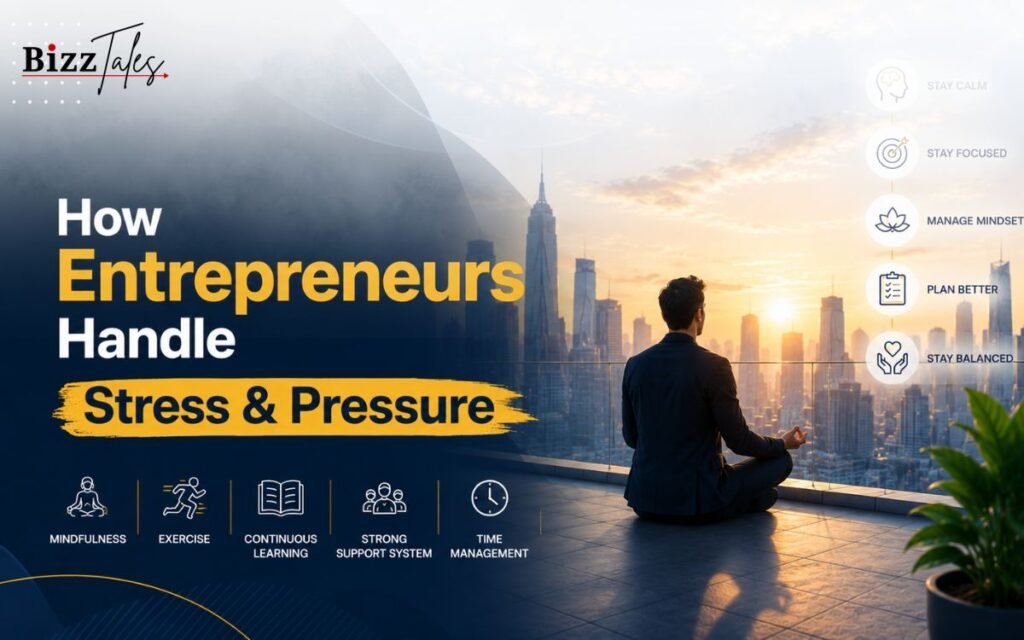
Take Care of Yourself
Located at the Mercy of entrepreneurship.
Stress is also a result of long working hours, insecurity and a heavy workload.
A lot of entrepreneurial founders forget about their health in the process of making their business successful.
But sustainable success comes from good health and sound mind…
Exercise, sleep, fitness, and recovery time all contribute to increased productivity and better decisions.
Entrepreneurs should however keep in mind that they are probably one of the most valuable assets in their businesses.
Maintaining personal health promotes long term efficiency and resilience.
The Entrepreneurial Journey Is a Marathon
Entrepreneurship is generally considered a sprint.
The truth is that a profitable business is usually not built overnight.
Success stories that happen overnight are most often years in the making. They represent years of preparation, learning, experimenting, and perseverance.
Aim for progress and not performance.
Patience is one of the most under-rated qualities of an entrepreneur.
The companies that prosper and last Long�the ones that survive and grow are usually ones that are the result of sound systems, always questioning the way they do things and taking an enduring approach.
Conclusion
Launching your own business can be a very exciting and fulfilling experience. However, it can also be overwhelming.Entrepreneurship can bring great achievements, new opportunities and success, but you need to be prepared…
Great entrepreneurs know that business is not about great ideas; it’s about executing on your ideas, deeply understanding your customers, managing your finances, being flexible and resilient, leading your team, and working harder than anyone else.
In other words, confirming hypotheses, addressing real issues, acquiring the basics of finance, building competent teams, understanding sales and marketing, and looking at the big picture will drastically increase the chances of achieving the startup dream-this first time around.
You’ve got to expect that each entrepreneur will hit some block at some point, and that mistakes and lessons will be learned. Aim not for no mistakes, but for learning from those mistakes quickly and getting back to work.
Achieving the goal of starting a winning company is never a straightforward journey. However, for those ready to learn, adapt and fight for their businesses, it can prove to be one of the most satisfying roles a person can undertake in their lives.
FAQs
What are the most common errors beginning founders do?
One of the most common mistakes is to develop a product without first testing if there are customers interested in it.
Requires capital to establish a business?, Is funding a requirement to start a business?
Why do I need a business plan?
While a business plan is primarily used by founders to set their objectives, identify their markets and plan their strategy, its real value as a tool for the business depends on its implementation.
Is it advisable for me to resign from my job before launching my own business?
It costs and sounds each entrepreneur. The answer is there if should be entirely on money or not, could risk wise or national scale wise or business wise. Most of entrepreneurs start timewise when part-time then go full-time.
Is there a way to test out the validity of a startup?
Ideas can be validated through customer interviews, surveys, prototypes, pre-order, minimum viable products.
Reasons for startup failure:
Typically, key issues are market failure, fund mismanagement, weak teams, poor marketing and failure to adapt.
The startup skills you must learn as a founder.
My experience has shown me that the most useful skills for entrepreneurs are sales, communication, leadership, financial literacy, problem solving and marketing.
How much time it has taken you to build a successful business?
There is no set time-frame. A lot of successful ventures may require a number of years to build the business and become profitable.