
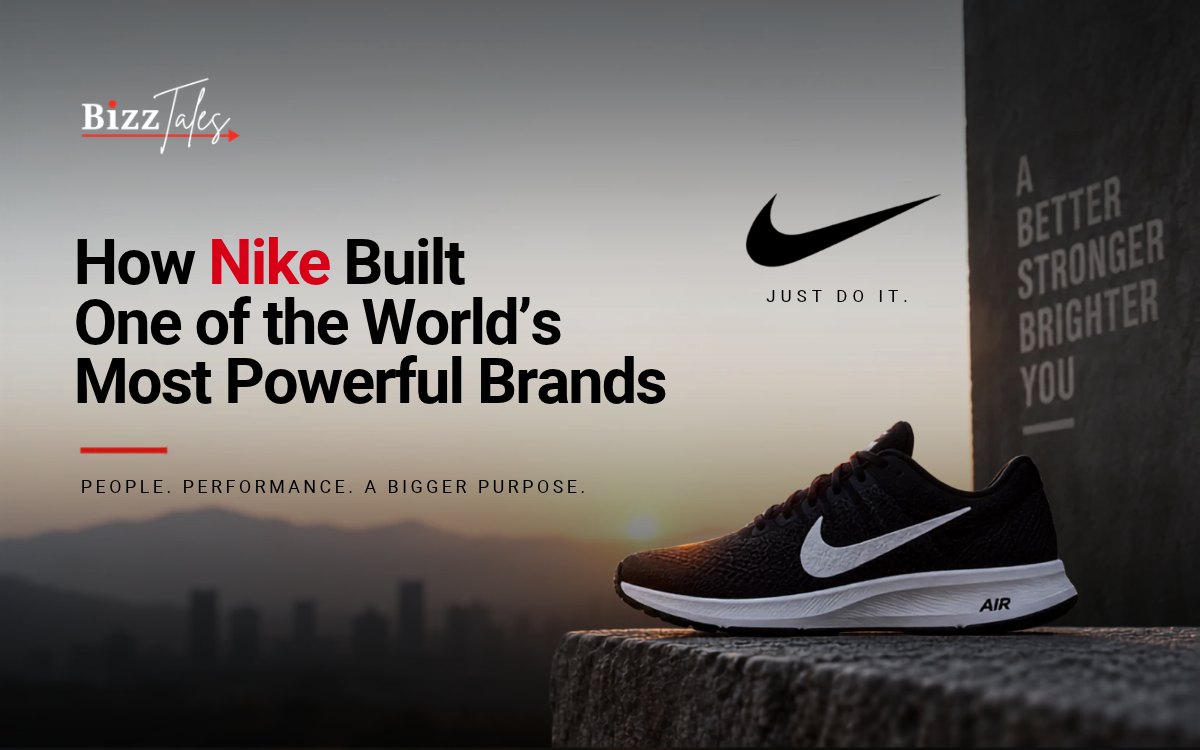
Nike is more than a sportswear company. It is one of the most recognizable brands in the world, built around a simple but powerful idea: inspire people to believe they can achieve more.
From the iconic Swoosh to the unforgettable “Just Do It” slogan, Nike has turned athletic products into symbols of ambition, performance, and culture. But how did Nike build such a powerful global brand?
The answer lies in a combination of great products, emotional storytelling, innovative marketing, cultural relevance, and relentless brand consistency.
From Blue Ribbon Sports to Nike
Nike’s story began in 1964 when Phil Knight and Bill Bowerman founded Blue Ribbon Sports. The company initially focused on importing and selling running shoes.
Bowerman, a track coach, was obsessed with improving athletic performance. Knight, meanwhile, saw an opportunity to build a business around high-quality, affordable athletic footwear.
In 1971, the company introduced the Nike name and Swoosh logo. The brand was named after Nike, the Greek goddess of victory, establishing an identity closely connected with winning and achievement.
Over time, Nike evolved from a shoe company into a global sports and lifestyle brand.
1. Nike Sells More Than Products
One of Nike’s greatest strengths is that it doesn’t primarily sell shoes or clothing—it sells emotion and identity.
A Nike advertisement rarely focuses only on technical product specifications. Instead, its campaigns often communicate ideas such as courage, determination, confidence, and overcoming obstacles.
This strategy allows customers to associate Nike with something bigger than a product.
When someone buys Nike, they aren’t simply buying sneakers. They can feel that they are buying into a mindset: work harder, push further, and never give up.
That’s powerful branding.
2. “Just Do It” Became a Cultural Phenomenon
Nike’s “Just Do It” campaign, introduced in 1988, became one of the most successful advertising slogans in modern marketing.
Its brilliance was its simplicity.
The phrase didn’t tell consumers which shoe to buy. It encouraged them to take action.
Whether someone was a professional athlete, a weekend runner, or someone simply trying to become more active, the message could apply to them.
“Just Do It” transformed Nike’s marketing from product advertising into motivational storytelling.
3. Athlete Partnerships Built Credibility
Nike understood early that athletes could become powerful extensions of the brand.
The company developed partnerships with some of the world’s most influential athletes, including Michael Jordan, Serena Williams, LeBron James, Cristiano Ronaldo, and many others.
The most famous example is undoubtedly Michael Jordan.
The launch of Air Jordan transformed the relationship between sports, sneakers, fashion, and popular culture. Jordan’s influence helped Nike create an entirely new category around basketball footwear and lifestyle products.
Instead of simply sponsoring athletes, Nike often built personal brands and stories around them.
4. Nike Mastered the Art of Storytelling
Great brands create stories that people want to be part of.
Nike’s advertising frequently focuses on struggle before success. Its campaigns show athletes training, failing, recovering, competing, and eventually achieving their goals.
This storytelling approach makes advertisements feel less like advertisements.
Nike’s brand narrative consistently reinforces a central idea:
Greatness is possible, but you have to work for it.
That message creates an emotional connection that product features alone cannot achieve.
5. The Swoosh Became a Global Symbol
Nike’s Swoosh is one of the world’s most recognizable logos.
Its simple, curved design represents movement and speed while remaining easy to recognize across different languages and cultures.
Importantly, Nike has maintained remarkable consistency in using its visual identity.
The Swoosh can appear on a shoe, billboard, athlete’s jersey, social media post, or storefront and still communicate the same brand.
This consistency has helped turn a simple graphic into a global symbol of sport and ambition.
6. Nike Blended Sports With Culture
Nike didn’t limit itself to traditional sports marketing.
Over the years, the company successfully connected sports with fashion, music, streetwear, entertainment, and youth culture.
Sneakers became lifestyle products rather than something worn only for athletic activities.
Collaborations, limited releases, celebrity partnerships, and culturally relevant campaigns helped Nike remain desirable beyond the sports field.
This ability to move between sports and popular culture significantly expanded its audience.
7. Innovation Keeps the Brand Relevant
Marketing can create attention, but products have to deliver.
Nike has consistently invested in footwear technology, materials, design, digital experiences, and performance innovation.
From lightweight running shoes to basketball footwear and performance apparel, innovation has remained central to Nike’s strategy.
The company also increasingly connects physical products with digital experiences through its apps, membership ecosystem, and direct-to-consumer channels.
This combination of innovation and brand storytelling gives Nike a powerful competitive advantage.
8. Nike Creates Communities, Not Just Customers
Modern consumers increasingly want to belong to communities.
Nike has responded by building ecosystems around running, training, basketball, football, and other sports.
Through digital platforms, events, content, and membership experiences, the company encourages customers to participate rather than simply purchase.
That changes the relationship from:
Company → Customer
to:
Brand → Community → Lifestyle
The stronger that relationship becomes, the harder it is for competitors to replace the brand.
What Businesses Can Learn From Nike
Nike’s success offers several lessons for companies of any size:
Build an emotional brand. People remember how a brand makes them feel.
Create a clear message. Nike’s positioning is easy to understand and consistently communicated.
Tell stories instead of simply selling products. Stories create deeper connections.
Invest in distinctive branding. A recognizable logo, voice, and visual identity create long-term value.
Stay culturally relevant. Strong brands evolve with their audiences.
Combine marketing with innovation. Advertising can attract customers, but excellent products keep them.
Build communities. Loyal communities can become one of a company’s strongest competitive advantages.
The Real Secret Behind Nike’s Brand Power
Nike didn’t become one of the world’s most powerful brands because of a single advertisement, athlete, logo, or product.
Its strength comes from decades of consistency.
The company repeatedly reinforces the same fundamental idea: human potential is limitless when people are willing to push themselves.
That message has allowed Nike to remain relevant across generations, sports, countries, and cultures.
Ultimately, Nike’s greatest achievement may not be creating the world’s most famous sneakers. It is creating a brand that makes people want to become the person who wears them.
And that is the difference between selling products and building a powerful brand.