
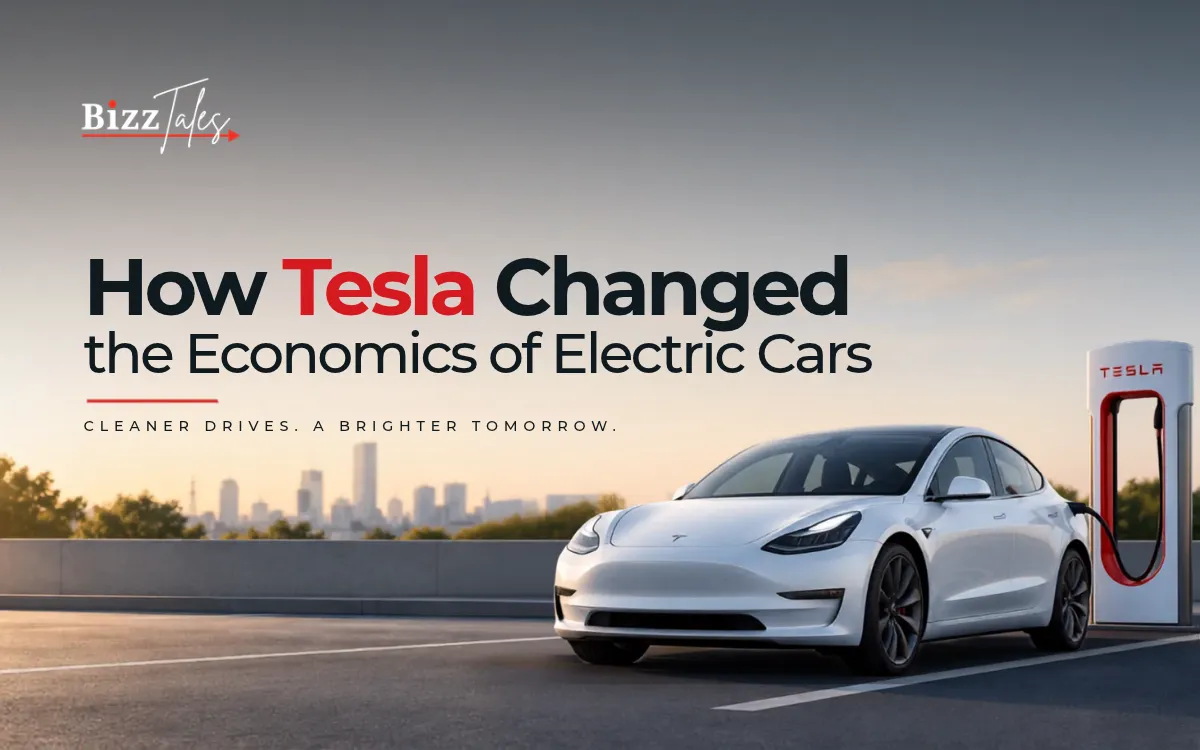
For years, electric cars were considered expensive alternatives to traditional petrol and diesel vehicles. High battery costs, limited driving range, and a lack of charging infrastructure made electric vehicles (EVs) difficult to adopt on a large scale. Tesla helped change that perception by demonstrating that electric cars could be desirable, technologically advanced, and commercially competitive.
The company’s approach transformed several aspects of the automotive industry, from battery manufacturing and vehicle production to charging infrastructure and consumer expectations. Tesla changed the economics of electric cars by focusing on battery costs, manufacturing efficiency, software, and economies of scale.
Here is how Tesla helped reshape the electric vehicle market and influenced the future of automotive transportation.
1. Making Electric Cars More Desirable
Before Tesla became a major automotive brand, electric vehicles were often associated with limited performance and practical compromises. Tesla challenged this perception by introducing electric cars that emphasized acceleration, driving range, technology, and design.
The Tesla Roadster demonstrated that an electric sports car could deliver high performance, while the Model S brought electric powertrains into the premium sedan market.
This strategy helped Tesla attract customers who were interested in innovation and performance rather than purchasing an EV solely to reduce fuel consumption.
By establishing electric vehicles as desirable products, Tesla helped expand the potential customer base and created opportunities for manufacturers to invest more heavily in electrification.
2. Reducing Battery Costs Through Scale
The battery is one of the most expensive components of an electric vehicle. Its cost has historically played a major role in determining EV prices and profitability.
Tesla made battery technology and manufacturing scale central to its business strategy. Through large production facilities, supplier partnerships, battery research, and manufacturing improvements, the company worked to reduce the cost of producing battery-powered vehicles.
Its Gigafactory strategy aimed to increase battery production capacity and improve manufacturing efficiency.
As production volumes increase, manufacturers can spread fixed costs across more vehicles, negotiate supply agreements, and improve factory utilization. These advantages can reduce the cost per vehicle.
Tesla’s investments also contributed to broader industry attention on battery innovation and large-scale EV production. However, battery prices are influenced by many factors, including raw material costs, chemistry improvements, and developments across the entire battery industry.
3. Using Premium Cars to Fund Mass-Market Expansion
Tesla’s early business strategy differed from the traditional approach of launching inexpensive vehicles first.
Instead, it initially targeted premium customers with higher-priced models. These vehicles helped establish the brand, generate revenue, and develop manufacturing experience before the company expanded into more affordable market segments.
The Model 3 and Model Y became central to Tesla’s broader-market ambitions.
This approach illustrates an important economic principle: premium products can help a company build the capabilities and production scale needed to compete in larger markets.
As Tesla expanded its manufacturing capacity, it sought to make electric vehicles accessible to more consumers while improving production efficiency.
The strategy also helped demonstrate that EVs could compete in high-volume vehicle categories rather than remaining limited to luxury niches.
4. Simplifying Manufacturing and Vehicle Design
Traditional automakers often operate complex manufacturing systems involving numerous vehicle configurations, suppliers, and production processes.
Tesla has pursued manufacturing approaches designed to reduce complexity and increase production efficiency. These include greater integration of vehicle systems, simplified product configurations, and large structural castings in certain models.
Reducing the number of individual parts can potentially lower assembly time, labor requirements, and manufacturing complexity.
Tesla has also emphasized designing vehicles around electric powertrains rather than adapting every model from a conventional combustion-engine platform.
These approaches can improve production economics, although their benefits depend on factory design, quality control, repairability, and the ability to manufacture vehicles consistently at scale.
5. Turning Software Into an Economic Advantage
Tesla helped popularize the idea that a car’s value can evolve through software updates after purchase.
Its vehicles use software to manage functions such as infotainment, energy consumption, driver assistance features, and vehicle settings. Over-the-air updates allow certain improvements and changes to be delivered without requiring a traditional dealership visit.
This creates potential economic benefits for both manufacturers and customers.
For manufacturers, software can support ongoing customer engagement and, where customers choose to purchase eligible services, additional revenue opportunities. For customers, updates can improve selected vehicle functions over time.
Tesla’s software-centered approach has also encouraged other automakers to invest in connected-car technology and digital services.
However, software revenue depends on customer demand, regulatory requirements, and the features available in each market.
6. Building a Charging Network
Charging infrastructure is another important part of EV ownership economics.
For many potential buyers, the cost of an electric car is only one consideration. Charging availability, travel convenience, charging speed, and access to home charging also affect the overall ownership experience.
Tesla invested in its Supercharger network to support long-distance travel and make charging more convenient for its customers.
A reliable charging network can help reduce the practical barriers to EV adoption and improve the usefulness of electric vehicles for people who travel frequently.
Tesla’s charging ecosystem also influenced the wider industry. Other automakers and charging providers have increasingly worked toward greater compatibility and access to fast-charging infrastructure.
The economics of charging still vary by location, electricity prices, network fees, and whether drivers can charge at home.
7. Changing Competition Across the Automotive Industry
Tesla’s growth encouraged established automakers and new companies to accelerate their electric vehicle strategies.
As more manufacturers entered the market, competition expanded across vehicle prices, battery technology, driving range, charging capabilities, and software.
This competition can benefit consumers by increasing product choice and encouraging improvements in technology and efficiency.
At the same time, it places pressure on manufacturers to manage battery costs, factory investments, pricing, and profitability.
Tesla’s price adjustments have also highlighted how EV pricing can change as production capacity, competition, and market demand evolve.
The result is an automotive industry in which electric vehicles are increasingly treated as a central part of long-term product development rather than a specialized category.
8. Making Total Cost of Ownership Part of the Conversation
The economics of electric cars extend beyond their purchase price.
Electric vehicles can have lower energy and maintenance costs than comparable petrol-powered cars, depending on electricity prices, driving habits, local fuel costs, insurance, and repair expenses.
EVs do not require conventional engine oil changes and have fewer moving parts in their powertrains. However, tires, insurance, depreciation, battery condition, and repair costs can still significantly affect ownership expenses.
Tesla helped bring these considerations into mainstream discussions by promoting electric driving as an alternative to conventional vehicle ownership.
For consumers, comparing the total cost of ownership provides a more complete picture than looking at the sticker price alone.
Conclusion
Tesla changed the economics of electric cars by combining battery investment, manufacturing scale, premium-brand development, software integration, and charging infrastructure into a single business strategy.
Its influence extends beyond the vehicles it sells. Tesla helped demonstrate the commercial potential of electric cars and encouraged greater competition and investment throughout the automotive industry.
However, the economics of EV ownership continue to depend on local conditions, battery costs, vehicle prices, charging access, and ongoing technological developments.
Ultimately, Tesla helped move electric cars from a specialized alternative toward a major force in the global automotive market. Its long-term impact will depend on how effectively it and its competitors continue to reduce costs, improve manufacturing, and meet the changing needs of consumers.