
A customer who is looking for your business may make up their mind before they’ve spoken to your team, stepped foot in your shop or had a try of your product. A handful of search results, reviews online, comments on your Facebook page or customers’ tales may be all you need.
This is where the difference between digital reputation vs brand reputation matters.
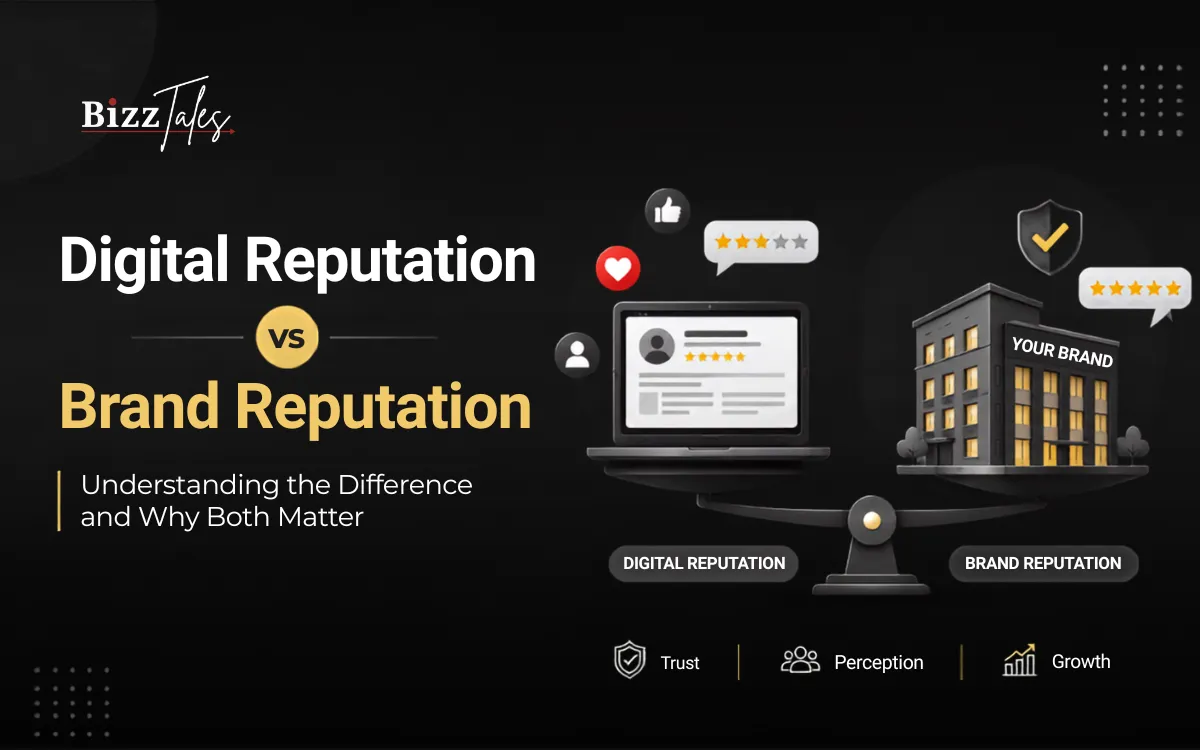
The two are intertwined but not the same. Brand reputation is a broad view of how people see the business as a whole, whereas digital reputation is specifically related to how a business is viewed within the digital realm.
Having both knows how to safeguard trust, enhance their online image and establish long-term partnership with customers.
🎯Get a Free Reputation Consultation→
What Is Digital Reputation?
Digital reputation is the perception of a person, business, or organization based on information available online.
Think about what happens when someone searches for a company on Google. They may see:
- Customer reviews and ratings
- Social media posts and comments
- News articles
- Forum discussions
- Blog posts
- Search engine results
- Videos and other online content
- Mentions on third-party websites
Together, these digital signals influence what people think about a business before they interact with it directly.
For instance, say a local eatery has great food but a number of newer reviews mentioning poor service. Even if the owner has resolved this issue, that restaurant will show up high in Google, and prospective customers might opt to eat elsewhere.
This is what makes online reputation management a key component of present day reputation management. Businesses need to be aware of what is being said about them and react accordingly whenever necessary.
What Is Brand Reputation?
Brand reputation is the broader perception of a company among its customers, employees, partners, investors, competitors, and the wider market.
It develops over time through many factors, including:
- Product or service quality
- Customer experience
- Company values
- Leadership and workplace culture
- Advertising and communication
- Business practices
- Reliability and consistency
- How the company handles problems
Brand reputation is therefore bigger than an online search result. It reflects the overall level of trust and confidence people associate with a business.
Think of a software company that is always helpful on the phone, offers quality products at a fair price, and is straightforward and honest. Those interactions may not even be in response to a customer inquiry, but they help build the brand.
Brand reputation is part of a much bigger business asset—learn why business reputation deserves long-term attention.
Digital Reputation vs Brand Reputation: Key Differences
Easiest explanation of digital reputation vs brand reputation is to treat digital reputation as a key element of the overall reputation landscape.
| Factor | Digital Reputation | Brand Reputation |
| Scope | Primarily online perception | Overall perception of the business |
| Channels | Search engines, reviews, social media, forums, websites | Online and offline customer, employee, partner, and market experiences |
| Audience | Mainly people encountering the brand digitally | Customers, employees, partners, investors, and the broader market |
| Control | Influenced by online content and conversations | Influenced by the complete business experience |
| Measurement | Reviews, mentions, sentiment, search visibility, social engagement | Customer loyalty, trust, feedback, perception, retention, and broader market sentiment |
The distinction matters because a company can have a strong brand but a weak digital reputation, or the reverse.
For example, an established company may have a large customer base, but be showing up in searches with old, negative comments. While the overall brand image might still be positive, the online reputation could use work.
How Digital Reputation and Brand Reputation Are Connected
Digital reputation and brand reputation continually impact each other.
A good experience from a customer can result in that customer writing a 5-star review, sharing on social media or offering a comment to a customer review. Those digital signs can support the company’s larger brand.
The above can also be the case.
Say an online retailer is known for great products but poor customer service. Customers may start to leave negative reviews online. Fellow consumers would read those reviews on the search engine and social network and may start to question the company’s credibility.
While the original was a customer-service issue, the problem appearing on the Web can make it a business reputation issue.
Similarly, a solid online reputation for a company’s digital brand cannot save it if the reality of its product or service continually underwhelms its customers. Over time, the so-called positive content will become untrustworthy.
A strong digital presence cannot replace genuine customer trust—explore how great brands build trust through consistent experiences.
Why Both Matter for Businesses
Reputation can also affect if people are willing to do business with a company. Business with a company. The management of digital reputation along with brand reputation can contribute to:
Build Customer Trust
We tend to favor companies that are seen as reasonable, transparent, and trustworthy; having a reputation for reliability and spending time and energy communicating in a responsible way online will build that trust.
Influence Purchasing Decisions
Possible customers may do research on a company prior to purchasing. Reviews, search results, social content and word of mouth are just some factors that will influence a potential customer’s choice.
Improve Credibility
A professional web presence and a high quality customer experience together build a stronger credibility.
Attract and Retain Customers
Reputation extends beyond acquisition. A good reputation encourages repeat purchases and positive word-of-mouth.
Support Long-Term Brand Growth
A reputation for trust is an asset. It can ease the way for new product or service introductions, partnership or joint ventures, and marketing campaigns because the company has already earned trust.
Reduce the Impact of Reputation Crises
There is no business that can’t be criticized or accused of doing something wrong. Successful companies that keep tabs on their reputation will spot issues sooner and deal with them before they blow up.
Common Threats to Digital and Brand Reputation
Reputation problems can begin with something relatively small. Common threats include:
- Negative or misleading reviews
- Social media backlash
- Poor customer service
- Unresolved public complaints
- Negative search results
- Inconsistent brand messaging
- Misleading advertising or information
- Employee or leadership controversies
- Poor-quality products or services
For instance, a professional services firm may publish polished marketing content promising fast responses. If customers repeatedly experience delays and complain publicly, the gap between the brand’s message and the actual experience can damage credibility.
The solution is not simply to remove negative comments. Businesses need to address the underlying issue.
How Businesses Can Manage Both Reputations
Effective reputation management is an ongoing process rather than a one-time campaign.
1. Monitor Online Mentions
Regularly check search results, review platforms, social media, forums, and important third-party websites for conversations about your business.
2. Respond Professionally to Reviews
Thank customers for positive feedback and respond calmly to legitimate criticism. Avoid defensive arguments. A thoughtful response can demonstrate accountability even when the original review is negative.
3. Keep Brand Messaging Consistent
Your website, social media profiles, advertising, customer communications, and offline materials should present a consistent identity. Consistency helps strengthen your brand image and makes the company easier to trust.
4. Improve the Customer Experience
Reputation management cannot compensate indefinitely for poor products or service. Fix recurring problems at their source.
5. Publish Useful Content
Helpful articles, FAQs, case studies, videos, and customer resources can create positive online visibility while demonstrating expertise.
6. Address Complaints Quickly
A complaint that receives a prompt, respectful response is less likely to become a larger reputation issue. Give customers a clear path toward resolution.
7. Build Positive Online Visibility
Encourage genuine customer reviews, maintain accurate business profiles, and regularly publish useful information. The goal is not to manipulate perception but to ensure that accurate, valuable content represents the business.
8. Review Your Online Presence Regularly
Search your company’s name periodically. Check what appears on the first page of results, whether your social profiles are current, and whether outdated or inaccurate information needs attention.
Digital Reputation vs Brand Reputation: Which One Is More Important?
It shouldn’t be viewed as more significant than the other.
Your brand reputation is a bigger picture of how your business is viewed, and digital reputation is an essential piece of that puzzle online.
A business with a stellar offline image but neglectful of its online presence can still lose prospective buyers during the research phase. On the other hand, one with superb digital marketing but bad customer experiences will finally fall by the wayside.
The most effective way is to handle both of them together. Enhance the real customer experience, keep a regular communication, watch the people talk, and react positively when there is an issue.
Conclusion
The discussion of digital reputation vs brand reputation is less about picking one than understanding the interaction between the two.
Digital reputation is what people find and say about you on the internet. Brand reputation is the overall perception of your business, based on the sum of all interactions. Search engine ranking, reviews, social media, customer care, product excellence, the company’s values, and offline experience.
Reputation is something a business must take responsibility for on a continuing basis. Begin by researching your company name, see what is being said about it, look for common problems that your customers have, and ensure that your messaging online reflects the customer experience.
Always ensure that your actions, communication and customer experience serve to back each other up. This will enhance your digital reputation and will improve the image of your brand.