
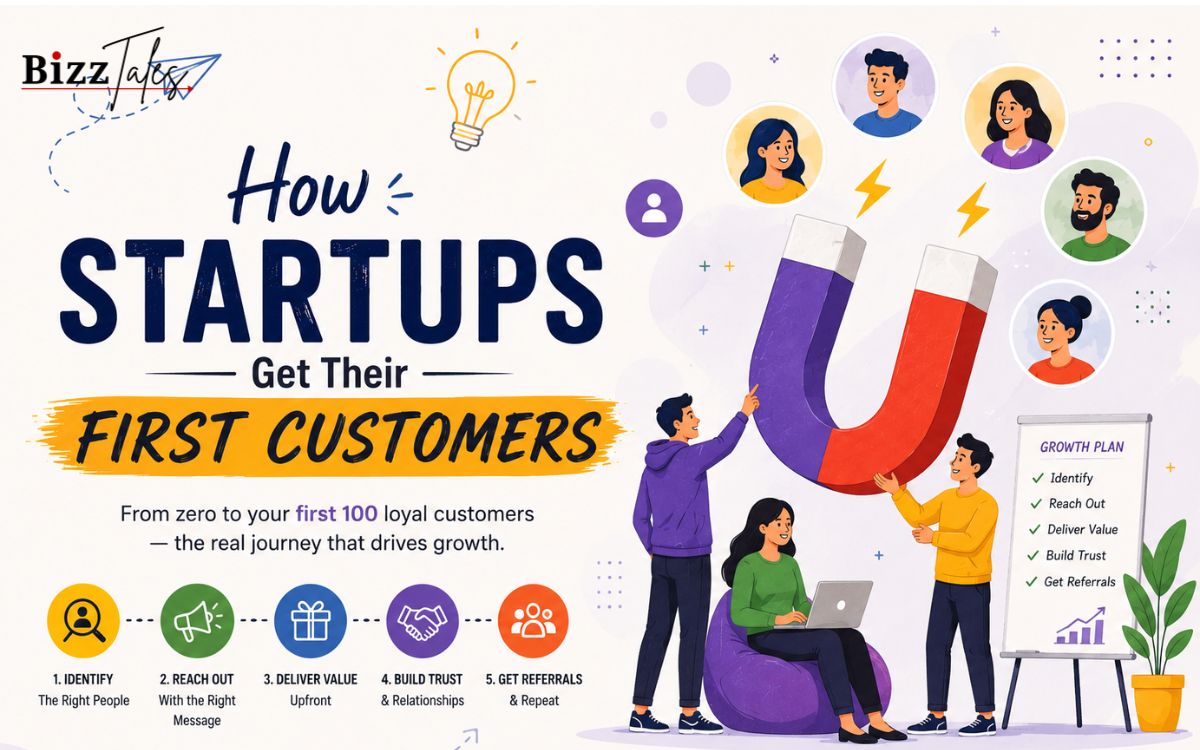
One of the most difficult challenges for all start-up businesses is gaining the initial customers.
People tend to think that getting your business up and running is the toughest bit, but in reality, this is often when the real struggle begins. Your business might have a wonderful concept, appealing branding, and be selling a fantastic product, but without customers-your business cannot last.
This is where a lot of fledglings get irritated. They believe that customers will buy without any effort after getting launched but business growth does not work that way. Customers do not come just by having a website or Instagram page. Startups need to work for it by building trust, exposure and customer bonds.
Initial customers are key because they will help entrepreneurs to validate ideas, create the product, and get paid for it as well as to spread the word. Even some of the biggest brands had as little as few customers before they expanded.
Knowing how startups attract their first customers can help future entrepreneurs a great deal in making the “entrepreneurship road” a lot smoother and realistic.
Start with Solving a Real Problem
The single biggest reason for startups dying early is because they end up building something that people don’t want.
Good startups typically address real pain points for customers. If you truly and consistently deliver value to the customer, then it will be easier and easier to acquire customers.
Before focusing heavily on marketing, entrepreneurs should first ask one important question:
Why would someone actually buy this?
If the product or service is solving a real problem then it is easier to attract customers.
Family and Friends Are Often the First Customers
Getting early customers can be one of the most difficult parts. Often it’s down to friends and family in the early days.
Friends, relatives, classmates, work colleagues and contacts from the local area are often the initial champions. These people have already established a personal relationship with the entrepreneur.
While some are shy about marketing your business to friends and family, it can be crucial to have this early on support during the startup phase.
Many successful firms gained their initial orders just through word of mouth.
Social Media Became a Powerful Tool
Right now, social media is one of the most powerful means for startups to secure early customers.
And they offer companies targeted channels for reaching audiences like Facebook, YouTube and LinkedIn.
All kinds of startups become successful by first producing valuable content, writing stories, publishing their work, and establishing communities online.
Content Builds Trust
We tend to buy from businesses we can trust.
That’s why content marketing is so effective in the world of startups. When you post helpful advice, tips, tutorials or interesting content that educates your audience you will be perceived as a more professional business.
For instance, if an individual owns a digital marketing startup, they could write and frequently post marketing tips on social media to draw customers in naturally.
Starting Small Is Normal
Most business owners believe they require thousands of customers overnight.
The truth is most successful startups began with a very small operation. Many companies started with a customer base of only 5-10, expanding over time.
The objective in the beginning is not large scale. The objective is learning, getting better, and creating good experiences for customers.
Word-of-Mouth Marketing Matters a Lot
Happy customers are free marketers for startups.
Happy customers talk to friends, relatives and colleagues about their experiences. This word of mouth promotion can be incredibly powerful for small businesses.
It is for this reason that during the initial stages customer experience becomes of a greater importance.
Offer Real Value First
A few startups are too obsessed with selling than helping.
The customers of today are smarter and will steer clear from any business that appears to be desperate for sales.
A business will have a higher growth rate if it is giving value first. Providing good content, free information, a good conversation, or a great service, will make customers come to you naturally.
Networking Helps Startups Grow
Business networking is very crucial for startups.
Visit local events, connect through LinkedIn, be part of entrepreneur groups and network with industry professionals may provide customer opportunities.
Many founders of startup launched their first clients with an introduction rather than by advertising.
The Importance of Online Presence
Nowadays, consumers tend to go online before they make their purchase.
A business that doesn’t have a web site might be seen as ‘dodgy’.
At minimum, businesses should maintain:
- a website
- Instagram page
- LinkedIn profile
- Google presence
- proper contact details
Increased professional online visibility greatly enhances trust.
Why Customer Trust Is Important
The most difficult thing faced by new start-ups is trust.
Of course customers tend to trust well known brands more, as they have established an already positive reputation. But startups will have to earn this reputation by providing a reliable product.
Quick replies, honesty, quality service, and good communication can increase the customer’s confidence step by step.
Offer Free Trials or Samples
A common approach for many startups is to use free trials, demos, consultations, or discounted introductory offers to get the first customer.
This minimizes the risk for potential customers and provides more incentives to give it a go.
Consistency Matters More Than Viral Success
There are a few startups who expect everything to go viral immediately.
But for the most part, the majority of businesses build upon incremental growth over a long term rather than the occasional hit of virality.
Consistently posting, improving the product, good communication and keeping busy tends to lead to the strongest prolonged growth rather than a short term flash in the pan.
SEO Helps Startups Get Customers
Another highly effective customer acquisition method is Search Engine Optimization, or SEO for short.
Google ranking for companies: This is one of the best ways to generate traffic to your company over time without having to be completely reliant on paid advertisements.
Blogging, making websites work well and creating relevant material helps to improve the visibility gradually.
Paid Advertising Can Help Carefully
Paid advertising is also employed by some startups to acquire initial customers.
Google Ads, Instagram Ads and many other platforms offer the ability for businesses to target certain audiences.
Yet, beginners should be caution on their spending because if they did not have the right advertising plan, it would be expensive.
Listen to Early Customers Carefully
Customer #1 Feedback is very very helpful.
Shrewd entrepreneurs pay close attention to customer complaints, ideas, and experiences.
By doing this they can upgrade their products and services much more quickly.
Personal Branding Helps Founders
Nowadays people trust founders nearly as much as companies.
Sharing your story, knowledge and experience online helps entrepreneurs develop a stronger personal brand. This indirectly benefits your business in terms of acquiring more customers.
Customer Retention Is Equally Important
Acquiring customers is important, but retaining them is the really crucial thing.
If a customer repeatedly comes back rather than buying just once, a business will grow faster.
Why Many Startups Struggle Early
Most startups die because they give up too soon.
Customer acquisition is a marathon, not a sprint. Trust, exposure and community take time to develop.
Some entrepreneurs give up after a few months unaware that initially most companies develop very slowly.
Learning from Competitors Helps
Analyzing competitors allows startups to identify what customers are expecting.
Successful business people see what works in the marketplace and improve on it, rather than just copying blindly.
Long-Term Relationships Matter
The best companies work on building relationships with the customers in the long-term rather than maximizing gains in the short-term.
Consumers who have confidence in companies will become loyal customers and refer the company to friends.
Conclusion
Getting the first customers is one of the most difficult but most important stages of building a startup.
Successful startups usually grow by solving real problems, building trust, staying consistent, and creating positive customer experiences.
The first customers may come slowly, but those early relationships often become the foundation for future growth.
For upcoming entrepreneurs, the key lesson is simple — businesses do not grow only through products. They grow through trust, visibility, value creation, and consistent effort over time.
FAQs
Why are first customers important for startups?
First customers help startups generate revenue, improve products, and build trust in the market.
How do startups usually get their first customers?
Startups often get early customers through social media, networking, personal contacts, referrals, and content marketing.
Is social media important for startups?
Yes, social media helps startups build visibility, trust, and customer engagement at low cost.
Why do many startups struggle to get customers?
Many startups struggle because they lack visibility, trust, proper marketing, or patience during early stages.
Can small startups compete with bigger companies?
Yes, startups can compete by offering better customer experience, innovation, and stronger personal connection with customers.