It takes more than a compelling product to get noticed. A company may provide superior service, address a real customer need, and still find it difficult to gain traction if the right individuals never hear about it-or aren’t convinced to try it when they do.
Customers, investors, partners, employees and even prospective competitors are scrutinizing your business long before they ever pick up the phone or walk through the front door. They are searching online, viewing social profiles, reading the press, viewing opinions of your leadership team, and measuring consistency in the way you communicate your brand.
So business visibility is no longer just a marketing goal. It’s increasingly a business asset.
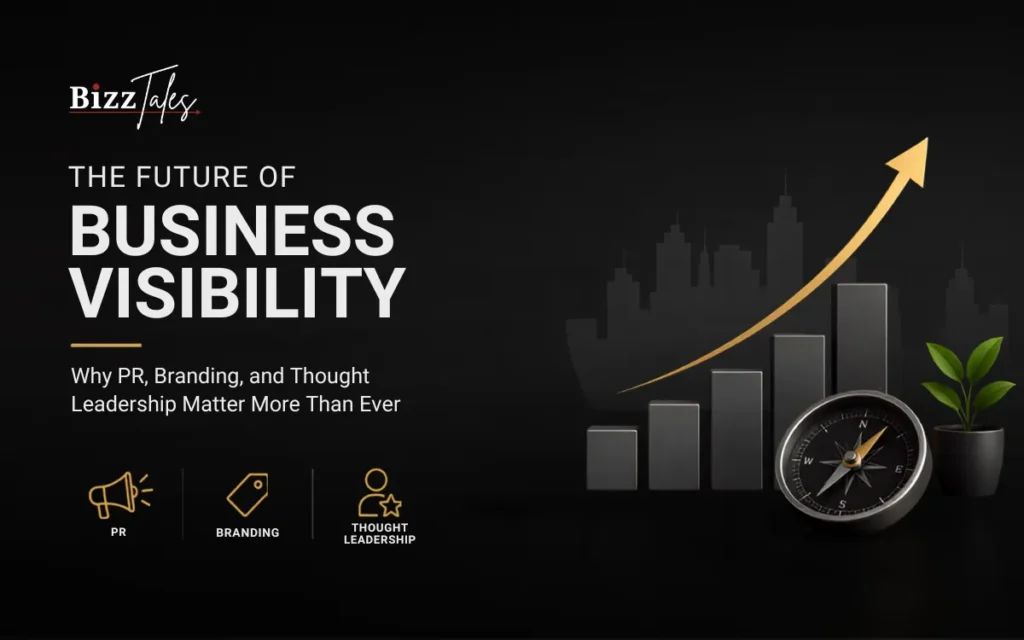
PR, branding and thought leadership each play a role in that equation. PR can lend credibility, branding can turn a company into a household name, though leadership can position executives as trusted experts-working together, these tools can make for a more solid platform for awareness, reputation, acquisition and healthy Business growth.
🎯Get a Free PR & Brand Visibility Consultation
What Business Visibility Really Means Today
Business visibility was traditionally tied to advertising, physical presence or media recognition. The digital economy has vastly increased the number of places where a company needs to be visible to be found.
A prospective customer might encounter a business through:
- A Google search or AI-powered search result
- An article in an industry publication
- A LinkedIn post from the founder
- A podcast interview
- A social media discussion
- A customer review
- A conference or webinar
- A recommendation from an industry expert
Each interaction contributes to the impression a company creates.
And this is why brand visibility is not about seeing and being seen all the time; it’s about being seen in the right places, by the right people, with the right content.
A repeatedly appearing company through trusted channels can seem established even before a prospect talks with its sales team. On the other hand, a company that lacks much independent presence may struggle to dispel doubts in a competitive or high-Consideration market.
Why PR Is Becoming More Important
Public relations provides business with that which advertising cannot do justice to: validation by a third-party.
When a respected magazine, journalist, podcaster, or industry portal wants to talk about a company or its executives, the organization is receiving an outside confirmation of its importance. The audience isn’t hearing what a company says about itself; it’s experiencing it through a third party.
Effective PR can help businesses:
- Build credibility and awareness
- Strengthen corporate reputation
- Support product or company launches
- Create visibility in new markets
- Give sales teams stronger credibility
- Position executives around important industry issues
- Establish a stronger digital footprint
Think about a technology company launching into a saturated B2B market. Its advertising might clarify what its product does. But an interview with its founder on a significant industry problem can do something else: establish expertise, spark debate, and connect a brand with an audience that otherwise might not have seen its advertising.
Any new digital PR coverage is also capable of adding value in a variety of ways, not just as an individual article. Each media mention can be repurposed into a website piece, sales collateral, social media post, profile of senior executives, or a contributor to the wider communications ecosystem.
The goal is not simply to collect media logos. It is to build a reputation that supports the business.
Media coverage becomes more valuable when it contributes to long-term credibility—learn how media coverage builds authority and business growth.
The Growing Importance of Branding
Branding gets a bad rap for being about visual identity: logos, fonts, colors, design. Those aspects are just a part of branding. Corporate branding at its core is the meaning people attach to a company.
A strong brand answers questions such as:
- Who is this company for?
- What problem does it solve?
- Why should customers choose it?
- What does it believe?
- How is it different?
- What should people remember about it?
Consistent positioning and messaging make those answers easier to recognize.
Just think about two consulting firms providing virtually the same service. One has a clear focus, a knowable perspective, a unified message, and a clear demonstration of competence through its website and leadership. The other communicates a different message at every turn.
The first firm is consequently more easily remembered, if, despite having similar inherent abilities, they are not equally contributed to knowledge.
That is the commercial power of a brand. A strong brand decreases uncertainty. It allows consumers to know what a company stands for and see its reason for being.
In the long-term, consistency leads from awareness to familiarity, and from familiarity to trust.
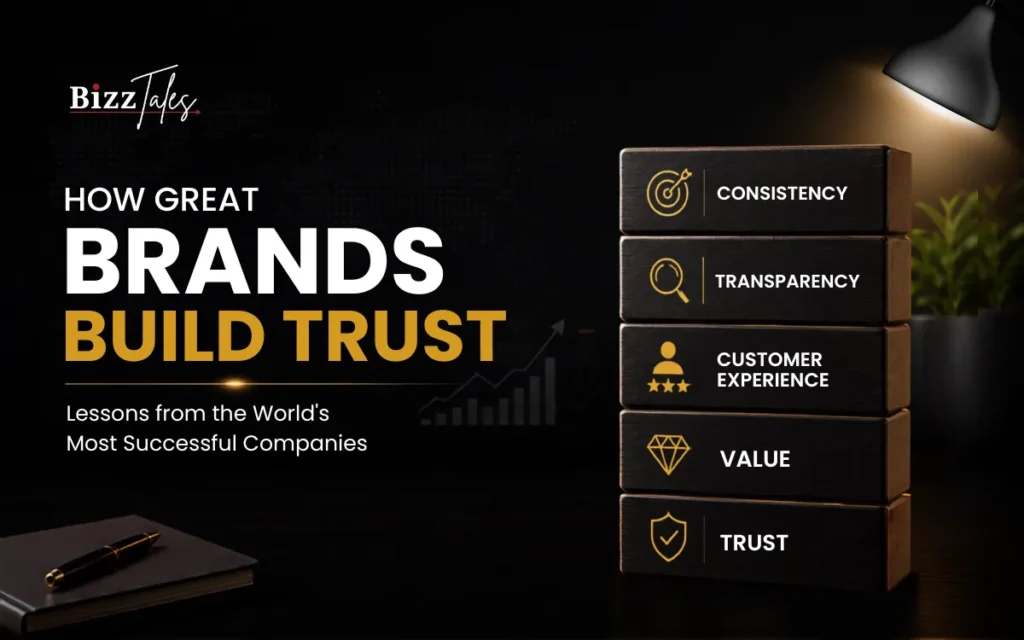
Consistent branding can turn familiarity into lasting trust—explore how great brands build trust.
Thought Leadership: From Promotion to Authority
Thought leadership goes a step beyond content marketing.
Publishing frequently does not automatically make a founder or executive a thought leader. Authority comes from demonstrating useful expertise, offering original perspectives, explaining complex issues clearly, and contributing meaningfully to industry conversations.
A thoughtful thought leadership strategy might include:
- Expert articles and opinion pieces
- Industry interviews
- Podcasts and webinars
- Conference speaking
- LinkedIn insights
- Research-based commentary
- Executive perspectives on emerging trends
- Practical analysis of customer or industry challenges
The difference is important. Promotional content says, “Here is what we sell.” Thought leadership asks, “What can we teach, challenge, clarify, or contribute to the market?”
For founders specifically, this opens a door for creating trust in their knowledge rather than relying solely on marketing at the company level.
A CEO, who constantly guides by telling where the industry is going, discusses knowledgeably with big news and the lessons he or she has learned from an experience can be linked with some domain knowledge. This link can affect the clients, the partners, investors, future employees, and the press.
For executives, turning expertise into trust starts with a strong public presence—explore personal branding for CEOs.
Why PR, Branding, and Thought Leadership Work Better Together
These disciplines are most powerful when they reinforce one another.
PR creates external credibility.
It puts the company and its leaders in credible third-party environments.
Branding creates recognition and consistency.
It ensures that audiences encounter a coherent identity and clear positioning across channels.
Thought leadership creates authority.
It gives executives and brands something substantive to say beyond product promotion.
Together, they create a visibility flywheel.
For example, a founder publishes a well-reasoned perspective on an industry challenge. That perspective attracts media interest. The resulting interview or article strengthens the founder’s authority. The company then shares the coverage through its digital channels, reinforcing its brand positioning. Prospects encountering the business later see not just marketing claims, but evidence of expertise and external recognition.
That is considerably more valuable than treating every channel as a separate campaign.
When PR, branding, and thought leadership work together, they can create lasting credibility—see how PR builds brand trust and supports business growth.
The Role of Digital and AI in the Future of Visibility
The discovery journey is dissolving. Consumers are not only turning to engines or going straight to company websites anymore. They get inspired by social networks, communities, video and podcasts, marketplaces, newsletters and, thanks to chatbots and AI, search has become more conversational.
This shift makes a credible digital footprint increasingly important.
You can’t count on a visitor’s first impression to be your website. Pretend the people who find you in search, come across your information before they ever visit your site.
- What do they read?
- Are your company leaders displayed?
- Is the brand the same everywhere?
- Are there reputable third-party citations?
- Does your company possess credible expertise just by its name?
As AI systems increasingly synthesize information from digital sources, having clear, authoritative, consistent information across the web becomes strategically important.
The future is therefore not about choosing between SEO, PR, social media, or branding. It is about creating a coherent presence that works across the discovery ecosystem.
Common Visibility Mistakes Businesses Make
Several approaches can limit the impact of otherwise strong marketing efforts.
Focusing only on paid advertising: Advertising can generate attention, but it does not replace reputation or authority.
Using inconsistent messaging: If the company’s positioning changes from platform to platform, audiences may struggle to understand what it stands for.
Talking only about products: Businesses that constantly promote features can miss the opportunity to demonstrate genuine expertise.
Ignoring PR until a crisis: Reputation should be built before it is tested. Crisis communication is much harder when there is no established credibility.
Creating content without a point of view: Publishing regularly is not the same as being useful or memorable.
Chasing visibility without credibility: High reach has limited business value if audiences do not believe or remember what they encounter.
How Businesses Can Build Long-Term Visibility
A sustainable visibility strategy does not require every company to become active on every platform. It requires focus and consistency.
Start by defining a clear brand position. Identify the audience you want to influence, the problem you solve, and the ideas you want your company to be associated with.
Next, identify areas of genuine expertise. These should become the foundation for executive content, media commentary, speaking opportunities, and other thought leadership initiatives.
Build PR around meaningful business developments and relevant industry conversations rather than chasing coverage for its own sake. Develop relationships with journalists, publications, podcast hosts, event organizers, and industry communities that reach your target audience.
Then create a repeatable content system. A strong interview, article, presentation, or executive insight can often be adapted into multiple formats without becoming repetitive.
Finally, measure visibility over time. Look beyond immediate clicks. Track indicators such as relevant media coverage, branded search interest, engagement from target audiences, quality of inbound opportunities, executive visibility, and changes in business reputation.
Conclusion: Visibility Is Becoming a Competitive Advantage
The future of business growth will not belong only to companies with the best products. It will increasingly favor companies that can explain their value clearly, earn trust consistently, and remain visible in the places where important decisions are being made.
PR, branding, and thought leadership are therefore not cosmetic additions to a marketing plan. They are interconnected tools for building brand credibility, authority, recognition, and reputation.
Businesses that invest in these areas today can create an advantage that paid campaigns alone cannot easily reproduce: a market presence that people recognize, understand, trust, and remember.
In an increasingly crowded digital world, being good is the starting point. Being visible, credible, memorable, and authoritative is what helps a business get chosen.
🎯Get a Free PR & Brand Visibility Consultation
FAQs
1. Why is business visibility important?
Business visibility helps customers, investors, partners, and talent discover a company and build confidence in its credibility.
2. How does PR improve brand visibility?
PR increases brand visibility by earning credible third-party coverage, strengthening reputation, and reaching relevant audiences.
3. What is the role of branding in business growth?
Strong branding creates recognition, differentiation, and trust, helping businesses remain memorable in competitive markets.
4. Why does thought leadership matter for founders and executives?
Thought leadership positions founders and executives as knowledgeable, trusted voices whose expertise can influence customers and industry conversations.
5. How do PR, branding, and thought leadership work together?
PR builds external credibility, branding creates recognition, and thought leadership establishes authority, creating a stronger long-term visibility strategy.