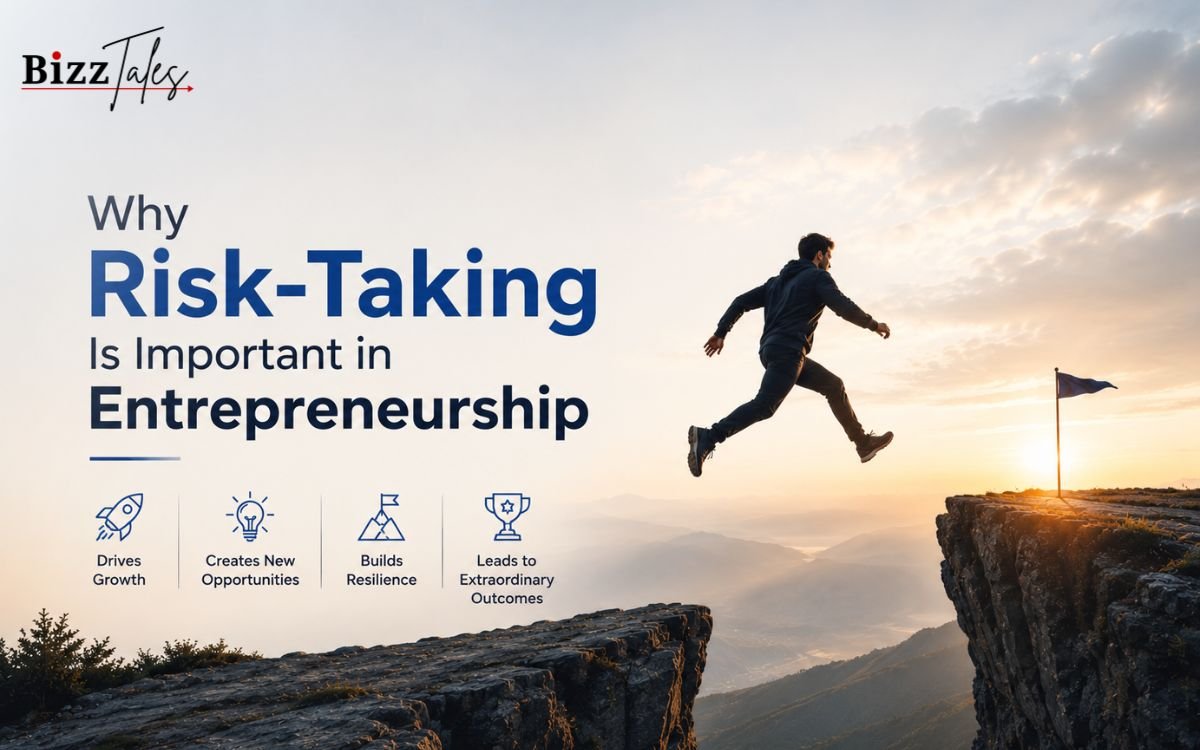
Every good entrepreneurial story starts with one element: risk.
No entrepreneur is successful without embracing the unknown. Be it quitting a secure job, putting savings into a new venture, introducing a new product to a marketplace, or dueling for market share, entrepreneurship always involves risk.
Everyone dreams about creating their own businesses, becoming self-reliant, and having their own popular brands. However, very few will do anything about it because people are afraid of failing, of losing, of being criticized and of not knowing ahead of time.
This is a point of divergence for entrepreneurs.
Successful entrepreneurs embrace risk rather than fear it. They recognize that the risk can be a chance to thrive in the long run.
Of course taking risks also doesn’t mean to act without being careful. Intelligent entrepreneurs assess the riskiness of their potential actions before they do anything. They know that no risk-taking is most likely leading to no progress anyway.
In today’s rapidly evolving world, taking risk has become one of the most essential virtues in new entrepreneurs.
Entrepreneurship and Risk Are Connected
It is always entrepreneurship and risk.
Business, on the other hand, always gets into an environment of unpredictable outcomes as it is prone to fluctuation in profit from the time it is running than the other type of employment salaried jobs where the earning is normally predictable.
Entrepreneurs face challenges like:
- Market competition
- Customer behavior changes
- Financial pressure
- Technology disruptions
- Economic uncertainty
There is nothing in business owner could be sure of.
This very uncertainty is indeed a risk.
Entrepreneurs, however, still press on, since they believe the potential benefits are better than the prospect of failure.
Without risk-taking, Amazon, Tesla, Apple, and several Indian startups would never come into existence today.
After all every company was once just an idea.
Why Most People Fear Risk
In general, mankind tends to prefer the safe instead of the uncertain. Most humans instinctively avoid risks.
We all fear losing money, our reputation, our comfort, our security.
In various households (in fact, majority of Indian household), secure jobs are seen more as being safer than looking at an entrepreneurial venture. As most of the child’s first help from parents is in probably getting him a regular paid employment due to low nature of uncertainty involved in a regular appointment;
Business, on the other hand, can sometimes be erratic.
This social attitude discourages a large number of gifted persons to want to develop entrepreneurial concepts.
Are also heavily affected by the fear of failure.
They are worried what their family will say if their business doesn’t work.
Nevertheless, the triumphant entrepreneurs have realized that it is a path to learning and improvement.
They do not let fear totally manage their decisions.
Risk Creates Opportunities
Another fundamental reason why risk is important is that most opportunities are found beyond our comfort zones:
If traders keep playing safe and predictable games, they seldom produce anything unusual.
Large business ventures frequently come with an element of uncertainty.
For example:
- Launching a new technology
- Entering an unexplored market
- Investing in innovation
- Creating new business models
- Expanding into global markets
These choices are risky, but open the door to enormous growth.
In general, the entrepreneurs who take no risk tend to stay in small businesses.
It’s not easy to grow. You need courage.
Innovation Comes From Risk-Taking
There is no innovation without risk.
Any new concept involves some degree of uncertainty, as no one fully understands the reactions of customers or markets.
When a company launches a new product or service, there will always be a risk that it will not succeed.
However, it is innovation that fuels business.
A fear of innovation can make each individual firm be quite obsolete.
Established entrepreneurs continuously try new things, refine, optimize, and evolve because they recognize that calculated risk helps their business remain competitive.
Today, savvy entrepreneurs understand that their greatest risk is not changing.
Entrepreneurs Think Long-Term
All entrepreneurs differ from Normal people in that Entrepreneurs think in the Long-term:.
Most consumers gravitate towards short-term security.
Long term potential is what entrepreneurs always look for.
If you think about it, quitting a good and stable jobs to start a business sounds crazy. But it can lead to financial freedom and opportunities if the business is successful.
A focus on the long-term enables entrepreneurs to make choices that discourage others.
They are prepared to give up ultimate comfort in the short term for greater pleasure in the long term.
Risk Builds Confidence
It helps to increase one’s confidence to take risks.
Each time entrepreneurs face uncertainty and survive the hardship, their mind grow stronger.
Failures from risks still find a way to teach us lessons.
Over time, entrepreneurs develop:
- Better decision-making abilities
- Problem-solving skills
- Emotional resilience
- Business understanding
- Leadership confidence
- This benefits so much.
Those who never take risks continuously beat themselves up, not realizing how capable they really are.
The entrepreneurs develop through action.
Calculated Risk vs Careless Risk
You should also realize that entrepreneurs do not put their lives on the line by taking blind shots.
There’s a very big difference between calculated risk and reckless risk.
Calculated risk involves:
- Research
- Planning
- Understanding consequences
- Financial preparation
- Market analysis
Careless risk is where individuals make decisions based on emotion rather than rational knowledge.
Smart entrepreneurs will investigate different situations before they spend a lot of their time and money.
They are aware of potential negatives and see potential positives.
Good risk is not haphazard but strategic.
Failure Is Part of Risk-Taking
Few every risk, there is success.
From time to time, no matter how well you plan and despite best efforts, businesses can go bust…
Nevertheless, failures themselves are offers a lot of learning experiences.
Many entrepreneurs who today are successful had to go through years of “trial and error”.
Failure teaches lessons about:
- Customers
- Markets
- Financial management
- Leadership
- Operations
- Competition
Those who bounce back from setbacks have a keener intellect.
That is why a lot of the investors actually respect entrepreneurs who can learn from previous mistakes.
Risk-Taking Creates Competitive Advantage
Companies who regularly take calculated risks tend to get ahead of the competition.
Many companies are considered industry leaders because they’re more responsive than their competitors.
For example:
Any companies that went digital early on were gaining huge competitive advantages.
They found that: Companies that provided a online service market shifts experienced high growth.
They were entrepreneurs who have perceived trends earlier then avg by observing new and upcoming trends in day to day life. The entrepreneurs used to be market leaders also.
Time-limited opportunities. We believe that taking quick chances is sometimes much more important for firms. Only a rapid response can seize the opportunities that often disappear when markets become saturated.
In business, if you wait too long it is worse than the risk…
Financial Risk in Entrepreneurship
The economic problem of money is the greatest anxiety of all entrepreneurs.
Establishing a business involves investing, with uncertain results.
This financial insecurity keeps many people from starting a business.
But the triumphant entrepreneurs master the art of how to deal with financial risks wisely.
They:
Start small
Control expenses
Test markets
Maintain cash reserves
Avoid unnecessary spending
Sound financial planning helps minimize the risks involved in business risk.
Because looking after the downside of a risk is equally crucial as exploring the upside, risk management is just as significant.
Risk Helps Entrepreneurs Discover Their Potential
People often do not realize their potential because they have never challenged themselves.
Entrepreneurship entices people to try and find answers, to make choices and to quickly learn.
It allows entrepreneurs to uncover abilities they didn’t previously possess.
There are some who can be wonderful leaders.
Some have excelled at communicating.
The remaining2become creative problem-solver.
Increases your comfort with taking risks, which forces you to grow more.
Modern Entrepreneurship Requires Bold Thinking
in the current and changing business environment.
Over the past years, technology, artificial intelligence, digital marketing, e-commerce and global competition are revolutionizing industries.
Hustlers that do not adapt are not in business long.
Modern founders must be willing to:
- Experiment with new technologies
- Enter competitive markets
- Build online businesses
- Adapt quickly to trends
- Make bold strategic decisions
Eventually, successful entrepreneurs will be those who are willing to adapt forever.
Why Young Entrepreneurs Should Not Fear Risk
Young entrepreneurs tend to have a better capacity to carry risk.
They usually have:
- Fewer responsibilities
- More energy
- Greater adaptability
More time to recover and learn from setbacks
Thus, youth is the perfect opportunities for experimentation and entrepreneurship.
Most successful entrepreneurs began young because they had the daring to make risks that others didn’t.
Certainly, this still needs to be calculated accurately.
Nevertheless, fear must not prevent brilliant people from investigating possibilities.
Conclusion
Engaging in risk is one of the most important aspects for any entrepreneur.
No risk equals no growth, no evolution, no competition…
Great entrepreneurs accept that there will always be a certain level of uncertainty. Rather than trying to dodge the bullet completely, they will learn to corner smart.
Risk-taking provides opportunities, inspires confidence, stimulates innovation, and enables entrepreneurs to unlock their fully potential.
Of course no risk always guarantees a successful outcome. But not risking anything can at the very least guarantee mediocrity.
Entrepreneurship is about rewarding those entrepreneurs who like to test new waters and take risks. The action of proceeding and learning from both your wins and losses.
In a world that is changing so rapidly, smart risk-taking is not just a matter of interest for entrepreneurs.
FAQs
Why is risk-taking important in entrepreneurship?
Risk-taking helps entrepreneurs create opportunities, innovate, grow businesses, and achieve long-term success.
Do successful entrepreneurs fear risk?
Yes, but they learn how to manage and calculate risks instead of avoiding them completely.
What is calculated risk in business?
Calculated risk involves research, planning, and understanding possible outcomes before making decisions.
Can businesses succeed without taking risks?
Very limited growth is possible without risk. Major business success usually requires bold decisions and innovation.
Is failure part of entrepreneurship?
Yes. Failure is common in entrepreneurship and often provides valuable learning experiences.
How can entrepreneurs reduce business risks?
Entrepreneurs can reduce risks through planning, market research, financial discipline, and continuous learning.