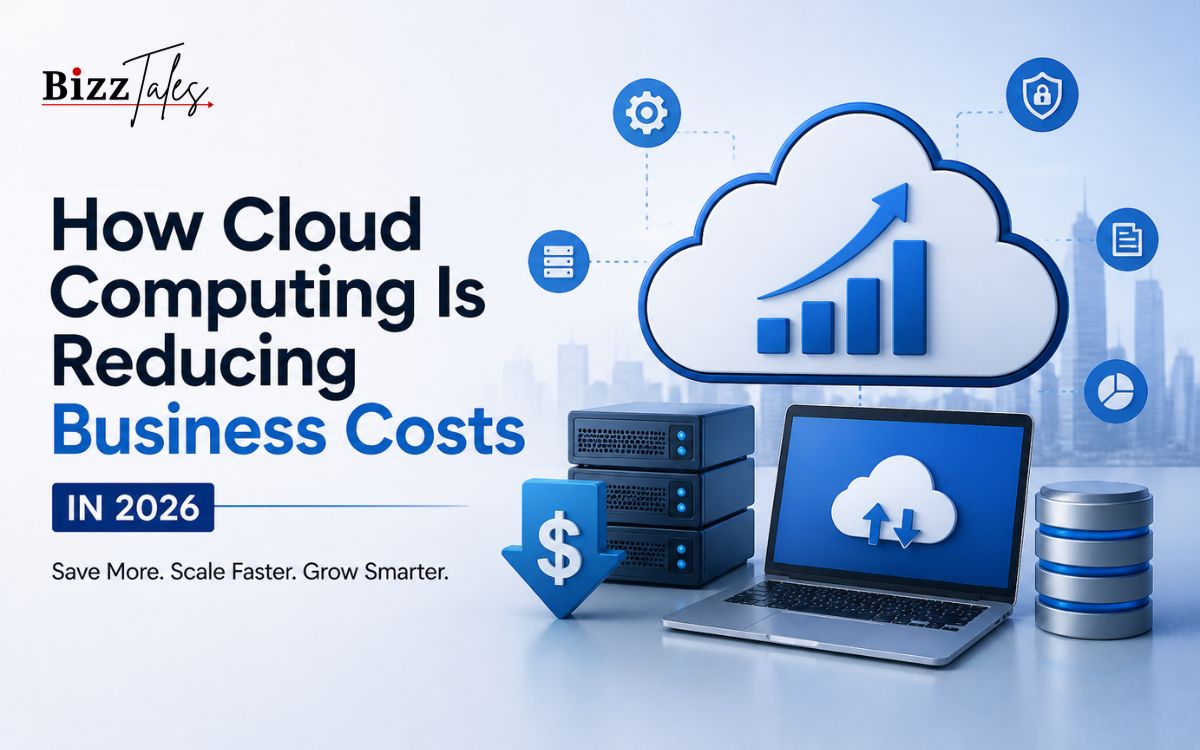
Business in 2026 goes beyond just profits, it’s about maximizing costs while keeping the business efficient. Traditional infrastructure-based businesses are outdated, expensive and hard to scale, and here’s where cloud computing came to the rescue.
Cloud computing is about to revolutionize the way we run our businesses as companies are beginning to leverage the internet and replace expensive physical infrastructure with easy-to-use services. Startups to enterprise businesses are shifting their businesses to the cloud to minimize operational costs and improve productivity and to compete in the rapidly changing digital era. The real benefit of the cloud service is it offers enterprise-level technology at a fraction of its cost, even for small businesses.
What is Cloud Computing?
Cloud computing is essentially about delivering computing services such as servers, storage, databases, networking, software and so forth over the Internet. Businesses don’t have to worry about purchasing and installing hardware and servers rather they access services on demand using the cloud provider. Popular cloud platforms such as Amazon Web Services (AWS), Microsoft Azure and Google Cloud Platform, have greatly simplified cloud adoption, making it possible for companies to leverage this technology without any hassle. Ownership to access is exactly what makes the cloud service so cost-effective.
Why Traditional IT Infrastructure is Expensive
Before we discuss how cloud computing is reducing business costs, we should be aware of how traditional IT infrastructure affects our business costs. Companies relying on traditional physical infrastructure, have several challenges. The main ones are as follow:
High initial capital cost of purchasing servers and hardware.
Ongoing costs for maintenance and upgrades.
A need for trained IT professionals to maintain systems.
The risk of downtime and failures.
Limited scalability when dealing with sudden traffic surges.
All these costs add significantly to operational expenses, limiting your flexibility.
Key Ways Cloud Computing Reduces Business Costs
- Elimination of Capital Expenditure
This is the most significant cost saving for many businesses. Companies no longer need to invest large sums of money in buying new servers and building data centers.
They can avail cloud services on a pay-as-you-go basis which allows them to utilize the budget better.
- Pay-As-You-Go Pricing Model
The usage-based pricing model that all cloud platforms follow, helps businesses save costs as they only pay for the resources they actually use such as storage, compute power and bandwidth.
This prevents overspending and allows startups to efficiently scale their spending according to business needs.
- Reduced Maintenance and IT Costs
Traditional servers require regular updates and monitoring for which you often need to hire IT professionals, adding to your overall costs.
The cloud provider takes care of system updates and maintenance of your servers, reducing the need for a full-time IT team.
- Scalability Without Additional Investment
When businesses see an increase in demand, the need to purchase more hardware arises which will then sit idle during low demand periods.
Cloud computing lets you scale your usage instantly according to your business needs, preventing you from paying for capacity you are not using.
- Lower Energy and Operational Costs
The amount of electricity and cooling required for running physical servers is massive and can add up very quickly.
Cloud data centers are typically optimized for efficiency, which will lead to fewer energy bills.
- Improved Collaboration and Productivity
Employees are enabled to share information regardless of their location, thus minimizing the need for physical meeting places and traveling.
Employees have easier access to data and applications as they are available from any corner of the world.
- Enhanced Data Security and Backup
Data loss or breach could cause devastating financial and reputational harm to any business. The security features provided by cloud providers not only protect you from threats, but they also create automatic backups.
Real-World Business Applications
E-commerce platforms utilize the cloud for handling increasing traffic volumes during holiday sales. Financial organizations can now store their vast data in the cloud for security and analysis purposes. Startups can efficiently utilize the cloud for launching their products faster with reduced expenses. Companies in India have now widely adopted accounting, customer relationship management (CRM) and inventory management systems on the cloud for seamless business operation.
Cloud Computing Models That Help Save Costs
- Infrastructure as a Service (IaaS)
This service offers servers, virtual machines and storage at reduced costs by replacing your physical hardware.
- Platform as a Service (PaaS)
This provides the tools for developing software application at the cloud and helps save money spent on buying development platforms.
- Software as a Service (SaaS)
This gives you access to ready-made software applications over the internet without installation or the need to maintain the software itself.
Challenges of Cloud Computing
Although, there are plenty of benefits, you need to be aware of some disadvantages too:
Internet Dependence.
Vendor lock-in issue.
Data security worries.
Despite these challenges, careful planning and necessary precautions make it manageable for every business.
Future of Cloud Computing in Business
Cloud computing will continue to experience rapid growth over the coming years. AI, Machine Learning, Big data analytics and other technologies will continue to be an integral part of the cloud. Companies who shift to cloud services sooner, will lead the race by achieving significant advantages in both cost savings and innovation.
Conclusion
The shift towards cloud computing is not just a technological enhancement, but also a business strategy for profitability. Cloud computing reduces the infrastructure expenses of the businesses and provides scalability and enhanced productivity. It is an undeniable trend that companies who adopt the cloud technology efficiently and strategically will definitely be winners in this highly competitive business market.