Software usage has been transformed over the last ten years. Previously software used to require buying, installing, and high upfront payments from business and individuals. Updating required hardware investment and effort, and using multiple devices was not easy.
Currently, the majority of modern software can be.
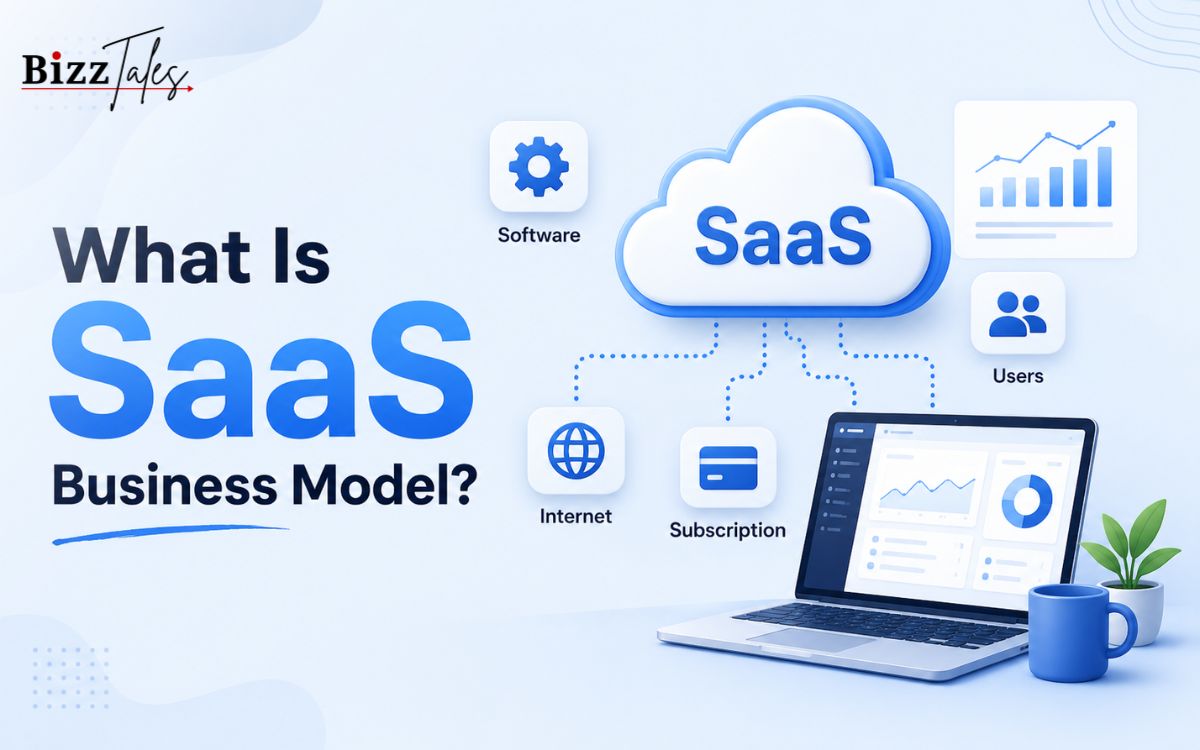
Users pay for the access to application on a monthly or yearly basis instead of buying software forever and get install it on their local machine. It’s called SaaS (Software as a Service).
The SaaS industry is one of the most rapidly expanding areas of the world’s technology industry. Many of the largest and most successful companies operate by providing their services as SaaS products. Companies rely on SaaS products to manage everything from communication, and administration, to accounting, marketing, customer support, human resources, cyber-security and hundreds of other tasks.
For entrepreneurs, SaaS has become one of the most attractive business model thanks to its scalability, recurring revenue and long term growth prospects.
It is more than just a lesson for startup founders to learn the business lessons behind the SaaS business model. If you want to learn what the future of software and digital business is, it would be interesting to understand how this business model works.
What Does SaaS Mean?
Software as a Service refers to providing software online rather than the user having to install it forever on his/her computer.
You want for users to login via a browser or app, to be able to use the service over the net.
The software provider handles:
- hosting
- maintenance
- security
- updates
- infrastructure
All the customers have to do is to register and then they can start using the software that is simple to use and instructions on how to use are also provided. They do not require any costly hardware or any required knowledge of computers.
This enhances the software to be more open, adaptars and cost efficient unlike the traditional software business models.
How the SaaS Business Model Works
The SaaS model. Subscription is the basic form of the SaaS model.
Provides monthly or yearly billing rather than charging everything up front as a large one off fee.
For example, a customer may pay every month to access:
- Project management software
- CRM software
- accounting software
- video conferencing platforms
- marketing tools
- design platforms
C customers keep making payments, then they keep having access.
This setup often carves out each time revenue stream for a business.
Why SaaS Became So Popular
The greatest reason why SaaS is expanding is ease.
Businesses no longer want the pain of manual software installation onto a number of systems.
A SaaS’ platform is available anywhere that has an internet connection.
This has become particularly relevant following the proliferation of remote work and hybrid work models worldwide.
Can be used at work, at the home, or on the move. This can all easily be done with no technical experience.
Lower Initial Costs
Often traditional software demanded large initial investments.
On occasion small firms could not afford enterprise software because of prohibitive licensing fees.
This refashioned that entirely: the SaaS model
Customers pay smaller, periodic fees rather than enormous payments up front
This thereby brings powerful software within reach for startups, freelance and small businesses that previously didn’t have access to them.
Recurring Revenue Makes SaaS Attractive
Recurring Revenue – For entrepreneurs and investors, one of the greatest benefits of SaaS.
Old-style business sometimes faces a battle to gain new customers on an ongoing basis and prosper.
How do SaaS companies make money? They continue to sell revenue generated from subscribers.
As the customer base increases, revenue will become more foreseeable and consistent.
It’s also one of the big reasons why investors can have a warm fuzzy for SaaS companies.
Forecastable cash flow generates more valuable business in the long run.
Scalability Is a Major Advantage
More scalable for SaaS IT companies than for most traditional businesses.
Subsequently it is easier to provide “software” to subsequent “customers.”
A SaaS platform could support a myriad-or perhaps even a billion-of users globally on the same basic technology.
This scalability opens up a whole world of growth possibilities.
Examples of SaaS Products
Any industry now employs SaaS products.
Businesses use SaaS solutions for:
- customer relationship management
- email marketing
- communication
- accounting
- team collaboration
- cybersecurity
- content creation
- analytics
Numerous companies use multiple SaaS tools to carry out their daily operations.
Why Businesses Prefer SaaS
Companies love SaaS for the simplicity.
Organizations can outsource management of costly IT infrastructure to professionals in the cloud.
Enabling businesses to concentrate on development rather than software upkeep.
Automated updates saves technical difficulties and downtime.
The Importance of Customer Retention
The importance of retaining customers in SaaS businesses cannot be overemphasised.
Since earnings is generated from subscriptions, Firms can’t afford to half-hearted customers.
If customers cancel subscriptions revenue will decline.
This is why successful SaaS companies invest heavily in:
- customer support
- user experience
- product improvements
- onboarding
- training
To achieve this, long term customer relationships become essential.
- Churn: The Biggest SaaS Challenge
- Churn may be the most important SaaS metric.
- Churn. This is used for customers leaving or cancelling services.
If you constantly keep new customers, high churn can dramatically slow down your growth.
Churn is frequently the biggest priority for SaaS companies.
Product-Led Growth
A good handful of today’s SaaS companies have adopted a product-led growth approach.
Customer gets first hand experience of the product rather than depending on the sales team.
Many free trials and freemium business models exist.
The user becomes aware of the software and enjoys it so much that, over some time, he/she considers upgrading to a paid plan.
As a result, this saves often on customer acquisition costs.
SaaS and Cloud Computing
One of the biggest drivers behind SaaS expansion was the emergence of cloud computing.
Serverless infrastructure enables all software guys to provide products on a global scale, without expecting customers to handle hosting servers in their arms.
This leap in cloud technology made Software as a Service more feasible, robust and scalable.
There would be no modern SaaS Industry existing without the presence of the cloud computing.
Why Investors Love SaaS Startups
Investors often view SaaS as a class of start-up companies that offers the most promising investment appeals.
Several factors contribute to this:
- recurring revenue
- scalability
- global reach
- high profit potential
- predictable cash flow
Effective SaaS businesses can scale quickly while remaining comparatively lean.
Such combination makes this business model very attractive.
Challenges of the SaaS Business Model
SaaS is however by no means a magic solution.
SaaS products require large investments in infrastructure, R&D, security, sales and marketing to be successful.
Competition is equally fierce.
There are literally thousands of SaaS applications competing in each industry.
It has to be strong value proposition or distinct differentiator in order to get a chance to succeed.
The Role of Artificial Intelligence
Artificial Intelligence as a game changer in SaaS.
Today’s SaaS-based solutions are incorporating AI/ML features to enable automation of processes, deliver valuable insights, to assist the customers with support, and much more.
AI enabled SaaS products are currently the fastestgrowing part of the software market.
There is an increasing demand for AI automation tools from companies.
SaaS Opportunities for Entrepreneurs
SaaS has the potential to be advantageous to entrepreneurs.
There are still a lot of business problems for which there are no effective software solutions.
If you can pinpoint the pain and develop a useful SaaS product, you have the makings of a successful business.
The best SaaS companies do one thing and do it very well before they ever try to do more.
The Future of SaaS
It is anticipated that these features will are positive for the SaaS industry with.
Expect there’s a growth in demand for the cloud-based software solutions as the business gets more digital.
With the advent of new technologies like AI, Automation, Machine learning and big data analytics will lead to further opportunity’s.
What is the future of software? In a nutshell: subscription-based, cloud-enabled and smarter.
Conclusion
The SaaS business model has transformed how software is delivered, purchased, and used worldwide.
Instead of expensive installations and one-time purchases, businesses now access powerful software through affordable subscription plans.
This model benefits both customers and providers. Customers gain flexibility, affordability, and convenience, while companies enjoy recurring revenue and scalability.
Although building a successful SaaS business requires significant effort, the rewards can be substantial. Many of the world’s most valuable technology companies operate using SaaS principles.
For entrepreneurs, understanding the SaaS business model is increasingly important because it represents one of the most powerful and scalable business opportunities in the modern digital economy.
FAQs
What does SaaS stand for?
SaaS stands for Software as a Service, a model where software is delivered through the internet on a subscription basis.
How do SaaS companies make money?
Most SaaS companies generate revenue through monthly or annual subscription plans paid by customers.
Why is SaaS popular?
SaaS is popular because it is affordable, easy to access, scalable, and requires minimal technical maintenance from users.
What are examples of SaaS products?
Examples include software used for CRM, project management, communication, marketing, accounting, and collaboration.
Is SaaS a good business model?
Yes. SaaS is considered one of the most scalable and profitable business models because of recurring revenue and global growth potential.