
There have been several changes over that the startup scene underwent in the last two decades. A few years ago, the start-up activity was not considered to be encouraging as a career choice since it was felt to be more risky than a conventional job. Most young boys and girls preferred to study engineering, medicine, banking and joining the government services.
However, this is very different at present.
India ranks as one of the world’s largest startup ecosystems, within which is been incubated this number of unicorns, with so many entrepreneurs starting up in so many sectors. Originators are building businesses serving millions of customers, raising billions of dollars investment- in e-commerce, fintech, edtech, SaaS etc.
The record of such businessmen motivated new generation of entrepreneurs. Their stories of entrepreneurship highlighted that successful business could be prospered by entrepreneur raised from the solid ground of daily life thoughts and an earnest attitude.
Though every entrepreneur’s story may be different but theone thing they share in common arequalities like tenacity, risk-taking ability, ingenuity, endurance, creativity, candor, positive approach and love for innovation.
When one observes some of the amazing startup entrepreneurs from India, what lessons can you learn from their lives that could hold a message for the entrepreneurs to be?
Sachin Bansal and Binny Bansal – Flipkart
No matter which topic we discuss in regards to India’s start-up revolution we can’t seem to stop bringing up the story of Sachin Bansal and Binny Bansal.
These 2 founders launched Flipkart in 2007 with the intention to bring ease in online purchasing for Indian customers.
That time e-commerce India was an emerging field as people weren’t ready to purchase online. Internet penetration levels weren’t high as we have today, there were very few digital payments and customers weren’t use to this concept of online shopping.
However, customer experience was one such area in which Flipkart put lots of efforts into: an example being the usage of cash on delivery which was a great way of winning customers confidence.
In due course, Flipkart became one of the largest e-commerce enterprises of India and helped to create the digital commerce ecosystem in the country.
Follow their example. Entrepreneurs should try to sense the true local needs and come up with solutions to those problems.
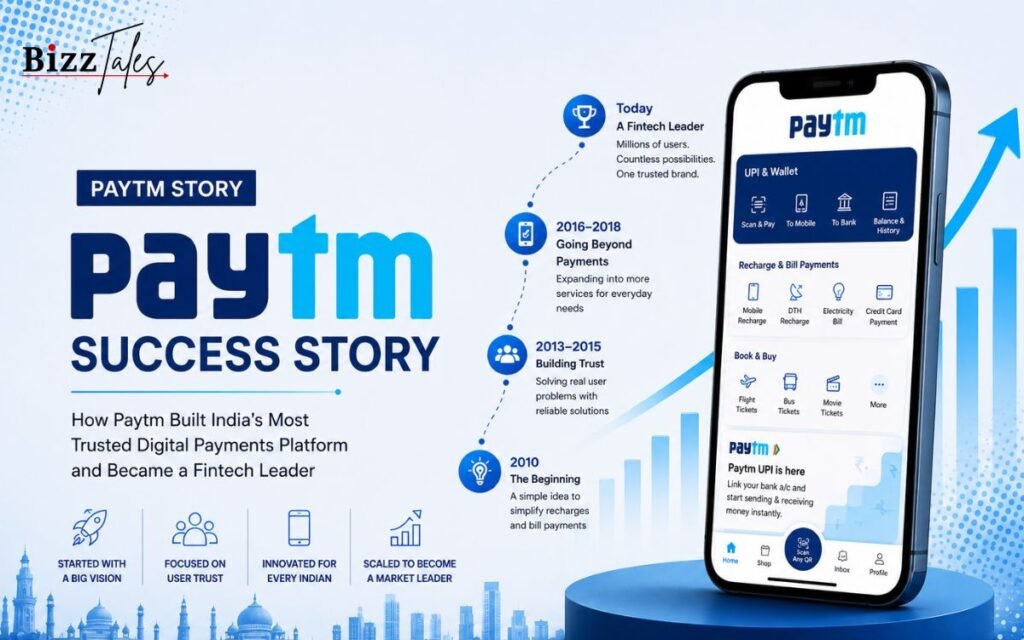
Vijay Shekhar Sharma – Paytm
Vijay Shekhar Sharma is one of the most famous startup founder in India.
Coming from the middle class family Sharma built PayTM, one of the biggest digital payment platform in India.
The business expanded from mobile recharges into payments, and then moving into banking, commerce and financial services.
During the first phase of the digital payments revolution in India, Paytm secured a lot of a ground too.
This is an example of Sharma’s willpower and adaptability. The company was still able to ply through though the competition was high with changing rules governing the business.
His success illustrates the ability entrepreneurs have to recognize shifts induced by the major technological revolutions.
Bhavish Aggarwal – Ola
Transportation in India was revolutionized by Bhavish Aggarwal.
He began Ola to derive it for people.
Having a safe means of transport on hand before Uber was a nightmare in several different cities.
Ola harnessed technology to move: innovations that connected car owners and customers through apps.
The company saw tremendous growth and is now one of the leading mobility platform in India.
Aggarwal’s entrepreneurial activities clearly reflect how the measurement of inefficiencies in our day-to-day functioning is often the first step in designing scalable solutions.
Falguni Nayar – Nykaa
The most inspiring start-up story in India is Falguni Nayar’s.
Building on an successful career in investment banking, she left to establish her own brand, Nykaa in her 50s.
Since there is an assumption that you have to be young to be an entrepreneur, Nayar said:
Nykaa which focused on beauty and personal care products established a trusted e-retailing channel for the Indian consumers.
The company has successfully combined commerce, branding and the customer experience in order to bring forward one of the biggest successes ever seen in the Indian startup bubble.
Her growth shows that age is no just in start-up business.
Nithin Kamath – Zerodha
We are talking about Nithin Kamath who revolutionized how trading is done in India with Zerodha.
Previously, the cost of access to an age-old broker was to provide and have a lengthy procedure.
Zerodha simplified investing more than ever before at a lower price and in a user friendly technology.
This has helped the company to establish itself as India’s biggest stock broker with little outside funding.
Excellent bootstrap. Kamath is a great example of how much can be achieved with self-funding and stockpiling.
So his achievements demonstrate us that a startup doesn’t just always necessarily need a lot of cash to be one of the big players in a specific industry.
Ritesh Agarwal – OYO
Ritesh Agarwal, the youngest successful startup founder of India.
He founded OYO, setting benchmarks for budget hotels.
A lack of increasing customer satisfaction or commonly referred to as the hospitality industry.
OYO has centralized.. Technology, branding, and uniform operating standards across properties.
After all the hurdles and considerable amount of aggressive interrogation, the company still continues to be known as a Start-up in India.
Agarwal story is a tale of hunger, growthpain, playing to win.
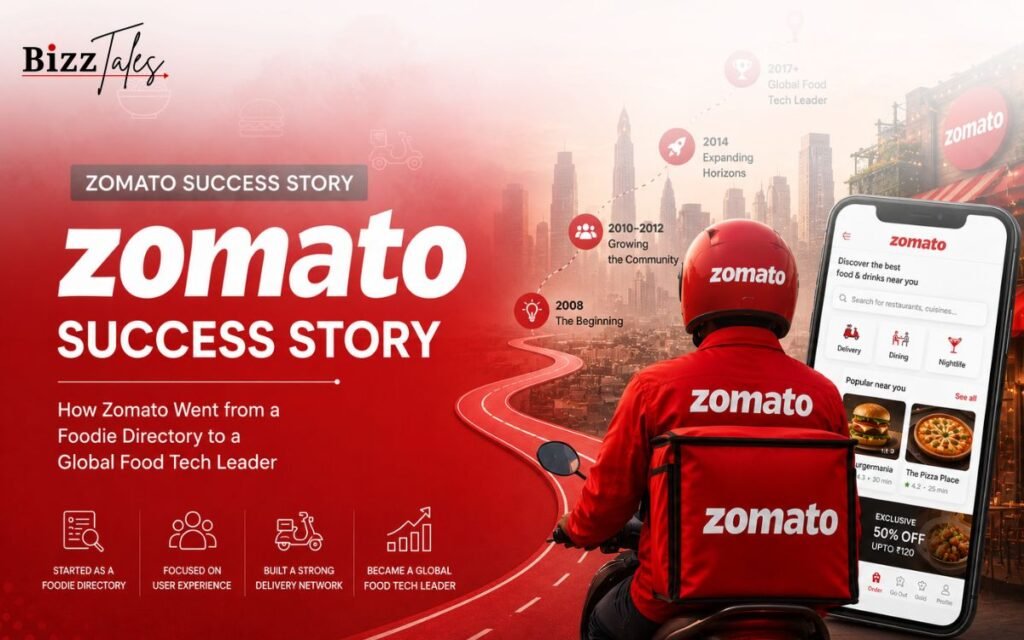
Deepinder Goyal – Zomato
Deepinder Goyal has transformed how people order food for delivery and look for a restaurant.
On the helm of the company, which he started up as one of his ventures, he set out to clear the spade of a common problem that of finding restaurants with menus a great deal easier.
Eventually the website has dawned as one of the top most food delivery service provider in India.
Fast-paced competition, changing consumption patterns and operational complications have been some of the hurdles faced by Zomato in its growth path.
Goyal’s way of presenting unmindfully illustrates the importance of small problem solving, which enables innovative entrepreneurs to find billion dollars business opportunities.
Peyush Bansal – Lenskart
Lenskart was launched by Peyush Bansal reforming the eyewear industry completely by giving it a contemporary image.
The main strength of the company was that it integrated the technology, the webportal along with the physical stores in order to upgrade the purchase dimensions for the consumers.
Following the example set byAmerican firms such as Warby Parker , in other words, Lenskart has since grown into one of India’slargest consumer brands by being innovative-and focusing on “the customer.
The Bansal saga is a classic case of how an emerging technology can breakopen a mature industry.
Kunal Shah – CRED
Kunal Shah has pioneered new methods of conducting business.
Shah created CRED which is essentially a platform designed to motivate good credit card users.
What makes him different from other entrepreneurs is a different mentality and consumer consciousness.
Many entrepreneurs have adopted him as their role model because he highlights the importance of long term value creation than trends of the present.
What Makes These Founders Successful?
In spite of the differences in their industries, there are some similarities among these founders:
The real issues they managed to pinpoint.
- They focused on the customer requirement.
- They developed.
- They were resilient through difficult times.
The one thing they got spot on were thinking long term.
We know also that no big success has ever been achieved in 6 months.All those entrepreneurs spent years to innovate, get feedback, learn from their lessons, make mistakes and upgrade themselves.
The Role of Failure in Entrepreneurship
Some people have the wrong impression that all the good founders had it easy.
In the real world, you will have setbacks.
Funding problems, competition in the market place, operational issues, economical downturns and customer red tape mainly.
Great entrepreneurs take lessons from failures; rather than letting them define the course of their lives.
Sometimes, their resilience can be their greatest gift.
Why India Is Producing More Startup Founders
India’s startup industry is very developed.
Several factors contributed to this growth:
- increasing internet penetration
- digital payments
- smartphone adoption
- government initiatives
- investor interest
- growing consumer markets
Such circumstances provided opportunities to entrepreneurs from various fields.
Incoming fields that could produce the next set of successful founders-artificial intelligence, climate tech, SaaS, healthcare, deep tech are all regions that should be tracked.
Lessons for Aspiring Entrepreneurs
Stories of successful Indian founders can teach us…
Begin by tackling real-world problems.
Prioritize the customer experience.
Think long term.
Be flexible.
Teams can be built to membership, competency, issue, challenge, task, assignment, or level.
Keep at. (Even if it seems like no progress is being made)
The most important thing to remember is that entrepreneurship is a long-term game not a short-term game.
Conclusion
India’s startup world has produced some of the world’s most inspiring entrepreneurs.
Founders such as Sachin Bansal, Binny Bansal, Vijay Shekhar Sharma, Bhavish Aggarwal, Falguni Nayar, Nithin Kamath, Ritesh Agarwal, Deepinder Goyal, Peyush Bansal, and Kunal Shah transformed industries through innovation and persistence.
Their stories show that great businesses often grow from a basic idea, when combined with good vision, ability to execute and the right motivation.
As India’s startup ecosystem evolves, future generations of founders will upend the 21st century with new game-changing companies.
For participants who want to become an entrepreneur, this must be one of the sweet stories making them realize that success is possible, only through patience, sensible suggestions and never-stop quest to find a effective way of overcoming all problems.
FAQs
Who is the most successful startup founder in India?
There is no single answer, but founders such as Sachin Bansal, Vijay Shekhar Sharma, Falguni Nayar, Nithin Kamath, and Deepinder Goyal are among the most successful.
Which Indian startup founder built a company without major external funding?
Nithin Kamath built Zerodha largely through bootstrapping and sustainable growth.
Who founded Flipkart?
Flipkart was founded by Sachin Bansal and Binny Bansal in 2007.
Why are Indian startups growing rapidly?
Factors such as internet growth, digital payments, smartphone adoption, and increased investment have accelerated startup growth in India.
What can entrepreneurs learn from successful startup founders?
Entrepreneurs can learn resilience, customer focus, adaptability, long-term thinking, and the importance of solving real problems.