
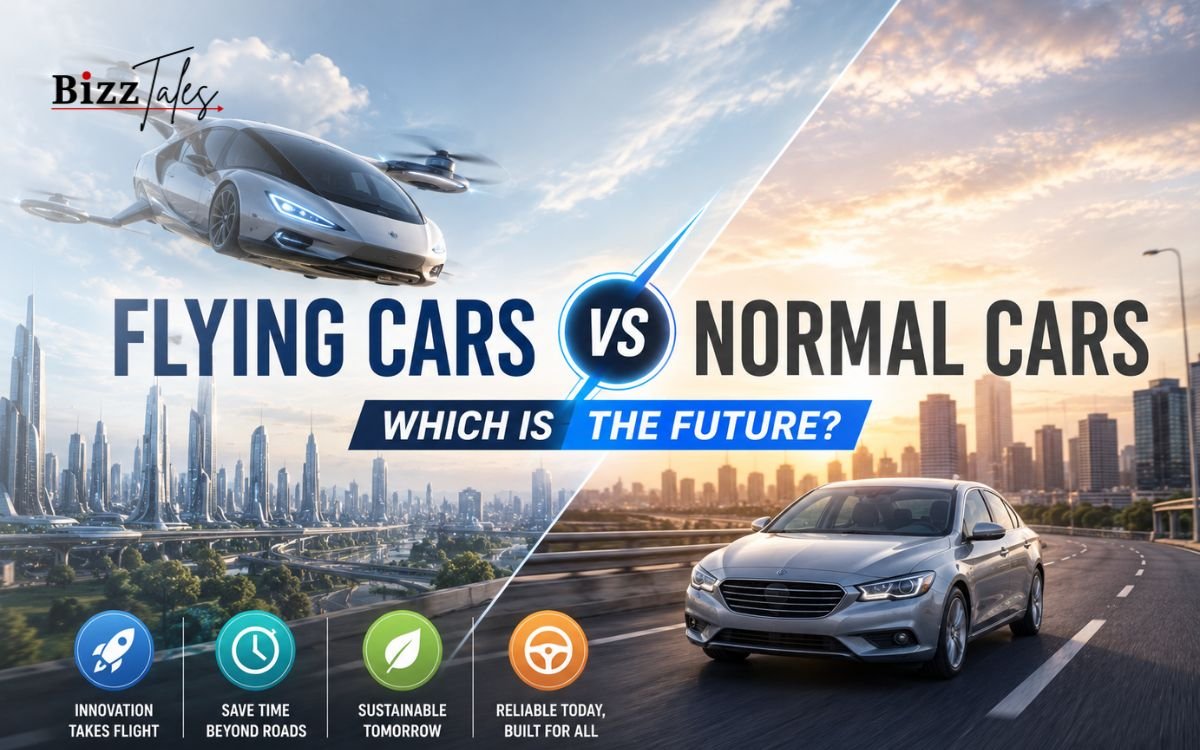
Cars have been the dominant personal transportation medium for over 100 years-from the jungles of the early 20th century to our modern streets, our vehicles have dictated the way we organize and promote our societies. And yet, however much technology has advanced, traffic congestion has consistently plagued the development of those societies. Every year, millions of hours are wasted idling in seemingly endless traffic jams. As urban densities continue their upward climb, our need to find an alternative persists.
The most far-reaching idea has nothing to do with ground transportation at all-at least not directly. For years, science fiction writers, movie makers, and technology predictors have played with the idea of flying cars. Frequently present in far-off visions of the future, flying cars have been more the stuff of dreams for the average person than any feasible solution to urban transportation congestion. Today, however, electric propulsion, battery technology, AI, strong lightweight materials, and self-controlled navigation systems have put the concept practically within reach.
Today there are dozens of startups and large aerospace businesses pouring billions of dollars into the development of electric vertical takeoff and landing aircraft, also known as eVTOLs. These vehicles aim to merge the convenience of your car with the speed, flexibility, and ease of use of an aircraft. Investors, governments and transportation providers are betting big on this nascent industry. Industry analysts see urban air mobility being a multi-hundred billion dollar market in the decades ahead.
The widespread enthusiasm for the flying car raises an intriguing question: will we ever forsake conventional vehicles and opt for a car that flies? Hence below, we would address the technology, the economics, the infrastructure, safety issues and the practicality of the concept.
Why Flying Cars Are No Longer Science Fiction
The dream of flying cars has been around for almost as long as cars have been trying to design them. The early Wright brothers and pioneers of the automobile area even tried to design cars that could fly, and while this is a concept that has long captured peoples’ imaginations, technologies were not advanced enough. Conventional flying autos require huge runways, costly maintenance, and skilled pilots all using copious amounts of fuel.
However, as electric aviation technology advanced this situation began to be reframed. Electric Vertical Takeoff and Landing (eVTOL) aircraft can now utilize multiple electric rotors, making use of vertical take-off and landing vehicles without any need for conventional runways. Advances in battery technology, AI, sensor tech and autonomous systems have made such aircraft more reliable, silent and viable than before.
Many firms entered the competition to develop and sell flying transportation. Joby Aviation, Archer Aviation, EHang and Alef Aeronautics all received large investments of venture capital, car manufacturers and big names in aviation. Some of the candidates have already achieved a couple of successful test flights with pilot programmes being designed in different countries.
Proponents point out that urban air mobility will have the potential to address the current mobility challenges of cities. Rather than being constrained by road infrastructure, cities will be able to afford air rides to a destination directly. The road trip hour becomes only fifteen minutes.
The economic impact is gaining some attention as well. Industry predictions suggest that urban air mobility will be responsible for a significant amount of new jobs. Among forecasts for the industry, well-touted estimates say the urban air transportation industry will spawn thousands of jobs in manufacturing, software development, airline air services, infrastructure development and maintenance, and logistics. The investors look at the industry as the inevitable next ride sharing and electric vehicle businesses, both of which have already been providing immense economic activity.
AI is especially crucial to the development of the flying car-current systems are capable of interpreting enormous numbers of flight-related information, keeping track of the weather, avoiding collision, and guiding the vehicle through its route. As technology advances, future flight will become less dependent on human conrol, allowing more and more air vehicles to become autonomous.
However, there are still considerable issues to face. For the flying cars to be taken seriously as viable form of public transportation, we need to have addressed the obstacles imposed by the different agencies that regulate transportation, the technological restrictions and infrastructural costs involved, the safety of passengers and drivers and the economy in general.
Why Traditional Cars Still Have a Massive Advantage
Although flying cars may seem like a dream, standard cars are still king around the world for a reason. We have over 1 billion cars running on the road today. Our current road system, fuel stations, repair facilities, car manufacturing, and transport administration are all well over a 100 years old.
Cost is actually one of the largest benefits of conventional vehicles. Prices do vary widely for vehicles but even without extraordinary resources any consumer is able to purchase, lease, or finance a normal vehicle whereas flying cars will be disproportionately more costly at the beginning. The first flying cars will be way out of reach for the typical traveler, and likely be available to businesses, the very wealthy, or companies offering a transportation service.
Another significant problem related to flying cars is the development of infrastructure. Basically, there are roads in literally every city and town. Flying cars would need places to land – vertiports, recharging points, maintenance places, air traffic control systems, and new urban planning concepts. Development of this kind of infrastructure would need a lot of money to be invested from public and private hands.
Safety continues to be one of the top issues. Although remains unfortunate, the accidents occur on the roads. However, flying vehicles introduce a whole new type of danger. Mechanical malfunctions, bad weather, software bugs, communication failures are all potential hazards. Certification standards are likely to be very demanding before mass adoption of flivvers.
Battery advancements too, are limited. Electric propulsion provides the advantage of cheap and environmentally friendly operation, but the fact that current battery systems have weight limitations, currently limits flight range and payload carrying ability. Conventional vehicles have much higher operating efficiencies and far greater distances can be covered without affecting infrastructure.
As I mentioned, consumer purchasing habits are rarely considered in prognoses about the future of transportation. Cars are common in people’s lives. They are not only used in daily commutes, but also for shopping trips, family outings, recreation and many other purposes. It may be feasible for flying cars to take over certain aspects of urban transportation, but a complete shift from entire mass of conventional cars would be by far a challenging task.
Meanwhile, automakers also keep upgrading the conventional vehicles. Electric vehicles, automation cars, connected vehicle technologies, intelligent traffic management systems are enhancing the safety, environments friendliness, and efficiency of transportation on roads. By pouring hefty investments into developing electric and automation vehicles, car manufactures are almost racing with flying cars in laying out the future of personal mobility:
Due to the above considerations, many transportation specialists believe that conventional vehicles will be the dominant form of transportation for several decades although flying cars may be finally successful in a competitive market.
The Future of Transportation May Not Be a Competition
In the battle between the flying cars and “conventional” cars people tend to assume that one must replace the other. This is wrong. Past innovations in transportation show that existing modes are simply phased out for different reasons.
Airplanes did not replace cars. Trains did not displace airplanes. Ridesharing did not replace cars. There is a place within a larger mobility ecosystem for each form of transportation. Flying cars will have a place as well.
Short term, it seems that vehicles with the ability to fly will be used mainly as air taxis in major cities. Business travelers, climbers, holiday enthusiasts and high end transportation providers are likely to first use them. Instead of just replacing current means of transportation, the flying vehicles will be added to the mix, along roads where high traffic volumes lead to a relatively high inefficiency.
Eventually, a smart city may house all investment in various modes of transportation under one umbrella and create a singular transportation ecosystem. A commuter might get onto an autonomous hovercraft, then to an air-taxi to travel swiftly across the city, and lastly to a trained taxi stand using yet another mode of land-based transporter. All the transportation required will be coordinated by software algorithms.
Environmental factors will also play a role in future adoption. Some electric flying vehicles may result in reduced emissions compared to conventional flights, but their overall environmental advantage will really depend on battery manufacturing, the electrical mix used to charge the vehicles and their flyability. Standard electric vehicles are also becoming greener as the world is increasingly using renewable energy.
Commercial business possibilities of urban air-mobility are enormous. Logistic companies are trying to build air-delivery networks. Real estate entrepreneurs are investing in aer-transportation infrastructure. Technology companies are building software for autonomous navigation and air traffic management. Governments are crafting regulations desirable for future commercialization.
Experts predict that the future of urban air mobility is not a matter of replacing cars, but rather, adding to what is already present. Growing numbers of industry observers look to the commercial industry, which added possibilities rather than abolishing existing modes of transportation, as a model for urban air mobility.
Conclusion
For centuries, humanity has dreamed of flying cars, and in recent years, it is the advent of new technologies that has raised the prospect from flight of fantasy to near-future reality. Developments in electric thrust, autonomous navigation, battery design and aeronautical engineering have begun to turn the dream of flying vehicles into an emerging industry., with significant sums of money invested.
Moreover, traditional vehicles continue providing benefits that will be arduous to replicate. Existing infrastructure, covering costs, variety, regulated complacency and popularity guarantee that cars is within the road transport-to need market for the near future. The incredible size of the worldwide automotive industry makes total substitution extremely improbable.
Thus, the prospect of a a winner-takes-all battle between flying cars and standard automobiles does not seem to be more likely. A more probable future would involve a hybrid mobility system, in which several different forms of mobility (flying cars, standard vehicles, public transportation, walking and biking) are integrated to some extent and offer the consumer a varied transportation system.
As civilization continues to progress-with increasing urbanization, technological innovations, and transportation needs-both flying cars and traditional cars will be vital in defining the next few decades of movement. The real battle may be not which mode of transport comes out on top, but how they can coexist to ensure faster, safer, more efficient, and more eco-friendly transit systems of the future.
FAQs
What you ask is, Are we already having flying cars? The answer is No.
While many companies have built prototypes and some have even performed successful test flights, flying cars are stillnot available for general use.
What are eVTOL?
What is an eVTOL?. An electric VTOL or an eVTOL is an aircraft capable of taking off and landing vertically, that is powered electrically.
Will flying cars take the place of normal cars?
The majority of specialists have a more optimistic vision and think that a flying car would exist over the existing cars, not in replacement of them.
How come the cost of a flying car is so high?
Complex supply chain: developed aerospace systems and safety systems, components for electric propulsion systems, certification according to official standards.
When are we likely to see flying cars?
INDUSTRY PREDICTIONS indicate commercial air taxi services may grow dramatically into the 2030s, but personal ownership could take many decades.