Artificial intelligence (AI) has progressed quickly from a sci-fi dream to one of the most disruptive technologies of the modern age. Today, AI systems write articles and create art, sift through mountains of information, diagnose sick patients, engineering software, and automate myriad mundane tasks for companies and institutions worldwide. Pioneering AI models have ignited imagination across industries, prompting many industry experts to compare the current AI revolution to the advent of the internet or of the smartphone. And yet, even as artificial intelligence marvels and excites us, one thing remains true: it is still very narrow.
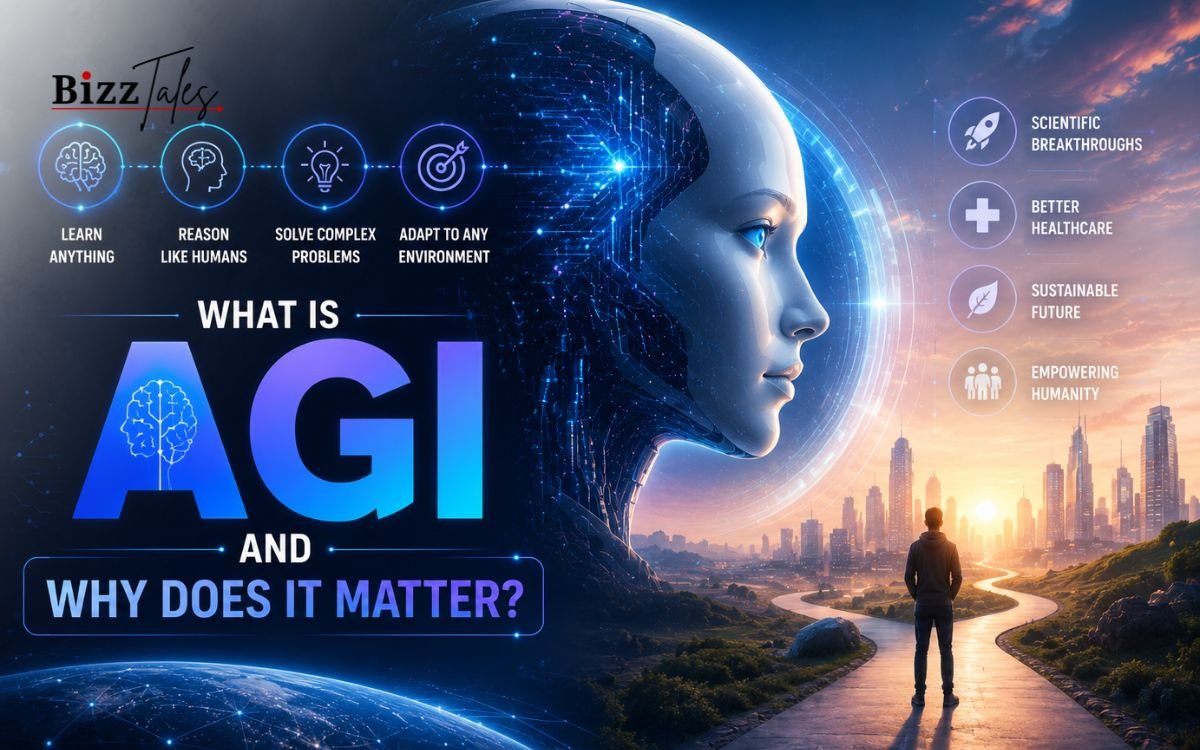
This has inspired researchers and technology executives to aim instead for a far greater challenge called Artificial General Intelligence, known as AGI. An AI system of this kind, as opposed to existing tools, would be capable of learning, reasoning and adapting to new situations, as well as skillfully solving unique, unrelated problems across various fields and disciplines, just as a human can.
AGI is now one of the greatest topics of discussion across current technology, business, economics and the public policy spectrum. There are both great promises that AGI could bring about possible innovations and efficiencies that we have never seen before, possibly generating trillions of dollars worth of economic value, as well as many potential threats to our institutions, labor markets and our humanity itself. As interest and capital directed at artificial intelligence expands and technology advances rapidly, the importance of understanding AGI increases for all levels of society: from scientists and engineers to business leaders, entrepreneurs, investors and governments.
Today, it is not unusual for one of the world’s largest tech firms to spend billions trying to develop artificial intelligence because they see AGI as potentially one of the most valuable technologies ever created. That AGI may come in 10 years or a hundred, its potential impact is so high that it is shaping business strategies, investment choices, and even government policy.
Understanding AGI: How It Differs From Today’s AI
Before one can fully appreciate the significance of AGI it is necessary to differentiate it from the artificial intelligent we most commonly encounter. Most of the AI technology in use now is classified as narrow AI because the technology is focused on the completion of specific tasks. An AI model might be really good at language translation or image recognition but not always both at once.
For instance, one can train a chess program to master world-champion level chess but cannot suddenly have it switch to diagnosing diseases or managing a business without extensive retraining. Likewise, an AI chatbot may produce convincing conversations but it does not truly comprehend the world; unlike humans it does not possess a deep understanding of the big picture. While today’s AI can seemingly be very intelligent, they are nonetheless task specific.
AGI is a completely different target. Rather than a specialized skill, it would require general intelligence. It could learn an additional activity, adjust to new circumstances, grasp ideas sophisticated enough not to require further adaptation, and transfer knowledge from one domain to another. In a word-more like a human mind.
Think of an astute system which can usefully descend on the financial markets each morning, be engaged in scientific research by mid-afternoon, solve advertising strategies by night and then go off and learn a whole new set of skills on a moment’s notice. This is the kind of versatility that researchers see when they talk about AGI. It could open the door to new levels of utility with AI in virtually every industry.
Many companies are now focusing on achieving AGI above all else; they see it as the next great leap, the next step in their advancement. Technology leaders are coming to see that while narrow AI can be beneficial, a true AGI could help change civilization. They are pouring huge amounts of money into everything, from increased computing power and AI models, to data centers around the world.
Although advances in artificial intelligence have been accelerating in the last few decades, there is a consensus among most researchers that artificial general intelligence has not been realized. Current AI systems have not reached an adequate level of intelligent behavior in terms of reasoning consistency, long-term planning, common-sense reasoning, or self-directed learning just to name a few. The estimated timeframe for the arrival of artificial general intelligence is still controversial, from within a few years to many decades from now.
Why AGI Could Transform Business and the Global Economy
What makes AGI so interesting is fairly straightforward: its economic impact could be unlike anything we’ve seen before. Every great technological revolution raised productivity and spawned new markets. The steam engine ushered in the Industrial Revolution. The advent of electricity revolutionized manufacturing and people’s lives. The internet connected billions of people and converted existing markets. AGI might significantly surpass these revolutions, if not outdo them.
Companies are always looking to be more efficient, cheaper and more innovative-AGI could potentially make a major contribution to all those goals. While existing automation simply optimises specific processes, AGI could carry out a wide variety of intellectual tasks. It could help with research, product development, planning, financial analysis, customer care, logistics, legal work, and “a thousand other business processes”.
Next think of the difficulties that modern day companies experience every day. Businesses would benefit from a system that could help them reduce the cost of employing new staff, training the existing employees, looking after the business, dealing with problems etc. An AGI system that can encompass many of these responsibilities may revolutionise how modern organizations function. Smaller offices with less employees, more efficient and productive meanwhile more intellects will be given more creative and effective tasks.
The startup ecosystem might also undergo dramatic transformations. Past efforts to commercialize something include the need to bring together marketing, finance, operations and technical people and centers of excellence. AGI might make this much easier by giving entrepreneurs effective digital assistants, able to execute far more work than a phone call or notebook would have needed.
There are claims that AGI, if brought about, could add on the order of trillions of dollars to the world’s GDP. As availability of (cost-effective) intelligent systems rises, three consequences would naturally follow: Reduction in price, increase in quality and growth of markets. Every sector from health, education, manufacturing, agribusiness and scientific research will be able to develop cost-effective solutions capable of addressing problems at previously impossible velocities.
Certainly an area one of the most exciting example is the World of healthcare. AGI would help, among other things, in designing new drugs, processing large data on individual patients, suggesting optimal treatments, and making faster scientific advancements. Accelerating scientific progress by reducing the time spent in experiments is the speed AI could give researchers.
One other area where the landscape could be reorganized is education. Using an AGI system, a tutor could adapt lessons to an individual’s way of learning, which would enrich education and make it more broadly available. Many other industries where analysis, knowledge and trouble-shooting are essential could benefit in the same way.
The Challenges, Risks, and Future of AGI
Although AGI offers incredible opportunities, it also comes with a significant set of challenges and concerns. The very fact that AGI has tremendous potential also leads to difficult issues regarding its development and implications on society.
Another common topic of worry is employment. If AGI can do many of the things that humans can intellectually, then large portions of the workforce might have no work to do. While previous technological revolutions resulted in new jobs leading to job losses, AGI might have a more profound impact on a wider set of occupations than our previous experiences suggested. Altogether, policy makers, economists, and business leaders are considering adaptation to this scenario:
Safety is a further issue. Powerful AI systems need to work in a safe manner, and within our value system. There is significant ongoing work into making sure AGI acts in a safe way, and achieves the goals it was designed for without suffering from undesirable side effects. Sensitive safety mechanisms will need to be implemented in systems that are capable of influencing large proportions of the population.
Another potential issue may be privacy and security. AGI will likely rely heavily on a lot of data to operate correctly, so organizations will need appropriate security measures to deter nefarious usage, hackings, and leaks of valuable, sensitive information. Governments across the globe are already looking into oversight implementations to address such concerns ahead of AGI’s development.
Furthermore, the geopolitical dimension underscores the strategic importance of AI competition among nations, who perceive it as a high-stakes arena for technological supremacy, economic competitiveness, and geopolitical leverage.
One more key issue is the timeframe for AGI itself. There is no consensus among specialists about how soon, or even if, AGI will arrive. Some notable figures maintain that current advances strongly imply that we could be within 10 or 20 years of AGI. Many feel however that the scientific innovations necessary for true general intelligence still lie well in the future. Whether they are imminent or not, however, the debates on AGI are already impacting on government, business and finance.
What is a little more obvious, is that investment and development into AGI will keep making a new generation of AI capabilities. Though AGI may be ten years out, the work being done toward it is already creating technology that enhances existing AI and delivering usable business solutions. AGI is already defining the direction of the future.
Conclusion
Artificial General Intelligence is one of the most difficult goals that has ever been set. Compared with our current narrow artificial intelligence systems that are designed to perform specific duties extremely well, AGI is supposed to perform on a level comparable with any human regarding flexibility, adaptation, and reasoning. Achieving AGI would have profound implications for nearly every industry, ushering new era of problem-solving in science and society, revolutionising economies and changing countless facets of daily human existence.
For the business world, the implications alone are profound. AGI could exponentially boost productivity, make starting new businesses much easier, lead to smarter decisions, and enable new types of innovations. Companies that a sense of what this might mean, and are ready for the new world, will have tremendous advantages.
Simultaneously, the emergence of AGI raises significant issues related to employment, regulation, safety, morals, and administration. The choices taken in creating super-intelligent AI can alter an economy but also much more far-reaching forces. To see this technology work in favor and minimize the perils requires a different kinds of collaboration by researchers, companies, political institutions, and citizens of the world.
No matter if AGI acomes earlya or becomes an elusive long-term goal, it is undeniably an area of such importance that it is already affecting technological development, investment and business planning worldwide. In order to make sense of what the future holds, it is therefore vital to understand what AGI is and why it is relevant.
FAQs
What is AGI?
Artificial General Intelligence (AGI), also known as strong AI, is a yet to be achieved type of AI that has the ability to fully comprehend, learn, and carry out a range of intellectual functions at the same human standard as well.
Compared to existing artificial intelligence (AI), how is artificial general intelligence (AGI) dissimilar?
Unlike existing ai, AGI should be playable in any domain without extensive retraining.
Is AGI already reached?
No. Even the most optimistic predictions indicate that we haven’t yet built the general intelligence found in humans.
Why this tremendous push for AGI?
Enterprises think AGI can bring huge productivity improvement, business development opportunities, and deliver one of the most valuable technologies the human kind ever created.
What are the most significant dangers of AGI?
Workforce disruption, safety, ethical considerations, privacy, and its eventual strong alignment with human interests are the potential risks.