
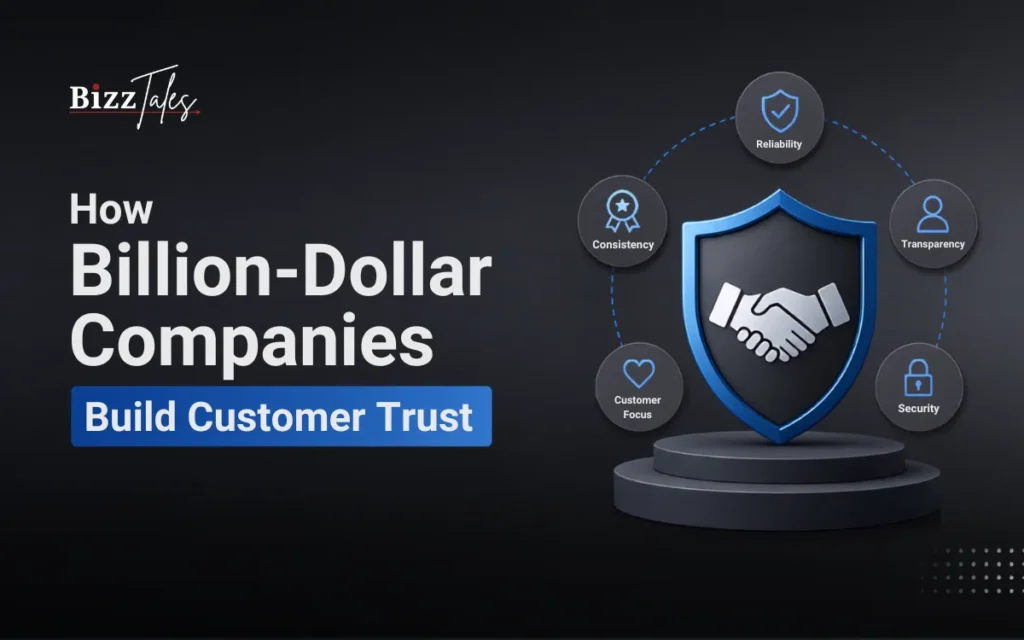
Quality doesn’t sell products alone. Customers buy when they are convinced that a company will follow through with what it promises and treat them fairly when issues arise. In saturated markets, that confidence can be as important as price or features.
Which is why customer trust is perhaps the most valuable long term asset an organization can develop. Billion dollar companies don’t leave trust to chance, or focus on building it exclusively through advertising and marketing. They develop trust in product design, support, pricing, privacy, and communication.
Trust Starts With Consistency
When they know what to expect, customers can develop trust.
A company builds credibility by delivering something reliably over and over again, not by doing something extraordinary once. Consider the draw of, say, McDonald’s, or other such brands: people in different parts of the world go to different outlets expecting the same experience, despite different quality of execution. Consistency reduces uncertainty, and lessening uncertainty makes purchasing easier.
Similar rules apply online. Amazon’s core user experience has centered on a familiar promise of predictable ordering, delivery, reviews and returns. The details vary but the core promise is unchanged: buy a product, and you can reasonably expect to receive it.
For any business, consistency means:
- Delivering the quality customers were promised
- Meeting deadlines and service commitments
- Maintaining a recognizable customer experience
- Fixing recurring problems instead of repeatedly apologizing for them
A single great transaction can create satisfaction. Repeatedly good transactions create trust.
Consistency is one of the foundations of lasting customer confidence—learn how great brands build trust through reliable experiences.
Transparency Builds Credibility
Keen customers turn away when critical details are buried in fine print or presented in confusing terminology. Honest firms provide clarity in helping customers figure out exactly what they are getting.
Providing clear pricing and terms, honest product claims, plain talking. And being honest about what happens when it all goes wrong.
Think of how a business reacts to a service outage or a problem with a product. If the company releases an ambiguous statement, customers might think they are hiding the scale of the failure. Being transparent about what occurred, what actions are being taken, and when updates will follow indicates responsibility.
Transparency doesn’t mean giving your customers all of the details. It means providing them with the essential information they can reasonably use to determine the course of action.
No company can avoid making all mistakes, but it can decide if making a mistake will result in a credibility issue or proof of accountability.
Customer Experience Is a Trust Signal
The way that a company handles every experience that its customers have with it communicates how committed it is to honoring its word.
A sleek website might bring in the customer, but the experience afterward often determines if they come back. If they encounter slow support, complicated returns, surprise charges, or painful cancellations, the marketing will have been wasted.
That is why companies with strong customer experience tend to treat the entire journey as connected:
- Website or app usability
- Checkout and payment
- Delivery or service fulfillment
- Customer support
- Returns and refunds
- Follow-up communication
- Problem resolution
The most revealing moment often comes when something goes wrong. Customers remember whether support listened, whether the issue was resolved efficiently, and whether the company made them feel like a burden.
Customer satisfaction is not simply about preventing complaints. It is about handling inevitable friction well.
Social Proof and Reputation Reduce Uncertainty
People seek proof before trusting a new company. Proof in the form of reviews, testimonials, case studies, recommendations and referrals.
This is even more critical when it comes to startups and internet companies, where a potential customer may have no other interaction with the company. A trusted review can answer questions that an advertisement can’t: does the product do what it says? Does the company provide support when we actually need it? Was it worth the price?
Of course, big business has a long established reputation. However this reputation is not everlasting, and years of good will can be damaged by a single incident of poor service, or dishonesty.
Community involvement also counts. Businesses that are open to feedback, display genuine respect and that allow customers input to affect the company make the relationship seem more than one-sided. Customers are not just transactions but active contributors to the brand’s standing.
Customer experiences and public perception ultimately shape a valuable business asset—learn why business reputation matters so much in the digital age.
Data Privacy and Security Are Part of Trust
As more purchases, conversations, payments, and personal details move online, customer trust increasingly depends on how businesses handle data.
Customers do not need to understand cybersecurity architecture to recognize responsible behavior. They want to know that their information is protected and handled responsibly.
Companies can strengthen confidence by:
- Collecting only the information they genuinely need
- Explaining privacy practices in clear language
- Securing accounts and transactions
- Giving customers meaningful control over their information
- Responding responsibly when security incidents occur
Data privacy is no longer just a technical or legal issue; it is a customer experience issue. When people share sensitive information, they are trusting the company with part of their lives.
Putting Customers Before Short-Term Profit
Customer relationships that are worth having are frequently based on choices that actually lose money in the short term.
A reasonable refund may be costly today but maintain a relationship for years. An accommodating, customer-oriented cancellation policy may sacrifice the short-term retention rate but increase the customer trust. Support development may increase operating expenses but keep losing customers at bay.
Firms like Costco have fostered loyalty through both consumer pro-benefit policies and a clearly defined value proposition. The overarching lesson, though, surpasses any particular policy: customers applaud a business that is ready to defend the relationship, not merely the sale.
And this is how customer trust links to customer lifetime value. If your company is trustworthy, it is more likely to secure repeat sales, win words of mouth and gain forgiveness when it wrongs.
Trust Through Brand Values
A brand’s values only become relevant if your customers are able to experience them.
Businesses often make empty commitments to being simple, high quality, sustainable, inclusive, innovative or obsessed with customers. Those words are nothing unless an organization’s decision making process reflects them over and over again.
Apple, for instance, has brought privacy to the forefront of its brand positioning. Whatever a customer may believe about the company’s overall approach, the takeaway is simple: a declared value turns into a trust cue when it is embedded in products, messaging and business choices.
What brand says and does consumers will compare. When these two points match, trust in the brand will deepen. When they are at odds, even great advertising may seem empty.
What Smaller Businesses Can Learn
A startup does not need a billion-dollar budget to build customer trust. Smaller businesses can sometimes move faster because fewer layers separate customers from decision-makers.
Founders and small-business teams can turn trust into a daily operating discipline:
- Keep promises. If a deadline cannot be met, communicate before the customer has to ask.
- Be transparent. Explain pricing, limitations, policies, and changes plainly.
- Respond quickly. Speed signals respect, even when the final solution takes longer.
- Ask for feedback. Then show customers that useful feedback leads to action.
- Fix mistakes. A sincere apology followed by a concrete solution is more valuable than excuses.
- Protect customer data. Use sensible security practices and explain how information is handled.
- Deliver consistently. Do not let growth become an excuse for declining quality.
The goal is not to imitate a global corporation. It is to adopt the habits that make trusted companies durable: reliability, accountability, clarity, and respect.
Conclusion: Trust Is Built One Decision at a Time
Customer trust is not built with one ad or a slogan. It is earned one small decision at a time: an honest price, helpful support, an honest update, a fair refund, a secure transaction, a product that performs as expected.
The billion-dollar companies have realized that these are adding up. Persistent efforts earn trust and “referral, persuade customers to come back for their next purchase, bolster corporate esteem, and build their brand into the rest of the world’s eyes.”
For businesses of every size, that is the real competitive advantage. Products can be copied. Features can be matched. Prices can be undercut. But a strong reservoir of customer trust—earned patiently and protected consistently—is far harder to replicate.
The companies that treat trust as an operating principle, rather than a marketing message, give customers a reason to stay long after the first sale.
➜Strengthen Your Brand Reputation
FAQs
1. Why is customer trust important for businesses?
Customer trust drives loyalty, repeat purchases, positive reviews, and long-term business growth.
2. How do billion-dollar companies build customer trust?
They build trust through consistent quality, transparency, excellent customer experience, security, and reliable service.
3. How does transparency improve brand trust?
Honest pricing, clear policies, and open communication make customers feel informed and respected.
4. Does customer experience affect customer trust?
Yes, every interaction—from purchase to customer support—can strengthen or weaken trust.
5. Can small businesses build strong customer trust?
Absolutely; keeping promises, responding quickly, fixing mistakes, and protecting customer data can build lasting trust without a large budget.