India’s consumer electronics market has witnessed the rise of several homegrown brands, but boAt stands out for turning everyday audio accessories into lifestyle products. From wireless earphones and headphones to smartwatches and speakers, boAt has built strong brand recognition among young, value-conscious Indian consumers.
The company’s growth offers valuable lessons in affordable pricing, digital marketing, influencer collaborations, product positioning, and customer engagement.
So, how did boAt build a mass-market consumer electronics brand in a competitive market dominated by established international players? Its approach combined accessible products with a distinctly youthful brand identity and a marketing strategy designed for India’s digital-first consumers.
1. Identifying a Gap in the Indian Market
boAt’s success began with understanding a simple consumer problem: people wanted durable, stylish electronic accessories without paying premium international-brand prices.
Founded by Aman Gupta and Sameer Mehta, boAt was commercially launched in 2016. The founders identified an opportunity to serve Indian consumers looking for affordable, reliable, and fashionable audio products.
Instead of competing only on technical specifications, boAt focused on everyday usability, design, and value for money.
Its early products addressed practical problems, such as fragile charging cables and tangled earphone wires. This helped establish a clear product proposition: electronics that fit the needs and budgets of young Indian consumers.
2. Affordable Premium Brand Positioning
One of the key elements of the boAt brand strategy was its affordable-premium positioning.
The brand positioned itself between inexpensive, unbranded accessories and expensive global electronics brands. Its products offered contemporary designs and lifestyle appeal at accessible prices.
This positioning helped boAt appeal to consumers who wanted products that looked fashionable without stretching their budgets.
Rather than presenting itself as just another electronics manufacturer, boAt built an identity around self-expression, music, and youth culture.
The lesson for businesses is straightforward: a brand can create value by identifying an underserved segment and communicating a clear reason to choose its products.
3. Digital-First Distribution and E-Commerce
boAt used online marketplaces to reach consumers without initially depending on a large physical retail network.
Platforms such as Amazon and Flipkart gave the company access to shoppers across India. Its own direct-to-consumer website also provided an additional sales channel.
This approach supported several aspects of its growth:
- Wider reach: Online marketplaces helped boAt reach consumers beyond major metropolitan areas.
- Product discovery: Search results, product listings, and customer reviews helped shoppers discover and evaluate its products.
- Consumer feedback: Online reviews provided insights into product quality, preferences, and areas for improvement.
- Convenience: Consumers could compare products and purchase them from home.
As the business expanded, offline distribution also became part of its strategy, allowing the brand to connect with shoppers who prefer physical stores.
4. Influencer Marketing and Celebrity Partnerships
boAt’s marketing strategy focused heavily on connecting its products with popular culture.
Instead of relying exclusively on traditional advertising, the brand used social media, influencer collaborations, and celebrity associations to reach its target audience.
Its campaigns have drawn on India’s interest in music, cricket, Bollywood, and fashion. The company has also worked with public figures such as Hardik Pandya and Kartik Aaryan.
These partnerships helped present audio products as lifestyle accessories rather than purely functional gadgets.
The approach illustrates how influencer marketing can support brand awareness when the people promoting a product align with its intended audience.
5. Building a Youth-Centric Brand Identity
boAt developed a recognizable identity through bold designs, energetic communication, and youth-oriented messaging.
The brand’s appeal extended beyond product functionality to the lifestyle associated with music, entertainment, fitness, and everyday technology.
Its product designs, social media presence, and celebrity partnerships reinforced this positioning.
This consistency helped create a recognizable brand image across different consumer touchpoints.
For other businesses, boAt demonstrates the importance of maintaining a clear brand personality rather than relying solely on discounts or product specifications.
6. Product Innovation and Portfolio Expansion
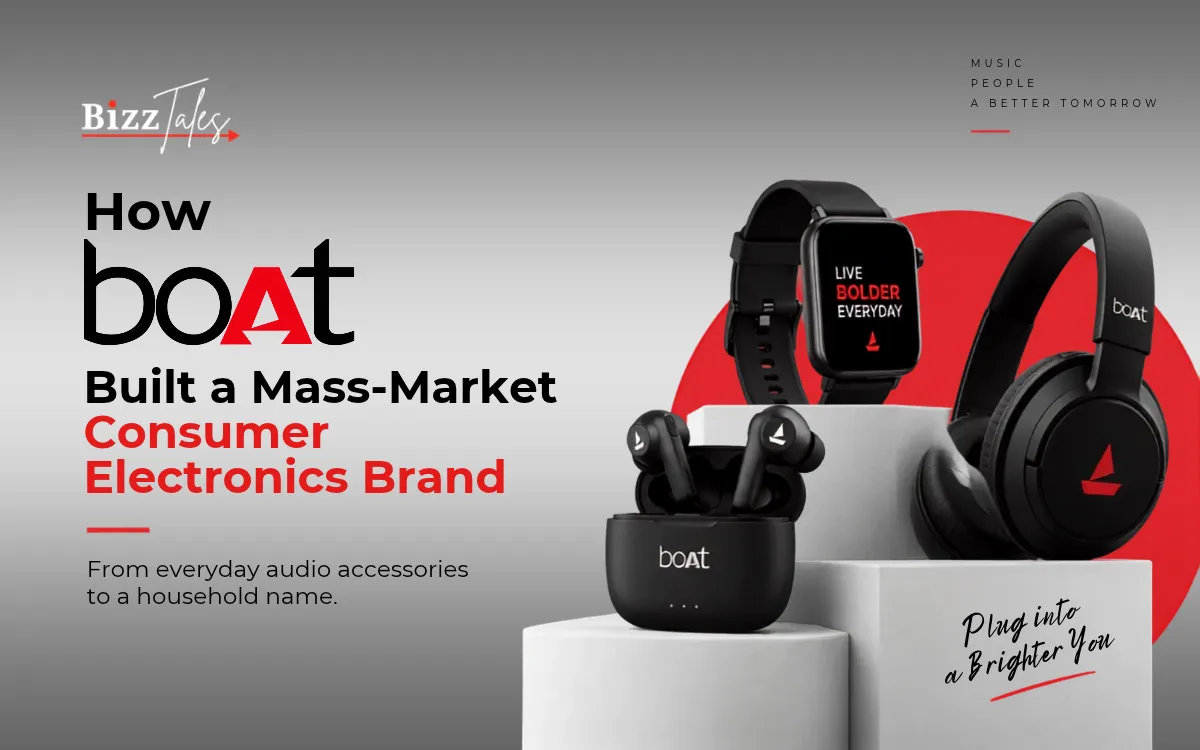
boAt did not remain limited to its initial accessories and wired audio products. It expanded into categories such as wireless earbuds, headphones, Bluetooth speakers, smartwatches, and other consumer electronics.
This portfolio expansion allowed the company to serve customers across multiple everyday technology needs.
The brand also used consumer feedback to identify changing preferences and product opportunities.
However, expanding into new categories requires more than brand recognition. Product quality, reliability, after-sales support, and differentiation remain important for sustaining consumer trust.
7. What Businesses Can Learn from boAt
boAt’s brand-building journey offers several practical lessons for startups and established businesses:
| Strategy | Business lesson |
| Market research | Identify specific consumer pain points. |
| Affordable-premium positioning | Offer a compelling balance of price, design, and value. |
| E-commerce distribution | Use digital channels to reach customers efficiently. |
| Influencer marketing | Build awareness through relevant cultural connections. |
| Consistent branding | Create a recognizable identity across platforms. |
| Product expansion | Grow into adjacent categories while maintaining customer trust. |
These strategies are not a guaranteed formula for success. Their effectiveness depends on market conditions, execution, competition, and the company’s ability to deliver on its promises.
Conclusion
How boAt built a mass-market consumer electronics brand is a story of understanding consumers, identifying a market gap, and combining accessible products with digital-first marketing.
By focusing on affordable-premium positioning, e-commerce distribution, influencer collaborations, and a youth-centric identity, boAt developed a recognizable presence in India’s consumer electronics market.
Its journey highlights an important principle of brand building: understanding what consumers value—and consistently delivering on that expectation—can be as important as the product itself.
For businesses looking to build a mass-market brand, boAt provides a useful case study in combining product-market fit, customer insight, and distinctive marketing to create consumer awareness and demand.
Frequently Asked Questions (FAQs)
1. Who founded boAt?
boAt was founded by Aman Gupta and Sameer Mehta, with its consumer brand commercially launched in 2016.
2. What is boAt’s marketing strategy?
Its strategy combines affordable-premium positioning, digital marketing, influencer partnerships, e-commerce distribution, and youth-focused branding.
3. Why did boAt become popular in India?
Its accessible pricing, stylish products, online availability, and marketing connected with young, value-conscious consumers.
4. What can startups learn from boAt?
Startups can learn to identify unmet consumer needs, create a distinct brand identity, use digital distribution, and expand their product portfolio in response to customer demand.