
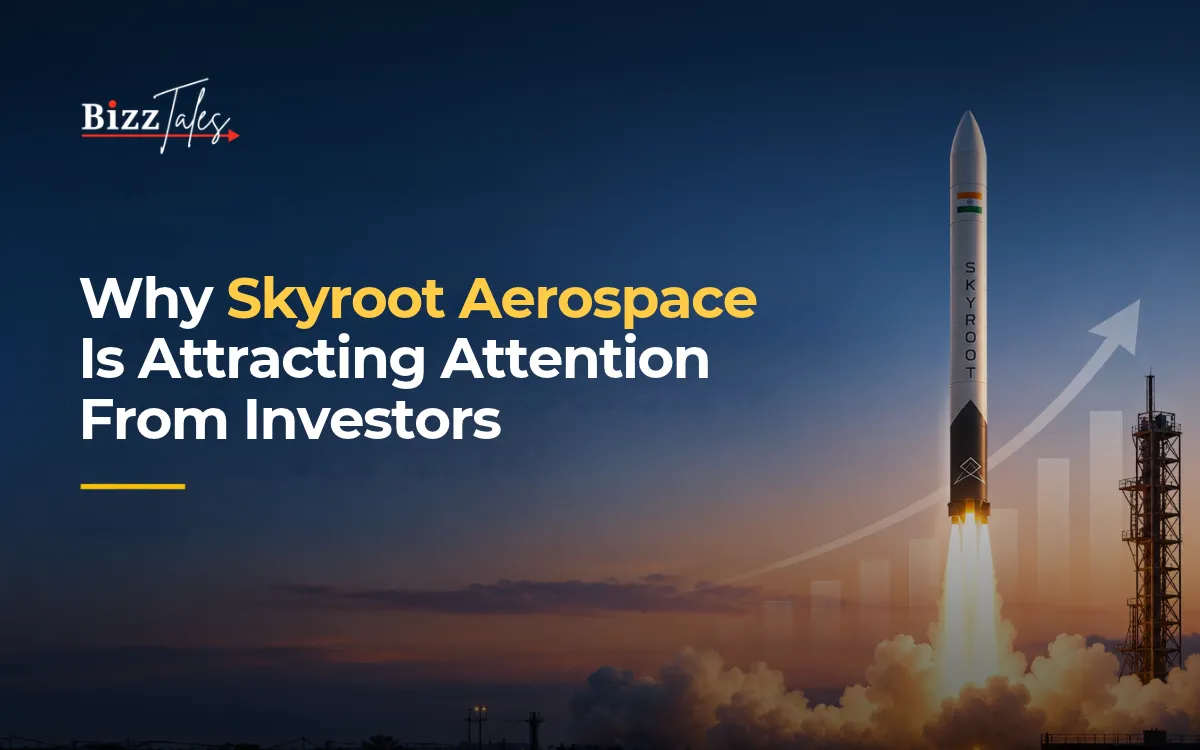
India’s space industry is entering a new phase, and Skyroot Aerospace has emerged as one of the most closely watched private space companies in the country. Founded in Hyderabad, the startup is developing privately built rockets designed to serve the growing small-satellite launch market.
With India opening its space sector to greater private participation, Skyroot Aerospace is attracting attention from investors, technology companies, satellite operators, and the broader global space industry. But what exactly is driving this interest?
What Is Skyroot Aerospace?
Skyroot Aerospace is an Indian space-tech company focused on developing launch vehicles for commercial and small-satellite missions. The company was founded in 2017 by former scientists and engineers with experience in India’s space ecosystem.
Its flagship launch-vehicle family is Vikram, named after Vikram Sarabhai, one of the pioneers of India’s space programme.
Skyroot’s business model is centered on providing launch services for small satellites, an increasingly important segment of the global space economy.
Why Are Investors Watching Skyroot Aerospace?
1. India’s Private Space Sector Is Expanding
One of the biggest factors behind the growing interest in Skyroot is the transformation of India’s space industry.
For decades, India’s space activities were dominated by government institutions, particularly ISRO. Policy changes have increasingly encouraged private companies to participate in satellite manufacturing, launch services, space applications and related technologies.
This creates an opportunity for companies such as Skyroot to build commercial businesses around space infrastructure.
The establishment of IN-SPACe has also helped create an institutional framework for greater private-sector participation in India’s space economy.
2. The Small-Satellite Market Is Growing
Satellites are becoming smaller, more specialized and more numerous.
Earth observation, telecommunications, climate monitoring, navigation, defence applications and IoT connectivity are contributing to demand for satellite launches.
For satellite operators, having access to dedicated or flexible launch services can be valuable. This is the market Skyroot is targeting with its Vikram rocket family.
If the small-launch market continues to expand, launch companies capable of delivering reliable and cost-effective services could have significant commercial opportunities.
3. The Vikram Rocket Family
Skyroot’s Vikram series is designed around different configurations for different payload requirements.
The company has been developing technologies covering propulsion, avionics, structures and launch systems, with the goal of building a commercially viable launch platform.
A major milestone came in November 2022, when Skyroot’s Vikram-S became the first privately developed Indian rocket to launch into space.
That mission demonstrated that an Indian private company could independently develop and launch a rocket, making it an important milestone for the country’s private space industry.
4. Strong Technology Focus
Rocket development is one of the most technically demanding areas of the space industry.
Skyroot has attracted attention partly because of its focus on developing proprietary rocket technologies and manufacturing capabilities.
The company has also explored advanced manufacturing techniques, including 3D printing for rocket-engine components.
Such technologies can potentially reduce manufacturing complexity and improve production efficiency. However, the commercial value ultimately depends on whether these technologies can be scaled reliably and economically.
5. Significant Venture-Capital Interest
Skyroot has raised substantial funding from prominent investors, reflecting institutional interest in India’s private space sector.
Investment in a space startup is fundamentally different from investing in an established listed company. Rocket development requires significant capital, long development cycles and extensive testing before commercial operations can reach scale.
Consequently, funding rounds can provide startups with the resources required to move from technology development toward regular commercial launches.
For investors, these funding events also provide an indication of the level of confidence that professional venture investors have placed in the company’s technology and market opportunity—although they do not guarantee future commercial success.
Skyroot Aerospace and India’s Space-Tech Boom
Skyroot is part of a much broader ecosystem of Indian space startups.
Companies are working across areas including launch vehicles, satellite manufacturing, propulsion, Earth observation, communications and space-based data services.
This ecosystem is benefiting from increasing government support and growing private-sector participation.
The result is a shift from a largely government-led space economy toward a more diversified model involving startups and private enterprises.
Is Skyroot Aerospace Listed on the Stock Market?
One of the most common questions surrounding Skyroot Aerospace is whether retail investors can buy its shares.
Skyroot Aerospace is a privately held company and is not currently listed on the Indian stock exchanges.
That means investors cannot purchase Skyroot shares through a normal NSE or BSE brokerage account.
Any future initial public offering (IPO) would potentially change the investment landscape, but investors should distinguish between confirmed company announcements and market speculation.
Until a formal listing takes place, exposure to Skyroot is primarily available through private-market investment rather than conventional stock-market investing.
Key Risks Investors Should Consider
The opportunity in commercial space is significant, but the industry also carries substantial risks.
High Development Costs
Rocket development requires expensive testing, infrastructure and engineering talent. Delays can increase capital requirements.
Launch Reliability
A launch company ultimately depends on successful missions. Technical failures can result in financial losses, reputational damage and delays.
Regulatory Requirements
Space activities involve extensive regulatory and safety requirements. Changes in policy or licensing requirements can affect business timelines.
Strong Competition
Skyroot operates in an increasingly competitive global launch market. Established aerospace companies and other startups are developing competing launch technologies.
Long Path to Profitability
Space startups may require years of investment before achieving sustainable profitability. Revenue growth and successful launches therefore remain important factors to watch.
What Could Drive Skyroot Aerospace’s Future Growth?
Several factors could influence Skyroot’s long-term prospects:
- Successful commercial launches
- Increasing demand for small-satellite launches
- Expansion of India’s private space ecosystem
- International launch opportunities
- Improvements in rocket manufacturing efficiency
- Continued access to capital
- Development of additional launch vehicles and technologies
The company’s ability to convert technological achievements into repeatable commercial launches will be particularly important.
Final Thoughts
Skyroot Aerospace is attracting investor attention because it sits at the intersection of India’s growing space economy, private-sector innovation and rising global demand for satellite-launch services.
Its Vikram rocket programme, successful private rocket launch and backing from institutional investors have made it one of India’s most prominent space startups.
However, investors should remember that technological progress does not automatically translate into financial returns. Skyroot remains a private company, and the commercial launch business involves substantial technological, regulatory and financial risks.
For anyone following India’s space-tech industry, Skyroot Aerospace is a company worth watching—not simply because of its funding or headline-making missions, but because its progress could provide an important indication of how India’s private space sector develops in the coming years.