Growing a business often requires more capital than the owner can provide from existing cash flow. Whether you want to expand operations, hire employees, purchase equipment, launch a new product, or enter a new market, choosing the right business financing option can have a major impact on your company’s future.
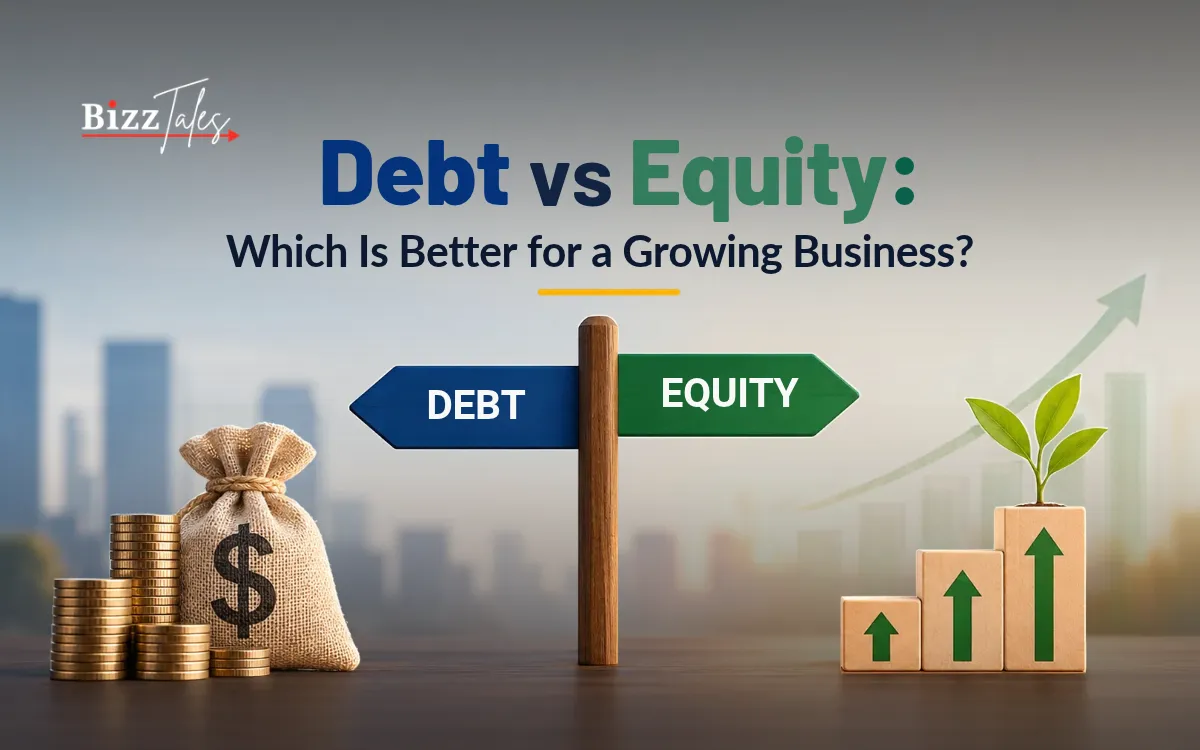
The two most common ways to raise capital are debt financing and equity financing. But which is better for a growing business?
The answer depends on your business’s financial position, growth plans, risk tolerance, and long-term goals. This guide explains the key differences between debt vs equity, their advantages and disadvantages, and how to decide which option is right for your business.
What Is Debt Financing?
Debt financing means borrowing money that your business agrees to repay over a specific period, usually with interest.
Common examples include:
- Business loans
- Bank loans
- Lines of credit
- Equipment financing
- Working capital loans
- Business credit cards
With debt financing, you generally retain full ownership of your company. However, you must make scheduled repayments regardless of whether your business is profitable.
Advantages of Debt Financing
1. You retain ownership
One of the biggest benefits of debt is that lenders typically don’t receive an ownership stake in your company. You retain control over business decisions and future profits.
2. Predictable repayment structure
Many business loans have fixed interest rates and repayment schedules, making it easier to plan your cash flow.
3. Potential tax benefits
In many jurisdictions, interest paid on qualifying business debt may be tax-deductible. Tax rules vary, so businesses should consult a qualified tax professional.
4. No profit sharing
Once the loan and applicable interest are repaid, the lender generally has no claim on future business profits.
Disadvantages of Debt Financing
Debt also creates financial obligations. Regular loan payments can put pressure on cash flow, particularly when revenue is unpredictable.
Other potential drawbacks include:
- Interest costs
- Collateral requirements
- Credit requirements
- Risk of default
- Reduced cash-flow flexibility
What Is Equity Financing?
Equity financing involves raising money by selling a percentage of ownership in your business to investors.
Equity investors may include:
- Angel investors
- Venture capital firms
- Private equity investors
- Strategic investors
- Friends and family
Unlike a traditional loan, equity financing generally doesn’t require fixed monthly repayments. Instead, investors receive an ownership stake and may benefit if the company increases in value.
Advantages of Equity Financing
1. No regular loan repayments
Equity can provide capital without adding monthly debt payments, which can be especially useful for businesses investing heavily in growth.
2. Lower financial pressure
If the business experiences a slow period, there usually isn’t a fixed equity repayment obligation comparable to a loan payment.
3. Access to expertise and networks
Investors can sometimes provide more than capital. Experienced investors may offer industry knowledge, strategic guidance, partnerships, and valuable connections.
4. Suitable for high-growth businesses
Startups and businesses with significant expansion opportunities may prefer equity financing when immediate cash flow is limited but future growth potential is high.
Disadvantages of Equity Financing
The biggest disadvantage is ownership dilution. When you sell equity, you give investors a percentage of your business.
This can mean:
- Less control over important decisions
- Sharing future profits
- Pressure to achieve aggressive growth
- Potential conflicts with investors
- More complex reporting and governance
Debt vs Equity: Key Differences
| Factor | Debt Financing | Equity Financing |
| Ownership | Usually retained | Shared with investors |
| Repayment | Required | Generally no fixed repayment |
| Interest | Usually charged | No traditional interest |
| Financial risk | Higher repayment pressure | Lower repayment pressure |
| Control | Generally retained | May be shared |
| Profit sharing | No | Investors participate in upside |
| Investor expertise | Usually limited | Potentially significant |
| Best suited for | Predictable cash flow | High-growth businesses |
Debt vs Equity: Which Is Better?
There is no universal answer to whether debt or equity financing is better. The right choice depends on your business model and financial circumstances.
Choose Debt If:
Debt may be a good option if your business has:
- Stable and predictable revenue
- Strong cash flow
- A good credit profile
- A clear repayment plan
- Assets that can support financing
- A desire to retain full ownership
For example, an established business with consistent monthly revenue may use a business loan to purchase equipment or open another location.
Choose Equity If:
Equity financing may make more sense if your company:
- Has significant growth potential
- Needs substantial capital
- Has limited cash flow
- Is still in an early stage
- Wants strategic investors
- Can accept sharing ownership
For example, a technology company developing a new product may raise equity capital to fund product development, marketing, and expansion before generating significant revenue.
Can a Business Use Both Debt and Equity?
Yes. Many growing businesses use a combination of debt and equity financing.
This approach can provide access to capital while balancing ownership and financial risk.
For example, a company could raise equity to fund long-term expansion while using a business loan to cover equipment purchases or working capital.
The ideal financing mix depends on factors such as revenue stability, growth rate, existing debt, business valuation, and the cost of capital.
How to Choose the Right Business Financing Option
Before choosing between debt and equity, ask these questions:
1. How predictable is your cash flow?
If revenue is stable, debt repayments may be easier to manage.
2. How much control do you want to retain?
If maintaining ownership is a priority, debt may be preferable.
3. How quickly do you expect to grow?
High-growth companies may benefit from equity investors who provide both funding and strategic support.
4. What is the cost of capital?
Compare interest rates, fees, equity dilution, and the potential long-term cost of giving investors a share of your business.
5. What risks can your business handle?
Debt creates repayment obligations, while equity reduces ownership and may introduce investor expectations.
Final Thoughts: Debt or Equity?
Choosing between debt vs equity financing is one of the most important financial decisions a growing business can make.
Debt can help you maintain ownership and take advantage of predictable repayment structures, but it creates financial obligations. Equity can reduce repayment pressure and provide access to investor expertise, but it requires you to give up a portion of ownership and potentially some control.
For many businesses, the best solution isn’t choosing one exclusively. A carefully planned combination of debt and equity may provide the right balance between growth, control, and financial risk.
Before making a decision, evaluate your cash flow, growth objectives, financial position, and long-term business strategy. Professional financial and tax advice can also help you determine the most suitable financing structure for your specific circumstances.
Frequently Asked Questions
1. Is debt or equity better for a small business?
It depends on the business. Companies with stable cash flow may prefer debt, while early-stage or high-growth businesses may find equity more suitable.
2. Does debt financing reduce business ownership?
Generally, no. A traditional lender does not receive ownership simply because it provides a loan, although loan agreements may contain certain conditions.
3. Does equity financing require repayment?
Unlike debt, equity financing generally does not require fixed monthly repayments. Instead, investors receive ownership and participate in the potential future value of the company.
4. Which is cheaper, debt or equity?
There is no universal answer. Debt has an explicit interest cost, while equity can have a significant long-term cost through ownership dilution and sharing future returns.
5. Can startups use both debt and equity?
Yes. Startups and growing companies can combine different financing sources depending on their capital requirements, cash flow, risk profile, and growth strategy.