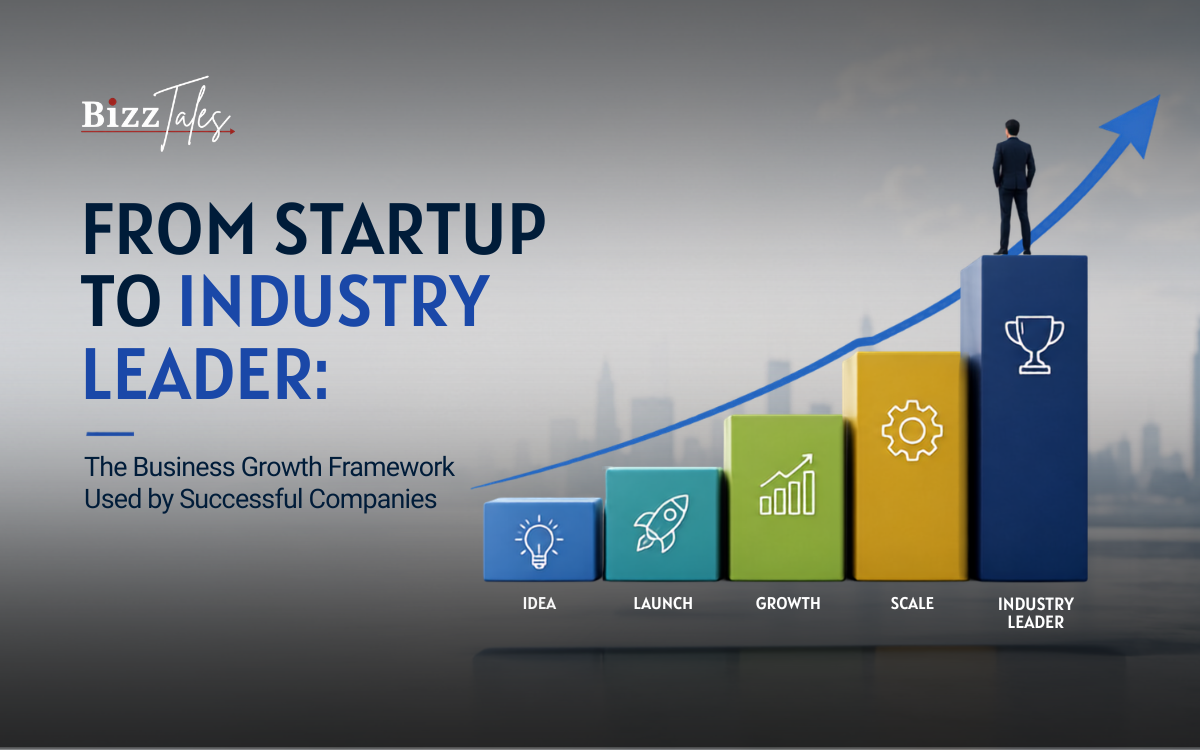
As a startup, transitioning from idea to industry leader seldom happens with one big idea. However, through founder energy, an extraordinary new product or a spike in demand for what they offer, early-stage companies can find themselves quite suddenly scaling rapidly. However, for sustained development you need a more formalised approach.
The firms that achieve this transition consistently—i.e. from a startup to become a growth stage business and then a market leader—create systems by which their growth is repeatable. They get to know their customers, refine their unique value proposition, create scalable processes, recruit world-class talent, manage capital prudently and innovate relentlessly even after they’ve gone public.
And that becomes the basis for a tangible business growth framework. It is not a rigid formula. It literally gives you an ordered list of priorities that allows you to move your company from traction finding to sustainable competitive advantage.
1. Start by Finding and Validating Product-Market Fit
The lowest level of a startup never makes it to this first stage of growth is expansion. It is demonstrating actual customer need for what the company sells.
When a certain segment of customers values it enough to use, refer, or pay for it. That represents the product-market fit. This implies that founders should test assumptions before allocating a significant amount of marketing, hiring or infrastructure resources.
Useful signals include:
- Customers repeatedly buying or using the product
- Strong organic referrals
- Positive customer feedback
- Increasing retention
- A clear problem that competitors are not solving effectively
Take Airbnb, for instance — they started off with a solution to the yet-unmet accommodation needs of travelers and hosts. Only once the marketplace model itself was proven on a global basis, did it internationally scale.
The take away for founders is easy: never scale an unproven business model. You first need to establish the customer, problem, solution and willingness to pay.
2. Build a Value Proposition Customers Can Understand
Once demand is validated, the next challenge is communicating why customers should choose the company.
A strong value proposition answers three questions:
- Who is the product for?
- What important problem does it solve?
- Why is it better or meaningfully different from alternatives?
A great example of how product, design, simplicity and ecosystem integration reinforces a clear customer proposition is Apple.
Your value proposition will be narrow at the startup stage. The ability of an organization to change over time without sacrificing its core promise at the same time. The goal is not to please everyone. It is to become intensely relevant to the customers for which the business is best situated serving.
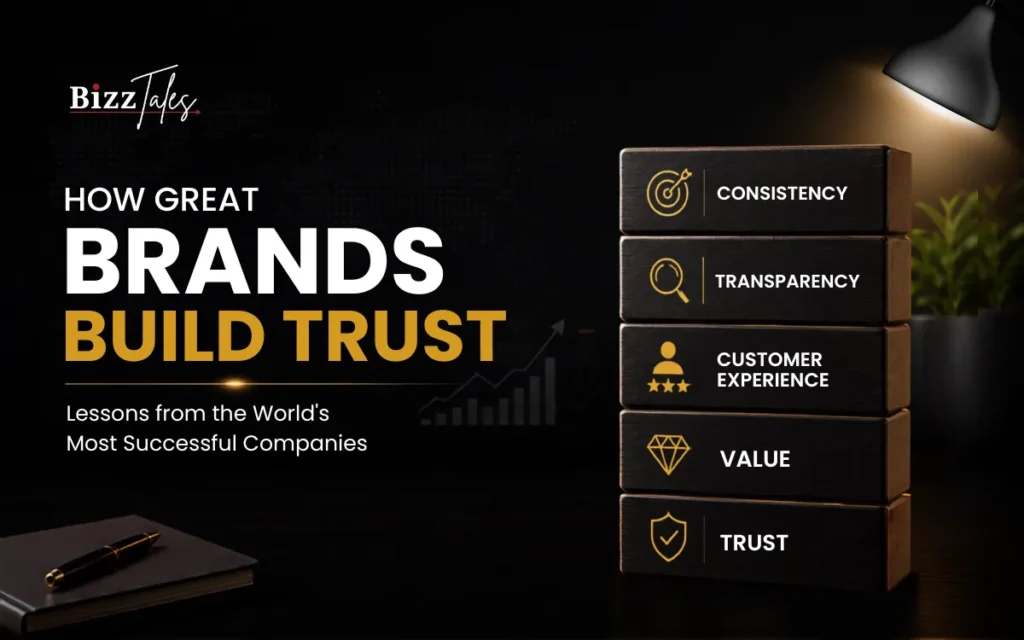
A clear value proposition is only the beginning—learn how great brands build trust by consistently delivering on their promise.
3. Turn Successful Activities Into Repeatable Processes
Founders come to be the driving force of a new business. They do sell at customers, solve ops issues, hire employees and take most important decisions.
Which works fine at first—but as the organization grows, it becomes a bottleneck.
After that, what comes next on the business growth strategy is to identify founder-led activities that have worked well and convert them into repeatable processes. What sales looks like, how customers get on-boarded, How products are delivered out of the door, How support problems are resolved and how decisions gets made.
The key is to have processes that ensure stability and consistency without creating the bureaucratic overhead.
One good question is: What would break first if the company doubled its customers next year?
Those weaknesses are the processes you need to fix before scaling aggressively.
4. Develop a Business Model That Can Scale
Not to be confused with just getting bigger, scaling a business is something entirely different.
A business is scalable if revenue can scale broadly without commensurate costs or complexities of delivery.
Digital products allow technology firms to sell more at relatively low incremental costs, so they have an advantage. Take for example when Shopify constructed a platform model so that the technology undergirding merchants of vastly different merchant scale could be the same.
While not all businesses can achieve software-like economies, every company should be looking within its model for scalability.
Consider:
- Which activities can be standardized?
- Which costs rise directly with every new customer?
- Can technology reduce manual work?
- Can existing products serve additional segments?
- Does growth improve operating leverage?
These questions help transform startup growth into sustainable business growth.
5. Build and Retain a High-Performing Team
A company can’t be founder dependent indefinitely. Over time, growth becomes less a challenge of market and more a challenge of organisation.
The best companies hire people who own outcomes, not just deliverables. They also clearly define roles and responsibilities, authority and decision-making power, performance expectations and communication mechanisms.
As the business scales up, founders must evolve from doing everything themselves to developing leaders who can make wise decisions on their own.
Recruitment is just as important as retention. High performing employees stay when they understand the company vision, see career development opportunities, receive constructive feedback and trust leadership.
We call it an organization that gets better as it grows, rather than slower and more political.
6. Let Customers and Data Shape Decisions
Successful companies rarely rely entirely on intuition once they reach scale. They combine customer insight with reliable data.
Customer feedback can reveal problems that metrics alone may miss. Data, meanwhile, can show patterns that individual customer conversations cannot.
Companies should track metrics appropriate to their business, such as:
- Customer acquisition and retention
- Conversion rates
- Repeat purchases
- Customer lifetime value
- Gross margins
- Product usage
- Cash flow
Netflix, for example, has repeatedly used customer behavior and viewing data to inform decisions around its product and content strategy.
The important principle is not “follow the data blindly.” It is to use evidence to challenge assumptions and make better decisions.
7. Strengthen Branding and Market Positioning
As competition increases, a strong product alone may not be enough. Customers also need a reason to remember and trust the company.
Branding becomes particularly important when a startup moves into a crowded market. Consistent messaging, recognizable positioning, customer experience, and credibility can turn a functional product into a preferred brand.
At this stage, companies should define what they want to be known for.
Is the company the most convenient option? The most innovative? The premium choice? The specialist for a particular customer group?
Strong positioning creates mental space in the customer’s mind and makes future marketing more efficient.
Strong positioning is easier to understand through real examples—explore what the world’s trusted business brands do differently.
8. Expand Into New Markets Carefully
Once the core business is healthy, business expansion becomes the next growth lever.
Expansion can mean entering new geographic markets, targeting new customer segments, adding product categories, or serving larger enterprise customers.
Amazon is a classic example of expansion from a focused starting point into multiple categories and markets. However, expansion works best when it builds on existing strengths rather than distracting the organization from its core business.
Before entering a new market, companies should assess:
- Customer demand
- Competitive intensity
- Local requirements
- Distribution economics
- Required investment
- Strategic fit with the existing business
Growth for its own sake is not the objective. Profitable and strategically defensible growth is.
9. Use Technology and Automation to Create Scale
Technology becomes increasingly important as transaction volumes and organizational complexity increase.
Automation can reduce repetitive work in areas such as customer support, finance, marketing, inventory management, reporting, and internal administration.
The best use of technology is not simply to replace people. It is to allow people to spend more time on activities that require judgment, creativity, relationships, and strategic thinking.
Companies should regularly identify repetitive processes and ask whether they can be simplified, automated, or eliminated.
This creates operating leverage and allows a growing organization to remain responsive.
10. Protect Cash Flow and Financial Discipline
Rapid revenue growth can hide an unhealthy business.
Companies can fail while growing because they spend too aggressively, mismanage working capital, underprice products, or assume future revenue will solve current cash problems.
Financial discipline should therefore remain central to the business growth framework.
Leaders need visibility into revenue, gross margins, operating expenses, cash flow, working capital, and profitability. Growth investments should have clear strategic reasons rather than being made simply because competitors are expanding.
The strongest companies balance ambition with financial resilience. They know when to invest aggressively and when to protect cash.
11. Build Strategic Partnerships
Partnerships can accelerate growth when a company lacks the distribution, technology, expertise, or credibility needed to enter its next stage.
A useful partnership should create value that would be difficult or expensive to generate independently.
Potential partners may include distributors, technology providers, complementary brands, resellers, financial institutions, or industry organizations.
The key is strategic alignment. A large partner is not automatically a valuable partner. The best relationships provide access to customers, capabilities, or markets while strengthening both businesses.
12. Keep Innovating After Success
One of the biggest dangers of becoming an industry leader is becoming comfortable.
Market leaders can lose their position when they protect existing products instead of responding to changing customer expectations. Microsoft, Netflix, and Apple have each demonstrated, in different ways, the importance of adapting their businesses as technology and consumer behavior change.
Innovation does not always mean inventing an entirely new product. It can involve improving an existing service, changing the business model, entering an adjacent category, or finding a more efficient way to serve customers.
A mature company should therefore preserve experimentation while introducing enough discipline to distinguish valuable innovation from distraction.
Common Scaling Mistakes to Avoid
Many companies struggle not because they lack opportunities, but because they scale too early or without the necessary foundation.
Common mistakes include:
- Hiring faster than the business can support
- Expanding before achieving strong product-market fit
- Adding complexity instead of improving processes
- Ignoring customer retention while chasing new customers
- Treating revenue growth as more important than cash flow
- Entering too many markets simultaneously
- Allowing company culture to deteriorate during rapid hiring
- Stopping experimentation after achieving market leadership
The solution is sequencing. A company should strengthen its foundation before adding another layer of complexity.
From Startup Growth to Sustainable Leadership
Startup to industry dominator is easily seen as a continuum.
However at the start, they have to substantiate demand. Then it must build repeatability. It must follow with robust scalability, organizational fortification, market presence reinforcement, and financial viability guard. And most importantly, keep innovating so the advantage you have today does not become your liability tomorrow.
And that basically is the true value of a framework to aid in growth. It provides a system for founders, or anyone running an established business, to tie together individual growth strategies into a cohesive framework.
The companies that sustain leadership over time are rarely the ones that practice growth at all costs. They understand what to grow, when grow it and how to keep the values that made business successful.
In the end sustainable business growth needs good strategy, people, customers, processes, innovation getting the right partnerships, technology and financial discipline. When those elements reinforce each other, the growth of a startup advances beyond broadening quickly into a strong groundwork for part driving reciprocity.