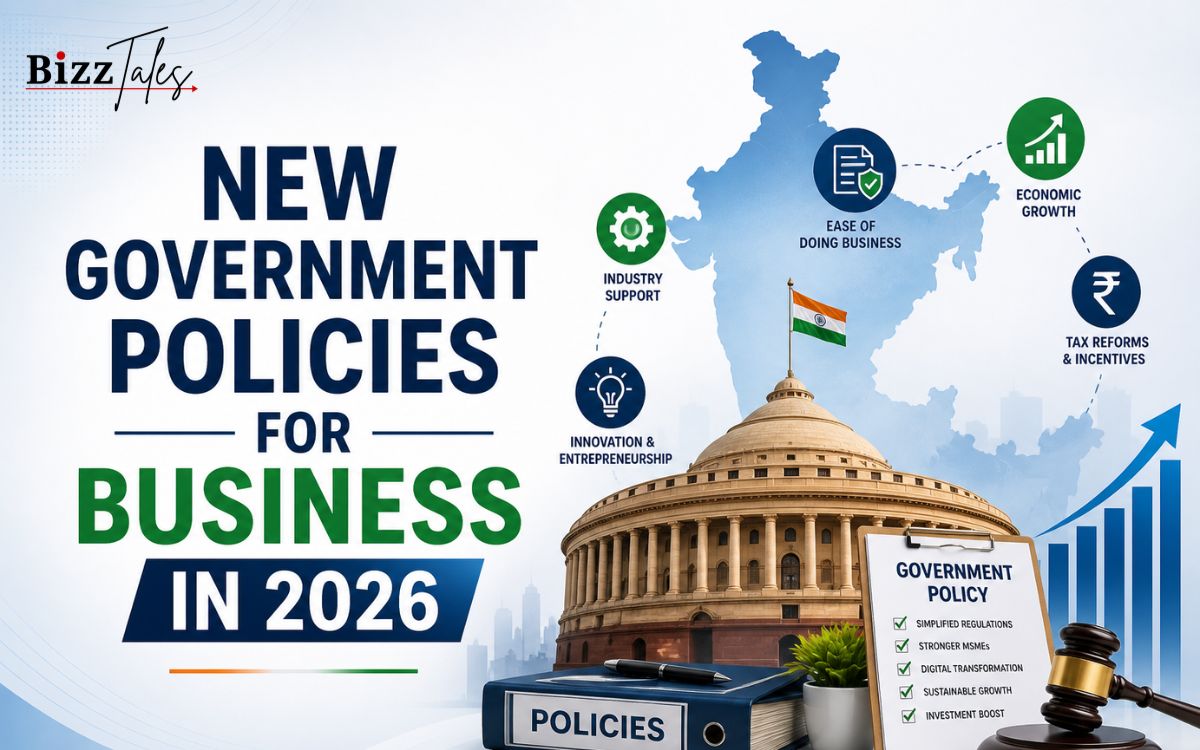
In 2026, government policies are playing a major role in shaping how businesses operate in India. Whether it is a small startup, a local MSME, or a large corporation, every business is directly affected by policy changes.
The Indian government is focusing on improving ease of doing business, boosting manufacturing, promoting digital payments, and supporting entrepreneurship. At the same time, there are stricter compliance rules and regulations that businesses must follow.
For any business owner, understanding these policy changes is not optional anymore. It is necessary to survive and grow in today’s competitive market.
Focus on Ease of Doing Business
The government has taken several steps to simplify business operations. In 2026, starting a business has become faster compared to earlier years. Online registration systems, simplified documentation, and digital approvals have reduced the time required to launch a company.
The aim is to encourage more entrepreneurs to enter the market and reduce bureaucratic delays.
However, while entry has become easier, ongoing compliance requirements are still something businesses need to manage carefully.
Digital India and Business Transformation
One of the strongest policy directions is digital transformation. The government is pushing businesses to adopt digital systems for payments, accounting, and communication.
Digital payment systems, online tax filing, and e-invoicing are now becoming standard practices. These changes are improving transparency and reducing tax evasion.
For businesses, this means better efficiency but also the need to adapt quickly to digital tools and systems.
GST and Taxation Updates
Goods and Services Tax continues to evolve in 2026. The government is working on simplifying GST processes, reducing compliance burden, and improving the filing system.
At the same time, stricter monitoring is being implemented to prevent tax fraud. Businesses must ensure proper documentation and timely filings to avoid penalties.
For small businesses, understanding GST rules is still a challenge, but it is essential for smooth operations.
Support for MSMEs and Startups
The government is giving strong support to MSMEs and startups through various schemes.
Access to credit has improved with government-backed loan programs. Many financial institutions are now offering easier loans to small businesses with reduced collateral requirements.
Startup-friendly policies are also being introduced to encourage innovation. These include tax benefits, funding support, and incubation programs.
However, awareness remains a major issue. Many small business owners are still not fully aware of these benefits.
Make in India and Manufacturing Push
The government is strongly promoting manufacturing through initiatives like Make in India. Policies are being designed to attract both domestic and foreign investment in manufacturing sectors.
Production Linked Incentive schemes are encouraging companies to produce goods in India by offering financial incentives.
This is creating opportunities for businesses in sectors like electronics, textiles, and automotive.
Labour Law Reforms
Labour laws have been updated to make hiring and workforce management easier for businesses.
The aim is to balance employee rights with business flexibility. Companies now have more clarity on hiring, wages, and working conditions.
However, businesses must ensure compliance with these laws to avoid legal issues.
Environmental and Sustainability Policies
In 2026, there is a strong focus on sustainability. The government is encouraging businesses to adopt eco-friendly practices.
Regulations related to pollution control, waste management, and energy usage are becoming stricter.
Businesses that adopt sustainable practices early can benefit from incentives and improve their brand image.
Challenges for Businesses
While policies are designed to support growth, they also bring challenges.
Frequent changes in rules can create confusion, especially for small businesses. Compliance requirements can be time-consuming and may require professional assistance.
Digital adoption can also be difficult for traditional businesses that are not familiar with technology.
Opportunities Created by Policies
Government policies are creating new opportunities across industries.
Digital businesses, manufacturing units, and export-oriented companies are benefiting the most.
Entrepreneurs who understand policy trends and align their business strategies accordingly can gain a competitive advantage.
Future Outlook
Government policies in India are expected to continue evolving. The focus will remain on digitalization, manufacturing growth, and global competitiveness.
Businesses that stay updated with policy changes and adapt quickly will be able to grow faster.
Ignoring these changes can lead to compliance issues and missed opportunities.
Conclusion
Government policies in 2026 are shaping the future of business in India. They are creating opportunities while also increasing responsibilities for businesses.
Understanding these policies is essential for making informed decisions and ensuring long-term success.
Businesses that align with government initiatives and adapt to changes will have a clear advantage in the market.