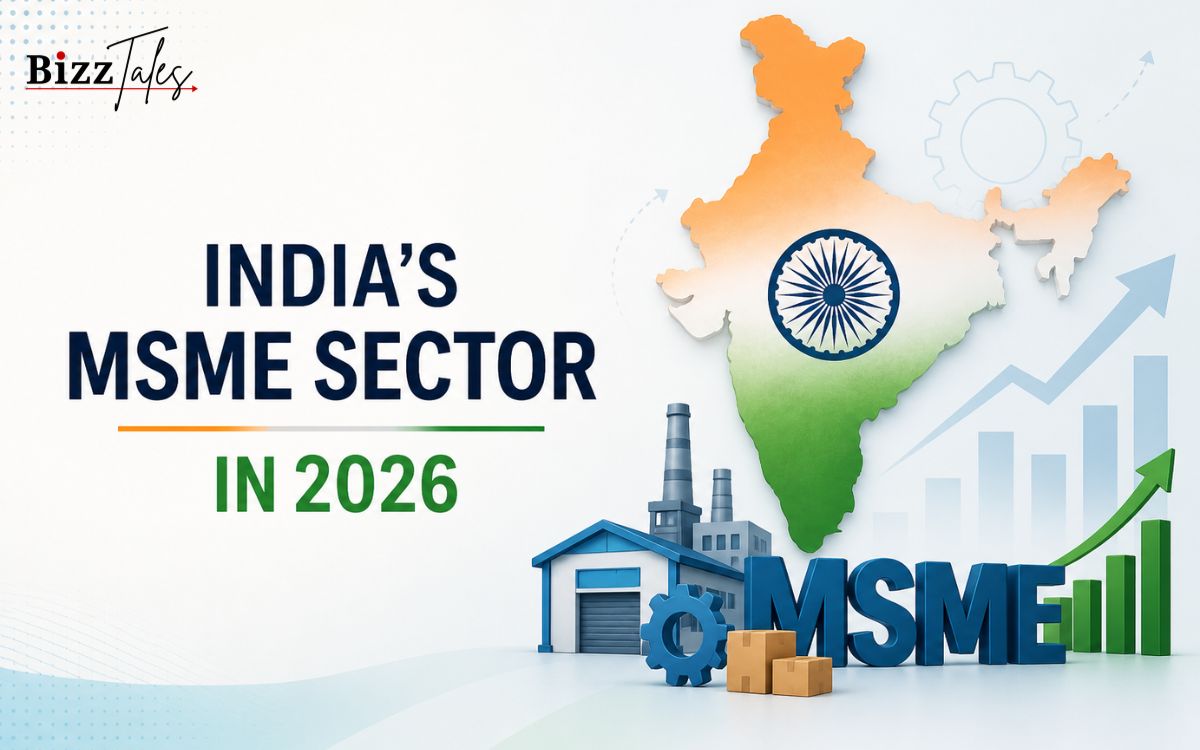
India’s MSME sector has always been the backbone of the country’s economy. In 2026, its importance has grown even more as small and medium businesses continue to drive employment, innovation, and regional development. From local manufacturing units to digital startups, MSMEs are present in every part of the country.
The government has also started giving more attention to this sector, understanding that without MSMEs, India’s economic growth cannot sustain in the long run. However, while opportunities are increasing, challenges are still very real.
This blog explains the current growth of MSMEs, the problems they are facing, and what the future looks like for small businesses in India.
Growth of MSME Sector in 2026
The MSME sector has shown strong growth in recent years. More people are starting their own businesses, especially after digital platforms and government schemes made it easier to enter the market.
In 2026, MSMEs contribute significantly to India’s GDP and employ a large percentage of the workforce. Many rural and semi-urban areas are also seeing new business activity, which is helping in balanced economic development.
The rise of digital tools has played a major role in this growth. Small businesses are now using online platforms for marketing, payments, and customer management. This has reduced dependency on traditional systems and improved efficiency.
Role of Digital Transformation
Technology has completely changed how MSMEs operate. Earlier, small businesses struggled to compete with large companies because of limited resources. But now, digital tools have leveled the playing field.
Online marketplaces, social media marketing, and digital payment systems have allowed MSMEs to reach customers across India. Even small shop owners are now accepting digital payments and selling products online.
Cloud computing, automation, and affordable software solutions have also helped businesses manage operations more efficiently without heavy investment.
Government Support and Policies
The Indian government has introduced several schemes to support MSMEs. These include easier loan access, reduced compliance burden, and incentives for manufacturing and exports.
Schemes like credit guarantees and digital registration processes have made it easier for new entrepreneurs to start businesses. The focus is now on making MSMEs more competitive globally.
However, many small business owners are still not fully aware of these schemes, which limits their benefits.
Key Challenges Faced by MSMEs
Despite growth, MSMEs continue to face several challenges that slow down their progress.
Access to finance remains one of the biggest problems. Many small businesses struggle to get loans due to strict requirements or lack of credit history. Even when loans are available, interest rates can be high.
Another major issue is delayed payments. Many MSMEs depend on larger companies for business, but payments are often delayed, affecting cash flow.
Lack of skilled workforce is also a challenge. While India has a large population, finding skilled workers for specific roles can be difficult for small businesses.
Competition from large companies and e-commerce giants is increasing. MSMEs often find it hard to compete on pricing, branding, and technology.
Impact of Global and Domestic Trends
Global economic changes also affect MSMEs. Fluctuations in raw material prices, supply chain disruptions, and international demand can impact small businesses significantly.
At the same time, domestic factors like inflation, policy changes, and consumer behavior also play a role in shaping business performance.
Opportunities for MSMEs
Despite challenges, there are many opportunities for MSMEs in 2026.
The rise of local manufacturing under initiatives like Make in India is creating new business opportunities. Export markets are also opening up, especially for sectors like textiles, handicrafts, and food products.
Digital platforms continue to offer growth opportunities. Businesses that adopt technology and build an online presence can scale faster than traditional businesses.
The growing demand for sustainable and eco-friendly products is another area where MSMEs can innovate and grow.
Future of MSME Sector in India
The future of MSMEs in India looks promising, but only for those who adapt. Businesses that continue to rely only on traditional methods may struggle to survive.
Technology adoption, financial planning, and customer-focused strategies will be key factors for success.
The government is expected to introduce more policies to support MSMEs, especially in areas like digitalization, exports, and manufacturing.
If MSMEs can overcome their challenges and leverage new opportunities, they will play a major role in making India a global economic power.
Conclusion
India’s MSME sector in 2026 stands at a critical point. On one side, there are strong growth opportunities driven by technology, government support, and market demand. On the other side, there are challenges related to finance, competition, and awareness.
The businesses that succeed will be the ones that adapt quickly, use technology effectively, and focus on long-term growth. MSMEs are not just small businesses anymore—they are the foundation of India’s economic future.