
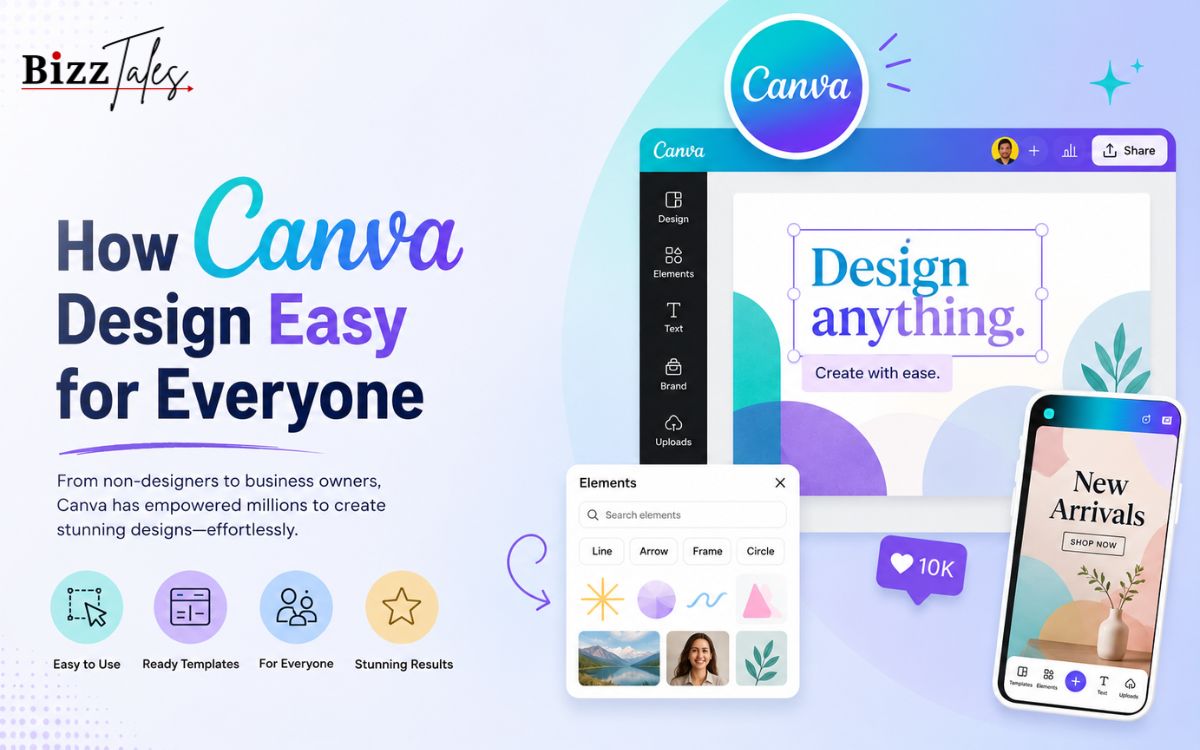
Some years back, graphic designing was always daunting for laymen. Designing a poster, presentation, logo, resume, a social media post, marketing material generally needed some skilled designers and costly software. Most designing tools were not user friendly, not easy to grasp and seemed to be meant only for experts.
And then arrived Canva – the startup that revolutionized online design creation.
Canva. It put the power of design into everyone’s hands. Overnight, students, business owners, Instagrammers, small businesses, teachers, freelancers, even non-designers were making beautiful graphics.
As of today, the platform of Canva is utilized by millions of people all across the world and become one of the most successful technology startups ever. However, there is a great lesson behind this success story.
In short, the Canva story is evidence that large business opportunities can occur by simply removing complexity from the lives of average consumers.
The Beginning of Canva
Canva was established by Melanie Perkins in conjunction with her team.
Prior to starting Canva, Melanie was aware that most people found graphic design software to be very complex and hard to master. It was, she thought, a costly and labor intensive process that demanded training, technical know-how and a significant investment of time.
That there should be a much easier way for everyday users to make elegant designs without turning into professional designers.
Now, you may not notice it, but this very observation is what started the billion dollar business idea of Canva.
Solving a Real Problem
Another strong reason for Canva’s success is that it addressed a real pain point.
Millions of people needed designs, but not everyone was familiar with the complex software. It was also costly to hire a professional designer for every minute task.
Canva simplified design by providing drag-and-drop tools, pre-designed templates, and simple-to-use features.
Simplicity Became Canva’s Biggest Strength
Numerous tech companies chase for the next complicated feature. Canva learned to do the opposite.
The platform was mainly centered on ease of use and user experience.
A person who has no knowledge of design could easily make presentations, Instagram posts, resumes, business cards, posters, invitations, logos, etc…
Templates Changed Everything
Canva’s best decision was certainly the ready-made templates.
Users could replace the blank pages with well-designed professional examples.
They saved time and allayed fears for beginners.
Canva Helped Small Businesses
Smaller businesses benefited hugely from it.
In the past, small business owners sometimes found it too costly to hire designers to develop branding items.
Canva provided the means for businesses to easily produce their own marketing content like social media posts, marketing banners, presentations, menus, and ads at a minimal cost.
This lowered the barrier to entry for branding among local startups and small businesses.
Social Media Helped Canva Grow
Canva’s timing of growth was great because social media was doing well at the same time.
Businesses, influencers, creators, and brands were releasing visual content everyday to Instagram, Facebook, LinkedIn, and YouTube. Canva was the one stop shop for quick content creation.
Canva Made Creativity Accessible
One really great thing about Canva was it made people feel creative.
Previously, users who thought they were ‘bad at design’ are now happily producing attractive graphics.
Freemium Business Model Worked Brilliantly
Canva also implemented a clever business technique known as the freemium model.
The free basic tools and templates for personal use were popular and easily attracted millions of users.
Subsequently, once users needed premium features, better templates, and business services, they moved to paid accounts.
Canva Focused on User Experience
The platform became popular thanks to a simple, smooth and beginner oriented interface.
A lot of technology products are successful because they don’t seem complicated. Canva put so much emphasis on removing confusion and making the experience pleasurable.
Team Collaboration Became Easy
Canva enabled teams to work together more effectively.
Businesses and teams could collaborate on designs, presentations and projects on-line without complex software systems.
The Power of Word-of-Mouth Growth
The ease of use of Canva led to word of mouth marketing.
The platform was naturally recommended by users to friends, students, colleagues and companies because it addressed problems efficiently and easily.
Canva Expanded Beyond Design
Canva began to grow into presentations, videos, business tools, whiteboards, AI functionality and co-creating workspaces.
The company gradually began to expand from a straightforward design device to encompass a more general creative tool.
Technology and AI Integration
Canva also implemented artificial intelligence to enhance its users’ experience.
And AI tools already improve the process by helping users brainstorm ideas for content, make edits to images and presentations, or automate the design process faster.
Why Canva Became So Popular
There are several reasons behind Canva’s global success:
- simplicity
- accessibility
- affordability
- user-friendly interface
- fast content creation
- strong branding
- template-based design system
Took the complication out of graphic design.
Canva vs Traditional Design Software
Most design software is aimed at professional designers. Canva aimed at normal users.
This big change made a total difference on the market.
Rather than merely competing for professionals, Canva broadened the design space to include millions of non-designers.
Business Lessons from Canva
There are many lessons from the origin story of Canva that an entrepreneur can learn from.
Lesson number one is the importance of simplicity. Companies are often successful because they take complex tasks and make them easy.
Another lesson: what is a pain point. Canva did well because it helped solve a pain point experienced by everyone.
The startup also illustrated the importance of user experience equally to technology.
Canva Empowered Content Creators
The creator economy has also been instrumental in the success of Canva.
YouTubers, influencers, bloggers, freelancers, digital marketers-all those who constantly required attractive images-found Canva to be one of the most helpful online tools.
Branding Played a Big Role
Canva also had a fresh, modern, and friendly branding.
The platform was never at all intimidating. It was very friendly and beginner friendly.
The Future of Canva
Canva’s growth shows no signs of slowing as it continues to grow rapidly in the field of education, business, marketing, artificial intelligence, and creative collaboration.
With the growing demand for online content worldwide, Canva’s importance in visual communication may grow even further.
Conclusion
Canva became one of the world’s most successful startups by making graphic design simple and accessible for everyone.
Instead of targeting only professional designers, the company focused on helping ordinary people create beautiful designs easily. This simple idea transformed Canva into a global business success story.
The startup’s journey proves that some of the best business opportunities come from solving everyday problems in simple ways.
For entrepreneurs, Canva offers one powerful lesson — businesses grow faster when they remove complexity and make people’s lives easier.
Sometimes innovation is not about creating something complicated. It is about making difficult things simple enough for everyone to use.
FAQs
Who founded Canva?
Canva was founded by Melanie Perkins and her team.
Why did Canva become popular?
Canva became popular because it made graphic design simple, affordable, and easy for beginners.
What is Canva mainly used for?
Canva is used for creating social media posts, presentations, posters, resumes, logos, and marketing materials.
Is Canva free to use?
Yes, Canva offers free tools along with premium paid features.
What can entrepreneurs learn from Canva?
Entrepreneurs can learn the importance of simplicity, user experience, and solving real customer problems.