
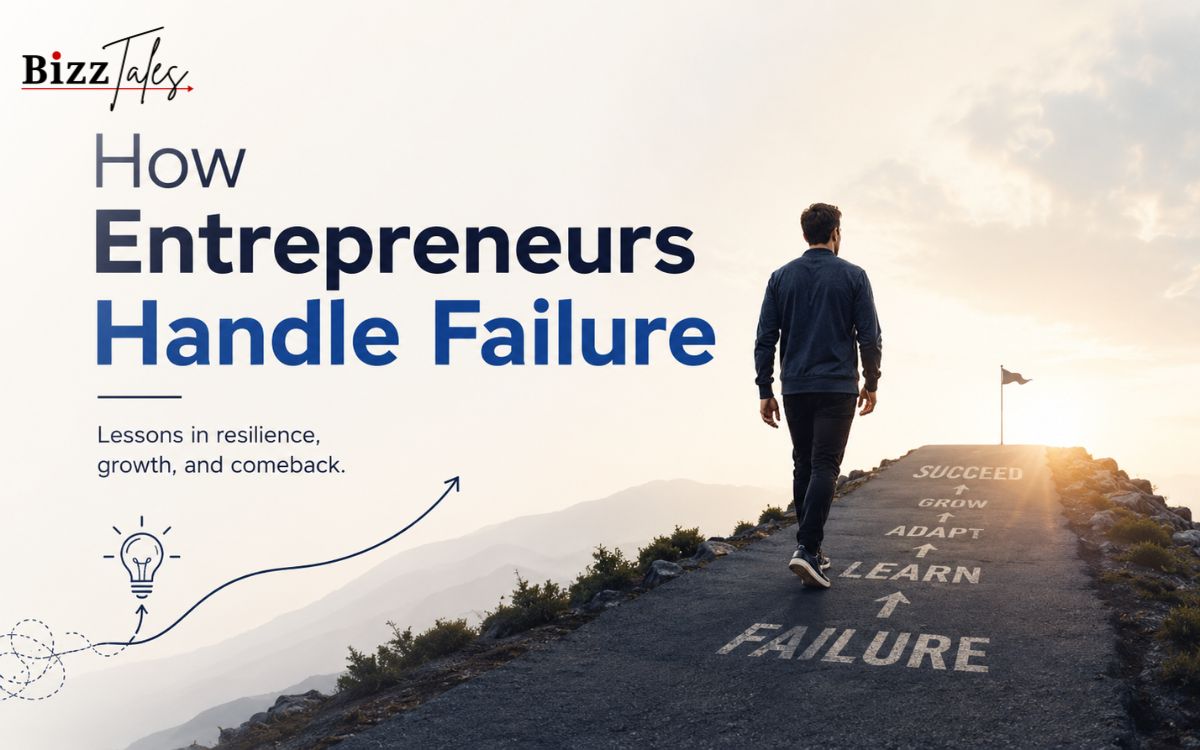
Failure-one of the most common realities of entrepreneurship. Any great entrepreneur one hear about today that has been successful has been rejected, suffered losses, criticism or some kind of business failure at some point in their career. And the difference between successful entrepreneurs and those who are not do not is not failure but what they do in response to it.
FallenIn business you can see many types of failure. In a startup there’s a failure when the company had to stop because there’s no more money. A product can die in the market. A partnership can break. Sometimes you just lose your customers, your money or reputation. It can kill you if you weren’t prepared.
Experienced business owners realize this is not the end. They often will consider failure one of the best lessons in business. Instead of quitting, they’re watching their mistakes, upgrading themselves and nothing will stop them from trying again.
All of the world’s largest companies have been built on the back of a string of failures from the people who founded them. Whether ‘they make it’ is down to the ability to rebound, reinvent and carry on.
Why Failure Is Common in Entrepreneurship
A business is unpredictable. No matter how good your ideas are, they can be unsuccessful due to circumstance, market placement, competitors, wrong timing, finances or consumers.
On the other hand, working in the salaried world means every month has the same income, whereas in entrepreneurship one has to deal with uncertainty every single day. Entrepreneurs assume the risk with money, time and emotions. This can only increase the likelihood of failure.
Many new entrepreneurs are under the impression that great entrepreneurs never fail. This is by no means true.
Failure is actually a normal part of the entrepreneurial path.
Occasionally any entrpreneurship is too much without market demands for the product; teams run out of money without proper planning; persons give up too swiftly, thinking it works immediately.
Entrepreneurship doesn’t come without bumps in the road.
Successful Entrepreneurs Accept Failure
Acceptance is also an important characteristic of successful entrepreneurs.
They’re not in denial. He’s very honest that their mistakes and failure in the beginning, and then they were able to recover faster than others.
Those entrepreneurs who insist they never fail lose valuable time pointing fingers at employees, the economy, the unlucky breaks they received, or someone elses fault. Leading entrepreneurs instead look to solutions.
Acceptance provides a sense of clarity.
It enables entrepreneurs to better identify the real reasons for failure and what modifications have to be made to grow in the future.
This doesn’t mean failure is painless. The majority of entrepreneurs experience they stress, disappointment and pain after failures. Self-disciplined entrepreneurs realize that the temporary failures cannot determine their future.
Learning From Mistakes
Perhaps one of the greatest benefits to failure is the lesson to be learned.
Business schools can teach theories though but business failures do teach us all the lessons that entrepreneurs always remember.
Sometimes even more when they failed. Several of the entrepreneurs I speak with claim that they learned more from their unsuccessful projects than from their successful ones.
Failure teaches:
- Better financial management
- Customer understanding
- Market research
- Team handling
- Risk management
- Decision-making
For instance, an entrepreneur who makes a loss due to mismanagement of cash flow is likely to be much more cautious in subsequent ventures.
Just the same, an entrepreneur who faced a failure in the startup because there was no enough demand from the customers will understand the significance of market validation before releasing products.
There are lessons in every failure.
They take the lessons learned and apply them to improving. Rather than trying to avoid failure, they use it as an opportunity to become better.
Emotional Strength Matters
There are many types of failure and it is not just related to money.
Most entrepreneurs are scarred by shame when there venture fails. Society suffers from a fear of failure-this is particularly apparent in India, where security is seen as everything.
The psychological health is put in danger by stress caused by family, money, society, or health problems.
Which is why the emotional toughness becomes so relevant.
The best entrepreneurs have resilience built in. They know if you hit a bad patch in your life, it’s not the end of the world.
They choose not to dwell on the negativity. Instead they work toward recovery.
Sometimes entrepreneurs take a moment to relax their minds. Other entrepreneurs may take this chance to develop new skills or talk to mentors and other entrepreneurs.
Stability of mind under trying time is the most underrated business skill.
Entrepreneurs Focus on Long-Term Vision
Another reason entrepreneurs get over failure is that they think long-term.
Employees generally look towards monthly salaries and short term security. Entrepreneurs tend to think along the lines of creating something bigger over many years.
Provides them with a long-term mentality that can keep them patient through the tough times.
Most of these entrepreneurs that eventually succeeded, experienced months or years of excruciating failures.
Steve Jobs was ousted from Apple before coming back.
ML had a series of failures including with his rockets and business ventures.
Jack Ma was turned down for his job applications and by universities several times.
The stories demonstrate that short term failure does not prevent lasting success.
Long-term thinkers on the part of the entrepreneur realize that failures are necessary.
Failure Builds Experience
What really counts in entrepreneurship is experience, not perfection.
The founder that has failed before is usually smarter than the founder that hasn’t faced problems.
Why?
That is because mature entrepreneurs are more aware about the risks involved. They tend to become more conservative in spending, hiring, operating the units and business decisions.
Failure equally pulls humility.
A lot of entrepreneurs get overconfident after some early success. Failure teaches us to stay humble and teach us throughout.
This balance of cockiness and humility allows more seasoned entrepreneurs to create better businesses next time.
Support Systems Help Entrepreneurs Recover
Behind many successful entrepreneurs are a solid support system.
It is friends, relatives, mentors, investors and business communities that support the entrepreneur emotionally, and morally and help him/her get a comeback to the professional life after failures & losses.
Stress can be compounded by isolation.
And this is the reason why network and maintaining good relationships in the business is so critical.
Most entrepreneurs are transparent about their failures with their mentors because an outsider will often catch something the entrepreneur has overlooked.
Up until recently, a culture of failure within the Startup community hadn’t really emerged until more recently. This is beginning to educate and encourage the next generation to see failure as inevitable.
Why Giving Up Too Early Is Dangerous
The biggest mistake most entrepreneurs make is giving up too soon.
Social media today fosters false hope. Users are fed stories ofstartups’success and driven to think that companies spring up instantly
In fact, many successful businesses take a decade or more before they start to make money.
Entrepreneurship is a long haul.
Many businesses are really doomed to fail due to the fact that their founders run out of steam after an unreasonably short period of time.
Some ideas are not meant to survive ad infinitum. While some entrepreneurs do need to shut down, I believe most should be able to reignite an idea after overcoming one or more pessimistic periods.
From time to time it is sheer persistence that makes the difference between success and failure.
The Role of Adaptability
Successful entrepreneurs bounce right back after failure.
Instead of making same error over and over again, adapt your strategies according to the realities of the market.
Flexibility is one of the most powerful tools survival strategies in business in today’s world.
Customer preferences change faster than we expected. Technology advances quicker than people think. Competition gets tougher year by year.
Unadaptable business owners may have a hard time.
Whoever learns, improves and grow is always in competition.
Failure pushes entrepreneurs to become MORE flexible and MORE innovative.
Conclusion
Failing is not the opposite of entrepreneurship. It is part of entrepreneurship.
All entrepreneurs will experience failures, lessons learned, and the tough times. What makes the difference is how you deal with it.
In addition to being resilient in the face of adversity, they are also able to manage failure, by: being realistic, acknowledging their failures and the lessons learned from them, remaining positive, and being flexible and adaptable.
Failure may prevent success, but need not shatter our dreams.
In fact, failure makes many entrepreneurs “tougher, smarter, and more profitable.”
The path of an entrepreneur is never paved with silver bricks. However the perseverance, patience, and concentration of can often turn the failure into to the initial building blocks of success.
FAQs
Why do entrepreneurs fail?
Entrepreneurs fail due to many reasons including poor planning, lack of market demand, financial problems, competition, and weak management decisions.
Is failure common in business?
Yes. Failure is very common in entrepreneurship and is considered part of the learning process.
How do successful entrepreneurs recover from failure?
They accept mistakes, learn from experiences, improve strategies, and continue working toward long-term goals.
Does failure help entrepreneurs grow?
Yes. Failure teaches valuable lessons about business, leadership, finance, and customer understanding.
Why is emotional strength important for entrepreneurs?
Entrepreneurship involves stress and uncertainty. Emotional strength helps entrepreneurs stay focused during difficult periods.
Can entrepreneurs succeed after failure?
Absolutely. Many successful entrepreneurs faced multiple failures before building successful companies.