
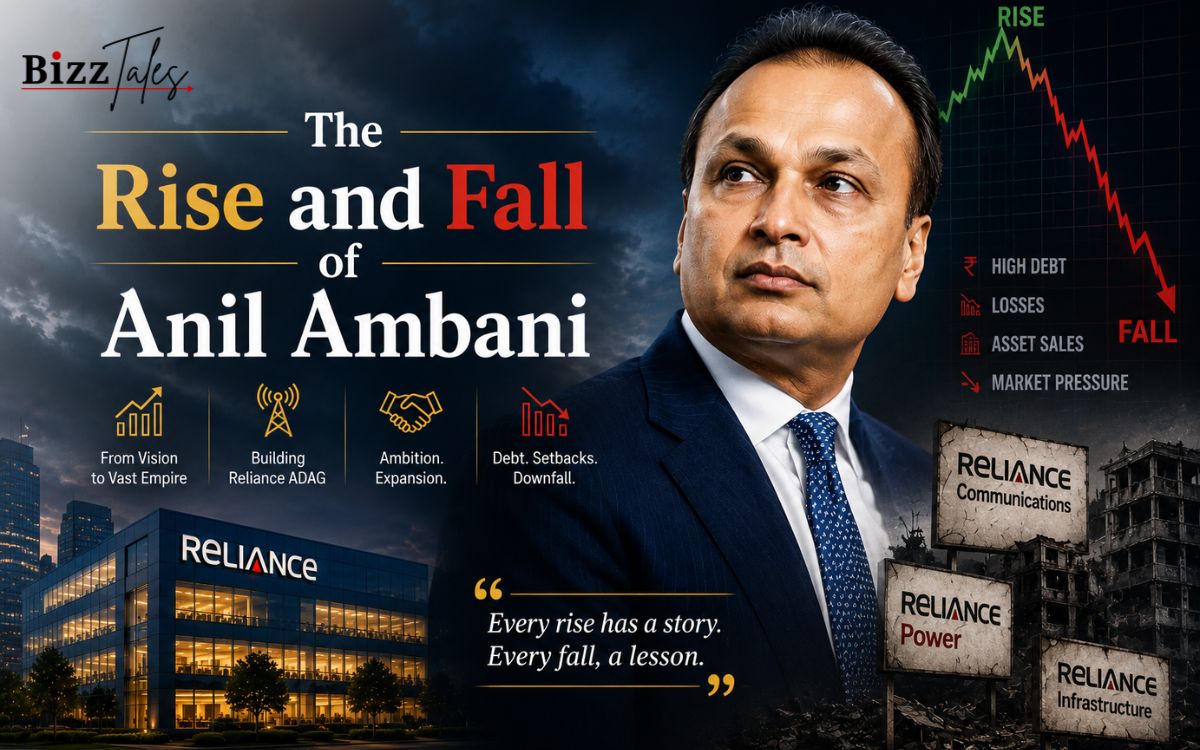
There are comparatively very few corporate stories in India which have been as turbulent as the case of Anil Ambani. Formerly one of the richest persons in the world, Anil Ambani was regarded as one of the top entrepreneurs in India. With business interests spanning cellul ar, power, infrastructure, entertainment, financial services, defense, large conglomerates and the like, his story was a model of the dreams of a rapidly developing India.
However,the Anil Ambani story is not just about incredible achievements. It involves struggling, indebtedness, strategic moves, market changes and fight for the management of a huge Conglomerate in so fierce competition.
The journey of Dhirubhai Ambani from one of the richest businessman of Asia to bankruptcy is being studied lots in India. It has become a learning point for entrepreneurs, investors and top level managers about all the lessons to learn from including planning all better strategies and managing debt effectively.
Even today people remain intrigued by the Anil Ambani saga because it exemplifies how fast wealth can be created and lost.
Early Life and Family Background
Anil Ambani was born on June 4, 1959, in Mumbai, Maharashtra.
The son of Mr Dhirubhai Ambani, the glorious entrepreneur of businesses Reliance Industries. Son of the Dhirubhai who found one of the biggest business groups of India and became sondream for each of the businessman in India.
Anil had been acquainted with business and the functioning of a company right from childhood. During his childhood he also learned tricks of running a business along his elder brother Mukesh.
Anil went to Mumbai for his schooling. Underwent a business administration course at well.
His business background and education makes him potential candidate of Reliance Group.
Joining the Reliance Empire
He joined the business upon his graduation.
Reliance Industries expanded quickly in the 1980s and 1990s, and diversified into many industries. It was one of the most valuable companies in India, and was responsible for much of the country’s growth.
Anil were regarded as someone who was good at communication and interaction with the investors. Anil was to act as the face of Reliance in the financial markets and became known as a shrewd business thinker.
As Reliance flourished, there was a general expectation among industry experts that there would be a High Noon Battle betweep the two brothers to carve up the family-controlled business empire very soon.
However, this is not true after when Dhirubhai Ambani pass away in 2002.,
The Reliance Split
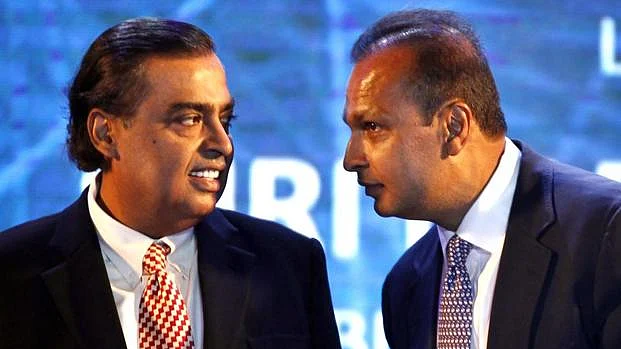
Accounts indicate, however, of a one-upmanship between Mukesh Ambani and Anil Ambani that led to the development plan for the Reliance Group following the death of Dhirubhai Ambani.
Reliance was one of India’s largest corporate groups, hence the situation became newsworthy and attracted Press coverage.
Lastly, in 2005, the ancestral business was divided into two again by virtue of agreement through Kokilaben Ambani mother of the business families.
Divided-annul Ambani acquired the telecom, power, financial services, infrastructure and entertainment interests,.
So was born the Reliance ADA Group [Trade Mark] was added to Reliance Anil Dhirubhai Ambani Group.
There was a strong feeling that Anil was in a prime position to build up a successful independent business empire.
Rapid Growth and Business Expansion
He took control of his empire! And he began building it up rapidly.
His team jumped into a bunch of sectors and generated enthusiasm among everyone to invest in his deals.
Companies under his leadership included:
- Reliance Communications
- Reliance Power
- Reliance Capital
- Reliance Infrastructure
- Reliance Entertainment
They expected the Indian economy to grow; they expected Anil Ambani’s companies to be the first beneficiaries.
The investors showed a lot of enthusiasm and eagerness on Reliance Power issue. The Electric chatter among the IPOs in India was among the highest.
In this period, the fortune of Anand Ambani race roars.
2008 he was one of the richest men in the world. His millions had become a net worth in the range of tens of billions of dollars.
This man remains a powerful symbol for many as representing the flowering of modern Indian enterprise.
The Peak of Success
Business Career of Anil Ambani was at the peak of the time period 2005-2008.
His business were doing well, investors had faith in him and the financial markets were buoyant!
Business and financial magazines [ of the period ] often covered him when talking about the wealthiest individuals in the world.
No-one could at this point have predicted what was in store.
His influence extended beyond business to sports, entertainments and charities.
It was going better than any of us could have imagined.
However, even the sheer growth and the debt financial structuring that’s employed by a much of Anil Ambani’s would be trying.
He would not handle it for very long. Before long this would become one of the largest issues his team would have to deal with.
The Debt Problem Begins
Business growth result increased debt.
Numerous sizable infrastructure, energy and telecommunication projects can be highly capital intensive prior to producing any financial benefits.
Although borrowing can boost growth, taking on more debt than necessary can be hazardous if the business does not perform as well as expected.
Several factors began affecting Anil Ambani’s businesses:
Market situation shifted, competition became more fierce, sanctions and regulations blocked some projects while making others more difficult to implement, time delay for those projects.
When the revenues started to decline servicing debt burden grew more difficult.
Formerly highly optimistic investors voiced worries about the financial condition of the group.
Debt gradually emerged as one of the central concerns related to the future of Anil Ambani’s companies.
Challenges in Telecommunications
One of the largest blow backs came through Reliance Communications.
However the telecommunications industry experienced a sharp change in the nature of competition.
Pricing pressures eroded industry-wide profitability.
The convergence of newly entrant rivals shifted the competitive landscape and made the battle for customers more intense.
Reliance Communications failed to remain competitive.
However, numerous restructuring exercises failed to improve the situation.
Over time, the telecom division that had been thought to be the group’s main growth driver transformed itself into one of its greatest challenges.
Impact on Other Businesses
Financial strain extended beyond telecom companies.
There were a number of our group business faced issues of debt, market and changing industry landscape.
Infrastructures needed a long time of investment.
The power sector companies encountered both operator and regulatory issues.
Businesses in the financial services industry faced some challenges of their own as the economy shifted.
By increasing these frustrations then, investor confidence suffered a significant erosion.
The pre-eminence of the similar groups pre-2007 in market valuation begin to collapse. It reflect bymarket value of various group companies experienced huge falls comparing to their year peak.
Financial Struggles and Public Attention
Anil Ambani’s financial woes became a talking point in the Indian business class.
Media picked up on news of debt rescheduling, asset sales and litigation.
The story stood out because of the stark contrast between his earlier success and the subsequent hardships.
For a time, even international discussion was run by the claim and debt juggernaut that was public litigation against creditors for nonpayment.
Many viewed it to be one of the most dramatic turnarounds in Indian corporate history.
In spite of difficulties faced, Anil Ambani persisted in looking into other opportunities to stabilise and restructure segments of his business group.
Lessons From the Rise and Fall
Several lessons can be learned from the story of Anil Ambani.
The main lesson there would be how to handle debt.
Leverage can lead to explosive growth for a company, but having too much debt can pose significant risks if market situations shift.
Yet another lesson learned is that there should be a recognition of the need to adapt to discontinuities within the industry.
For companies working in fast-changing industries, the business must constantly innovate and face new competitiveness.
Furthermore, the case underscores the significance of strategic focus.
The number of business 30 industries that he manages. Phir bhi, only high level strategic decision structure can synergistically leverage these businesses, though careful considerations regarding how these fields should be allocated .
Finally it shows that of course business success can never be assured.
Constant Readiness for Innovation Even the best of companies need to reinvent themselves sometimes.
Personal Resilience
While the setbacks, Anil Ambani story is also about endurance.
There are many examples of entrepreneurs in the Business history who have encountered serious difficulties and have subsequently gone on to rebuild their careers.
Although his had group experienced many hardships, his story is not without hope.
Every manager has encountered failure, disappointment and loss of money through period of his dead-end in his career.
Whether you choose to confront a difficult situation or not, the capacity to learn from problems can sometimes be a significant component of long-term success.
Famous Quotes by Anil Ambani
Throughout his career, Anil Ambani shared several insights about business, leadership, and ambition.
One of his well-known statements is:
“Dreams are what drive us. They are the fuel that keeps us moving forward.”
This quote reflects his belief in ambition and long-term vision.
Another notable quote is:
“Challenges are opportunities in disguise.”
This highlights the entrepreneurial mindset of finding possibilities even during difficult situations.
He also emphasized the importance of perseverance, stating:
“Success does not come overnight. It is built through determination and hard work.”
These quotes continue to resonate with entrepreneurs and professionals seeking inspiration.
Conclusion
The rise and fall of Anil Ambani remains one of the most fascinating stories in Indian business history.
From leading a major corporate group and becoming one of the world’s richest individuals to facing financial challenges and business setbacks, his journey demonstrates both the opportunities and risks associated with large-scale entrepreneurship.
His story highlights the importance of debt management, strategic decision-making, adaptability, and resilience.
While opinions about his business legacy may vary, there is no denying that Anil Ambani played a significant role in India’s corporate landscape.
For entrepreneurs and business enthusiasts, his journey serves as a valuable reminder that success requires not only ambition and growth but also careful planning and the ability to navigate changing market conditions.
FAQs
Who is Anil Ambani?
Anil Ambani is an Indian businessman and the younger son of Reliance Industries founder Dhirubhai Ambani.
Why is Anil Ambani famous?
He became one of India’s most prominent businessmen and was once among the richest people in the world.
What happened after the Reliance Group split?
After the division of the Reliance Group in 2005, Anil Ambani gained control of businesses in telecommunications, power, infrastructure, entertainment, and financial services.
Why did Anil Ambani face financial difficulties?
Several factors contributed, including high debt levels, industry competition, regulatory challenges, and changing market conditions.
What was Reliance Communications?
Reliance Communications was one of Anil Ambani’s major telecom companies and played a significant role in India’s telecommunications sector.
What lessons can entrepreneurs learn from Anil Ambani’s story?
Entrepreneurs can learn the importance of debt management, adaptability, strategic focus, risk assessment, and resilience during challenging times.