How did Lenskart transform from an online eyewear startup into a large omnichannel retail business? The answer lies in its ability to combine technology, physical retail stores, centralized manufacturing, and customer-focused innovation.
Founded in 2010, Lenskart started as an online eyewear retailer and later expanded into physical stores, creating an integrated shopping experience across digital and offline channels. Its business model addresses common eyewear shopping challenges, including affordability, product selection, accessibility, and the need for professional eye testing.
This case study explores how Lenskart built a scalable omnichannel business and the strategies that support its growth.
1. Starting Online and Expanding Offline
Lenskart initially operated as an online eyewear business. However, buying prescription glasses online presents a unique challenge: customers often want to try frames, receive expert advice, and undergo an eye test before purchasing.
To address these needs, Lenskart expanded into physical retail, opening its first store in 2013.
Instead of treating online and offline retail as separate businesses, the company connected both channels into one customer experience.
Customers can discover products online, visit stores to try frames, receive eye-testing services, and complete purchases through their preferred channel.
This approach helps Lenskart combine the convenience of e-commerce with the trust and experience of physical retail.
2. Creating a Seamless Omnichannel Customer Experience
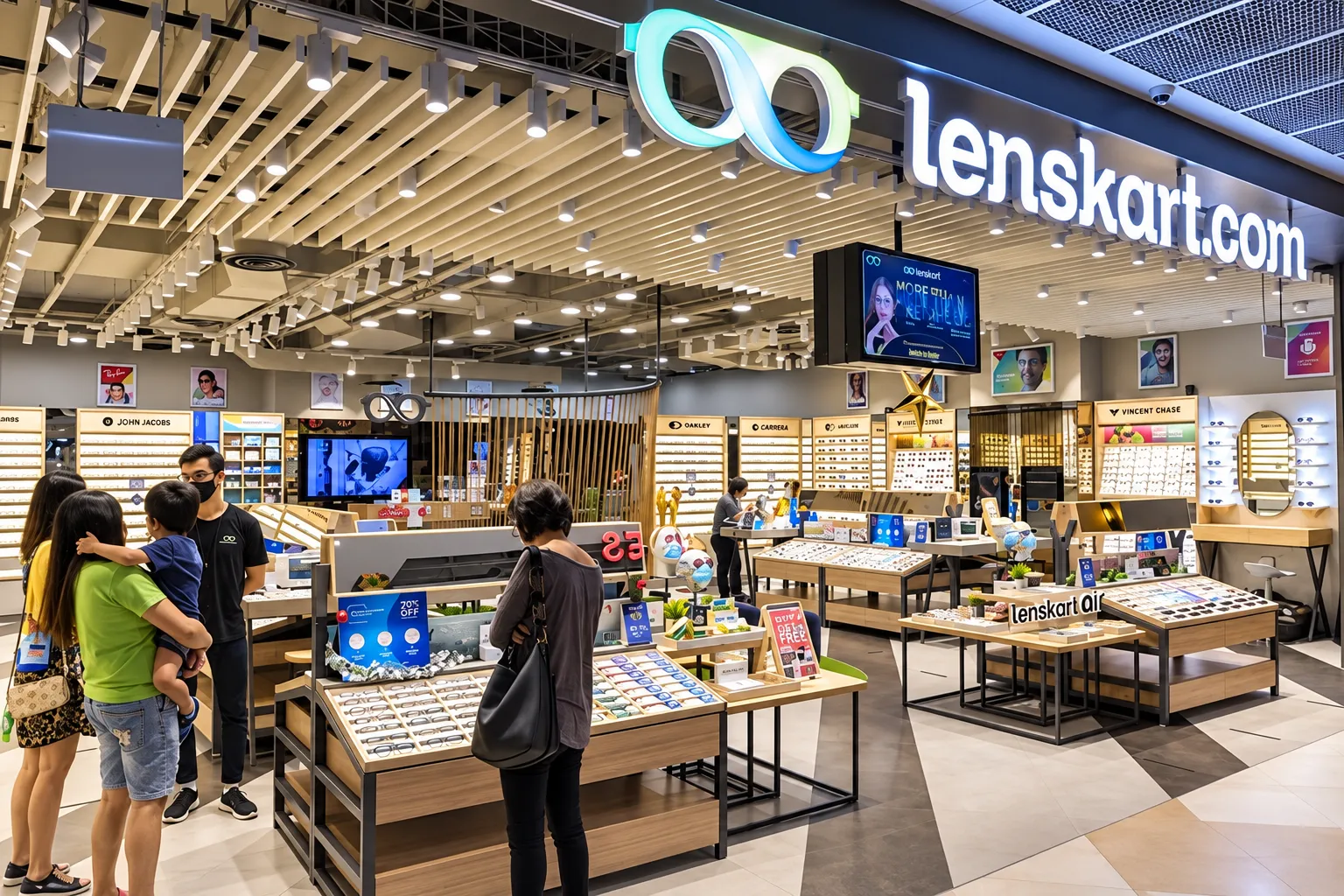
A major part of Lenskart’s omnichannel strategy is making the customer journey consistent across platforms.
Its website, mobile application, and retail stores work together to simplify eyewear shopping.
Key omnichannel features include:
- Online browsing and product discovery.
- Virtual frame try-ons using augmented reality.
- Store visits for physical trials and eye tests.
- Integrated inventory visibility.
- Flexible order fulfillment and return options.
Lenskart’s technology platform connects store and online inventory, allowing customers to access a broader product selection than a single store may physically carry.
SEO insight: This integrated experience helps explain how omnichannel retail improves customer convenience, product accessibility, and purchasing flexibility.
3. Using Technology to Solve Customer Problems
Technology plays a central role in Lenskart’s business model, from product discovery to order fulfillment.
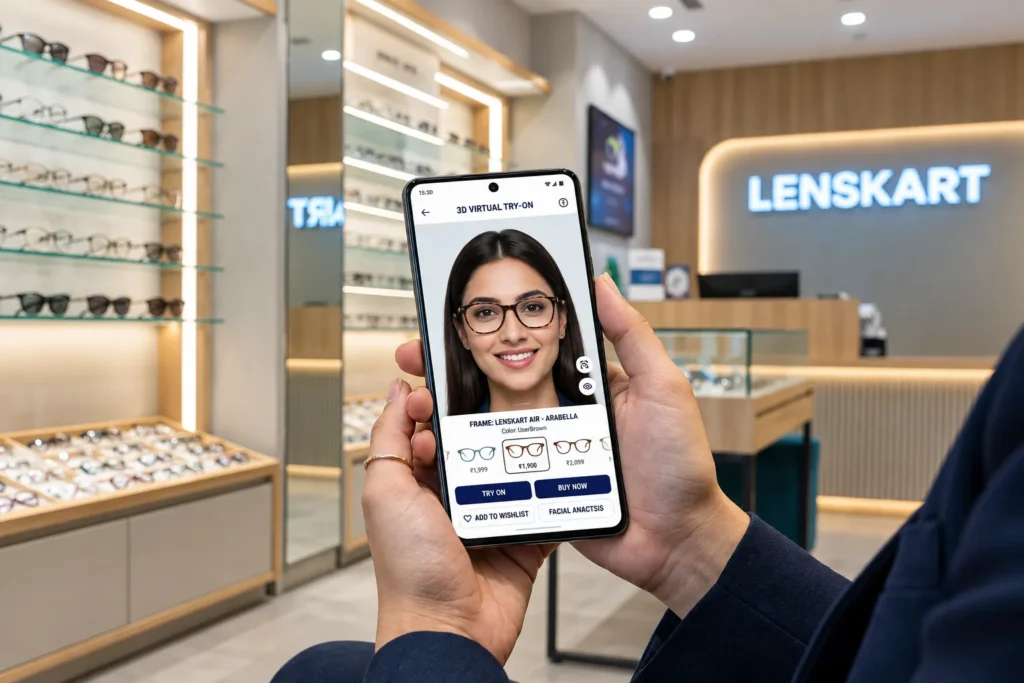
Virtual Try-On
Augmented reality allows customers to preview how different frames look on their faces using a smartphone camera. This helps reduce uncertainty when shopping online.
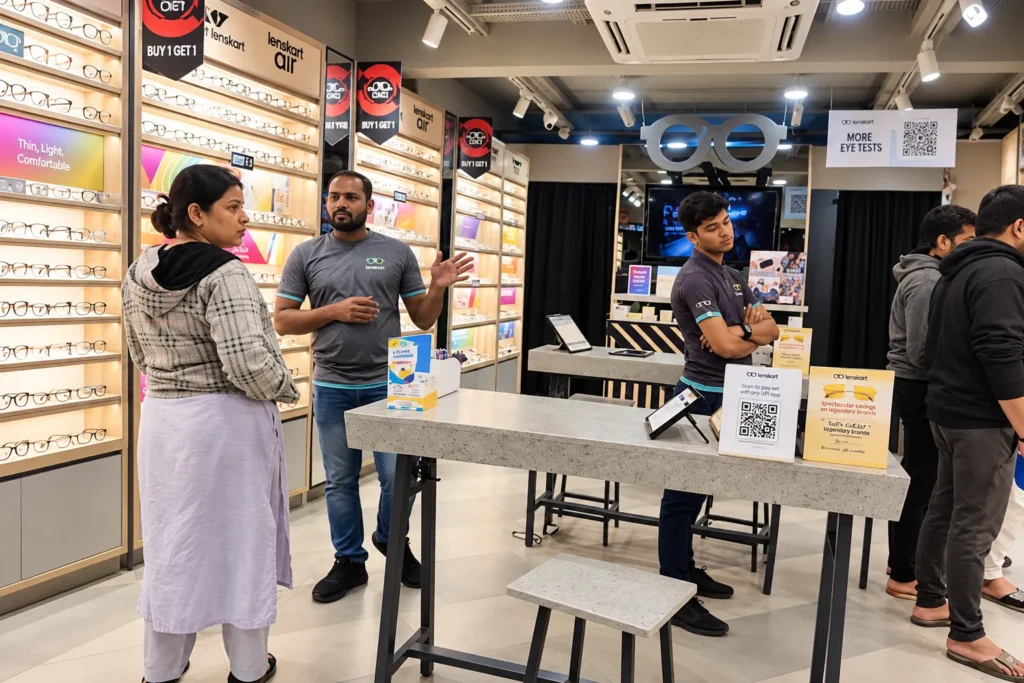
Remote Eye Testing
Technology-enabled eye testing helps extend access to optometry services across more locations, supporting the company’s retail expansion.
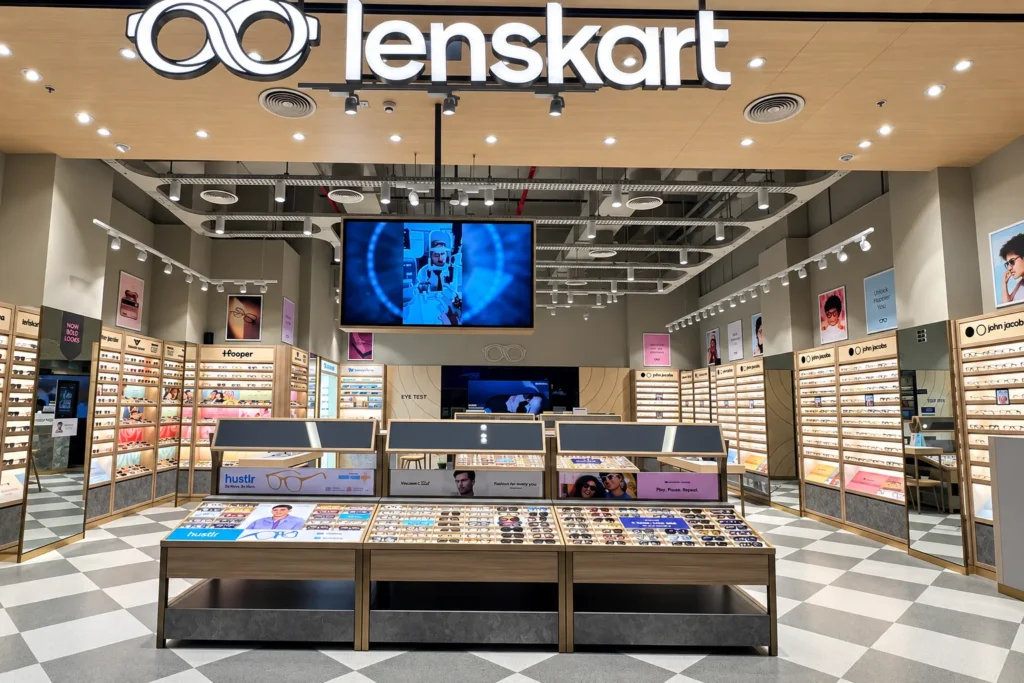
Digital Store Operations
Integrated inventory systems, queue management, and digital browsing tools help connect physical stores with Lenskart’s online platform.
According to Lenskart’s corporate technology overview, these systems support customer engagement, retail operations, supply chain management, and order fulfillment.
4. Building a Scalable Supply Chain Through Vertical Integration
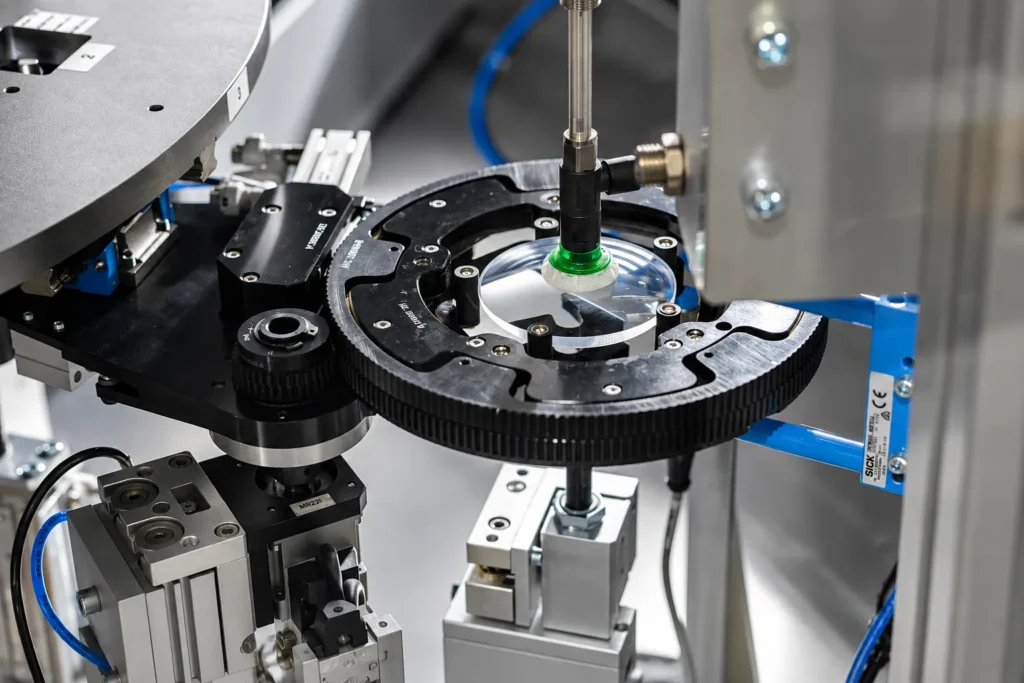
One of the important drivers of Lenskart’s scalability is its integrated supply chain.
Traditional eyewear retail can involve multiple intermediaries between manufacturers and customers. Lenskart has invested in designing products, manufacturing eyewear, and managing a centralized supply chain.
This approach helps the company coordinate product availability, quality control, and distribution across its retail network.
How centralized operations support growth
- Cost efficiency: Greater control over manufacturing and sourcing can help manage product costs.
- Inventory optimization: Centralized inventory can reduce the need for every store to stock the entire product range.
- Consistent quality: Integrated processes support standardized product specifications.
- Scalable fulfillment: A connected logistics network supports online orders and store replenishment.
Lenskart’s FY2025 industry report describes its centralized supply chain and vertical integration as distinguishing features of its operating model.
5. Expanding Through a Data-Driven Retail Network
Lenskart’s physical stores are more than traditional retail outlets. They also provide eye-testing services, product trials, and customer support.
The company uses location analytics to identify potential store locations and understand local demand.
Its GeoAnalytics platform considers factors such as demographics, mobility patterns, and location characteristics to support expansion decisions.
This data-driven approach can help the company:
- Identify underserved markets.
- Evaluate potential store locations.
- Align store placement with customer demand.
- Expand into smaller cities and emerging retail markets.
By combining online reach with physical stores, Lenskart can serve customers who prefer digital shopping as well as those who value in-person assistance.
6. Building Brand Awareness Through Digital Marketing
Lenskart’s digital presence supports customer acquisition and engagement across its omnichannel ecosystem.
Its marketing strategy combines online product discovery, app engagement, promotional campaigns, and physical retail visibility.
Important elements include:
Content and social media: Digital content helps introduce products, showcase styles, and engage potential customers.
Mobile app engagement: The app supports product browsing, virtual try-ons, and shopping journeys that can continue in stores.
Promotional offers: Discounts and bundled offers can encourage customers to explore products and make purchases.
Consistent branding: A recognizable brand experience across online platforms and physical outlets helps connect customer interactions.
The broader strategy is to make eyewear accessible as both a vision-care necessity and a fashion product.
7. Expanding the Business Beyond India
Lenskart has also expanded internationally, including through its acquisition of Japanese eyewear retailer Owndays.
Its international strategy combines established operating capabilities with adaptation to local customer preferences.
According to its FY2026 shareholder update, Lenskart is leveraging capabilities such as centralized supply chains, integrated omnichannel technology, product design, and remote eye-testing infrastructure across international markets.
This illustrates how a scalable business model can support geographic expansion while allowing localized product and marketing decisions.
8. The Lenskart Omnichannel Growth Model
Lenskart’s strategy can be understood as a connected growth cycle:
Digital Discovery
Website, app, social media, virtual try-on
Physical Retail Experience
Eye tests, frame trials, expert assistance
Integrated Fulfillment
Centralized inventory, manufacturing, delivery
Customer Feedback and Data
Insights that inform product, service, and expansion decisions
A connected operating model that links customer experience with business expansion.
The strength of this model comes from the interaction between its components. Digital platforms support discovery, stores provide physical experiences, and integrated operations support fulfillment.
Conclusion
Lenskart’s growth demonstrates how an eyewear company can combine e-commerce, physical retail, and technology into a scalable omnichannel business.
Its strategy brings together an integrated customer journey, virtual try-on technology, remote eye testing, centralized manufacturing, data-driven store expansion, and digital marketing.
Rather than relying on a single sales channel, Lenskart connects multiple touchpoints into a coordinated retail experience.
For businesses exploring omnichannel retail, the key takeaway is clear: scalability depends not just on expanding sales channels, but on connecting technology, operations, and customer experience into one integrated system.