Netflix has become one of the biggest entertainment giants in the world now-a-days. Every day millions of people across the globe use it to relive themselves watching movies, web series, documentaries and the ultimate best original content.
However, the destiny of Netflix has not always been as a hugely successful streaming provider-its origins are in the rental of DVDs at a time where of course the major source of television was cable television and the collection of videos
The history of Netflix is an excellent example of how innovation, risk and understanding consumer behavior can change the way people consume entertainment.
The year is 2026 and Netflix is one of the largest global entertainment brands in the world and has helped shape the future of television, movies and digital content.
- The Beginning of Netflix
- DVD Rental Business Model
- Competing with Blockbuster
- The Internet Changed Everything
- Shift from DVDs to Streaming
- Original Content Revolution
- Why Netflix Became So Popular
- Impact on Traditional Television
- Global Expansion
- Competition in Streaming Industry
- Challenges Faced by Netflix
- Reed Hastings' Leadership Style
- Business Lessons from Netflix
- How Netflix Changed Entertainment Forever
- Future of Netflix
The Beginning of Netflix
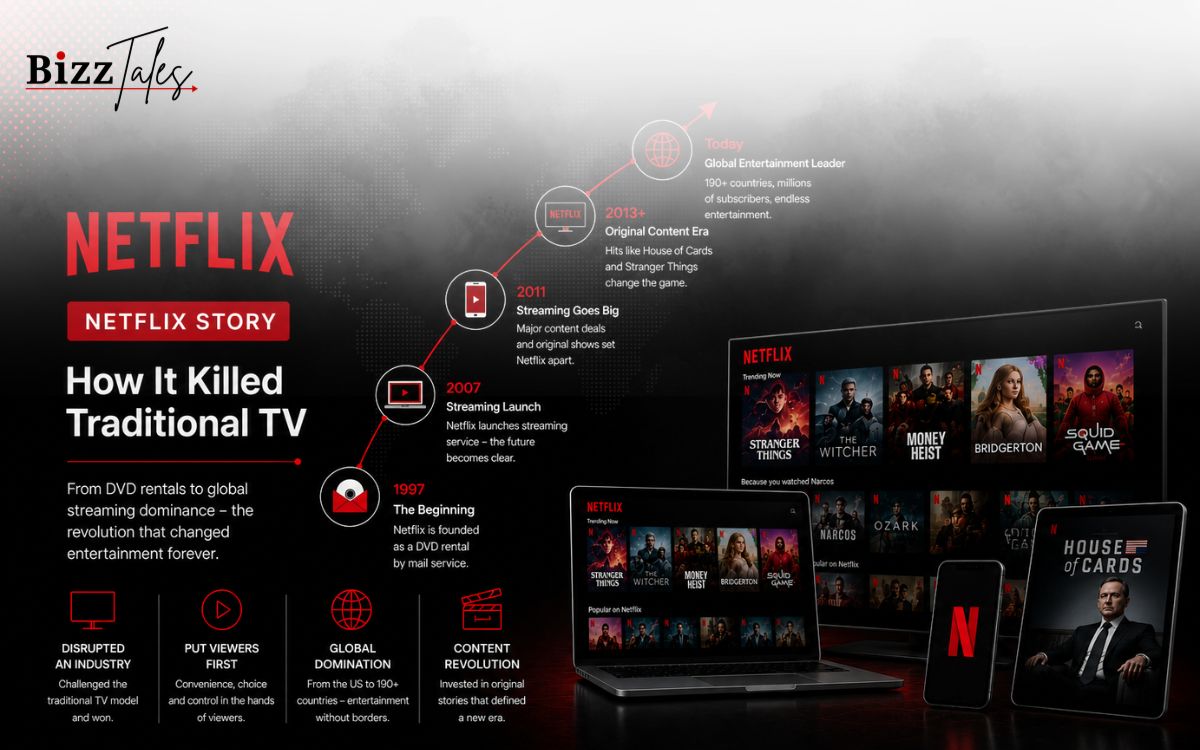
Netflix was founded in 1997 by Reed Hastings and Marc Randolph in the United States.
VHS rental shop was really popular at this time. Customers had to physically go to the store to rent movies and return them later.
Reed Hastings, the CEO of Netflix, was inspired to develop the idea for the company after he is said to have paid a fine at a video store for returning a DVD too late.
DVD Rental Business Model
The beginning of Netflix was that you were able to rent DVDs through the mail.
Customers have the option to order movies via Internet, get DVDs by mail, and send them back when they are finished.
One of the key innovations was the design of this model which differed from conventional rent-a-stores because it eliminated the requirement of physical visits.
The subscription plans without late fees. We launched.
Competing with Blockbuster
Back then, Blockbuster was the household name for renting movies.
Most thought Netflix would not be able to compete against such a big corporation.
However, Netflix centered its attention on the convenience and customer experience. While Blockbuster managed their business on using physical stores and Netflix targeted the digital systems and online services.
The Internet Changed Everything
Thanks to the technological advancements leading to quicker internet services, Netflix created a huge market.
The company saw potential in online streaming to be the next form of entertainment.
It was a difficult and brave choice, as streaming technology was still in its infancy and a lot of people were still hooked on the traditional TV.
Shift from DVDs to Streaming
Netflix started out as a DVD rental service and shifted to streaming as time went by.
Was a decision that would change the company’s futuresignificantly.
DVDs were not required by anyone any longer as people were now able to access the content instantly online.
The availability of streaming has transformed consumer habits across the globe.
Original Content Revolution
A further significant point of change came with the production of original content by Netflix.
The company, rather than relying on Hollywood films and TV shows, started making web series and movies of its own.
Allows to Netflix become enormously popular.
This method set Netflix apart from the traditional TV networks.
Why Netflix Became So Popular
Netflix was a success because they spotted a changing in customer behavior.
They want to watch their content when they want (anytime/anywhere)..! In the traditional TV environment, you had the constraint of schedules, with TV guide etc. Netflix did not have that constraint.
The platform also implemented suggestion engines, which used recommendations to recommend you content depending on your taste.
Made our experience more personal.
Impact on Traditional Television
The revolution of the entertainment industry was started by Netflix.
Cable TV networks saw the decline in viewers because consumers opted for streamings.
The phrase binge-watching was also made popular by Netflix when they started putting complete seasons on the site instead of weekly episodes.
It transformed the way audiences consume content.
Global Expansion
Netflix spread quickly to many countries.
An attempt to market own content in other languages. Heavy investments in first signs of localizations.
This has enabled Netflix to reach global audiences.
Competition in Streaming Industry
With the popularization of streaming, the competition expanded quickly.
There came the 1st services such as Disney+, Amazon Prime Video and so on.
This applied incentives on Netflix to keep up with quality content and increasing their library
Challenges Faced by Netflix
Challenges by Netflix;
We had to capitalize billions of dollars on content creation and licensing.
Content costs rose as did competition, making it harder to generate subscribers in some markets.
Was issues of sharing passwords, pricing, and flexible viewing preferences.
Reed Hastings’ Leadership Style
Innovative and Forward-thinking Leadership Reed Hastings is a leader who was sustained in innovative and forward looking leadership style.
He promoted experimentation and displayed readiness to take sizable risks when called for.
Going full head first into Streaming and Original content was a risky step it meant changing your entire business model.
Business Lessons from Netflix
There are many take-aways from Netflix’s story.
La leçon la plus importante est celle de l’adaptabilité. Les company normal s’endormes ou s”épuise” lorsque la technologie évolue.
A past lesson is innovation. Instead of relying solely on its original business model, Netflix kept innovating.
The storytogether highlights the role of customer insight and future trends:
How Netflix Changed Entertainment Forever
Netflix revolutionized the production, streaming and consumption of content.
The company brought streaming into the mainstream and changed the world of production of movies and web series.
Nowadays, even formertv channels and film studios have learned to adapt to streaming services thanks to the influence of Netflix.
Future of Netflix
In 2026, Netflix continues focusing on:
Original content
Artificial intelligence recommendations
Global expansion
Interactive entertainment
Gaming and digital experiences
The Company keeps changing all the time to keep up with the streaming industry.
Conclusion
Netflix’s evolution from a small DVD rental company to a dominant online streaming platform is one of the greatest transformations of modern business history.
Company has done a good job in the time i.e. Its set of vision and strategy revised and implemented before they were needed to have been changed in the market.
With its in-depth information about customer behaviors, willingness to take risks, and a path to innovation,Netflix has entirely transformed the entertainment industry.
According to its history, it tells us that early adopters to the future often become the leaders.