Running an online business in 2026 comes with massive opportunities—but also serious risks. As digital adoption grows, so do cyber threats. From phishing attacks to ransomware and data breaches, businesses are under constant threat.
And here’s the harsh truth:
Most small businesses don’t fail because of competition—they fail because of poor security.
A single security breach can wipe out customer trust, destroy your reputation, and cause financial losses that are impossible to recover from.
That’s why investing in the right security tools is not optional anymore—it’s essential for survival.
Why Online Businesses Are Easy Targets
Cybercriminals don’t just target big corporations. In fact, small and medium businesses are often easier targets because:
- They lack advanced security systems
- Employees are not trained in cybersecurity
- Passwords and access controls are weak
- Systems are outdated
This makes them vulnerable to attacks that can happen within minutes.
Types of Cyber Threats Businesses Face
Before choosing tools, it’s important to understand the threats:
- Phishing attacks: Fake emails or messages to steal sensitive data
- Malware & ransomware: Software that locks or damages your data
- Data breaches: Unauthorized access to customer information
- DDoS attacks: Overloading servers to crash websites
- Credential theft: Hacking accounts through weak passwords
Each of these threats can cause serious financial and operational damage.
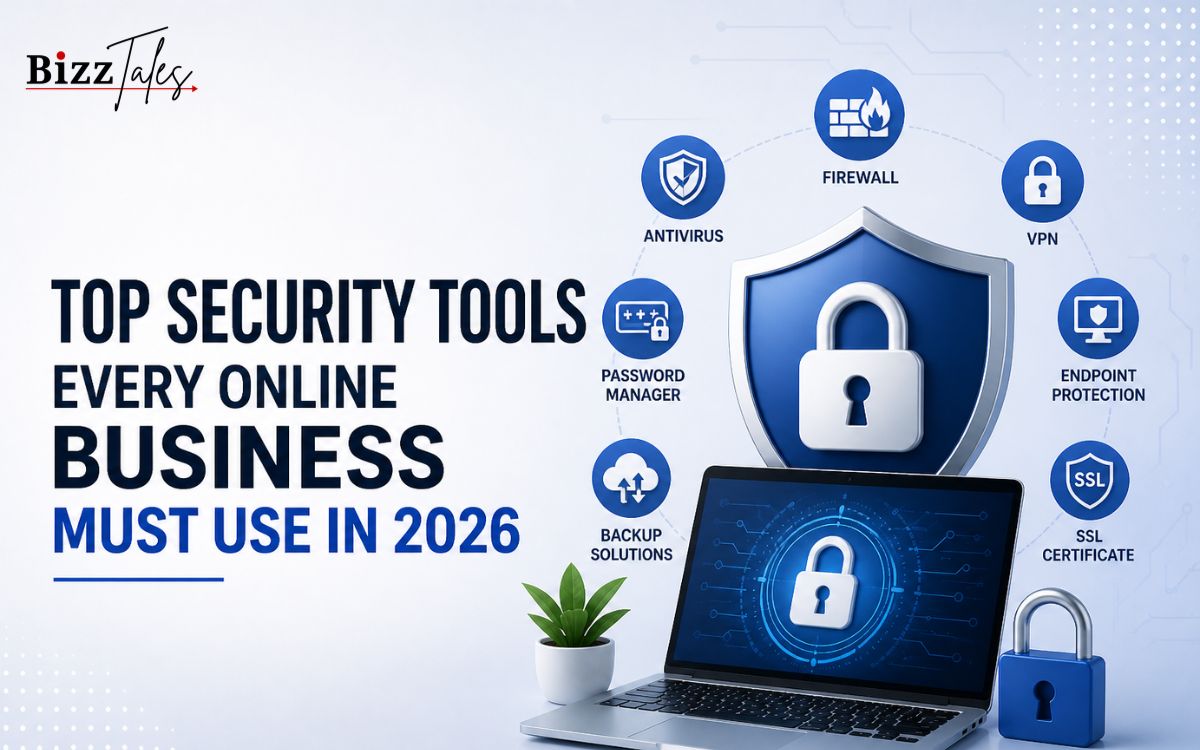
Top Security Tools Every Online Business Must Use
1. Antivirus & Anti-Malware Software
This is your first line of defense. Antivirus software detects and removes harmful programs before they damage your system.
Modern tools also provide real-time protection against evolving threats.
2. Firewall Protection
A firewall acts as a barrier between your internal network and external threats.
It monitors incoming and outgoing traffic and blocks suspicious activity before it reaches your system.
3. Virtual Private Network (VPN)
A VPN encrypts internet connections, making it difficult for hackers to intercept data.
This is especially important for remote teams working from different locations.
4. Password Managers
Weak passwords are one of the biggest security risks. Password managers help generate strong, unique passwords and store them securely.
This reduces the chances of account hacking.
5. SSL Certificates
SSL certificates encrypt data transferred between your website and users.
If your website doesn’t have HTTPS, you’re not just insecure—you’re also losing SEO rankings and customer trust.
6. Multi-Factor Authentication (MFA) Tools
MFA adds an extra layer of security by requiring additional verification, such as OTPs or authentication apps.
Even if a password is compromised, MFA prevents unauthorized access.
7. Endpoint Security Solutions
These tools protect all devices connected to your business network, including laptops, mobile phones, and tablets.
With remote work becoming common, endpoint security is critical.
8. Cloud Security Tools
If you’re using cloud services, you need tools to protect your data from unauthorized access.
Cloud security solutions provide encryption, monitoring, and compliance management.
9. Backup & Recovery Tools
Data loss can destroy a business overnight. Backup tools ensure that your data is stored securely and can be restored quickly in case of an attack.
This is your safety net against ransomware.
10. Threat Detection & Monitoring Tools
Advanced tools use AI to detect unusual activities and alert businesses before damage occurs.
These tools help in identifying threats in real time.
Best Practices Alongside Tools
Tools alone are not enough. Businesses must also follow best practices:
- Regularly update software and systems
- Train employees on cybersecurity awareness
- Use strong passwords and change them frequently
- Limit access to sensitive data
- Conduct regular security audits
Real-World Impact of Poor Security
Many businesses have faced massive losses due to weak security systems. Data breaches can lead to:
- Loss of customer trust
- Legal penalties
- Financial losses
- Business shutdown
The cost of prevention is always lower than the cost of recovery.
How to Choose the Right Security Tools
Not all tools are suitable for every business. Consider these factors:
- Business size and scale
- Budget constraints
- Type of data handled
- Industry regulations
Start with basic tools and upgrade as your business grows.
Future of Cybersecurity in Business
Cybersecurity is evolving rapidly. AI-driven security tools, biometric authentication, and zero-trust architecture are becoming standard.
Businesses that invest in security today will be better prepared for future threats.
Conclusion
Cybersecurity is no longer just an IT concern—it’s a core business priority.
Investing in the right security tools protects your data, builds customer trust, and ensures long-term sustainability. In a digital-first world, security is not an option—it’s a necessity.