Today, India is undergoing one of the fastest stages of digitization for digital payments in the world. A decade ago, India moved from being a cash-centric economy to a digital-first economy enabled by mobile phones, having a large internet user base, and adopting the latest in fintech technologies.
Digital payment is no longer restricted to the cities or to big organizations. In fact, now even small traders, street vendors and local stores can take payments using QR codes or mobile applications.
At the heart of this change is a not-for-profit organization called National Payments Corporation of India that designed the Unified Payments Interface. UPI has revolutionized the digital transaction economy in India.
What lies ahead for digital payments in India is likely to be quite exciting, and will be far more comprehensive than what we see today.
Growth of UPI in India
UPI became an enabler in the switchover to digital payments and fostered faster adoption of these payment modes. Through this method it became possible to transfer the money directly from one Bank A/c to another in real time through mobiles.
There are common electronic wallets like Google Pay, PhonePe, and Paytm to name a few which has eased this procedure and has thus catered to million users.
While many digital payments platforms have proved to be unsuccessful, UPI has done well for itself. The reasons include the fact that transactions are quick and free in most cases, the interface is user friendly and UPI is broadly accepted in cities as well as villages.
Consequently, UPI has emerged as the favored mode of transactions from consumers and merchants.
Emerging Trends in Digital Payments
Credit on UPI
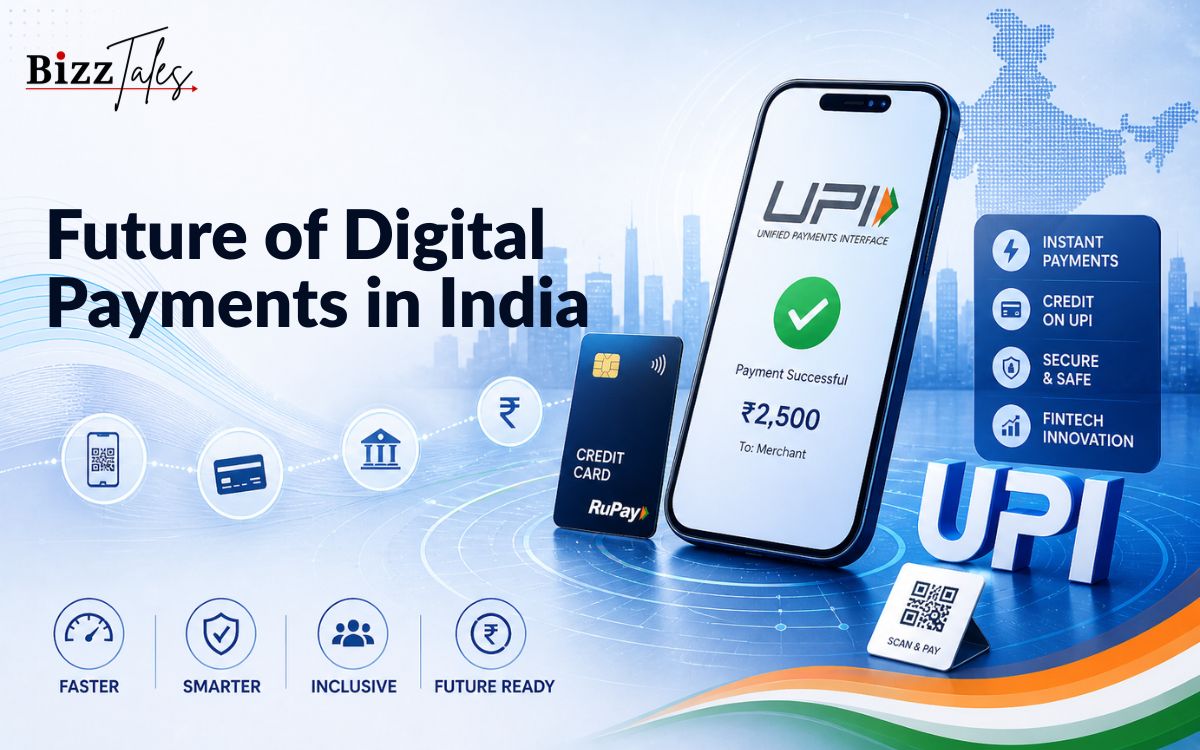
Pay-by-credit on UPI: One of the most recent innovations in UPI has been the introduction of credit on UPI. Users with a RuPay credit card can now link their card with UPI and make a payment without the balance in their bank accounts.
The forecast suggests the following benefits to consumers and businesses. The proposed feature will boost consumer spending and enhance the volume of transactions. It can also facilitate access to credit market to those who are less engaged with traditional financial institutions.
Growth of Contactless Payments
Alternatives to traditional payment methods include contactless payments, such as QR codes and near-field communication (NFC), which are increasingly being used for efficiency and customer convenience.
All the QR-based payments are already standard across India and is expected to grow even more.
Artificial Intelligence in Fraud Detection
As more and more transactions go digital, security is becoming a matter of concern. Utilization of artificial intelligence in detection of fraudulent practices is gaining pace.
The way AI algorithms monitor transactions in real time can even detect fraudulent activities across companies or countries by spotting abnormal patterns. This can be used to stop fraud from happening thus increasing trust in digital payment.
Expansion of Fintech Companies
India is witnessing a wave of innovation in its fintech sector. Firms like Razorpay and Pine Labs are offering modern payment options to the enterprises.
Beyond making transactions easier, these companies are providing additional services like payment gateways, lending products and financial analytics.
Central Bank Digital Currency (CBDC)
In India the Reserve bank of India is putting together a digital form of rupees called Central bank digital currency.
CBDC is designed to be a safe, monitored digital payment means. It can help decrease reliance on physical cash and facilitate a smoother functioning of financial systems.
Impact on Businesses
Business models have largely been transformed through the use of digital payments.
Faster Transactions
Digital payments allow for immediate transactions, which maximizes cash flow and reduces delays. They provide the ability to receive payment without delay.
Improved Financial Management
All deals are documented on a computer, simplifying the work of enterprises in recording revenues, bookkeeping and financial analysis.
Increased Customer Convenience
Multiple payment methods is also good for business. Customers want business which have fast and better experience for payment process.
Business Expansion Opportunities
Digital payments provide opportunities for companies to sell to new customers, regardless of them being located in different geographical regions or countries. Digital payments also enable companies to go to global markets online.
Challenges in Digital Payments
Although these industries have grown quickly, there are still many problems to overcome.
Cybersecurity Risks
As digital transactions have grown so too have the risks, such as fraud and hacking. This means investment in secure computer systems become necessary.
Internet Dependency
Digital payments. As they use the Internet, it is impractical to use in areas where the network infrastructure is not reliable.
Digital Literacy
People might not be comfortable using digital payment platforms. Not knowing how to use technology can hamper the penetration of these methods and slow down adoption rates, more so in villages.
What Businesses Should Do
In order to compete in the market.
Require multiple modes of payment, such as UPI, etc, alongside card based ones. Cyber-security measures should be put in place so as to safeguard transactions and customer data.
Furthermore, the companies should inform their clients about various possibilities of digital payments, as well as develop themselves technologically in the industry of financial technology.
Future Outlook
The future prospects of digital payments in India will be largely innovation-driven and adoption friendly.
UPI will remain the market leader, and credit based payment systems will show enormous growth Artificial intelligence will be leveraged to ensure security and improve customer experience
Digital currency will enhance the digital payment ecosystem going forward. Eventually the use of tradiontal cash will see a decline
Conclusion
Digital Payments has already changed the way India operates financially and will keep growing in the following years. UPI has already provided an excellent platform, and new technologies will strengthen the system even more.
Digital payments are made a must for business now. They are here for good and one has to adapt to the change in order to stay competitive.
Those entrepreneurs who seize these opportunities promptly will be more ready than anyone else for future long‐term growth and prosperity.