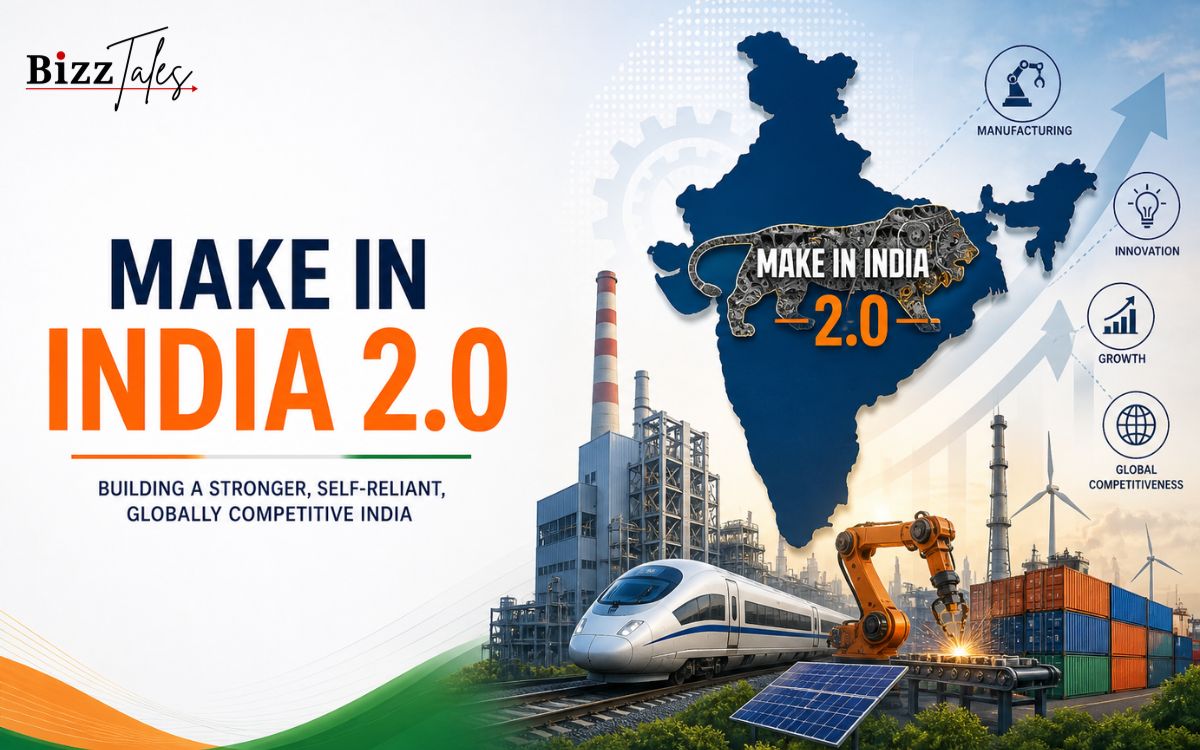
India is entering a new phase of industrial growth with the evolution of Make in India into what many are calling Make in India 2.0. The focus is no longer only on promoting manufacturing, but also on building a strong ecosystem where businesses can grow, compete globally, and innovate.
For entrepreneurs, this shift is creating new opportunities across multiple industries. The government is encouraging local production, reducing dependency on imports, and attracting global companies to set up manufacturing units in India.
In 2026, Make in India 2.0 is not just a campaign. It is becoming a serious economic strategy that can shape the future of Indian businesses.
What is Make in India 2.0?
Make in India was originally launched to promote manufacturing in the country. Now, the second phase is more advanced and focused.
Make in India 2.0 aims to improve infrastructure, simplify regulations, increase exports, and support both domestic and foreign investments. It is also focused on building strong supply chains and encouraging innovation.
The goal is to make India a global manufacturing hub and reduce reliance on imports from other countries.
Key Focus Areas
The new phase is focusing on sectors that have high growth potential and global demand. These include electronics manufacturing, electric vehicles, defence production, renewable energy, textiles, and pharmaceuticals.
These industries are receiving strong policy support, financial incentives, and infrastructure development.
Opportunities for Entrepreneurs
Make in India 2.0 is opening doors for entrepreneurs in ways that were not possible earlier.
Manufacturing businesses now have better access to funding, subsidies, and government support. Entrepreneurs can start production units with lower initial risk compared to the past.
There is also a strong push for local sourcing. Large companies are now looking for Indian suppliers, which creates opportunities for small and medium businesses to become part of supply chains.
Export opportunities are increasing as India is positioning itself as a reliable manufacturing destination. Businesses that focus on quality and efficiency can tap into international markets.
Role of Government Incentives
The government is offering several incentives to encourage manufacturing.
Production Linked Incentive schemes provide financial benefits based on production output. This motivates businesses to increase manufacturing capacity.
There are also tax benefits, easier land acquisition processes, and improved access to credit.
These incentives reduce the financial burden on entrepreneurs and make it easier to start and scale businesses.
Impact of Global Trends
Global companies are looking to diversify their manufacturing locations. Due to geopolitical factors and supply chain disruptions, many companies are shifting operations to countries like India.
This creates opportunities for Indian entrepreneurs to collaborate with global brands, supply components, and provide services.
The China+1 strategy is a major reason behind this shift, and India is one of the biggest beneficiaries.
Infrastructure Development
One of the major improvements in Make in India 2.0 is infrastructure.
Industrial corridors, logistics parks, and improved transportation networks are making it easier to move goods across the country.
Better infrastructure reduces costs and improves efficiency, which is crucial for manufacturing businesses.
Challenges Entrepreneurs Must Consider
While opportunities are increasing, there are still challenges that entrepreneurs need to manage.
Setting up a manufacturing unit requires proper planning, investment, and understanding of regulations.
Competition is also increasing as more businesses enter the market. Entrepreneurs must focus on quality, pricing, and efficiency to stay competitive.
Skilled labour is another important factor. Finding and training the right workforce is essential for business success.
Role of Technology in Manufacturing
Technology is playing a major role in Make in India 2.0.
Automation, artificial intelligence, and data analytics are being used to improve production processes.
Businesses that adopt modern technology can reduce costs, improve quality, and increase productivity.
Digital tools also help in managing supply chains and tracking performance.
Future Outlook
Make in India 2.0 is expected to grow further in the coming years.
The government will continue to introduce policies and incentives to support manufacturing.
India’s position as a global manufacturing hub will strengthen, creating more opportunities for entrepreneurs.
Businesses that start early and adapt to changing trends will benefit the most.
Conclusion
Make in India 2.0 is creating a strong foundation for industrial growth in India. It is providing entrepreneurs with opportunities to start and scale manufacturing businesses.
With government support, improved infrastructure, and global demand, the potential for growth is significant.
However, success will depend on how well businesses plan, adopt technology, and compete in the market.
Entrepreneurs who take advantage of this initiative can build sustainable and profitable businesses in the coming years.