
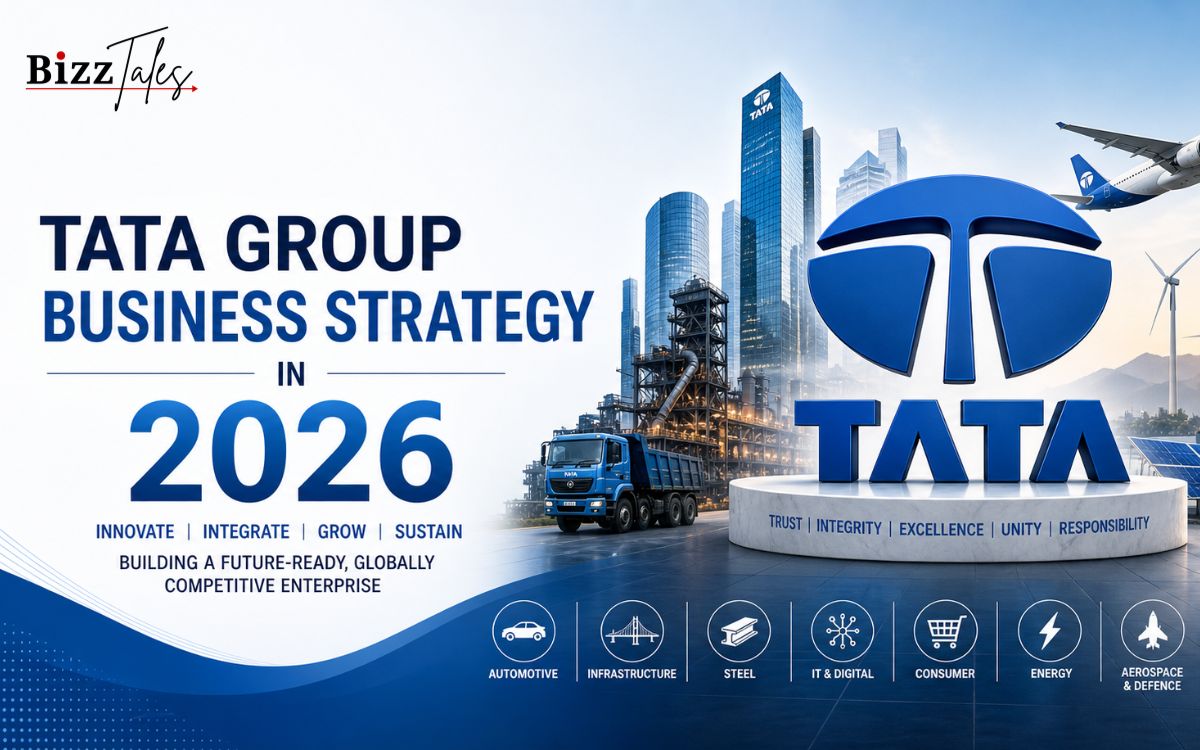
The Tata Group has always been one of India’s most trusted and diversified business groups. In 2026, the group continues to expand across multiple industries while maintaining a strong focus on long-term growth and stability.
From automobiles and steel to IT services and consumer products, Tata Group operates in almost every major sector of the economy. What makes the group different is its balanced approach to business, where profitability and social responsibility go hand in hand.
In recent years, Tata Group has also become more aggressive in adopting technology, entering new markets, and strengthening its global presence.
Core Business Philosophy
Tata Group’s strategy is built on a long-term vision rather than short-term profits. The company focuses on sustainable growth, ethical business practices, and customer trust.
This approach has helped the group maintain its reputation even during challenging times. While many companies focus only on quick gains, Tata Group invests in building strong foundations that support growth over decades.
This philosophy is one of the key reasons behind its continued success.
Expansion Across Key Industries
In 2026, Tata Group is actively expanding in several important sectors.
The automobile division, led by Tata Motors, is focusing heavily on electric vehicles. With increasing demand for EVs in India, the company is investing in technology, infrastructure, and product development.
The IT sector, driven by Tata Consultancy Services, continues to be a major revenue contributor. The company is focusing on digital transformation, cloud services, and artificial intelligence solutions for global clients.
In the retail and consumer segment, Tata is strengthening its presence through various brands and digital platforms. The group is also investing in e-commerce and online services to capture growing digital demand.
Focus on Digital Transformation
One of the biggest shifts in Tata Group’s strategy is its focus on digitalization.
The group is integrating technology across all its businesses to improve efficiency and customer experience. From digital payments to online retail platforms, Tata is building a strong digital ecosystem.
This move is helping the company stay competitive in a market where technology is becoming a key driver of growth.
Sustainability and Green Initiatives
Sustainability is a major part of Tata Group’s strategy.
The company is investing in renewable energy, electric mobility, and environmentally friendly practices. Many of its businesses are working towards reducing carbon emissions and improving resource efficiency.
This not only helps the environment but also strengthens the company’s brand image among customers and investors.
Global Expansion Strategy
Tata Group is not limited to India. It has a strong global presence and continues to expand in international markets.
The company is focusing on increasing exports, acquiring global businesses, and building partnerships with international companies.
This global strategy helps diversify revenue and reduce dependence on a single market.
Investment in Innovation
Innovation is a key part of Tata Group’s growth strategy.
The company is investing in research and development to create new products and improve existing ones.
From electric vehicles to advanced software solutions, Tata is focusing on innovation to stay ahead of competitors.
Challenges Faced by Tata Group
Despite its strong position, Tata Group faces several challenges.
Competition is increasing across all sectors. Global companies and new startups are entering the market with aggressive strategies.
Economic fluctuations, regulatory changes, and supply chain issues can also impact business operations.
Managing such a large and diversified group is itself a complex task.
Strengths That Drive Success
Tata Group’s biggest strength is its brand trust. Customers associate the brand with quality, reliability, and ethics.
Its diversified portfolio reduces risk, as the performance of one sector can balance another.
Strong leadership and clear vision also play a crucial role in maintaining stability and growth.
Future Outlook
The future of Tata Group looks strong as it continues to adapt to changing market conditions.
The focus on electric vehicles, digital platforms, and sustainability will drive growth in the coming years.
The company is expected to strengthen its position both in India and globally.
Businesses that combine innovation with trust are likely to lead the market, and Tata Group fits that model well.
Conclusion
Tata Group’s business strategy in 2026 is a mix of tradition and transformation. While it continues to follow its core values, it is also adapting to modern business trends.
The company’s focus on long-term growth, technology, and sustainability gives it a strong competitive advantage.
As markets evolve, Tata Group is well-positioned to remain one of the leading business groups in India and beyond.