In the last decade, the blockchain has become one of the hottest talking topics of the digital world. Some think it will transform industries completely while some still think it is about bitcoins only.
It is more than just bitcoin.
Blockchain technology is system where a digital entry or recording is shared among several parties and it is very difficult to alter once it has been made on it. This system is highly transparent and very reliable because data is added chronologically and in blocks that are chained together hence referred to as blockchain. This has far reaching implications for fields such as; finance, health, logistic, cybersecurity, real estate etc. Today, governments, big banks and technology giants, and startups are all looking at blockchain for it’s potential.
Though the technology may sound complicated, the principle behind the blockchain technology is quite simple. It is a system where entries made are virtually unchangeable when recorded in the ledger. To truly grasp blockchain, one has to first grasp the problem it was set up to address.
The Problems with Traditional Systems
Today, virtually all digital systems run on central authorities
Examples include: Banks are responsible for handling financial transactions, Governments hold property records, Social media companies manage customer data and payment processors handles all the online payment transactions etc. These systems are prone to:
- Single point of failure.
- Potential for malicious attacks/hacking, fraud and manipulation.
- High maintenance and operational costs.
- Lack of transparency.
- Dependency on intermediary institutions.
If the server holding the database is tampered with, then the whole system could be compromised, this dependency on a single centralized database is something blockchain technology aims to resolve.
What is Blockchain?
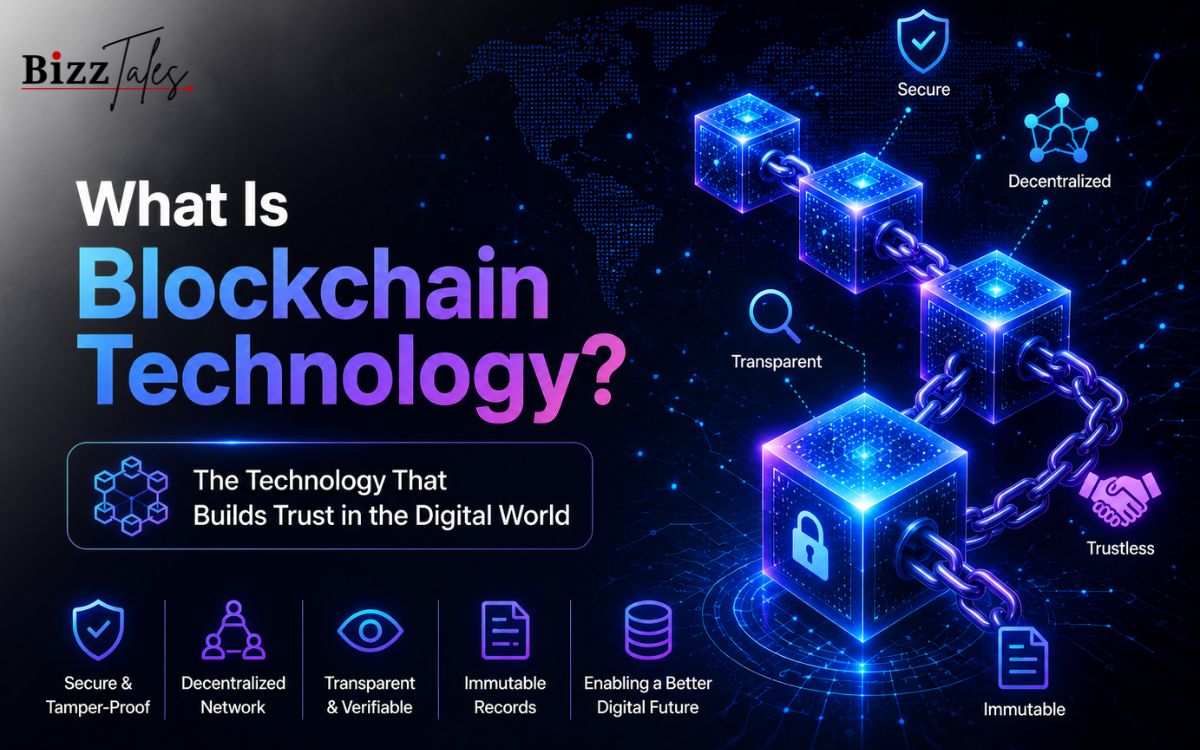
Blockchain technology is an open, distributed ledger where transactions recorded across multiple computers are simultaneously maintained. Unlike having a central bank’s database, data in the blockchain is stored across several computers; information is stored in blocks which are connected chronologically forming a chain. Thus, it is called blockchain.
Each block will include the following information:
- Details of the transaction.
- Timestamp when it occurred.
- The unique hash code.
- The hash code of the previous block.
Because every block is linked to the previous one, changing information on any given block would mean changing every consecutive block up to the end, making any tampering immediately apparent to all users.
How it works
To explain it in very simple terms;Imagine a digital ledger or book shared with thousands of people, each time a transaction takes place; each one is given an update of that transaction, each transaction is then authenticated through a verification process by network members and added to the chain which would then chain to the previous block. No one person owns the complete transaction book.
This brings about trust and transparency to the records held.
Decentralization
This is an important element of blockchain technology. In traditional systems, an entity has a complete monopoly over information whereas with blockchain systems this is diluted among many parties and the information can be verified by everyone using the ledger. It eliminates the need of intermediaries and enhances trust. For instance, money transfers can occur between two peers directly.
Security features of Blockchain
- Cryptography: Each block is given a hash number which is like a digital fingerprint of the block. If even one detail on a block is changed, its hash number also changes immediately. H(x) = H(y) when x = y
When the hash value is not constant it indicates that the data of the block has been tampered with. Since every block is linked to the previous one the system alerts of the inconsistencies across the chain. 2. Distributed verification: With thousands of computers on the network verifying transactions simultaneously, it would be impossible for an attacker to successfully tamper with it.
Blockchain and Cryptocurrency
The technology became widely known with the invention of bitcoins. Bitcoin introduced a decentralized digital currency where transactions were done without central authority or banks but on a blockchain system.
Nevertheless, a blockchain is far more than just a cryptocurrency; a cryptocurrency is a type of application that is built using the blockchain technology. There are millions of applications that use the blockchain, and cryptocurrencies are just one.
Smart Contracts
These are another extremely vital application of blockchain. A smart contract is a self-executing digital agreement that is stored on the blockchain and where terms of agreement are written directly into it.
Example; if delivery has been confirmed; the digital property then transferred to a particular account. Some of the known uses are in the area of automatically making payments when goods are delivered to a designated destination, for transfer of ownership, etc. These remove reliance on third parties to a large extent. The use of smart contracts was popularized by the Ethereum blockchain.
Real-life Use of Blockchain
Other than finances, the technology has found it’s way into multiple other sectors;
Banking and payments
- Efficient financial transactions
- Quick transaction settlement time
- Enhanced transaction security
- Reduced operational costs
Supply Chain Management
- Enhance transparency in the whole chain of product origin and ownership.
- Improve authenticity of products.
- Real-time tracking of products.
- Minimize fraud, loss and theft of goods.
Healthcare
- Storing medical records securely with immutability for all time, for access by the patient and specified authorities, thus enhancing patient privacy.
- Simplify the sharing of medical history of the patient amongst different doctors/ hospitals without compromising security.
Real Estate
- Potentially simplify transactions by enabling direct transfers of digital property ownership and facilitating smart contracts for payments.
- Reduce the time and costs associated with paperwork.
Voting systems
- A potential for making elections more secure and transparent due to the incorruptible nature of blockchain. There are challenges and complexities regarding security, privacy and voting on public platforms that are still being tackled.
Advantages of blockchain
- Transparency
- Security
- Decentralisation
- Increased speed of transactions
- Reduced costs.
Disadvantages of Blockchain
- The problem with transaction speed in large networks, otherwise called scalability.
- Large energy requirements for the most used blockchains to function.
- Ambiguous or confusing regulations.
- General difficulty and complicated system for average users.
- Other components besides the blockchain itself can be hacked such as a digital wallet or an exchange.
Blockchain vs Databases
Databases are designed for single users and quick efficiency, blockchain technology is a multi-user system used where many participants have to be certain they are not tampering with the information being distributed and where they may not implicitly trust each other. Therefore, not every business truly requires a blockchain; many companies market their products with ‘blockchain’ only because it has become popular term. True use cases for the blockchain are where a trust, decentralisation, transparency and verification problem exist.
The future of Blockchain
The field of blockchain is currently in it’s adolescence. The adoption rate is still developing and challenges such as scalability, regulation and the complexity of user interface still pose a barrier to the widespread use of blockchain. However as technology progresses more government bodies may begin using central bank digital currencies while financial institutions and other large corporations continue to invest in its infrastructure and research. It is highly probable that over time, blockchain will become an inconspicuous part of the future digital infrastructure.
Concluding thoughts
The emergence of blockchain technology represents a paradigm shift in the way we establish digital trust on the Internet.
Unlike traditional methods, where trust relies on central authorities and their infrastructure, blockchain establishes it through the distributed system itself.
While blockchain gained popularity primarily through its use in digital currency, its potential application now spans to many different industries besides virtual money.
From finance and healthcare to supply chain and IT security, blockchain is a technology that will eventually affect numerous sectors.
Challenges certainly still exist and the technology is only beginning to mature but it is certainly no longer just a hypothetical experiment and has to be considered as one of the most transformative technologies impacting our digital world today.
FAQs
Can you explain blockchain technology in simpler terms?
Blockchain is basically a decentralized digital way of recording data across many different computers at the same time, so it is extremely difficult to hack or tamper with data once it is recorded.
Is blockchain used for more than just cryptocurrency?
Yes. Blockchain technology is already being used within the financial sector, medical industries, supply chains, real estate, IT security, and many other sectors aside from the monetary system.
How is blockchain technology so secure?
Blockchain technology is highly secure due to three core components, cryptography, distributed systems and chained data structures; these elements collectively prevent any illegal interference.
What is a smart contract?
A smart contract is an automatically executing contract with the terms of the agreement between buyer and seller being directly written into lines of code.
Who created blockchain technology?
The creator of blockchain technology is an unknown entity under the pseudonym of Satoshi Nakamoto and rose to prominence as it was used in the creation of Bitcoin.
Will blockchain technology replace the need for banks?
The banking system could be revolutionised and parts of it could become irrelevant due to the capabilities of blockchain technology, however banks are extremely unlikely to be completely replaced for some time.