
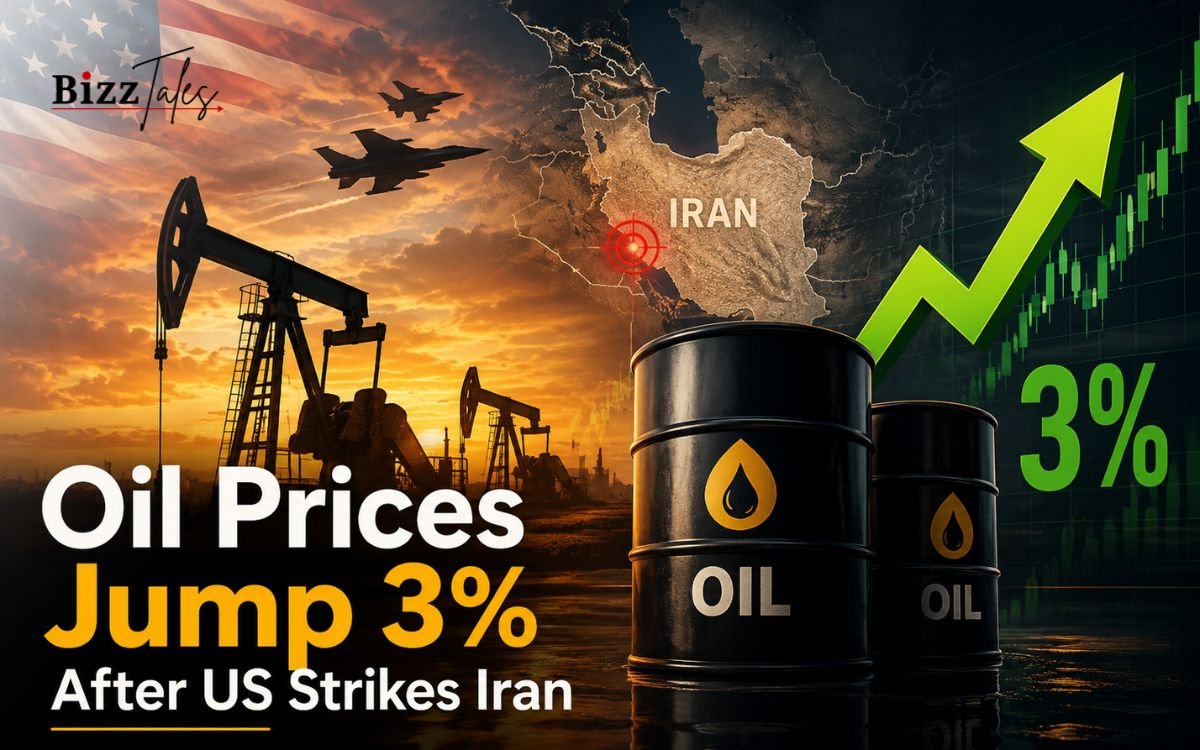
Premiums for delivery into the US escalated sharply as US air strikes against Iranian military targets fueled renewed anxiety about stability in the Middle East. The initial market reaction was swift, with crude rising close to 3% on the back of worries about a disruption to supplies.
The Middle East continues to be one of the most vital oil-producing areas in the world and any escalation of this event between the significant regional powers could have serious implications for energy supplies, shipping, inflation and global growth. The recent military event proves how geopolitics can affect commodities markets and investor confidence very quickly.
Though the financial markets have been exposed to geopolitical shocks previously, the latest event has attracted much attention owing to Iran’s key role in the energy related global markets. Investors, governments and firms are watching the market developments and realize that even a short lived disruption may have effects for the global economies.
The recent spike in oil prices coincides with a time when many nations are already grappling with inflationary pressures, transitions in supply chain, and a degree of economic volatility and wandering in the dark. While markets are now accounting for the fallout from the US strikes, there have been questions raised about the likely effects of these developments on the cost of fuel, trade and investment, and the general cast of the world economy.
Understanding the Recent US-Iran Escalation
The recent rise in oil prices comes on the heels of news that the United States has launched air strikes against Iranian military installations. This attack has escalated hostilities between Washington and Tehran, which have a long history of disagreements regarding policy and military operations.
The Middle East has often acted as a site of geopolitical conflict precisely because it is so rich in energy and because of its strategic importance. Every military conflict in the Middle East causes a response in the oil markets as traders expect interruptions in production or transportation.
Certainly the world oil supply has become much more diversified over time, yet the region still contributes a large proportion of world crude production and exports. Concerns about this supply has a quick negative impact on market sentiment.
Investors also take into account the threat of retaliatory measures that could harm shipping lanes or energy infrastructure. Fear of future supply disruptions has a way of raising prices even if no real supply disruption ever materializes.
Why Oil Prices React So Quickly to Geopolitical Events
Oil is also one of the most heavily traded commodities in the world but unlike other commodities, future supply availability and demand anticipate the current commodity price.
When geopolitical tensions intensify in critical producing regions traders take such risks into consideration and influence the prices for commodities accordingly. Possible risks in this case may be less a result of a reduced supply and may include such aspects as transportation problems, sanctions, damages due to infrastructure disruptions or worse regional unrest.
Markets are fundamentally driven by expectations. Therefore, it’s likely that mere anticipation of shortages will put an upward pressure on prices, even before they materialize.
With respect to the US-Iran conflict, fears are not limited to the current fighting. Investors are concerned about what the long-term implications are and if other nations might get involved. This kind of uncertainty tend to raise volatility in commodity markets.
This recent 3% increase is indicative of such a risk/uncertain tone of the market.
Iran’s Importance in Global Energy Markets
Iran is home to the world’s largest and the second-largest proven natural gas and oil reserves, respectively. Although placed under U.S imposed sanctions and restrictions recently, the country is still a significant actor in global energy debates.
Its geographical position also makes for its importance. Iran is situated adjacent to the Strait of Hormuz, a narrow strategic passage by which a significant proportion of oil stored in the world is transported every day.
The critical transportation route at the Strait of Hormuz. If an oil shipment route throughout the Strait of Hormuz were to be cut off, it could have an instantaneous impact on energy prices around the globe.
Iran is very significant to the regional balance of power so plays a role in energy traders’ eye. Should Iran and the region see even limited tensions there would be concerns on all future flows of oil and shipping activity.
Which is also why the markets react strongly to any third party geopolitics involving Iran.
The Role of the Strait of Hormuz
The first of the most alarming issues resulting from the latest escalation is the security of the Hormuz Strait. The passage is the most reliable of energy nocks in the world.
An estimated 40 million barrels of crude are transported through the Strait every day to the world’s largest economies in Asia and Europe, as well as North America. Leading Middle Eastern world oil suppliers such as Saudi Arabia, the United Arab Emirates, Kuwait, Iraq and Qatar are heavily reliant on the Stra.
Any attack on shipping activity in the strait would have an immediate effect on world oil supplies.
Indeed, in the past, even verbal threats in the context of the Gulf have led to large market moves. Market participants are well aware that a long-lasting disruption would squeeze global supplies and drive prices substantially higher.
While the trade is going on as usual,, there is a potential for markets to get affected by any developments affecting the security of the route.
Impact on Global Financial Markets
However, the increase in oil prices has impact also on markets. Financial markets tend to value safe dates in periods of political uncertainty by transforming investments to safer assets.
Stock markets tend to be volatile during times of military escalation. Investors are wary about future economic growth, company profits and inflation.
An increase in the price of oil may contribute to cost pressures affecting firms in the manufacturing, transportation, aviation and logstics sectors and gradually impact on consumer prices.
Also, with price hikes in crude, the energy companies generally gain. To the oil companies, there is much higher scope for greater revenue.
Consequently, market response can be erratic, with energy stocks rising in value while the rest of the market suffers.
What Rising Oil Prices Mean for Consumers
The first order of impact from higher prices on crude oil is already visible in terms of higher prices for fuels. The raw material for almost all gasoline, diesel, aviation fuel and many other industrial products is crude oil.
An increase in the oil prices can lead to the increase in the transportation costs and energy costs for individual consumer. Companies may meet this higher cost by increasing the prices on their products and services.
Higher fuel prices may impact household budgets and free spending. Fuel prices have a broad effect as they impact the cost of transportation, which affects the cost of most consumer goods.
The magnitude of these effects will depend on the length of time for which the high oil price persists. In the shorter term, a temporary burst in oil prices may have little effect. If the increase is maintained, however, the effects may become more inflationary.
Governments and central banks pay a lot of attention to energy prices because they affect the general economy.
Inflation Concerns Return to the Spotlight
Inflation is a chronic problem for much of the world economy. Following volatility in prices over most of the recent past, governments and central banks attempted to put inflation on a steady path for economy’s recovery.
A spike in the price of oil can hamper these attempts. Energy prices have an impact on almost all aspects of the economy and therefore oil prices influence inflation trends.
Rising fuel costs lead to increased transportation costs, production costs and logistic cost which can ultimately be transferred to the consumer.
Central banks may be forced to make tough choices if an energy-led acceleration in inflation is sustained. Achieving the right balance between inflation management and economic growth could prove increasingly difficult in an increasingly volatile geopolitical environment.
As a result, recent market trends have provided wiggle room not only for investment but also for policymakers overseeing stability.
Effects on Global Trade and Supply Chains
Today’s supply chains could not operate without inexpensive, dependable energy. Fuel is needed for transportation, shipping, production and distribution.
As the price of oil rise firms will have to pay higher operating costs. Global trade will become more expensive as transportation & shipping costs go up.
The global economy has been adjusting to the disruptions to the supply chain caused by pandemics, geopolitical conflicts and logistical constraints over past few years. Further spike in energy prices may become another hassle.
Business may have to restructure how it manages procurement, stock keeping and pricing models to absorb the rising costs.
High transported industries are especially sensitive to the increase in energy prices.
Impact on Emerging Economies
Emerging markets tend to feel the impact of rising oil prices more acutely than developed economies. A number of developing nations rely on imports of energy for economic growth and industrial activity.
Higher import prices will tend to devalue a countries’ currency, worsen the trade balance and cause pressures on government budgets.
Countries providing fuel subsidies possible additional fiscal pressures due to increasing price of energy. Decisions may have to be made to absorb impacts by governments, or let price increases be passed onto consumers.
Another factor that is likely to have an impact on countries’ economic growth forecasts is higher energy prices. When energy prices are high, it usually causes employers to cut back on investment and consumers to spend less.
Hence, oil markets’ developments are considered very important for developing countries all over the world.
Could Oil Prices Rise Further?
The future structure of oil prices will be driven by how the geopolitical environment evolves. Markets are currently pricing several potential ways.
If tensions relax and diplomatic avenues stay open, we could see prices stabilize as worries about supply shortages quickly go away.
Nonetheless, more military escalation, reprisal, or threats to the energy infrastructure could cause more prices hikes. Markets do not like uncertainly, as long lasting instability usually maintains better prices.
The analysts further point out that the future pricing pattern would be affected by the global demand situation, the decision of production by the world’s biggest oil-accumulating countries and inventory levels.
Although it is still difficult to forecast the actual movement in prices, volatility is expected to be sustained high until the regional outlook becomes clearer.
How Governments May Respond
Governments worldwide are watching these developments carefully, and policymakers have many strategic options for managing any turmoil in the energy markets.
They could also be used to augment supplies during emergencies. International cooperation among energy exporting and importing countries could serve to stabilize markets.
Governments, in some cases, can implement measures to help consumers exposed to these greater fuel prices, in case these prices were to remain high.
We will still see the central banks weighing the risks to inflation against the wider economy. Their actions could have an impact on interest rates, investment and markets.
The success of these strategies will also be contingent on the length and seriousness of the geopolitical conflicts.
Conclusion
The 3% increase in oil prices after US action against Iranian military facilities shows the profound linkages of geopolitics and global energy market. Despite the modern diversification of energy supply, developments in the Middle East still impact prices, investors and the world economy.
Iran’s strategic position in the regional energy equation as well as security issues in the Strait of Hormuz have contributed to increasing Market sensitivity to recent developments, as investors, governments and companies are watching very closely for any sign of escalation that may have far-reaching consequences on world energy supplies.
For consumers, higher oil prices could mean higher fuel and transportation costs; for Business higher energy costs may impact business profitability and supply chain management; and for policymakers, managing inflation risks while promoting growth.
Over time, the oil markets will probably stay volatile. If prices return to pre- crisis levels or escalate further will be determined by the state of relations on the diplomatic and regional levels and the general fundamentals of the market. One certainty: the role of geopolitics is still essential.
Why did oil prices rise after the US strikes on Iran?
The price of oil rose amid concerns that the Middle East might face supply and shipping disruptions.
How much did oil prices increase?
The value of the crude oil increased by about 3% in reaction to the strike reports.
Why is Iran important to global oil markets?
Iran has substantial oil deposits and is adjacent to the Strait of Hormuz, the world’s most important channel of energy exports.
What is the Strait of Hormuz?
The strait of Hormuz represents a crossroad for international maritime traffic, with an estimated 40% of the world’s oil exports being shipped through this strait.
Could fuel prices increase for consumers?
Yes. If prices stay high consumers could pay more for gasoline, diesel, and transportation.
Can oil prices continue rising?
Additional spikes of geopolitical tensions could result in further rises while peace efforts may lead to stabilization of prices.