To ride-hailing has become a revolutionary phenomenon in urban transportation globally. Cab aggregators like Uber, Ola have brought cars on demand at the mere tap of a smart-phone. It was so comfortable that even in countries without any dearth of cheap and convenient transportation, a huge chunk of population happily on-boarded the new modal split.
However, as industries matured, many issues started to annoy the drivers and passengers.
Travelers regularly voiced complaints about surge pricing, ridesharing and untimely rides. Drivers complained mainly about the shave to their commissions, falling income and inability to operate their business There was a growing realization that what had started as a tech-led solution to urban transit had become an arena where neither side was happy going into the future.
These worries became apparent in India. Given the sheer volume of trips made daily across the country’s major cities, such platforms had become an integral part of normal daily life; however drivers with a large number of these drivers arguing over excessive commission fees while the passengers of the vehicle themselves, claiming they had paid more than what was expected.
This set the stage for a new category of ride-hailing platform to emerge.
And that was the beginning of Namma Yatri.
The company originated in Bengaluru, and set out to tap into the mobility space with a revolutionary thesis. Instead of gouging drivers and passengers with bottom barrel commissions and dynamic pricing models, Namma Yatri committed to being transparent, affordable & driver friendly.
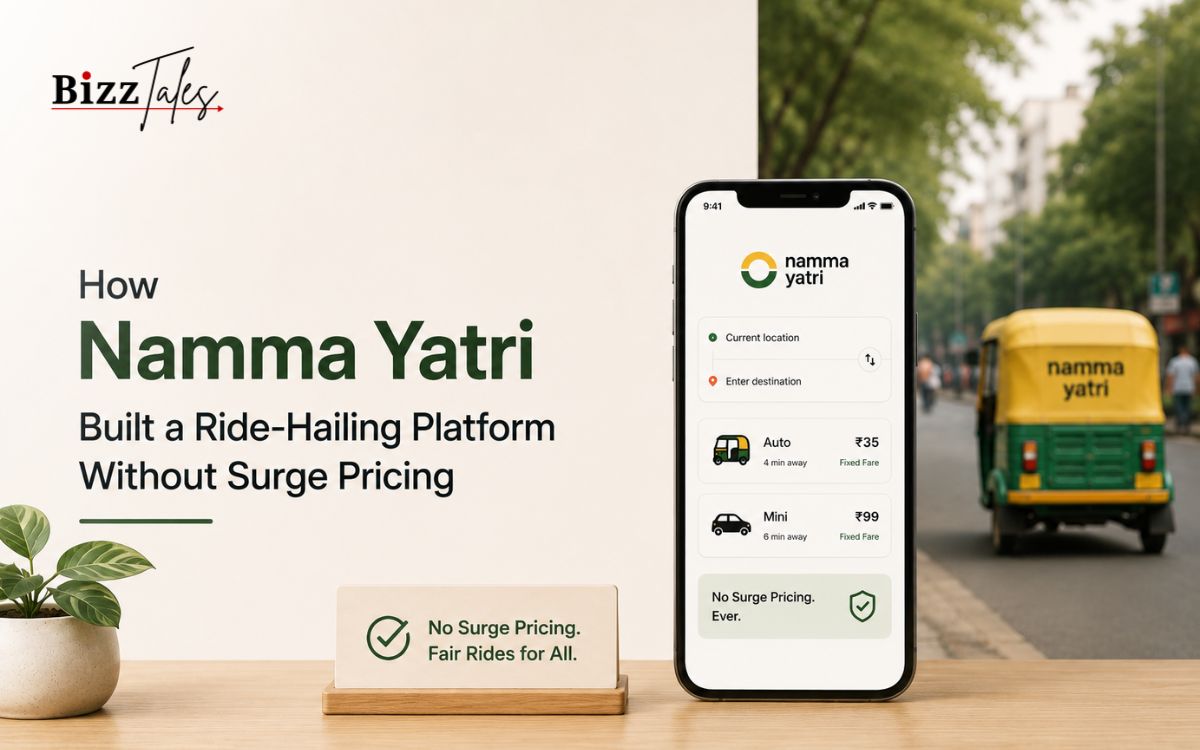
During a period when ride-hailing services increasingly depended on surge pricing, Namma Yatri developed a model that worked without it.
Its rapid rise has not only set a challenge to established mobility players but also led to discussions around the future of ride-hailing in India.
The Problems with Traditional Ride-Hailing Platforms
The reason Namma Yatri was buzzed about so rapidly is because if you really peep in to the current problematics that ailing the ride hailing industry
The original generation mobility platform was a game-changer in connecting drivers with those looking to be somewhere else. Technology made it quick and easy to book, and easy to pay for, a ride.
But there were tolls attached to this convenience
The most contentious issue in the industry has been the practice of surge pricing. When a lot of people need a taxi at a given time, the price for the service “surges”. Some critics point out that this method of fare calculation fails to protect passengers from high prices and is therefore counter efficient.
Say you want to order a ride and it’s pouring outside, you’re at a major event or it’s crush hour. Your ride that would normally be close to a fair price just doubled.
Drivers had their own worries.
Most of the existing platforms take commission on each trip. They gradually became a big source of contention. Drivers kept complaining about too many earnings were transferred to platform’s pocket instead of theirs.
When the feeling of frustration set in more forcefully, a large number of individuals started wondering if maybe there’s a better way to construct the mobility platform.
Namma Yatri thought it was.
The Vision Behind Namma Yatri
Namma Yatri was not developed to directly challenge companies like these.
The founders sought to revolutionize the use of technology by drivers and passengers.
So the only idea we had that was carrying us was li•-
The main insight was actually quite straightforward.
If technology could link passengers and drivers without taking half of every fare,…
Rather than drivers being quick to accept rides within a tightly-integrated marketplace owned by the platform, it created a system where the drivers could, for example, have more say on how to take home money:
This vision resonated with India’s increasing emphasis on Digital Public Infrastructure and open networks.
A model based on transparency, equity and community participation instead of platform predomination was supported by the company.
Right from the start, Namma Yatri was a driver-first mobility platform.
That differentiation would emerge as one of its defining features.
Why Bengaluru Became the Starting Point
All successful startups require a place in the market to be able to test and refine.
Bengaluru turned out to be the best launch city for Namma Yatri.
The city is also called the technology capital of India. It has a huge number of daily commuters, heavy traffic and high penetration of digital services.
Auto-rickshaws are integral to the transport system in Bengaluru. Several lakhs of people every day commute using auto-rickshaws.
However, numerous auto drivers felt discontented with their current ride-hailing systems.
Namma Yatri found a niche whose solutions could be built specifically to solve their, and therefore anyone else’s, problems.
Because Auto-Rickshaw drivers were selected as the pilot test rather than trying to conquer a variety of transportation categories at once, the company created a network within a significant portion of the mobility industry.
Thisconcrete helped us to gradually gain the trust and move forward.
The Driver-First Business Model
Perhaps one of the most defining factors of Namma Yatri’s success has been the driver focused approach.
Most current ride-hailing firms make money by taking a percentage out of every trip.
The approach taken by Namma Yatri was to take a different direction.
Instead of charging drivers a percentage of each fare, the platform implemented subscription-based models and other ways of generating revenue that lowered their costs.
This means drivers could took home more of their earnings.
The MAx difference was particularly meaningful for many drivers.
It provided greater rewarding. More earning per-ad stimulated people active on platform with the positive pay-off as well as more active recommending.
The result was a large, network effects, driven principally by word-of-mouth adoption.
In a beermarket were driver satisfaction directly influences service standards, this resulted in a compelling differentiator.
Eliminating Surge Pricing
One of the most recognizable strategies of Namma Yatri is its take on surge pricing.
For a long time, the practice of surge pricing was one of the most contentious parts of ride-hailing services.
The concept is understood by the customers and they are aware of the economic logic behind it. No matter how obvious the trade-off is.
People like a round number-I can really vouch for this. It’s very difficult to swallow something that is unpredictable; we love the certainty of things.
This is where Namma Yatri caught onto this fact,
The site also by highlighting transparent pricing, intended to make the experience more predictable for consumers.
The customer no longer had to be concerned about waiting times escalating giddily during busy days.
Relaxingly, this policy of the Trust would work.
When it came to many riders, transparency was as crucial as convenience.
Proves to be a deciding factor during unpredictable pricing envts that evoke frustration in a market.
The Role of Open Networks
Yet another differentiator for Namma Yatri is its link with the transitioning digital ecosystem.
The platform is in line with the larger concept of open digital networks that are trying to reduce dependence on central intermediaries.
It is consistent with policies to promote greater accessibility and competitiveness in digital commerce and services.
Since closed ecosystems can only be isolated, open networks naturally foster interaction and participation.
Indeed, for mobility services this trend opens the doors for the creation of platforms where cooperation beat control.
Namma Yatri stood out as a particularly prominent example of how this model could be, in practice.
Its success has gained interest from policy makers, technology giants, and entrepreneurs who are looking for other formats for online markets.
Why Riders Embraced Namma Yatri
Although getting drivers on board was vital, securing the trust of passengers had an equally significant impact.
It attracted many users because of its fair and transparent systems.
The lack of aggressive surge pricing minimized the uncertainty.
This element struck a chord with many customers.
The platform also capitalized on the rising number of people in the public who were looking for substitutes to traditional ride-hailing companies.
As consumers learned more about the economics of online platforms, some started to look for service providers more aligned with their own preferences and values.
The placement strategy of Namma Yatri gave it a unique positioning.
Didn’t try to just sell cheaper with discounts and offers (though he did this as well); instead established himself by developing authentic and open, he gained a reputation.
Challenges Facing Namma Yatri
Although Namma Yatri has grown significantly, it has also faced a number of challenges.
The competition still remains fierce.
Large and well established mobility companies have many resources, brand and users built up over various periods of time.
The increase in number of cities once again increases complexity.
Transportation markets go from very heavily regulated, toward no controls at all, with every form of infrastructure, from east to west and north and south and every kind of driver behavior and customer expectation.
Expansion has to be executed with care when service quality has to be maintained.
Profits are a difficulty as well.
Unless the company find a way to offset the loss of earnings to the drivers it will not be able to support growth in the company.
The trade-off between affordable fares, driver income, and business sustainability will continue to be a key challenge.
What Namma Yatri Means for the Future of Mobility
The success of Namma Yatri is just part of much larger transition that is happening across the platform economy.
For years, several technology platforms focused solely on leading growth.
Users are more and more asking different questions.
How is the value delivered to service providers?
Are pricing structures revealed?
How can platforms be made to work more fairly?
Namma Yatri’s emergence indicates the possibilities inherent in business models that build trust, transparency, as well as empowering participants.
The company is not purely competing with existing ride-hailing services.
Put to question assumptions regarding the operation of the digital marketplace.
This change might have an impact on upcoming startups in various industries.
Lessons Entrepreneurs Can Learn from Namma Yatri
Amidst all the struggles there has been a key lesson- Focus on solving a particular problem.
There is no pretense by the company on completely changing the way we move.
Instead, its attention was centered on remedies to frustrations experienced by drivers and passengers.
Incentives are yet another important lesson we learn.
Platforms succeed when players are well-compensated.
Namma Yatri improved its model and tailored the model more towards drivers interests.
The startup also highlighted the importance of differentiation.
Instead of simply copying competitors we already had, inherited a philosophy that is vibrant and passionate. The philosophy has a laod of refernce to consumer and other Inward.”
This differentiating feature made it stand out in a saturated market.
Conclusion
The story of Namma Yatri is perhaps one of the most interesting startup stories in India’s mobilty space.
As the company focused on the drivers, removed the reliance on commissions, and created the platform with no surge pricing, it brought a new perspective to ride-hailing.
Its emergence underscores the importance of a culture of trust, transparency and community-based business models.
Despite difficulties, Namma Yatri has proven that a different, perhaps more complex, form of platforms economics can work.
If its effects will lead to it becoming a leading mobility player or emit new innovation across the industry, is less in uncertain.
Namma Yatri was one more ride booking application, but also a different situation in which a technology based platform finds a positive sum game for it shareholders, customers and suppliers.
FAQs
What is Namma Yatri?
Namma Yatri is an Indian ride-hailing web and mobile platform that links drivers with passengers at the same time aims at transparency, control for the drivers and competitive pricing.
What makes Namma Yatri unusual in comparison to Uber and Ola?
Unlike other delivery aggregator’s that are highly susceptible to commission kills and dynamic pricing, Namma Yatri id driven by driver-first economics and transparent fares.
What led to the popularity of this ‘Namma Yatri’?
What makes this scheme so popular is that it is driver-friendly, has k…lling prices, is transparent, and fits into Indians overall vision of open digital networks.