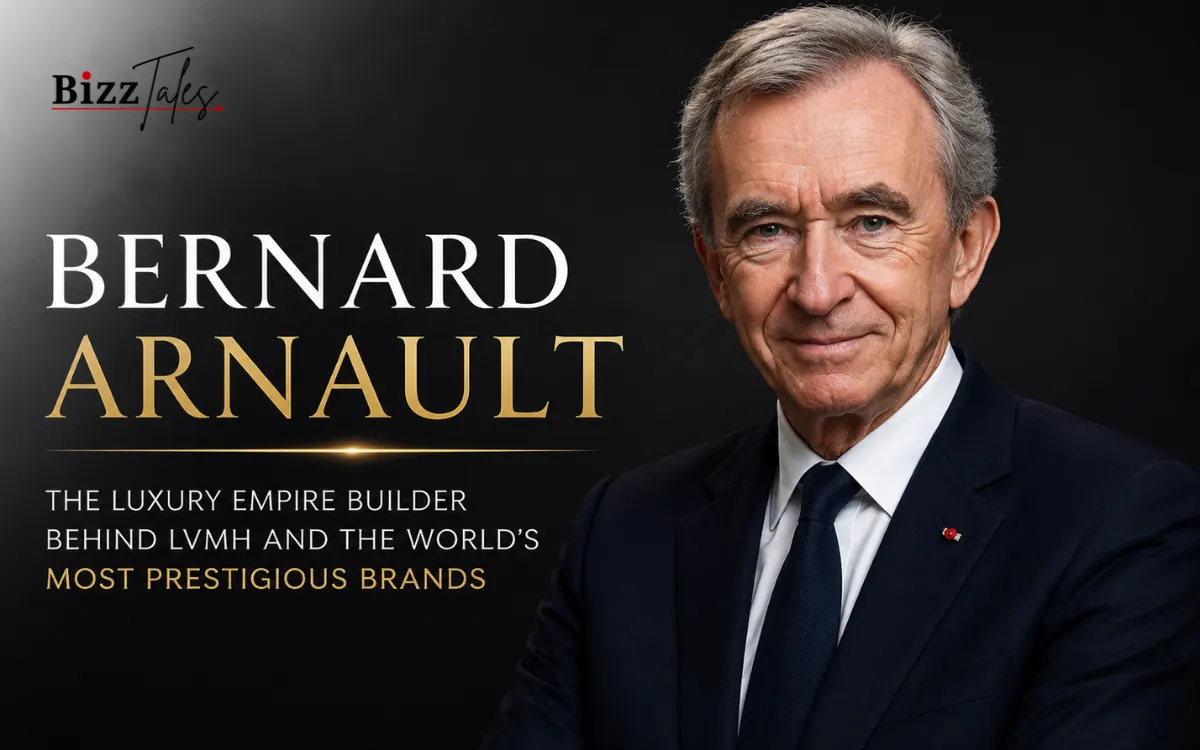
Bernard Arnault The King of Luxury By The Chairman & CEO of LVMH Moët Hennessy Louis Vuitton is building the biggest luxury goods company in the world – one that is made up of the dozens of iconic brands at the intersection of beauty, fashion, design, craft, lifestyle, and wine and spirits that are now synonymous with modern sophistication.
Rather than profiting from software and digital tools, many tech moguls have been fortunate to get rich from old, time-honored companies. He made a killing by identifying and accumulating companies, respecting their pedigrees and turning them into global behemoths.
Now Bernard Arnault is always on top lists of the most wealthy people on the planet. But his success wasn’t just about inheriting a legacy, or being Born a billionaire. He made a business with an army of employees and hundreds of billions by aggressively buyin the brands, and focusing on quality for customers at each level.
His story is a remarkable example of vision, patience, leadership, and long-term thinking.
Forbes Ranking & Net Worth History
| Year | Forbes Rank | Net Worth |
| 2026 | #9 | $148 Billion |
| 2025 | #5 | $233 Billion |
| 2024 | #1 | $233 Billion |
While fluctuations in luxury markets and global economic conditions have affected rankings, Bernard Arnault remains one of the wealthiest businessmen in the world.
Early Life and Family Background
Born in 1949 to parents in the business world, Bernard Jean Etienne Arnault had a business-class background, and as his father operated a successful construction firm that’s since evolved.
From a very young age, Arnault demonstrated excellent analytical skills, as well as a clear talent for business strategy. Unlike many self-made entrepreneurs who were pioneers from an early age, he entered into an already operating family business where he honed his skills.
Since his parents worked, he learned a thing or two about business and decision making. This gave him access to the internal workings of highly successful enterprises. This early introduction gave him quite an edge.
Education and Early Career
He studied at Ecole Polytechnique, a revered French engineering school, graduating at a young age. Arnault then took over his family’s construction business and quickly demonstrated that he was a brilliant entrepreneur. Instead of sticking with established practices, he saw areas for improvement and expansion and he seized them.
His ideas drew the notice of everyone who watched the business and the construction industry in general.
Around this time he acquired a reputation among the public as a very sharp, hardworking, and driven individual – all traits that would be invaluable for the development of what has become one of the world’s largest luxury brands.
Entering the Luxury Industry
But it all came together in the 1980s. The French textile and fashion retailer, Boussac Saint-Freres, was teetering on the brink of bankruptcy at that time, and it had a list of impressive assets, none more well-known than the iconic Christian Dior fashion house. Almost everyone else shunned Boussac as too risky a business venture.
Yet, here was Arnault, snapping it all up.
He managed to gain control of Boussac and then began dismantling it, selling off many pieces of it, but he wisely held onto Christian Dior with all its potential. This would go down as perhaps the best investment he would ever make.
Building the LVMH Empire
A big turning point in his career was taking the controlling share of a LVMH . This LVMH company itself was born by the merger of Louis Vuitton and Mot Hennessy. LVMH at that time was facing management disputes and the organization was unstable.
Arnault then found yet another opportunity.
With several maneuvers, Arnault ended up owning LVMH and taking leadership at the top. From that day on the firm adopted an extremely aggressive expansion and buying policy, which Arnault was focused on adding brands to cover many luxury fields rather than limiting on a select few. This turned LVMH into what it is today.
Acquiring Iconic Luxury Brands
One of Arnault’s greatest strengths is his ability to identify valuable brands and integrate them into a larger ecosystem.
Over the years, LVMH acquired some of the world’s most recognizable luxury names.
These include Louis Vuitton, Christian Dior, Tiffany & Co., Fendi, Givenchy, Bulgari, Sephora, TAG Heuer, Hublot, Dom Pérignon, Moët & Chandon, Veuve Clicquot, and many others.
Each acquisition strengthened LVMH’s market position while expanding its influence across fashion, jewelry, cosmetics, watches, wines, and spirits.
Arnault’s disciplined acquisition strategy became a model studied by business leaders worldwide.
Leadership During Economic Challenges
Creating a luxury empire wasn’t easy. There were recessions, a global financial crisis, shifting consumer tastes and escalating competition throughout the years, Arnault managed to navigate each one. The luxury market can be very sensitive to recessions, when luxury spending is usually among the first to take a hit.
But Arnault’s commitment to brand integrity and long-term value over short-term gains proved steadfast and allowed LVMH to weather the tough times where rivals crumbled.
Expanding into Global Markets
Arnault’s international strategy Arnault saw the opportunity of leveraging internationalization, especially with the booming economies in Asia and the Middle East, along with other emerging markets. LVMH started developing luxury boutiques worldwide and heavily invested in marketing strategies and connections to high net-worth individuals all over the globe.
For instance, the Chinese market has emerged as the largest market for luxury goods, adding to LVMH’s financial results significantly.
Other Businesses and Investments
Although LVMH remains his primary source of wealth, Arnault has invested in numerous other ventures. His interests include technology startups, real estate, hospitality, media companies, and financial investments. He has also invested in emerging businesses that complement the luxury ecosystem. These investments provide diversification while allowing him to remain involved in innovation and entrepreneurship.
His investment strategy reflects a balance between preserving established brands and exploring future opportunities.
Leadership Style
Bernard Arnault is known for his meticulous attention to detail and long-term vision.
Unlike leaders who prioritize rapid expansion at any cost, Arnault focuses on protecting brand identity and maintaining exceptional quality standards. He believes luxury brands must preserve exclusivity, craftsmanship, and heritage.
Employees and executives often describe him as demanding, analytical, and highly disciplined. His leadership style combines financial expertise with a deep appreciation for creativity and design. This balance has been a key factor in LVMH’s success.
Philanthropy and Personal Life
Arnault supports several philanthropic activities in the spheres of culture, arts, education and health. He is most frequently mentioned as a donor of art institutions in France and abroad. In particular, this is due to the Louis Vuitton Foundation which aims to encourage arts and culture.
As a result of his wealth, in comparison to most of the billionaires, LVMH chief generally prefers a more reserved style of life.
His public image, as that of any other successful business person, usually involves more focus on economic matters.
Official Social Media Presence
Unlike many modern entrepreneurs, Bernard Arnault does not maintain active personal social media accounts.
- Instagram: No official personal account
- X (Twitter): No active personal account
- Facebook: No official public profile
- LinkedIn: No verified personal profile
Most public updates related to Arnault come through LVMH, Dior, Louis Vuitton, and other corporate channels.
Lessons Entrepreneurs Can Learn from Bernard Arnault
One key takeaway from Arnault’s story is the power of patience. He didn’t try to find quick opportunities; instead, he focused on creating long-term value by strategically acquiring and carefully managing businesses. His story shows how essential it is to protect brand heritage, even with global expansion, allowing each to remain distinct.
Entrepreneurs can also learn from his approach to disciplined choices and taking the long-term view that is required to create sustainable success.
Conclusion
Bernard Arnault’s journey from a family construction business to leading the world’s largest luxury goods empire is one of the most remarkable business success stories of modern times. Through vision, strategic acquisitions, and exceptional leadership, he transformed LVMH into a global powerhouse that defines luxury across multiple industries.
His ability to recognize value, preserve brand heritage, and adapt to changing markets has made him one of the richest and most influential businessmen in the world.
As luxury markets continue evolving, Arnault’s legacy will remain deeply connected to some of the most prestigious brands ever created.
For entrepreneurs, his story offers valuable lessons about patience, discipline, strategic thinking, and the power of building lasting value.
FAQs
Who is Bernard Arnault?
Bernard Arnault is the chairman and CEO of LVMH, the world’s largest luxury goods company.
What is Bernard Arnault’s net worth in 2026?
His estimated net worth is approximately $148 billion.
What company does Bernard Arnault lead?
He leads LVMH Moët Hennessy Louis Vuitton.
How did Bernard Arnault become wealthy?
He built wealth through strategic acquisitions and expansion of luxury brands.
What brands are owned by LVMH?
LVMH owns Louis Vuitton, Dior, Tiffany & Co., Fendi, Bulgari, Sephora, TAG Heuer, and many others.
Was Bernard Arnault born into a luxury business family?
No, his family operated a construction business.
What is the Louis Vuitton Foundation?
It is a cultural and artistic institution supported by Bernard Arnault.
Does Bernard Arnault use social media?
He does not maintain active public personal social media accounts.
What leadership style is Bernard Arnault known for?
He is known for discipline, attention to detail, long-term thinking, and protecting brand heritage.
What can entrepreneurs learn from Bernard Arnault?
Entrepreneurs can learn patience, strategic acquisition skills, brand management, and long-term value creation.