
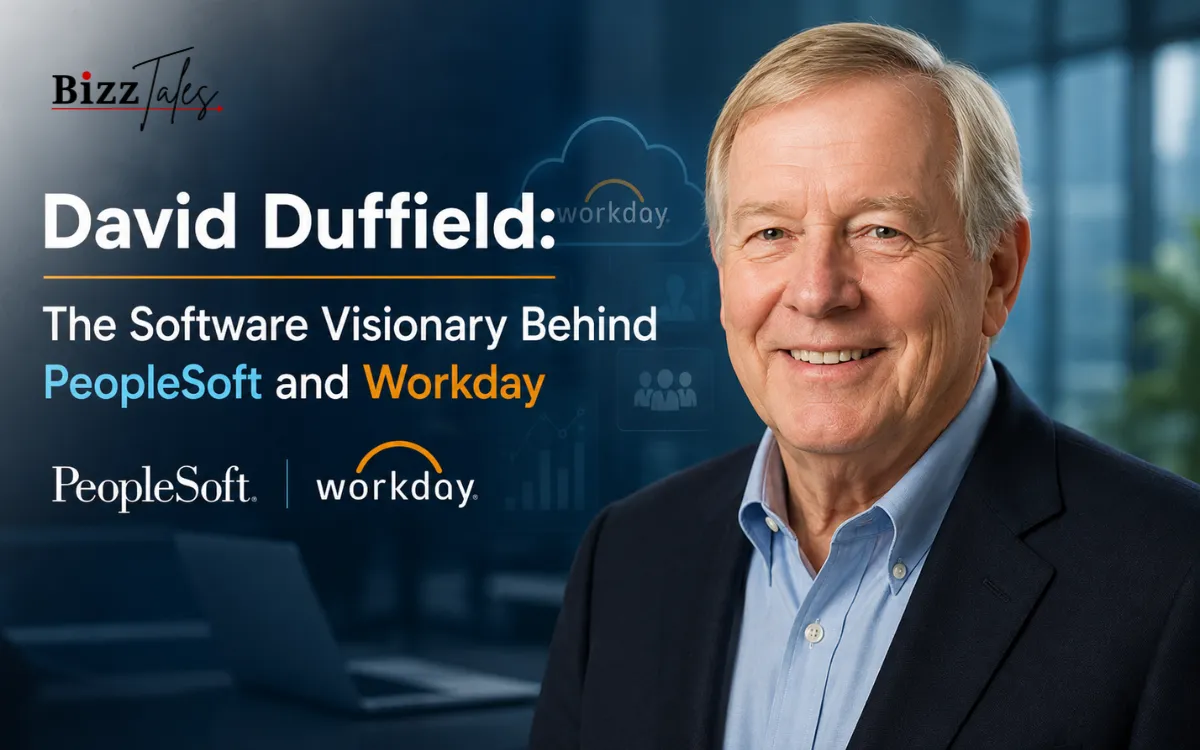
David Duffield is among history’s most significant software entrepreneurs and the creator of PeopleSoft and Workday, two of history’s most famous companies. Over many decades, he worked to reform the way many companies dealt with human resources, payroll, financing and employees. For the many tech billionaires who created products consumers bought, this isn’t typically the realm, as there are only business, not consumer versions of such systems.
In any event, such innovations transformed the ways corporations, business institutions and non-profits dealt with their employees and money-saving processes.
His involvement in the creation of both PeopleSoft and Workday have had an indelible effect on enterprise software, and in the tech industry itself. Such a path to success, failure and redemption is rather extraordinary and unusual. As such, the tale he has to tell of many decades working in enterprise software can be seen not only as one of incredible success but also as a remarkable success. And along the way he would also, among many other things, be instrumental in surviving industry shake-ups and the recovery from among tech’s most controversial corporate takeovers of the last half century.
Duffield is today remembered as much for his charitable work, investments and business savvy as he is remembered for his creation of enterprise software systems of significant lasting importance to companies throughout the world.
FORBES RANKINGS AND NET WORTH
| Year | Forbes Ranking | Net Worth |
| 2026 | #632 | $6.2 Billion |
| 2025 | #687 | $5.7 Billion |
| 2024 | #745 | $5.1 Billion |
EARLY LIFE AND EDUCATION
Born in the USA on September 21st, 1940, David Duffield showed an early aptitude for business, solutions and technology. Working with computers since they were first created, Duffield observed the dawn of technologies that would come to change the world’s economy. His keen eye for systems and process marked him as an emerging entrepreneur from an early age.
He graduated from university with an electrical engineering degree which served him as a good technical foundation whilst sharpening his analytical abilities for his soon to be career in the software industry.
Not an entrepreneur from birth or with overnight success, David’s career gradually led up to his greatest success, but lessons were learned from previous ventures such as understanding customer expectations, adapting to change and being inventive.
CAREER JOURNEY
David Duffield’s career in tech kicked off as software was becoming a real vertical market. Prior to forming PeopleSoft, he had founded a number of other technology-related businesses, learning the fundamentals of building and operating software companies. His initial forays helped Duffield understand the burgeoning opportunities-and challenges-in the field.
A pivotal point arrived in 1987 with the founding of PeopleSoft, a company that set out to build human resource software that was both simple and robust, as many existing enterprise applications were, to put it mildly, cumbersome to deploy and use.
Duffield insisted that software be built around people, not around existing technology stacks. It paid off. By the mid-2000s, PeopleSoft had ballooned into one of the planet’s most dominant software firms, and its founder one of the tech world’s most respected figures. With so many thinking he had sailed off into the sunset after PeopleSoft’s acquisition, Duffield unexpectedly re-emerged in 2005 to co-found Workday with a former colleague, Aneel Bhusri.
The cloud-based human resources and financial software powerhouse made for a second, equally stratospheric success, validating Duffield’s place as one of tech’s premier software founders.
BUSINESS VENTURES
He helped drive what’s easily seen as among David Duffield’s top two business ventures PeopleSoft, which disrupted the human resources software market, offering more flexible, easier-to-use software for workforce management that was utilized by countless companies, universities and governmental organizations.
The product suite broadened to include solutions for payroll, finances, procurement and the wider arena of enterprise resource management, an entire software environment. Once Oracle’s contentious acquisition of PeopleSoft was completed, David Duffield moved on to a different chance at the tech scene.
Workday In 2005, he partnered up and co-founded Workday, which, rather early on in an era in which many major companies in the field were sticking to on-premise software deployments, bet the farm on cloud technologies to help other organizations handle their human resources management, finance, planning, and analytics in the cloud.
Workday became quite popular and added considerably more wealth and influence to David Duffield’s life. Along the way, he was also involved with several ventures in the realms of investment, philanthropy and as a mentor to startup companies.
SUCCESS STORY AND MAJOR ACHIEVEMENTS
David Duffield’s legacy in enterprise software is a tale of truly epic success. His most notable deed, the development of PeopleSoft into the multinational titan of enterprise software it was is that the company, along with a generation of modernizers of the workplace, changed software in profound and undeniable ways.
His other, in a sense even more mind-boggling, accomplishment was that he, after having achieved staggering success and wealth with PeopleSoft, set about and successfully did it again with Workday.
Far too many people fail to capture that spark again, but not Duffield, he took down not one but two mult billion software firms.
At Workday he was again the leading light of enterprise applications built for the cloud revolutionizing in turn the way companies manage both finances and employees. David’s contributions to the enterprise software world earned him great respect and recognition, and established him as a visionary within the technology industry and far beyond.
RISE AND FALL
Born in 1939, David Duffield rose with the boom of PeopleSoft in the late 80s and 90s, when companies eager for enterprise solutions flocked to the burgeoning software vendor. PeopleSoft grew to become one of the largest and best software businesses in the world, tussling with giants like SAP, Siebel, and, well, Oracle. Known for his business savvy and people-first leadership, he was hailed as a visionary in the Valley.
But perhaps no phase of Duffield’s story captured attention more than when Oracle embarked on a bitter, protracted hostile takeover of PeopleSoft that ran from 2003 to 2005.
The battle over PeopleSoft would become one of the most famous corporate duels of Silicon Valley history. Duffield and his executives defended vigorously against the offer, making their resistance all the more intense given their status. Yet, the attempt was eventually successful: the two companies were merged in 2005. When it looked like the end of the line, it was instead the launch pad for something else.
Far from riding off into the sunset, he promptly launched the HR software startup Workday.
And just like with PeopleSoft, Workday’s incredible rise made him Silicon Valley’s greatest comeback king.
CHALLENGES, FAILURES, AND SETBACKS
Many entrepreneurs, just like David Duffield, had an obstacle-ridden career path. Entrepreneurs, building an enterprise software company-that means competing with established players that have much more funding and a bigger reach. PeopleSoft faced complex operations and the fast-paced pace of the software industry.
Facing hostile corporate takeovers, specifically Oracle took a toll-the prolonged battle was uncertain to customers, investors, and even employees of Peoplesoft.
Many observers doubted Duffield’s ability to survive after giving up control of the company he’d built for so long. Even shifting technologies, the software market quickly advanced-an evolving industry is never easy for an entrepreneur-also challenged many entrepreneurs like Duffield. But through it all, Duffield always remained optimistic and perseverant.
INVESTMENTS AND ASSETS
David Duffield’s substantial wealth largely stems from his investments in PeopleSoft and Workday. Both companies, successful endeavors, produced billion-dollar returns for shareholders, solidifying his status as an enterprise software magnate.
Apart from company shares, Duffield has investments in private enterprises, technology, and a mixed portfolio of financial instruments.
He’s significantly invested in philanthropies; specifically, with emphasis on education, community service, healthcare, and animal protection efforts.
Investment properties and private investment portfolios also play a role in his fortune.
LEADERSHIP STYLE AND BUSINESS PHILOSOPHY
People, culture, and trust seem to be common themes in David Duffield’s leadership philosophy.
Duffield often said he believed that happy people produce better products and better companies. That message characterized both PeopleSoft and Workday.
The focus on people’s welfare, company culture and collaboration permeated both companies.
Resilience was another hallmark of Duffield’s leadership; he overcame his share of setbacks and was always ready to tackle a new challenge.
Innovation and customer satisfaction were the other pieces of the puzzle. Duffields’s teams always worked toward resolving business problems and developed user-friendly interfaces to facilitate using the products and solving these problems.
Entrepreneurial with genuine compassion, the entrepreneur who also cared for people defined the two companies.
PERSONAL LIFE
Despite his success and wealth David Duffield generally avoids publicity. He also focuses his charitable efforts on community causes and animal welfare. His work with his wife Cheryl the couple have donated hundreds of millions to schools, hospitals, animal welfare organizations and other community groups is widely appreciated.
Supporting animal welfare causes have been one of his philanthropic priorities as he and his wife have funded a range of animal welfare projects.
Some who have worked closely with Duffield mention him as being generous, accessible and concerned with the welfare of those he encounters. He said in an interview that many of his personal beliefs and values have been “reflected in both my business and civic endeavors.”
SOCIAL MEDIA PRESENCE
- X (Twitter)
LEGACY AND FUTURE OUTLOOK
Dave Duffield certainly has a solid place in the pantheon of software history. Through PeopleSoft and then the groundbreaking SaaS application, Workday, his products reshaped how companies handle their workforce, how they manage and pay out money, and all aspects of their businesses. His companies helped pioneer new levels of sophistication in enterprise software, setting a precedent for a variety of applications.
His principles about taking care of employees and building positive corporate culture can be emulated to this day by any founder.
With the spread of SaaS applications, with the rise of artificial intelligence, and with the ongoing innovations in workforce automation technologies, much of Duffield’s thinking remains fresh and relevant. Young tech founders will continue to read case studies of his career-how he built and lost it, and rebuilt again. His impact on both business and software likely extends for generations to come.
CONCLUSION
David Duffield’s transition from being a software entrepreneur to the billionaire technology pioneer is one of the most inspiring stories you will ever hear in enterprise technology.
He established two industry-shaping companies through PeopleSoft and Workday that changed the way business is run. He revolutionized enterprise software and built his company around the value of people.
Despite setbacks such as losing PeopleSoft in Oracle’s acquisition,he bounced back with another successful business venture, cementing his status as one of the world’s leading entrepreneurs.
Today, David Duffield is one of the most honored names in the history of software. His extraordinary legacy continues to inspire through its embodiment of innovation, perseverance and dedication to enhancing the lives of employees, customers and neighbors.
FAQS
What is David Duffield’s net worth in 2026?
David Duffield’s estimated net worth in 2026 is approximately $6.2 billion.
How did David Duffield become a billionaire?
He became a billionaire by founding PeopleSoft and later co-founding Workday, two of the most successful enterprise software companies in history.
What companies does David Duffield own?
He is best known as the founder of PeopleSoft and co-founder of Workday, along with various private investments and business interests.
What is David Duffield’s leadership style?
His leadership style emphasizes employee happiness, strong workplace culture, innovation, collaboration, and long-term thinking.
What is David Duffield’s biggest business achievement?
His biggest achievement is building both PeopleSoft and Workday into industry-leading enterprise software companies that transformed workforce and financial management.