
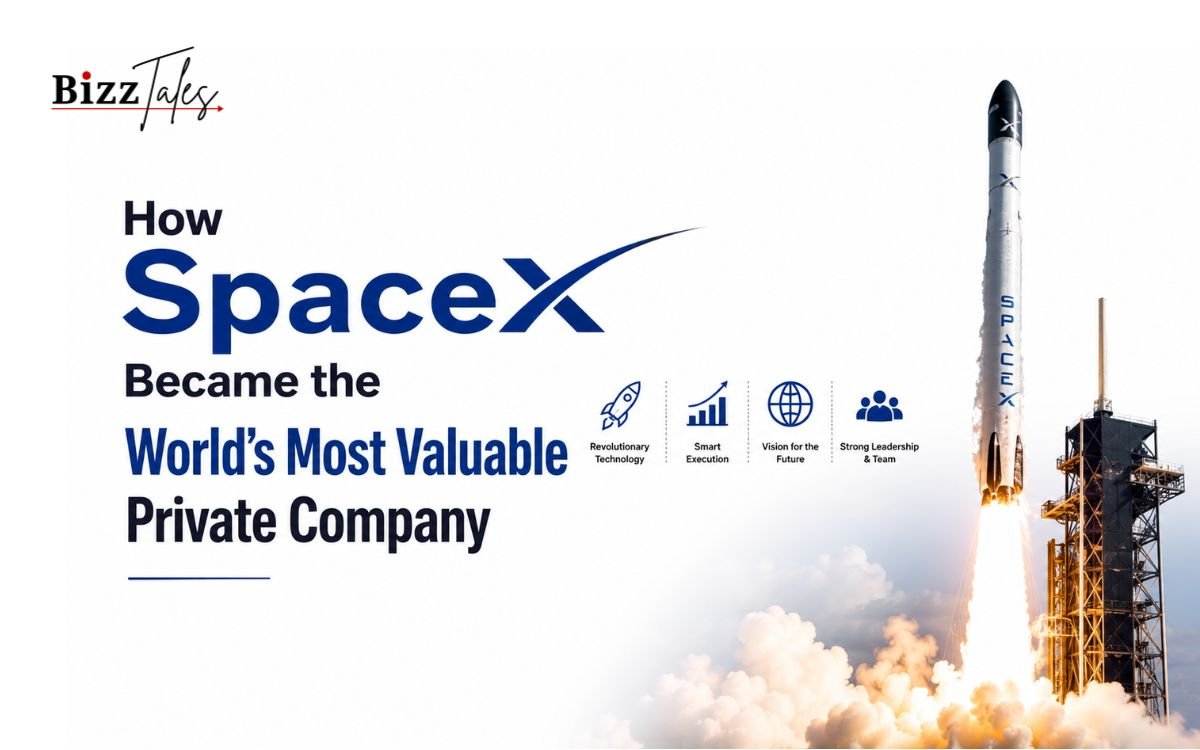
SpaceX is one of the few companies in history to have been able to pull off this level of innovation. In under 30 years, it went from a tiny private space start-up crippled by repeated rocket failures into the world’s most valuable private company. SpaceX is now slowly changing not only the future of space exploration, but the economics of the global aerospace industry. Its technologically groundbreaking reusable rockets, its satellite internet business, its widely-hailed Mars project, and its strategic partnership with NASA have made it one of the most influential technology companies of our time.
For decades, the space industry was run almost exclusively by governments. Launching a rocket was a slow, costly process that could only be undertaken by a handful of countries. Private companies had virtually no part to play in the industry due to high costs and risk. However, SpaceX began to challenge the entrenched method by demonstrating that an ability to innovate and think long-term could cut the cost of space launches significantly.
From the beginning, SpaceX has been an inspiration to entrepreneurs, investors, engineers, and government agencies worldwide. It has revolutionized the planning and executing of commercial space missions, changed satellite launch logistics, and altered perceptions of space travel in the future. With one of the world’s heaviest launch schedules under way, SpaceX remains at the forefront of this new private spacefaring generation.
The Beginning of SpaceX
In 2002, we designed our future by creating spaceX. The founder of spaceX named Elon Musk, who was empreror, had always dreamed of establishing a human colony on Mars. Because he thought the first of all was decreasing the costs of space transportation.
In its infancy, the business encountered tremendous obstacles. Making a rocket calls for the cutting edge in engineering, a highly talented workforce, big investment capital, not to mention a lot of risk, (a trial:error ratios much higher than software new product launch).
With the first 3 attempts to launch the Falcon 1 from the spaceX it looked as though the company was on the brink of losing everything. SpaceX was thought by many to be finished and not ready for the challenges ahead but after being knocked time and time again the company got back up, improved their technology and got to launch number four in 2008. What a difference a second makes.
NASA Changed the Company’s Future
One of the most significant moments was when NASA certified SpaceX for a billion dollar commercial cargo contract. NASA was willing to a never-before-in history to NASA’s glory. Instead, NASA chose to work with privates companies that could ferry loadsto the ISS.
This contract put money in the bank, but also validated SpaceX’s ability to launch reliably. It became a major step in establishing credence for the company within the world’s aerospace community.
In the coming years, SpaceX further developed a working relationship with NASA by ferrying astronauts to the International Space Station using the Crew Dragon spacecraft. This feat made SpaceX the first private corporation to send astronauts to orbit in its own spacecraft.
Reusable Rockets Changed the Economics of Space
One of the main factors behind successes of SpaceX must be the reusable rocket technology.
Historically, however, rockets have been single-use. Following each launch, costly rocket stages either plummeted into the ocean or disintegrated in the atmosphere making every flight exorbitantly expensive.
SpaceX took a different tack. Rather than discard rockets, the company designed equipment that enabled the first stage of its Falcon 9 rocket to make a safe return to Earth and land upright. The recovery boosters could then be refurbished and flown again.
This innovation greatly reduced launch costs and greatly increased launch rate. We now have, to date, many successful missions of a used Falcon 9 booster, demonstrating that reusable rockets can be a commercially viable concept.
Being able to refurbish rockets has provided the company with a major competitive advantage over many other competitors still using traditional launch technology.
Falcon 9 Became the Industry Standard
The Falcon 9 has established itself as one of the most dependable launch vehicles ever created. It’s transported satellites, cargo, astronauts, scientific investigations, and commercial payloads to orbit with phenomenal reliability.
Governments, private organizations, universities, defence groups and international clients routinely select Falcon 9 for their missions due to its consistency and minimal launch costs.
A high launch rate has helped SpaceX to optimize operation and earn huge in commercial launch revenue. The revenue earned from commercial launch services has numbed into billions.
The company’s ability to perform launches at a far higher rate than most of its competitors has bolstered its position at the forefront of the world launch industry.
Starlink Created a Powerful New Business
Rockets may have made the world focus on them. But it is Starlink that has become one of the most valuable ventures for the firm.
Starlink is a satellite internet constellation formed by a large number of individual satellites working in concert. Unlike usual internet services made available from cables or ground infrastructure, Starlink offers Broadband connectivity from Space.
This service is particularly beneficial in rural, isolated and unserved areas where high bandwidth has previously been unavailable.
Tens of Millions of customers spread over many Countries are now using Starlink. The Customer base keeps growing at a rapid pace.
Different from a one-time rocket launch, Starlink makes ongoing subscription revenues month after month. This provides a steady stream of revenue to fund future plans for research, rocket development, and Starship.
Starship: The Future of Space Exploration
Most of SpaceX is currently dedicated to Starship, a new and extremely heavy launch system that has the enormous title of the largest and most powerful rocket system ever constructed.
Unlike the previous launch vehicles, Starship has been built with reusability built in all the way from the top through to the bottom. The ultimate aim is to carry huge masses of people, and huge masses of cargo to the Moon, Mars and even further!
The vehicle is designed to enable NASA to undertake its Artemis lunar programme, along with commercial missions, satellite deployments, deep space exploration, and, ultimately, human colonization of the solar system.
While in the state of ongoing development with testing, the Starship is the next step in SpaceX’s long term vision and will most likely revolutionize the economics of deep-space travel.
Why Investors Value SpaceX So Highly
SpaceX-the most valuable private business in the world-has achieved this status for much more than just the building of rockets. Investors far and wide are looking at the company through the lens of a technology business, aerospace pioneer, satellite internet provider, naval production company and, ultimately, space transportation business-all in one to boot! This one-of-a-kind portfolio of companies provides the company with various income sources and great long term possibilities.
Since then, the launch business remains a lucrative enterprise with hundreds of millions of dollars flocking in for every launch performed on commercial satellite missions, government office and agency contracts and through deals with organisations across the globe. Meanwhile, Starlink has enabled the birth of a subscription business with round after round of longterm revenue from hungry customers worldwide.
Private investors have kept until now valuing the company at higher and higher levels because they think that the company is creating industries that will expand to massive proportions over the next few decades. Satellite communication, reusable launch services, lunar programs, commercial space infrastructure are forecasted by most analysts as billion dollar markets in the decades to come, thus favoring SpaceX.
Government Contracts Strengthen the Business
Another major factor for the faster growth of SpaceX is the fact that it has a very strong relationship with government agencies. It is still NASA’s largest client- it helps them in manned flights, cargo missions, launches for scientific purposes and moon exploration programs.
In addition to NASA, SpaceX has also secured contracts from defence and government bodies looking for secure satellite launches, national security operations and advanced communications. Such contracts are evidence of companies faith in the organisations technology and guarantee a reliable source of income over the long-term.
Partnerships help to promote ongoing innovation as well. As space agencies take on more challenging endeavors, this is proving to help increase SpaceX’s engineering expertise, and so providing benefits on the commercial front as well.
Competition in the Space Industry
While SpaceX is leading the way in many fields of commercial spaceflight, competition is getting fierce very quickly. Several companies including Blue Origin, Rocket Lab, Relativity Space and Firefly Aerospace, alongside a number of foreign launch providers, are investing heavily in new technologies.
Old-line aerospace organizations also build launch systems for government and commercial clients. They do not appear to have any technology edge over the new entrants but SpaceX has maintained a substantial competitive advantage due to its operational experience, reusable rocket technology, aggressive launch cadence, and integrated business model.
Instead of producing a singular item, the company has built an ecosystem of launch capabilities, satellite communications, spacecraft manufacturing and possible planetary exploration that is so diverse makes it hard for competitors to keep up in terms of mass.
Challenges Ahead
Regardless, a very bright future is predicted for SpaceX. Despite its tremendous achievement, there are challenges ahead. Heavy investments are needed to help develop exotic goods like the Starship.
This includes long hours of testing and being able to overcome legal hurdles.
With each single launch, technical issues contribute to the high failure rate of spaceflight programs.
The company has to contend with increased competition, growing satellite constellations, international regulations, environmental concerns and increasing demand for launch services. Achieving rapid innovation whilst maintaining safety and reliability is [it]’s greatest challenge today.
As starlink grows in size, issues of space traffic management, orbital debris, and coordination with regulatory bodies worldwide will come to the forefront.
Could SpaceX Become a Public Company?
Perhaps the most frequently asked questions by investors is whether SpaceX will go public in the future. Despite the various rumors floating around; however, the company has not gone public so far.
Over and over again, Elon Musk has stated that SpaceX going public is not an immediate concern because long term space exploration projects require relief from short term market pressures. The technology needed to enable human travel to Mars will need to be built over decades, so Private ownership is more appropriate than a public business at this time.
Nevertheless, a number of specialists in the field are starting to agree that certain areas of the business – for instance Starlink – may eventually be individually publicly listed, should a need for a fresh influx of capital for its onward growth arise. This is likely to be one of the costliest flotations in the history of finance.
The Road to Mars
Maybe no goal is more imaginative than thevision of spaceXaiming for human colonies on Mars. This goal is many years away; but every large project pursued by the organization in the interim is really an endeavor on thatgoal’s behalf.
Reusable rockets reduce launch cost. Starship increases payload. Starlink provides recurring revenue.
Government contracts provide operational experience.
These all contribute to a narrative of enabling affordable deep-space travel.
By the next decade or not, though, the technological advancements effort today is already easily revolutionizing satellite deployment, commercial launches and space transportation on Earth.
The Global Impact of SpaceX
What SpaceX does impacts not only aerospace but may transform the entire global economy. The company’s mission success has pressured governments and private entities all around the world to deepen their focus on space technologies. The expenditures of governments on space projects (like satellite programs, developing launch systems, moon missions etc.), and the investment of private sector in space based infrastructure are increasing day by day.
With reduced launch costs, universities, start ups and research organisations can now afford to support scientific missions that were previously prohibitively expensive. The swift expansion of the commercial space economy opens up a range of new opportunities for engineering, manufacture, software, artificial intelligence, robotics, telecoms and defence technology.
SpaceX has even encouraged a new group of entrepreneurs by proving that everything once governed by governments can be reformed with innovation and three-decade planning.
Conclusion
The ascendancy of SpaceX from startup struggling with launch failures to the most valuable private enterprise in the world ranks among the most extraordinary entrepreneurial tales of the 21 st century. It has been achieved through relentless ingenuity and technical talent, inspired and daring decisiveness and an indomitable obsession to make space business affordable.
SpaceX has transformed the world’s perception of commercial spaceflight through multi-use rockets, the rapidly expanding satellite internet network Starlink, a multitude of successful NASA contracts, and the bold Starship program. It has established a successful business, and developed new technologies that could revolutionise communication and transportation, scientific research and human exploration of space.
With worldwide demand for satellite communications, launch services and space infrastructure ever increasing, SpaceX is at the heart of one of the most exciting technological revolution ever. No matter if the company will go public, establish a permanent presence on the Moon or even try to colonize Mars, its footprint on business, technology and space will just keep getting bigger.
FAQs
Why is SpaceX the world’s most valuable private company?
A mixture of successful launch service provider, reusability of spacex’s rocket, continuous subscription revenue streams from starlink, government service contracts, and long term growth prospects are a few factors that make at present, it one of most valuable private companies across the world.
How does SpaceX make money?
The company makes money from commercial satellite launches, NASA and government contract work, defense missions, rideshare launches and monthly subscriptions from its Starlink satellite internet service.
What is Starlink?
Starlink is a satellite internet constellation being constructed by SpaceX to provide satellite Internet access globally. It will use a constellation of the North Star internet satellites in low Earth orbit.
Will SpaceX launch an IPO?
SpaceX has not considered IPO at the moment. The market players still believe that Starlink might go public on its own in the future.
What is SpaceX’s long-term goal?
The long-term goal of the company is to lower the costs of space travel so that humans can colonize Mars while expanding commercial space transportation and satellite communication.