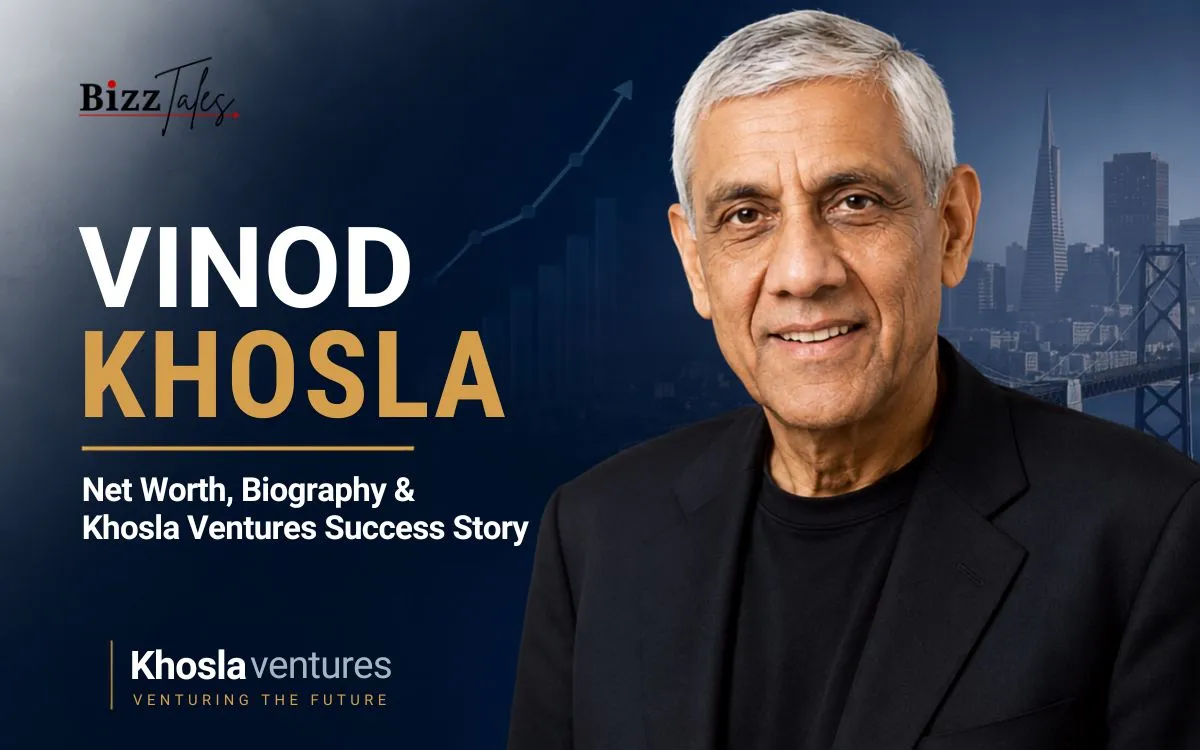
Few venture capitalists have influenced the global technology industry as profoundly as Vinod Khosla. Known for his bold investment decisions, willingness to back unconventional ideas, and remarkable ability to identify transformative technologies before they become mainstream, Khosla has earned a reputation as one of Silicon Valley’s most visionary investors. While many entrepreneurs achieve success by building a single company, Vinod Khosla’s impact spans multiple industries, generations of startups, and some of the most important technological breakthroughs of the modern era.
His journey began in India, where a fascination with technology and entrepreneurship inspired him to pursue opportunities beyond conventional career paths. Over the following decades, he would become a co-founder of Sun Microsystems, one of the most influential technology companies of the 1980s and 1990s, before transitioning into venture capital and helping shape the future of innovation through Khosla Ventures. Throughout his career, Khosla has invested in sectors ranging from artificial intelligence and biotechnology to renewable energy, robotics, healthcare, agriculture, and enterprise software.
Unlike many investors who focus primarily on financial returns, Khosla has built a reputation for backing ambitious ideas capable of solving large-scale global problems. He frequently supports entrepreneurs tackling challenges in healthcare, sustainability, food production, and climate change, often investing in technologies that others consider too risky or too early. His willingness to embrace uncertainty has made him one of the most respected and controversial figures in venture capital.
Today, Vinod Khosla stands among the world’s most influential investors, with a legacy that extends far beyond personal wealth. His story is one of vision, perseverance, intellectual curiosity, and a relentless belief in the power of innovation to transform society.
FORBES RANKINGS AND NET WORTH
| Year | Forbes Ranking | Net Worth |
| 2026 | Forbes Global Billionaire | Approximately $9.5 Billion |
| 2025 | Forbes Global Billionaire | Approximately $8.7 Billion |
| 2024 | Forbes Global Billionaire | Approximately $8.1 Billion |
EARLY LIFE AND EDUCATION
Vinod Khosla was born on January 28, 1955, in Pune, Maharashtra, India. Growing up in a middle-class family, he was exposed to discipline, education, and intellectual curiosity from an early age. His father served in the Indian Army, which meant that responsibility, commitment, and perseverance were important values within the household. While many children around him pursued traditional professional ambitions, Khosla became fascinated with technology and entrepreneurship after reading about emerging technology companies and innovative business leaders.
One of the defining moments of his childhood came when he learned about Intel and the semiconductor revolution taking place in the United States. The story of entrepreneurs building world-changing companies through technology inspired him to think beyond conventional career paths. At a time when entrepreneurship was not considered a mainstream ambition in India, Khosla became determined to participate in the technology revolution.
After completing his schooling, he enrolled at the Indian Institute of Technology (IIT) Delhi, where he earned a degree in Electrical Engineering. IIT exposed him to advanced technical concepts and a highly competitive academic environment that strengthened his analytical and problem-solving abilities. However, Khosla understood that to achieve his ambitions, he would need broader exposure to global technology ecosystems.
Following his graduation from IIT Delhi, he moved to the United States and pursued a master’s degree in Biomedical Engineering at Carnegie Mellon University. This experience expanded his understanding of innovation, engineering, and scientific research. Later, he attended Stanford Graduate School of Business, where he earned an MBA. Stanford placed him at the center of Silicon Valley’s entrepreneurial culture, providing direct access to emerging startups, venture capital firms, and some of the most influential minds in technology.
His educational journey combined engineering expertise, business strategy, and entrepreneurial exposure, creating the perfect foundation for a career that would eventually span company building, investing, and technological innovation.
CAREER JOURNEY
Vinod Khosla’s professional career began during one of the most exciting periods in technology history. After completing his studies, he worked briefly in the technology sector before becoming increasingly interested in entrepreneurship. Rather than pursuing a stable corporate career, he wanted to build companies capable of changing industries.
His first entrepreneurial venture was Daisy Systems, a company focused on computer-aided engineering tools. Although the business achieved moderate success, it was only the beginning of Khosla’s entrepreneurial journey. The experience taught him valuable lessons about product development, leadership, fundraising, and market competition.
The defining breakthrough came in 1982 when Khosla co-founded Sun Microsystems alongside Andy Bechtolsheim, Scott McNealy, and Bill Joy. The company was founded during a period when computer networking and distributed computing were rapidly evolving. Khosla recognized an opportunity to build powerful workstation computers that could serve engineers, developers, and businesses.
Under the leadership of its founding team, Sun Microsystems quickly became one of Silicon Valley’s most successful technology companies. The company’s innovations played a crucial role in the development of enterprise computing, networking infrastructure, and internet technologies. Sun’s slogan, “The Network Is the Computer,” reflected a vision that would later become central to modern cloud computing.
As Sun expanded, Khosla became known for his strategic thinking and ability to identify emerging market opportunities. However, after helping establish the company, he eventually transitioned into venture capital, recognizing that he could have an even greater impact by supporting multiple entrepreneurs rather than focusing on a single organization.
In the mid-1980s, he joined Kleiner Perkins, one of Silicon Valley’s most prestigious venture capital firms. There, he invested in numerous technology companies and developed a reputation for bold, high-conviction investments. Over time, his success as an investor became just as significant as his achievements as an entrepreneur.
BUSINESS VENTURES
Sun Microsystems remains one of Vinod Khosla’s most important entrepreneurial achievements. The company helped shape the evolution of enterprise computing and played a major role in the development of internet infrastructure. Technologies developed by Sun influenced businesses, developers, and technology organizations around the world.
However, Khosla’s greatest impact arguably came after he transitioned into venture capital. During his time at Kleiner Perkins, he participated in investments that generated significant returns and helped establish his reputation as one of Silicon Valley’s leading investors.
In 2004, he launched Khosla Ventures, a venture capital firm focused on funding ambitious entrepreneurs and transformative technologies. Unlike many investment firms that concentrated on proven business models, Khosla Ventures embraced risk and pursued opportunities in areas often considered speculative.
The firm invested heavily in artificial intelligence, biotechnology, healthcare innovation, agricultural technology, renewable energy, robotics, enterprise software, and climate-focused solutions. Khosla frequently argued that breakthrough innovations often appear unrealistic in their early stages and that investors must be willing to embrace uncertainty.
Over the years, Khosla Ventures backed hundreds of startups, many of which went on to become industry leaders. The firm’s investments have included companies involved in machine learning, autonomous vehicles, synthetic biology, digital health, financial technology, and advanced computing.
Khosla also became one of the most prominent advocates for clean energy and sustainability-focused investments. Long before environmental technology became a mainstream investment category, he was funding startups working on renewable fuels, carbon reduction, and sustainable agriculture.
Through Khosla Ventures, he created a platform that continues to shape the future of technology and innovation across multiple industries.
SUCCESS STORY AND MAJOR ACHIEVEMENTS
Vinod Khosla’s success story is unique because it combines achievements as both an entrepreneur and investor. His role in co-founding Sun Microsystems established him as a major figure in Silicon Valley, while his venture capital career expanded his influence across countless industries.
One of his greatest achievements was helping build Sun Microsystems into one of the most influential technology companies of its era. The company’s innovations contributed significantly to networking, enterprise computing, and internet infrastructure.
As a venture capitalist, Khosla achieved another level of success by identifying opportunities long before they became obvious to mainstream investors. His willingness to back unconventional ideas enabled him to support startups working on technologies that later became transformational.
He is also recognized for promoting innovation in sectors beyond software and internet services. While many venture capitalists focused primarily on consumer technology, Khosla invested heavily in healthcare, clean energy, agriculture, and biotechnology.
Another major achievement is his influence on entrepreneurial culture. Founders often describe Khosla as an investor willing to support ambitious visions rather than incremental improvements. His belief that technology can solve major global challenges has inspired countless entrepreneurs to pursue bold ideas.
His contributions have earned widespread recognition within both the startup ecosystem and broader business community.
CHALLENGES, FAILURES, AND SETBACKS
Despite his extraordinary success, Vinod Khosla’s career has not been free from setbacks. His willingness to invest in highly ambitious and experimental technologies naturally resulted in failures alongside successes.
Many startups backed by Khosla Ventures did not achieve commercial success. Some struggled with technological limitations, while others faced regulatory obstacles, market resistance, or operational difficulties. However, Khosla has consistently argued that failure is an unavoidable component of innovation.
His investments in alternative energy technologies attracted both praise and criticism. While some projects delivered strong results, others failed to meet expectations due to changing market conditions and economic realities.
Khosla has also been involved in public controversies, particularly regarding property rights and access disputes involving land he owns in California. These legal battles attracted significant media attention and generated debate about private property and public access.
Additionally, investing in emerging technologies often requires patience. Many of Khosla’s investments took years to mature, requiring long-term commitment despite uncertainty and criticism.
Rather than avoiding risk, Khosla embraces the possibility of failure as part of the innovation process. This philosophy has allowed him to remain focused on transformative opportunities even when outcomes are uncertain.
INVESTMENTS AND ASSETS
A significant portion of Vinod Khosla’s wealth comes from his ownership interests in Khosla Ventures and the firm’s extensive portfolio of investments. Over the years, he has backed companies across artificial intelligence, healthcare, biotechnology, agriculture, climate technology, robotics, and software.
His investment strategy differs from many traditional venture capitalists because he frequently targets sectors requiring substantial scientific and technical breakthroughs. This approach has allowed him to participate in innovations capable of creating entirely new industries.
Beyond venture capital, Khosla owns substantial real estate holdings, private equity investments, and other long-term assets. His financial portfolio reflects a diversified approach centered on innovation-driven growth.
Khosla is particularly interested in technologies that can improve healthcare outcomes, increase agricultural efficiency, reduce environmental impact, and expand access to essential services. These priorities influence both his investments and broader business activities.
His willingness to fund ambitious projects often places him at the forefront of emerging technological trends.
LEADERSHIP STYLE AND BUSINESS PHILOSOPHY
Vinod Khosla is known for a leadership philosophy built around bold thinking, intellectual curiosity, and a willingness to challenge conventional assumptions. He frequently encourages entrepreneurs to pursue ideas that others consider impossible or impractical.
One of his core beliefs is that breakthrough innovation requires accepting significant risk. He argues that transformative technologies rarely emerge from safe or predictable strategies. Instead, meaningful progress often requires experimentation, uncertainty, and persistence.
Khosla also places strong emphasis on data-driven decision-making. While he supports ambitious visions, he expects entrepreneurs to validate assumptions and continuously refine their approaches based on evidence.
Another defining aspect of his philosophy is optimism about technology’s ability to solve global challenges. Whether addressing healthcare, energy, food production, or environmental sustainability, he believes innovation can create solutions that improve lives on a large scale.
His leadership style combines high expectations with long-term support, making him one of the most respected mentors in venture capital.
PERSONAL LIFE
Despite his prominence in Silicon Valley, Vinod Khosla maintains a relatively private personal life. He is married and has children, with family remaining an important part of his life outside business.
Khosla is known for his intellectual curiosity and wide-ranging interests. He frequently engages with topics related to science, healthcare, education, economics, and public policy. His enthusiasm for learning extends beyond technology and influences many of his investment decisions.
He is also actively involved in philanthropy and supports initiatives focused on education, healthcare, entrepreneurship, and social impact. Through charitable efforts and mentorship, he continues contributing to future generations of innovators.
Colleagues and entrepreneurs often describe him as highly analytical, demanding, and intellectually rigorous. While he expects excellence from founders, he is also known for supporting entrepreneurs through difficult periods.
His personal values reflect a commitment to innovation, learning, and long-term societal progress.
SOCIAL MEDIA PRESENCE
Vinod Khosla primarily uses professional platforms to discuss technology, entrepreneurship, artificial intelligence, climate innovation, healthcare, and venture capital.
LEGACY AND FUTURE OUTLOOK
Vinod Khosla’s legacy extends far beyond his personal fortune. As a co-founder of Sun Microsystems, he helped shape the evolution of modern computing. As a venture capitalist, he influenced generations of entrepreneurs and contributed to the growth of transformative technologies across multiple industries.
His willingness to support unconventional ideas has made him one of the most important investors in Silicon Valley history. Many technologies that are now considered mainstream once appeared speculative or unrealistic, yet Khosla recognized their potential early.
Looking ahead, his influence is expected to remain significant as artificial intelligence, biotechnology, robotics, and climate technology continue advancing. Khosla Ventures remains actively involved in identifying and supporting the next generation of breakthrough innovations.
Future entrepreneurs will likely continue studying his investment philosophy and willingness to embrace calculated risk. His belief that technology can solve humanity’s biggest challenges remains a defining aspect of his legacy.
As global industries continue evolving, Vinod Khosla’s contributions to innovation, entrepreneurship, and venture capital will remain highly influential for decades to come.
CONCLUSION
Vinod Khosla’s journey from a young engineering student in India to one of Silicon Valley’s most influential billionaires is a remarkable story of ambition, vision, and perseverance. Through Sun Microsystems, he helped build one of the defining technology companies of the computer era. Through Khosla Ventures, he expanded his impact across healthcare, artificial intelligence, biotechnology, renewable energy, and countless other sectors.
What distinguishes Khosla from many investors is his willingness to support ambitious ideas that others consider too risky. His belief in innovation as a force for solving global problems has guided both his investment decisions and broader business philosophy.
Beyond financial success, his contributions have shaped entrepreneurial culture and inspired generations of founders to think bigger and pursue transformative solutions. Whether funding startups, mentoring entrepreneurs, or advocating for technological progress, Khosla continues influencing the future of innovation.
His story demonstrates that extraordinary success often comes from embracing uncertainty, challenging conventional thinking, and maintaining a long-term vision. As technology continues reshaping the world, Vinod Khosla’s legacy as an entrepreneur, investor, and visionary leader will remain firmly established.
FAQS
1. What is Vinod Khosla’s net worth in 2026?
Vinod Khosla’s estimated net worth in 2026 is approximately $9.5 billion.
2. How did Vinod Khosla become a billionaire?
He became a billionaire through co-founding Sun Microsystems, successful venture capital investments, and the growth of Khosla Ventures.
3. What companies did Vinod Khosla found?
Vinod Khosla co-founded Sun Microsystems, Daisy Systems, and Khosla Ventures.
4. What is Vinod Khosla’s leadership style?
His leadership style emphasizes bold thinking, innovation, calculated risk-taking, data-driven decision-making, and long-term vision.
5. What is Vinod Khosla’s biggest business achievement?
His biggest achievement is co-founding Sun Microsystems and later building Khosla Ventures into one of Silicon Valley’s most influential venture capital firms.