
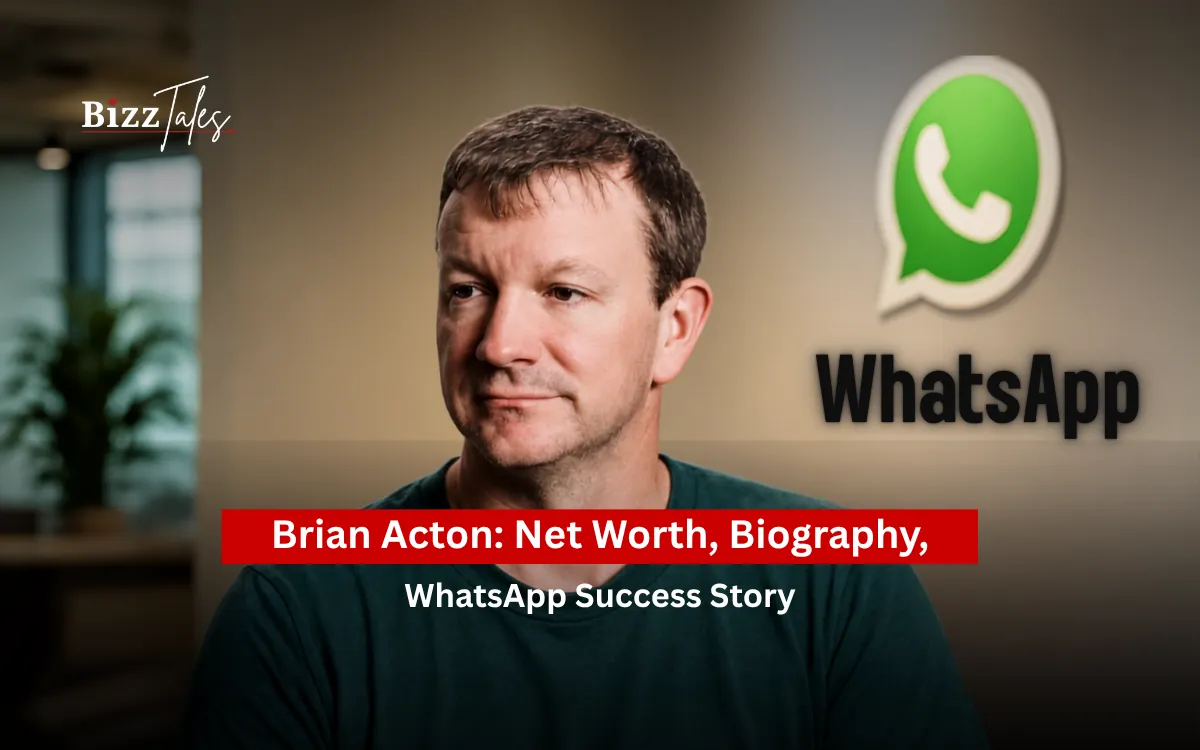
Brian Acton is one of the most influential technology entrepreneurs of the modern era, best known as the co-founder of WhatsApp, the messaging platform that transformed global communication. While many internet billionaires achieved fame through social media, e-commerce, or software services, Acton built his reputation by helping create a product that fundamentally changed how people connect with friends, family, and businesses across the world. Today, billions of messages are exchanged daily through services inspired by the simple, fast, and reliable communication model that WhatsApp popularized.
What makes Acton’s journey particularly remarkable is that his path to success was far from straightforward. Before becoming a billionaire, he experienced professional setbacks, startup failures, and even job rejections from some of the world’s largest technology companies. Instead of allowing those disappointments to define his future, he used them as motivation to continue building products and pursuing opportunities in the rapidly evolving technology industry.
Together with Jan Koum, Acton co-founded WhatsApp in 2009 with a vision of creating a messaging service focused on simplicity, reliability, and user privacy. Unlike many technology startups that relied heavily on advertising and aggressive monetization, WhatsApp prioritized the user experience. This approach helped the platform achieve extraordinary growth and eventually led to one of the largest acquisitions in technology history when Facebook acquired WhatsApp in 2014.
Beyond WhatsApp, Acton became a leading advocate for digital privacy and secure communication. Through his involvement with the Signal Foundation and various philanthropic initiatives, he has continued influencing the future of internet communication. His story is a powerful example of perseverance, innovation, and staying true to core principles even in the face of enormous business pressures.
FORBES RANKINGS AND NET WORTH
| Year | Forbes Ranking | Net Worth |
| 2026 | Forbes Global Billionaire | Approximately $4.8 Billion |
| 2025 | Forbes Global Billionaire | Approximately $4.5 Billion |
| 2024 | Forbes Technology Billionaire | Approximately $4.2 Billion |
EARLY LIFE AND EDUCATION
Brian Acton was born on February 17, 1972, in Michigan, United States. He spent much of his childhood in Florida, where he developed an interest in technology, mathematics, and problem-solving. Unlike many future technology entrepreneurs who grew up surrounded by computers and startup culture, Acton came from a relatively ordinary background and built his career through education, persistence, and continuous learning.
During his school years, he displayed strong analytical abilities and an interest in understanding how complex systems worked. Computers were becoming increasingly important during this period, and Acton quickly recognized the opportunities technology would create in the future. His curiosity about software, engineering, and digital communication continued to grow throughout his teenage years.
After completing high school, he attended Stanford University, one of the most prestigious institutions in the world for technology and engineering education. At Stanford, he earned a degree in Computer Science. The university exposed him to cutting-edge research, innovative thinking, and a culture of entrepreneurship that would later influence his career choices.
While studying computer science, Acton gained a strong technical foundation that prepared him for the rapidly growing software industry. His education taught him not only programming and engineering principles but also the importance of logical thinking, collaboration, and problem-solving. These skills would become essential throughout his professional journey.
The combination of technical expertise, curiosity, and determination positioned Acton well for a career in technology, even though he could not have predicted the extraordinary impact he would eventually have on global communication.
CAREER JOURNEY
After graduating from Stanford University, Brian Acton began his career as a software engineer. Like many aspiring technology professionals, he started by working in technical roles that allowed him to develop practical experience while improving his engineering skills.
One of his earliest significant positions was at Apple. Working at one of the world’s most innovative technology companies exposed him to large-scale software development and helped him understand how successful technology organizations operate. The experience provided valuable lessons that would later influence his entrepreneurial ambitions.
Following his time at Apple, Acton joined Yahoo, where he met Jan Koum. This relationship would eventually become one of the most important partnerships in technology history. At Yahoo, Acton spent several years working on infrastructure and advertising-related systems while developing deep expertise in internet technologies.
The two colleagues built a strong friendship based on shared interests, technical skills, and a belief in creating simple, user-focused products. After leaving Yahoo, they explored various opportunities and considered launching new ventures.
Interestingly, before founding WhatsApp, both Acton and Koum applied for jobs at Facebook and were rejected. Acton also faced rejection from Twitter. While these setbacks could have discouraged many professionals, he chose to view them as opportunities to pursue entrepreneurship instead.
In 2009, he and Koum founded WhatsApp. The company began as a small startup focused on status updates and messaging but quickly evolved into one of the fastest-growing communication platforms in the world.
BUSINESS VENTURES
WhatsApp remains Brian Acton’s most significant business achievement and the primary source of his wealth. The company was founded with a simple but powerful goal: making communication easier, faster, and more reliable across mobile devices.
At a time when text messaging often involved high costs and limited functionality, WhatsApp offered an alternative that worked through internet connections. Users could send messages instantly, regardless of geographic location, creating a dramatically improved communication experience.
Unlike many technology companies that focused heavily on advertising, WhatsApp prioritized user satisfaction and simplicity. The platform avoided unnecessary features and concentrated on delivering a fast, reliable service. This strategy proved highly successful as smartphone adoption accelerated worldwide.
The company’s growth was extraordinary. Within just a few years, WhatsApp became one of the most widely used messaging applications globally, attracting hundreds of millions of users.
In 2014, Facebook acquired WhatsApp for approximately $19 billion in one of the largest technology acquisitions ever completed. The deal transformed Acton and Koum into billionaires while cementing WhatsApp’s position within the global technology landscape.
Following his departure from Facebook, Acton shifted his focus toward privacy-focused communication technologies. In 2018, he joined Moxie Marlinspike to establish the Signal Foundation, an organization dedicated to developing secure communication tools.
Signal quickly became one of the most respected privacy-focused messaging platforms in the world.
SUCCESS STORY AND MAJOR ACHIEVEMENTS
Brian Acton’s success story demonstrates the power of persistence and long-term thinking. One of his greatest achievements was helping create WhatsApp, a platform that fundamentally changed how billions of people communicate.
The company’s growth from a small startup to a global messaging giant represents one of the most remarkable success stories in technology history. WhatsApp succeeded because it focused on solving a clear problem while maintaining simplicity and reliability.
Another major accomplishment was overseeing WhatsApp’s expansion across diverse markets worldwide. The platform became particularly popular in regions where traditional messaging services were expensive or unreliable.
The Facebook acquisition stands as another significant milestone. At approximately $19 billion, the transaction remains one of the largest acquisitions ever completed in the technology sector.
Beyond financial success, Acton earned recognition for his commitment to privacy and secure communication. His involvement with the Signal Foundation demonstrated that entrepreneurship can extend beyond profit generation and contribute to broader social goals.
His achievements have influenced the messaging industry, digital privacy discussions, and the broader technology ecosystem.
CHALLENGES, FAILURES, AND SETBACKS
Like many successful entrepreneurs, Brian Acton experienced numerous setbacks before achieving success.
One of the most widely discussed examples involves his job applications to Facebook and Twitter, both of which resulted in rejection. While these outcomes could have been discouraging, Acton used them as motivation to continue pursuing new opportunities.
Building WhatsApp also presented significant challenges. The messaging market was highly competitive, with numerous companies attempting to establish dominant positions. Scaling infrastructure to support rapidly growing user numbers required substantial technical expertise and constant innovation.
Following Facebook’s acquisition, tensions emerged regarding privacy, advertising, and business strategy. Acton ultimately left the company after disagreements about the future direction of WhatsApp.
His decision to walk away from Facebook highlighted his commitment to principles he believed were important, even when doing so involved substantial personal and professional consequences.
The technology industry itself is filled with uncertainty, and many startup ideas fail before achieving traction. Acton’s journey demonstrates that setbacks and failures are often essential components of long-term success.
INVESTMENTS AND ASSETS
A significant portion of Brian Acton’s wealth originates from his ownership stake in WhatsApp and the company’s acquisition by Facebook. The transaction generated billions of dollars in value and established him among the wealthiest entrepreneurs in technology.
Following the acquisition, Acton expanded his involvement in investments and philanthropic initiatives. While he generally maintains a relatively low profile compared to many technology billionaires, he has supported projects aligned with technology, privacy, and social impact.
His investment philosophy often reflects his belief in products that create meaningful value for users rather than relying exclusively on aggressive monetization strategies.
Acton has also directed substantial resources toward nonprofit initiatives and privacy-focused technologies. Through the Signal Foundation, he committed significant funding to support secure communication tools accessible to users around the world.
His financial portfolio includes technology investments, private assets, and philanthropic commitments designed to create long-term impact.
LEADERSHIP STYLE AND BUSINESS PHILOSOPHY
Brian Acton is known for a leadership style built around simplicity, integrity, and user-focused decision-making. Throughout his career, he emphasized creating products that solve real problems rather than pursuing unnecessary complexity.
One of his core beliefs is that technology companies should prioritize users and maintain trust. This philosophy played a major role in WhatsApp’s development and later influenced his support for privacy-focused technologies.
Acton also values humility and teamwork. Unlike many high-profile technology leaders, he generally avoids excessive publicity and focuses on execution rather than personal branding.
Another defining aspect of his philosophy is resilience. His career demonstrates that professional setbacks and rejection do not necessarily determine future outcomes. Instead, persistence and adaptability often matter more than early successes or failures.
His leadership approach combines technical expertise, ethical considerations, and a commitment to creating products with long-term value.
PERSONAL LIFE
Despite his wealth and influence, Brian Acton maintains a relatively private lifestyle. He is known for focusing on family, philanthropy, and technology rather than celebrity culture or public attention.
Outside business, he has demonstrated a strong interest in charitable initiatives and social impact projects. His support for privacy rights and secure communication reflects broader concerns about technology’s role in society.
Acton has also contributed to educational and philanthropic causes through financial donations and organizational support. These efforts reflect his belief that success should be accompanied by meaningful contributions to the broader community.
Friends and colleagues frequently describe him as humble, thoughtful, and deeply committed to his values. These qualities have shaped both his professional achievements and his personal reputation.
SOCIAL MEDIA PRESENCE
LEGACY AND FUTURE OUTLOOK
Brian Acton’s legacy is firmly connected to the transformation of global communication. Through WhatsApp, he helped create a platform that changed how billions of people connect with one another across countries, cultures, and languages.
His contributions extend beyond messaging technology. By supporting Signal and advocating for privacy-focused communication, he helped influence discussions about user rights, digital security, and the future of online communication.
The messaging industry continues evolving, but many of the principles that guided WhatsApp’s success—simplicity, reliability, and accessibility—remain highly relevant today.
Looking ahead, Acton’s influence is likely to continue through privacy-focused initiatives, technology investments, and philanthropic efforts. As concerns about digital privacy and secure communication grow, the ideas he championed may become even more important.
Future entrepreneurs will likely study his career as an example of how persistence, technical excellence, and strong values can create both financial success and meaningful societal impact.
CONCLUSION
Brian Acton’s journey from software engineer to billionaire entrepreneur is one of the most inspiring stories in modern technology. Despite facing rejection from major technology companies and navigating numerous challenges, he remained focused on building products that improved people’s lives.
Through WhatsApp, he revolutionized digital communication and helped create one of the most widely used messaging platforms in history. Through the Signal Foundation, he demonstrated a commitment to privacy and user rights that continues influencing the technology industry.
His success reflects the importance of perseverance, simplicity, and staying true to core principles. Beyond wealth creation, his career serves as a reminder that technology can be a powerful force for connection, empowerment, and positive change.
As the digital world continues evolving, Brian Acton’s legacy as an entrepreneur, innovator, and advocate for privacy will remain highly influential for generations to come.
FAQS
1. What is Brian Acton’s net worth in 2026?
Brian Acton’s estimated net worth in 2026 is approximately $4.8 billion.
2. How did Brian Acton become a billionaire?
He became a billionaire through WhatsApp, which was acquired by Facebook for approximately $19 billion in 2014.
3. What companies did Brian Acton found?
Brian Acton co-founded WhatsApp and later helped establish the Signal Foundation.
4. What is Brian Acton’s leadership style?
His leadership style emphasizes simplicity, integrity, user trust, privacy, and long-term value creation.
5. What is Brian Acton’s biggest business achievement?
His biggest achievement is co-founding WhatsApp and helping build one of the most successful messaging platforms in history.