
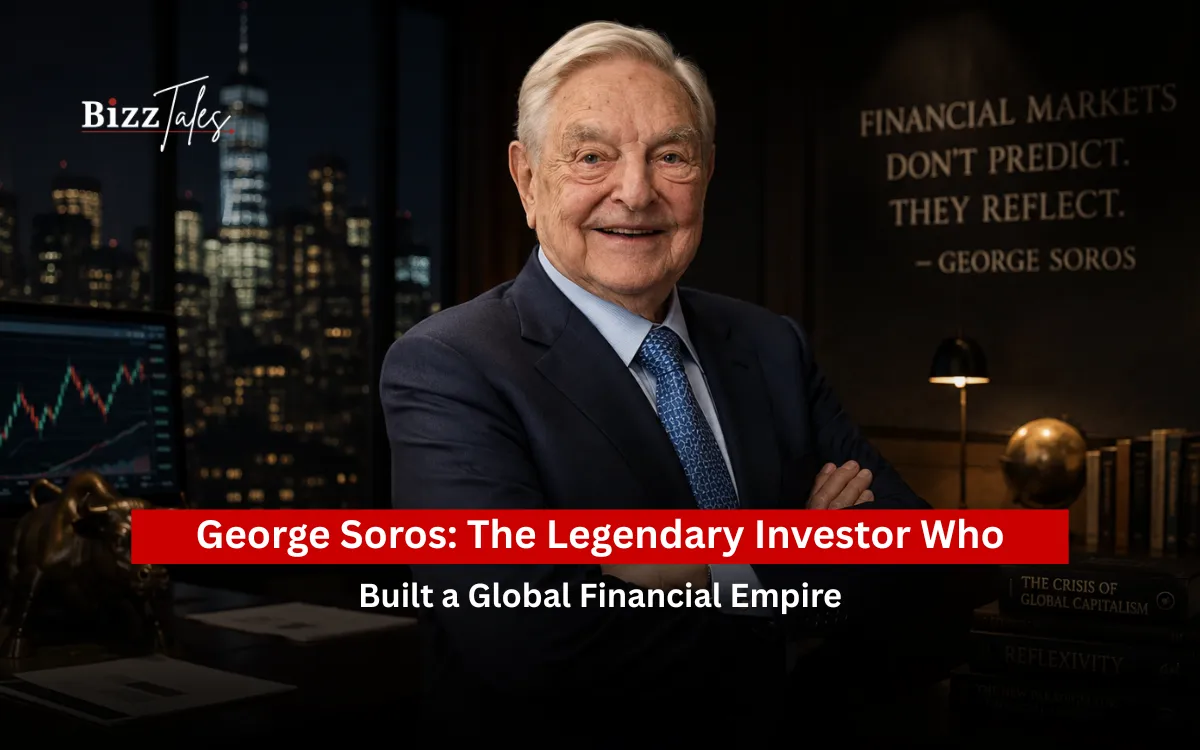
Few investors in modern history have achieved the level of influence, wealth, and recognition earned by George Soros. Known as one of the greatest hedge fund managers of all time, Soros built a financial empire through bold market predictions, disciplined risk management, and a deep understanding of global economics. His name became legendary after a single trade reportedly earned more than $1 billion and earned him the nickname “The Man Who Broke the Bank of England.”
Over a career spanning more than six decades, Soros transformed himself from a refugee fleeing war-torn Europe into one of the most successful investors in financial history. Through his hedge fund, Soros Fund Management, he generated extraordinary returns that consistently outperformed most competitors. His influence extended beyond finance into politics, education, philanthropy, and international development, making him one of the most discussed public figures of his generation.
Unlike many billionaires who accumulated wealth through technology or manufacturing, Soros built his fortune by understanding markets, identifying opportunities, and acting decisively when others hesitated. His story is one of resilience, intellectual curiosity, and strategic thinking.
Today, George Soros is remembered not only for his investment achievements but also for his extensive philanthropic efforts, having donated billions of dollars to causes supporting democracy, education, human rights, and social development around the world.
Forbes Rankings and Net Worth
| Year | Forbes Ranking | Net Worth |
| 2026 | Forbes Billionaire | Approximately $7.2 Billion |
| 2025 | Forbes Global Billionaire | Approximately $7 Billion |
| 2024 | Forbes Global Billionaire | Approximately $6.7 Billion |
Although George Soros has donated more than $32 billion to philanthropic causes throughout his lifetime, he remains one of the wealthiest investors in the world due to the success of his investment businesses.
Early Life and Education
George Soros was born as György Schwartz on August 12, 1930, in Budapest, Hungary. His childhood was shaped by some of the most turbulent events in modern history. Growing up during World War II, Soros and his family faced significant danger under Nazi occupation.
His father, Tivadar Soros, was a lawyer and writer who played a crucial role in helping the family survive the war. Using forged documents and strategic planning, the family managed to avoid persecution during one of Europe’s darkest periods. These experiences had a profound impact on young George, shaping his understanding of risk, uncertainty, and human behavior.
After the war, Hungary came under communist rule. Seeking greater opportunities and freedom, Soros left Hungary in 1947 and moved to England. The transition was not easy. He worked various jobs, including railway porter and waiter, to support himself while pursuing higher education.
Soros enrolled at the London School of Economics, where he studied philosophy under renowned philosopher Karl Popper. Popper’s ideas about open societies, critical thinking, and the limitations of human knowledge deeply influenced Soros’s worldview and later became central to both his investment philosophy and philanthropic work.
His education provided not only academic knowledge but also a framework for understanding markets, societies, and decision-making.
Career Journey
George Soros began his financial career in London, working at merchant banks while learning the fundamentals of international finance and investment.
In 1956, he moved to New York City, where he joined several Wall Street firms as an analyst and trader. During these early years, Soros gained valuable experience in stocks, bonds, currencies, and global financial markets.
Although talented, he initially struggled to gain widespread recognition. However, his deep analytical abilities and willingness to challenge conventional wisdom gradually distinguished him from his peers.
In 1970, Soros founded Soros Fund Management and launched the Quantum Fund, a hedge fund that would eventually become one of the most successful investment vehicles in history.
The fund’s performance quickly attracted attention. Soros generated exceptional returns by combining macroeconomic analysis with bold trading strategies. Unlike many investors who focused on individual companies, he concentrated on broader economic trends, currency movements, interest rates, and geopolitical developments.
His ability to identify major market opportunities helped the Quantum Fund achieve average annual returns exceeding 30% over several decades.
This remarkable performance transformed Soros into one of the wealthiest and most respected investors in the world.
Business Ventures
The Quantum Fund remains George Soros’s most significant business achievement.
Launched in 1973, the fund became one of the highest-performing hedge funds ever created. Through a combination of currency trading, macroeconomic analysis, and strategic speculation, Soros generated billions of dollars in profits for investors.
One of the most famous moments in financial history occurred in 1992 during the Black Wednesday crisis. Soros concluded that the British pound was overvalued and unlikely to remain within the European Exchange Rate Mechanism. Acting on this belief, he placed a massive short position against the pound.
When the British government was forced to withdraw the currency from the mechanism, Soros reportedly earned more than $1 billion in a single day. This trade cemented his reputation as one of the greatest investors of all time.
Beyond the Quantum Fund, Soros Fund Management expanded into global investments across equities, bonds, currencies, commodities, private equity, and alternative assets.
The organization became known for its flexibility, intellectual rigor, and willingness to pursue unconventional investment opportunities.
His business success ultimately created the financial resources necessary to support one of the largest philanthropic initiatives in modern history.
Success Story and Major Achievements
George Soros’s achievements extend far beyond wealth accumulation.
His greatest accomplishment is undoubtedly the extraordinary performance of the Quantum Fund. Few investment managers have matched its long-term track record or influence on global finance.
Another major achievement was pioneering macro investing as a dominant strategy within the hedge fund industry. His approach inspired generations of investors and helped reshape modern investment management.
Soros also became widely known for his theory of reflexivity, which suggests that market participants influence the very realities they attempt to understand. This concept challenged traditional economic assumptions and became a cornerstone of his investment philosophy.
Beyond finance, his philanthropic contributions have had a profound global impact. Through the Open Society Foundations, he funded educational programs, democratic initiatives, public health projects, and human rights organizations across numerous countries.
His commitment to philanthropy distinguishes him from many other billionaires and represents a significant part of his legacy.
Challenges, Failures, and Setbacks
Despite his extraordinary success, George Soros experienced numerous challenges throughout his career.
Financial markets are inherently unpredictable, and even the most successful investors experience losses. Soros made several high-profile investment mistakes, including trades that produced significant losses during volatile market periods.
The Asian Financial Crisis of 1997 generated controversy, with some critics accusing hedge funds of contributing to market instability. Soros faced criticism from political leaders and financial commentators despite arguing that broader structural issues were responsible for the crisis.
His public involvement in political and social causes also attracted controversy. Supporters praised his commitment to democracy and human rights, while critics challenged his influence and activities.
Managing a global investment organization during periods of economic uncertainty presented additional difficulties. Market crashes, recessions, geopolitical tensions, and regulatory changes required constant adaptation.
Despite these setbacks, Soros consistently demonstrated resilience and an ability to learn from mistakes.
Investments and Assets
The majority of George Soros’s wealth originated from the success of the Quantum Fund and Soros Fund Management.
His investment portfolio historically included stocks, bonds, currencies, commodities, private companies, and alternative assets across multiple continents.
Soros became particularly known for large-scale macroeconomic trades involving currencies and sovereign debt markets. These investments often reflected his views on economic policy, interest rates, and geopolitical developments.
In addition to financial assets, he supported numerous ventures through private investments and philanthropic organizations.
A significant portion of his wealth has been transferred to the Open Society Foundations, making it one of the largest philanthropic networks in the world.
His approach to wealth management emphasizes flexibility, global diversification, and continuous adaptation to changing economic conditions.
Leadership Style and Business Philosophy
George Soros’s leadership style is deeply influenced by intellectual curiosity and critical thinking.
One of his defining characteristics is a willingness to challenge conventional wisdom. Throughout his career, he often pursued opportunities that others overlooked or dismissed.
His investment philosophy centers on reflexivity, the idea that market perceptions can influence economic realities. This perspective encouraged him to think differently about risk, valuation, and market behavior.
Soros also emphasizes adaptability. He believes investors must remain open to new information and be willing to change their views when circumstances evolve.
Another important principle is risk management. Although known for bold trades, Soros consistently stressed the importance of controlling losses and preserving capital.
His leadership demonstrates how intellectual flexibility and disciplined decision-making can create long-term success.
Personal Life
George Soros has been married multiple times and is the father of five children. His family has played an increasingly important role in managing both business and philanthropic activities.
In recent years, leadership of the Open Society Foundations and portions of the family enterprise have gradually transitioned to the next generation.
Outside of finance, Soros has long been interested in philosophy, politics, education, and social development. His intellectual pursuits often influenced both his investments and charitable activities.
Despite his immense wealth, he frequently emphasizes the importance of ideas, institutions, and societal progress rather than material success alone.
His life reflects a unique combination of financial achievement and civic engagement.
Legacy and Future Outlook
George Soros’s legacy is likely to endure across both finance and philanthropy.
Within the investment world, he is widely regarded as one of the greatest traders and hedge fund managers in history. His theories, strategies, and market insights continue influencing investors around the globe.
Through the Open Society Foundations, his impact extends into education, healthcare, democracy promotion, and human rights. The organization’s work reaches numerous countries and communities worldwide.
His theory of reflexivity remains an important contribution to economic and financial thought, encouraging deeper analysis of how markets function.
As future generations study investing, macroeconomics, and philanthropy, Soros’s ideas and accomplishments will continue serving as important reference points.
His influence on both financial markets and global civil society is likely to remain significant for decades.
Conclusion
George Soros’s journey from a young refugee escaping war-torn Europe to one of the most successful investors in history is an extraordinary story of resilience, intelligence, and ambition.
Through the Quantum Fund, he generated remarkable investment returns and reshaped the hedge fund industry. His ability to anticipate economic trends, manage risk, and think independently established him as a legendary figure in global finance.
At the same time, his philanthropic efforts demonstrate a commitment to using wealth for broader societal impact. Few individuals have influenced both financial markets and social institutions as extensively as George Soros.
For investors, entrepreneurs, and leaders, his story offers valuable lessons about critical thinking, adaptability, intellectual curiosity, and the power of long-term vision.
Today, George Soros remains one of the most influential figures in modern financial history.
FAQs
1. What is George Soros’s net worth in 2026?
George Soros’s estimated net worth in 2026 is approximately $7.2 billion, despite donating tens of billions of dollars to philanthropic causes.
2. How did George Soros become a billionaire?
He became a billionaire through the success of the Quantum Fund and Soros Fund Management, which generated exceptional investment returns over several decades.
3. What companies does George Soros own?
George Soros is primarily associated with Soros Fund Management and the Open Society Foundations rather than ownership of a single operating company.
4. What is George Soros’s leadership style?
His leadership style emphasizes critical thinking, adaptability, intellectual independence, risk management, and challenging conventional assumptions.
5. What is George Soros’s biggest business achievement?
His biggest achievement is building the Quantum Fund into one of the most successful hedge funds in financial history and earning over $1 billion from his famous 1992 trade against the British pound.