
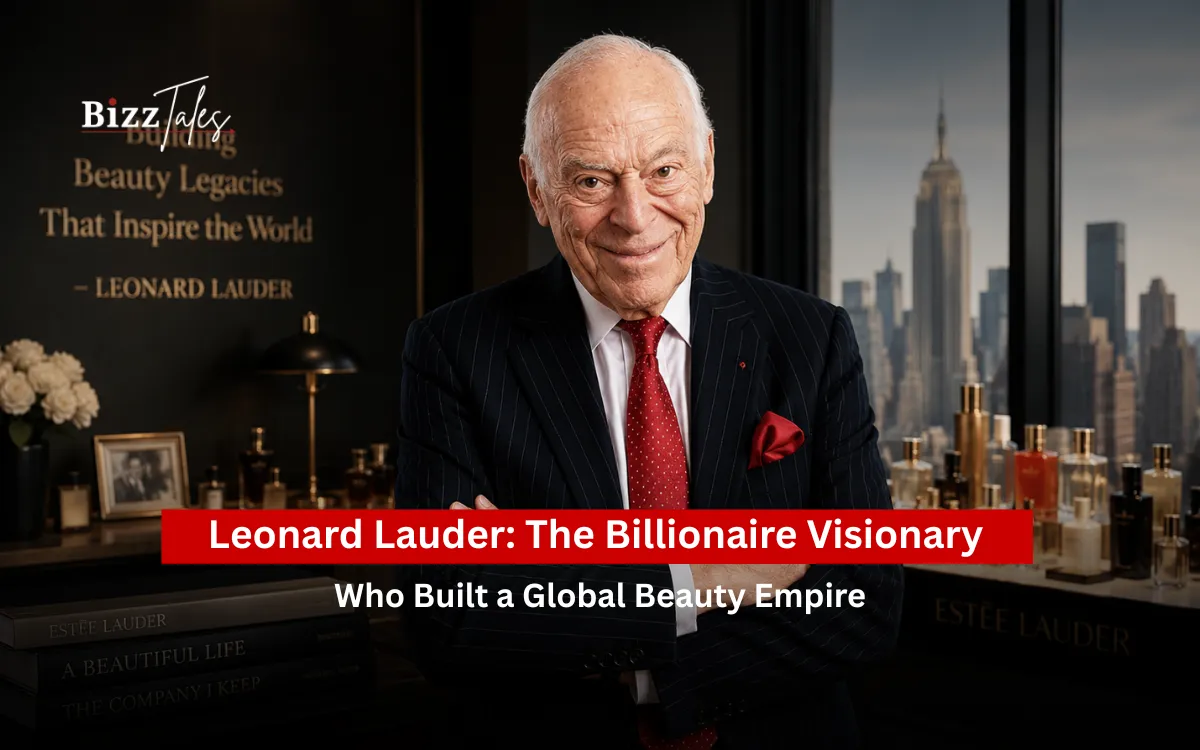
The global beauty industry has produced many successful entrepreneurs, but few have left a mark as significant as Leonard Lauder. As the driving force behind Estée Lauder Companies transformation into one of the world’s largest cosmetics and beauty conglomerates, Leonard Lauder played a pivotal role in shaping modern beauty retail. His journey is not simply a story of inheriting a family business; it is the story of expanding a promising cosmetics brand into a multinational powerhouse worth billions of dollars.
For decades, Leonard Lauder has been recognised as one of America’s most influential business leaders. Through strategic acquisitions, innovative marketing, global expansion, and a deep understanding of consumer behaviour, he helped turn Estée Lauder into a household name across continents. His impact extends beyond business success, as he is also known for philanthropy, art collection, and contributions to medical research.
This article explores Leonard Lauder’s life journey, business career, investments, achievements, setbacks, leadership philosophy, and lasting influence on the beauty industry.
Forbes Rankings and Net Worth
| Year | Forbes Ranking | Net Worth |
| 2026 | Among World’s Top Billionaires | Approximately $28 Billion |
| 2025 | Among America’s Richest Individuals | Approximately $27 Billion |
| 2024 | Forbes Global Billionaire | Approximately $26 Billion |
Early Life and Education
Leonard Alan Lauder was born on March 19, 1933, in New York City, United States. He was the eldest son of Estée and Joseph Lauder, the founders of the Estée Lauder cosmetics business. Growing up in a household where entrepreneurship was part of daily life, Leonard witnessed firsthand the challenges and rewards of building a company from scratch.
His mother, Estée Lauder, was passionate about beauty products and customer relationships, while his father focused on business operations. This combination of creativity and business discipline would significantly influence Leonard’s future leadership style.
As a child, Leonard was exposed to the growing cosmetics business, often observing how products were developed, marketed, and sold. These experiences gave him valuable insights into consumer behavior and brand building long before he entered the business professionally.
He attended the prestigious Bronx High School of Science before earning a degree from the University of Pennsylvania’s Wharton School. His education provided him with a strong foundation in economics, management, and business strategy.
Following his university studies, Leonard served as a lieutenant in the United States Navy. Military service strengthened his leadership skills, discipline, and decision-making abilities. These qualities would later prove essential as he guided one of the world’s most recognizable beauty brands through decades of growth.
Career Journey
Leonard Lauder officially joined Estée Lauder Companies in 1958. At the time, the company was still relatively small compared to the global beauty giants that dominated the industry. While many assumed he would simply inherit a successful business, Leonard had much bigger ambitions.
During his early years, he worked across multiple departments to understand every aspect of the business. He spent time learning sales, marketing, operations, distribution, and product development. This hands-on approach gave him a comprehensive understanding of how the company functioned.
One of Leonard’s earliest contributions was expanding the company’s marketing capabilities. He recognized that beauty products were not merely functional items; they represented aspiration, confidence, and lifestyle. This understanding helped shape advertising campaigns that resonated deeply with consumers.
As the company grew, Leonard played a crucial role in entering new markets. He led expansion efforts across North America, Europe, Asia, and other regions. His international growth strategy transformed Estée Lauder from a domestic cosmetics company into a global beauty leader.
In 1982, Leonard became Chief Executive Officer of Estée Lauder Companies. Under his leadership, the company experienced extraordinary growth. Revenue increased dramatically as new brands, product categories, and markets were added to the portfolio.
His ability to combine long-term vision with operational excellence helped establish Estée Lauder as one of the most respected companies in the beauty industry.
Business Ventures
While Estée Lauder Companies remained the centerpiece of Leonard Lauder’s career, his greatest business achievement was transforming the organization into a diversified beauty conglomerate.
Rather than relying solely on the flagship Estée Lauder brand, Leonard pursued a strategy of acquiring and developing complementary beauty companies. This approach allowed the organization to serve different customer segments while reducing dependence on any single product line.
Among the most successful additions were Clinique, MAC Cosmetics, Bobbi Brown, La Mer, Aveda, Jo Malone London, and several luxury fragrance brands. Each acquisition strengthened the company’s market position and expanded its global reach.
Leonard understood that consumer preferences varied significantly across regions and demographics. By building a portfolio of distinct brands, he created a competitive advantage that enabled the company to capture a larger share of the beauty market.
His expansion strategy also included investments in research, innovation, packaging design, and customer experience. These efforts helped maintain the company’s reputation for quality and innovation.
Through decades of strategic growth, Estée Lauder Companies became one of the world’s largest manufacturers and marketers of skincare, makeup, fragrance, and haircare products.
Success Story and Major Achievements
Leonard Lauder’s career is filled with achievements that have left a lasting impact on the beauty industry.
One of his greatest accomplishments was increasing company revenues from a relatively modest level to billions of dollars. Under his leadership, Estée Lauder became a truly global enterprise operating in dozens of countries.
He is also credited with popularizing the concept of the “Lipstick Index,” a theory suggesting that consumers continue purchasing affordable luxury items like cosmetics even during economic downturns. The concept gained widespread attention and remains part of business discussions today.
Another major milestone was leading the company’s public offering in 1995. The IPO significantly increased the company’s financial flexibility and enhanced its global profile.
Leonard’s influence extends beyond corporate success. He has received numerous business awards and honors recognizing his contributions to entrepreneurship, retail innovation, and leadership.
His reputation as a strategic thinker and visionary executive has earned him respect throughout the global business community.
Challenges, Failures, and Setbacks
Despite remarkable success, Leonard Lauder faced numerous challenges throughout his career.
The beauty industry is highly competitive, with constant pressure from established rivals and emerging brands. Maintaining market leadership required continuous innovation and adaptation.
Economic recessions created additional difficulties. During periods of reduced consumer spending, luxury beauty brands often faced slower sales growth. Leonard’s ability to navigate these downturns helped preserve the company’s long-term stability.
The company also faced challenges related to changing consumer preferences. Trends in beauty evolve rapidly, and brands must constantly adapt to remain relevant. Managing this transformation required substantial investment in research and product development.
As digital commerce gained importance, Estée Lauder needed to modernize its business model. Transitioning from traditional retail channels to e-commerce and social media marketing presented significant operational challenges.
Despite these obstacles, Leonard’s leadership helped the organization remain competitive and continue growing.
Investments and Assets
A significant portion of Leonard Lauder’s wealth comes from his ownership stake in Estée Lauder Companies. As one of the company’s largest shareholders, he benefited directly from decades of growth and rising market value.
Beyond cosmetics, Leonard has invested in philanthropy, education, healthcare initiatives, and cultural institutions. His financial resources have supported projects aimed at improving society and advancing research.
He is also known as one of the world’s most prominent art collectors. His collection includes valuable works from major artists and represents a substantial asset portfolio.
Real estate holdings and diversified financial investments further contribute to his overall wealth. However, unlike many billionaires who diversify into numerous unrelated industries, Leonard’s primary focus remained closely connected to the beauty business.
His investment philosophy emphasizes long-term value creation, strategic ownership, and disciplined capital allocation.
Leadership Style and Business Philosophy
Leonard Lauder’s leadership style is often described as collaborative, visionary, and customer-focused.
He believes that understanding consumers is the foundation of business success. Throughout his career, he emphasized listening to customers, anticipating trends, and delivering products that meet evolving needs.
Another defining aspect of his philosophy is brand building. Leonard understood that strong brands create emotional connections with consumers, leading to long-term loyalty and sustained growth.
Innovation also plays a central role in his management approach. He encouraged experimentation, creativity, and continuous improvement across the organization.
His leadership demonstrates that sustainable success requires balancing financial performance with long-term strategic thinking.
Personal Life
Leonard Lauder’s personal life reflects many of the values that shaped his business career. He has maintained strong ties to family, education, philanthropy, and the arts.
He was married to Evelyn Hausner Lauder, who became a respected business executive and advocate for breast cancer awareness. Together, they contributed significantly to charitable causes and public health initiatives.
Outside business, Leonard developed a passion for art collecting and cultural preservation. His extensive collection has gained international recognition and contributed to major museums.
He is also deeply involved in philanthropy, supporting education, healthcare research, and social development programs.
Despite immense wealth, Leonard has often emphasized the importance of purpose, responsibility, and giving back to society.
Legacy and Future Outlook
Leonard Lauder’s legacy extends far beyond the beauty products sold under the Estée Lauder umbrella.
He helped create one of the world’s most successful family-controlled corporations and demonstrated how strategic leadership can transform a business into a global powerhouse. His influence can be seen throughout the beauty industry, from branding strategies to retail innovation.
The company he helped build continues to operate as a major force in global cosmetics, serving millions of customers worldwide. Future generations of leadership will inherit an organization strengthened by decades of innovation, acquisitions, and operational excellence.
His contributions to philanthropy, education, healthcare, and the arts further ensure that his impact will continue long after his business career is remembered.
Conclusion
Leonard Lauder’s journey is a remarkable example of how vision, discipline, and strategic thinking can transform a family business into a global empire. While he inherited a promising cosmetics company, his leadership elevated Estée Lauder Companies into one of the most influential beauty organizations in the world.
Through acquisitions, innovation, international expansion, and a relentless focus on consumers, he created extraordinary value for shareholders while shaping the future of the beauty industry.
For entrepreneurs, executives, and aspiring business leaders, Leonard Lauder’s story offers powerful lessons about leadership, brand building, long-term thinking, and the importance of adapting to change. His legacy remains firmly embedded in the global beauty industry and the broader world of business.
FAQs
1. What is Leonard Lauder’s net worth in 2026?
Leonard Lauder’s estimated net worth in 2026 is approximately $28 billion.
2. How did Leonard Lauder become a billionaire?
He became a billionaire through his ownership stake in Estée Lauder Companies and decades of successful business expansion.
3. What companies does Leonard Lauder own?
He is primarily associated with Estée Lauder Companies and its portfolio of beauty brands, including Clinique, MAC Cosmetics, La Mer, Aveda, and others.
4. What is Leonard Lauder’s leadership style?
His leadership style focuses on customer understanding, innovation, brand building, and long-term value creation.
5. What is Leonard Lauder’s biggest business achievement?
His greatest achievement is transforming Estée Lauder Companies into one of the world’s largest and most successful beauty conglomerates.