
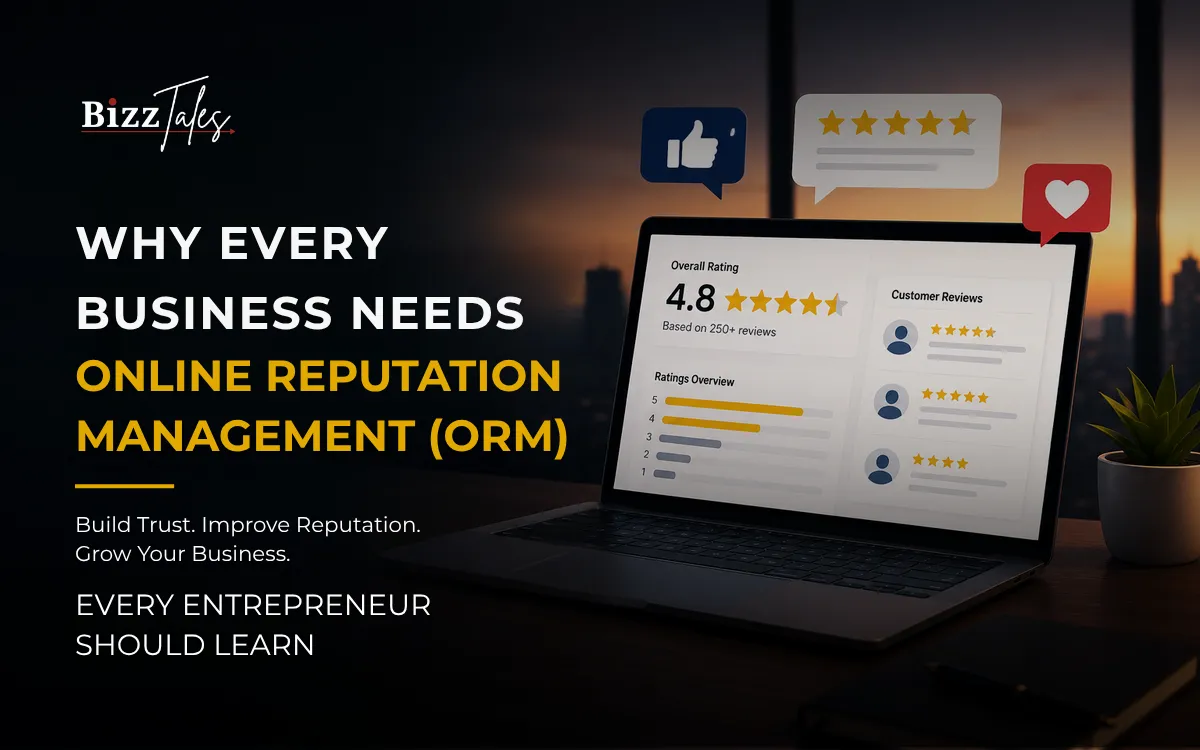
Did you know about 9 out of 10 consumers look to online reviews to research and find a business? More than ever, a handful of negative reviews or a single social media posting that goes viral can affect hundreds-or potentially thousands- of buyers to-do business with you.
No matter how small or big your business is – whether you just starting up, trying to grow a local company, or already running a multinational enterprise-your digital reputation is likely the first thing customers see. Over the course of running errands, shopping online, or eating out, your potential customers will have looked up your company online.
That is where Online Reputation Management (ORM) comes in. It helps businesses track, enhance, and safeguard their online image and build customer trust.
Introduction This article explains what Online Reputation Management (ORM) is, why all businesses require it and how a well-planned reputation management campaign can help your long-term prosperity.
Need Help Managing Your Business Reputation?
Build trust, improve Google search results, manage online reviews, and strengthen your brand reputation with professional ORM solutions.
🎯 Get a Free PR & Reputation Consultation
What is Online Reputation Management (ORM)?
Online reputation management (ORM) involves keeping a check on your business’s online popularity and guiding it in a desired direction. ORM uses everything from search engine ranks, reviews and social media quotes to customer feedback and name mentions to ensure a positive online image.
The main aim of ORM is to make sure that when people do a search of your business, it is factually correct, credible and credible data that they should get.
How ORM Works
A successful ORM strategy typically involves:
- Monitoring online mentions and reviews
- Responding to customer feedback
- Publishing valuable content
- Improving branded search results
- Managing social media conversations
- Addressing negative publicity before it escalates
ORM combines customer service, SEO, content marketing, and public relations to strengthen your digital reputation.
Reputation Management vs. Brand Marketing
Although closely related, these strategies serve different purposes.
| Reputation Management | Brand Marketing |
| Protects public perception | Promotes products and services |
| Responds to customer feedback | Creates awareness |
| Focuses on trust and credibility | Focuses on growth and visibility |
| Handles reviews and crises | Drives campaigns and engagement |
Both are important, but brand reputation management ensures your marketing efforts are supported by customer trust.
Why Every Business Needs Online Reputation Management
1. Builds Trust and Credibility
Trust is one of the most significant factors affecting purchasing decisions.
Customers are more likely to become interested in your product or services when you have received good customer feedback, high stars and professional replies from your job site profile.
A sound business reputation means that you are reliable and professional.
2. Influences Customer Purchase Decisions
People compare different businesses prior to buying.
A great online review can be the difference between you and another business in the eyes of the customer.
Benefits include:
- Increased confidence
- Reduced purchase hesitation
- Better customer perception
- Higher conversion rates
A single star decrease in rating can significantly impact sales.
3. Improves Search Engine Visibility
Search engines value businesses that demonstrate authority and trust.
An effective Online Reputation Management strategy helps by:
- Encouraging fresh customer reviews
- Publishing quality content
- Improving branded search results
- Increasing positive mentions online
These activities contribute to stronger SEO performance and greater online visibility.
4. Protects Brand Image During Crises
Bad publicity makes a good reputation even worse.
Lack an ORM plan to save them from a bad customer, false news or grievance on social media.
ORM helps by:
- Monitoring conversations in real time
- Responding professionally
- Correcting misinformation
- Minimizing long-term damage
Preparedness enables firms to respond calmly instead of emotionally reacting.
5. Increases Customer Loyalty
Customers appreciate businesses that listen.
When companies respond respectfully to feedback—even criticism—it shows they genuinely care.
This encourages:
- Repeat purchases
- Better customer relationships
- Stronger brand advocacy
- Increased referrals
Satisfied customers often become your most valuable promoters.
6. Attracts More Leads and Sales
People naturally choose businesses with excellent reputations.
Positive testimonials, case studies, and consistent customer satisfaction reduce buying uncertainty.
An effective ORM for business increases:
- Website inquiries
- Sales conversions
- Customer confidence
- Revenue growth
Your reputation often becomes your strongest sales tool.
7. Gives Competitive Advantage
Many businesses still overlook reputation management.
Companies that actively manage their online presence stand out because they:
- Respond faster
- Build stronger trust
- Maintain better review ratings
- Create better customer experiences
A stronger digital reputation makes competing much easier.
Understand how digital reputation differs from brand reputation and why businesses need to manage both.
8. Helps Manage Negative Reviews
Negative reviews are inevitable.
The difference lies in how businesses respond.
Best practices include:
- Reply promptly.
- Stay professional.
- Apologize when appropriate.
- Offer solutions.
- Continue the conversation privately if needed.
Thoughtful responses often impress future customers more than perfect ratings.
9. Strengthens Social Media Presence
Social media has become one of the largest sources of brand perception.
Customers expect businesses to:
- Answer questions
- Resolve complaints
- Share useful content
- Engage consistently
Active engagement improves both visibility and credibility.
10. Supports Long-Term Business Growth
A positive reputation creates lasting value.
Businesses with strong ORM often experience:
- Better customer retention
- Higher referral rates
- Improved SEO performance
- Greater brand authority
- Sustainable growth
Reputation is an asset that compounds over time.
Learn why a strong business reputation has become one of the most valuable assets in today’s digital landscape.
Key Elements of a Successful ORM Strategy
A successful reputation management strategy includes several important components.
Monitor Online Mentions
Track your brand across:
- Search engines
- Review websites
- Forums
- Social media
- News websites
Early detection prevents small issues from becoming major problems.
Respond to Reviews Professionally
Always acknowledge customer feedback.
Whether positive or negative:
- Thank satisfied customers.
- Address complaints respectfully.
- Offer practical solutions.
- Never argue publicly.
Professional communication builds trust.
Encourage Positive Customer Feedback
Happy customers often need a simple reminder to leave reviews.
Ask for reviews through:
- Follow-up emails
- SMS
- QR codes
- Website forms
- Google Business Profile
More authentic reviews strengthen your reputation.
Manage Social Media Reputation
Maintain consistent branding across every platform.
Respond quickly to:
- Comments
- Messages
- Mentions
- Customer questions
Social responsiveness demonstrates excellent customer service.
Publish High-Quality Content
Helpful content establishes expertise.
Publish:
- Blog articles
- Case studies
- Customer success stories
- Videos
- FAQs
Quality content also supports SEO.
SEO for Branded Searches
Optimize search results by creating content around:
- Company name
- Products
- Leadership
- Success stories
- Customer testimonials
Strong branded SEO helps control what users see first.
Crisis Management Planning
Prepare before problems arise.
Develop clear procedures for:
- Negative publicity
- Data breaches
- Customer complaints
- Social media incidents
- PR responses
Planning reduces panic and speeds recovery.
Common ORM Mistakes Businesses Should Avoid
Avoid these common mistakes:
Ignoring Negative Reviews
Silence is often mistaken for apathy.
Buying Fake Reviews
Fake reviews harm one’s reputation and can get you banned.
Delayed Responses
Non responsive traders are a weak factor indicating lack of customer service.
Inconsistent Branding
Mixed messages can be confusing and diminishes credibility.
Lack of Monitoring
The problem is that companies never find it in the first place.
We’ve got to keep tabs on it.
Best Tools for Online Reputation Management
Several tools simplify reputation monitoring and management.
Google Business Profile
Helps businesses manage local listings, collect reviews, and interact directly with customers.
Google Alerts
Provides email notifications whenever your business is mentioned online.
Mention
Tracks brand mentions across websites, blogs, forums, and social media.
Brand24
Offers real-time monitoring, sentiment analysis, and reporting.
Hootsuite
Manages social media engagement and monitors conversations from one dashboard.
ReviewTrackers
Collects, analyzes, and manages customer reviews across multiple review platforms.
Benefits of Investing in ORM
Investing in Online Reputation Management offers measurable long-term benefits.
- Better customer trust
- Higher conversion rates
- Improved SEO performance
- Stronger brand authority
- Increased customer loyalty
- More positive customer reviews
- Greater competitive advantage
- Long-term business success
A positive reputation directly supports business growth.
Frequently Asked Questions (FAQ)
1. What is Online Reputation Management?
Online Reputation Management (ORM) is the process of monitoring, improving, and protecting how a business appears across search engines, review websites, and social media platforms.
2. Why is Online Reputation Management important?
ORM establishes credibility with customers, enhances search presence, boosts conversions and shields your company from negative publicity.
3. How do online reviews affect business reputation?
Good buyer comments enhance the credibility of the item and will have a positive impact on sales, while poor customer comments drive customers away.
4. What are the best tools for Online Reputation Management?
There are many ORM tools which are quite popular such as Google Business Profile, Google Alerts, Mention, Brand24, Hootsuite, ReviewTrackers.
5. Can small businesses benefit from ORM?
Absolutely. The majority of local search and reference business searches are conducted for small businesses, making the ORM for business one of the most profitable marketing investments today.
Conclusion
Your online reputation is no longer an option-it’s one of your most important business assets. Customers research businesses online before they purchase and will choose you or your competitors based on your online presence.
By investing in Online Reputation Management, you can build trust, improve your search visibility, strengthen customer relationships, manage negative feedback effectively, and create a solid foundation for sustainable growth.
The businesses that actively protect and improve their digital reputation today will be the ones that earn customer confidence and outperform competitors tomorrow.
Looking to build trust, improve your online reputation, or get featured in the media?
Our PR and ORM experts help businesses create a powerful digital presence through strategic media coverage, reputation management, and founder branding.