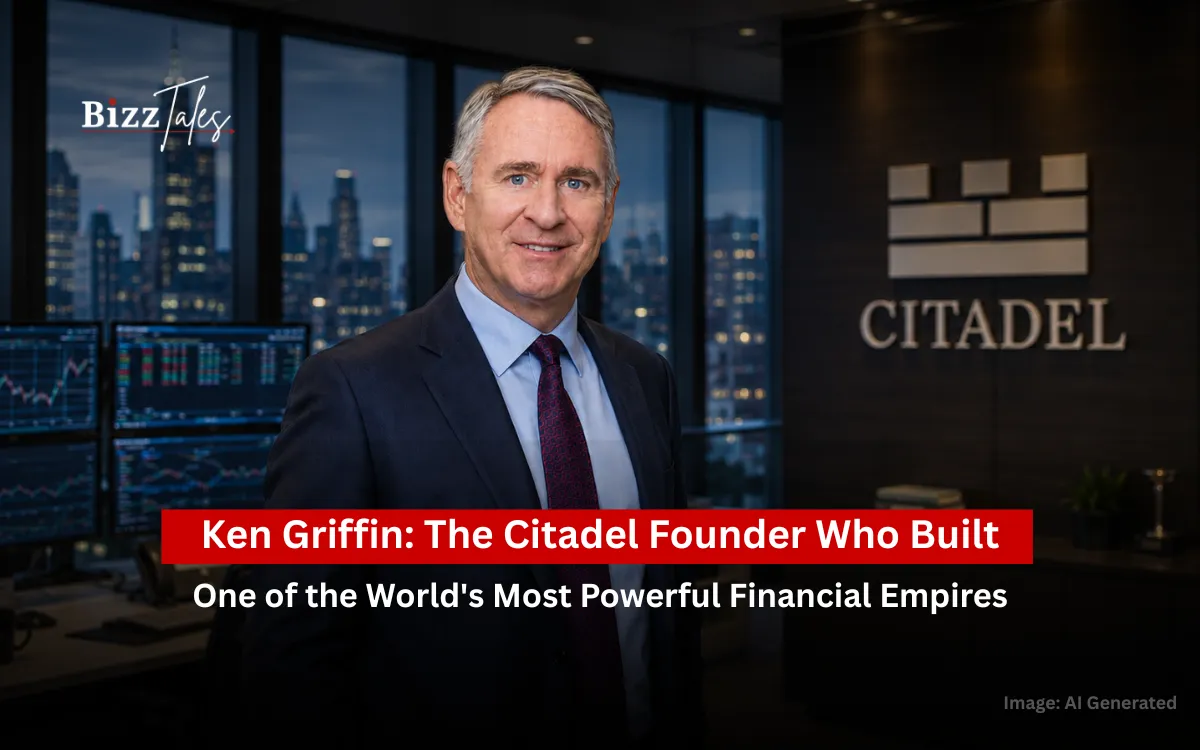
Few investors have transformed the modern financial industry as dramatically as Ken Griffin. As the founder and CEO of Citadel, Griffin built one of the world’s largest and most successful hedge funds while simultaneously creating Citadel Securities, a market-making giant that handles a significant portion of stock trading in the United States. Through a combination of innovation, risk management, and relentless pursuit of excellence, he became one of the wealthiest individuals in the world and one of the most influential figures in global finance.
Unlike many billionaire investors who inherited wealth or joined established firms, Griffin built his empire from the ground up. Starting with a small amount of capital while still a college student, he developed a reputation for identifying market opportunities and managing risk more effectively than many of his competitors. Over the following decades, Citadel grew into a financial powerhouse managing hundreds of billions of dollars and employing thousands of professionals across multiple continents.
His story is not simply about making money in financial markets. It is a story of entrepreneurship, technological innovation, resilience during economic crises, and the creation of institutions that have reshaped modern investing and trading.
Today, Ken Griffin stands among the most successful hedge fund managers in history, and his influence extends far beyond Wall Street into philanthropy, education, public policy, and cultural preservation.
Forbes Rankings and Net Worth
| Year | Forbes Ranking | Net Worth |
| 2026 | #33 World’s Billionaires | Approximately $52.8 Billion |
| 2025 | Forbes Global Billionaire | Approximately $44.5 Billion |
| 2024 | Forbes Global Billionaire | Approximately $39.2 Billion |
Ken Griffin’s fortune comes primarily from his ownership stakes in Citadel and Citadel Securities, both of which have experienced significant growth due to strong financial performance and increasing market influence.
Early Life and Education
Kenneth Cordele Griffin was born on October 15, 1968, in Daytona Beach, Florida, United States. He grew up in a middle-class family where education, discipline, and hard work were strongly encouraged.
From an early age, Griffin displayed an unusual interest in business and finance. While many teenagers focused on sports or entertainment, he became fascinated by investing, economics, and financial markets. This curiosity eventually led him to begin trading stocks while still in high school.
His academic performance earned him admission to Harvard University, one of the world’s most prestigious institutions. At Harvard, Griffin studied economics and quickly developed a reputation for exceptional intelligence and entrepreneurial ambition.
While still a student, he converted his dormitory room into a miniature trading operation. He installed satellite equipment on the roof of his residence hall to receive real-time market information and began managing investment capital provided by friends, family members, and early supporters.
His success as a student investor attracted attention throughout the university community and laid the foundation for what would eventually become Citadel.
Upon graduating from Harvard in 1989, Griffin chose entrepreneurship over traditional employment, a decision that would ultimately make him one of the most successful investors of his generation.
Career Journey
Ken Griffin’s professional journey began before he even completed college.
During his years at Harvard, he successfully traded convertible bonds and other financial instruments, generating impressive returns for investors. His performance convinced him that he could build a larger investment business.
In 1990, at the age of just 22, Griffin founded Citadel with approximately $4.6 million in startup capital provided by investors including Frank Meyer, a prominent Chicago businessman.
The firm’s early years were promising but challenging. Financial markets are notoriously unpredictable, and managing a young hedge fund requires both investment expertise and operational discipline.
Griffin distinguished himself through a multi-strategy investment approach. Rather than relying on a single type of trade, Citadel diversified across equities, fixed income, commodities, credit markets, and quantitative strategies.
This diversification allowed the firm to identify opportunities across different market conditions and reduce reliance on any single investment style.
As Citadel expanded, Griffin invested heavily in technology, data analysis, and talent acquisition. These investments created competitive advantages that helped the firm outperform many rivals.
Over time, Citadel became one of the most respected hedge funds in the world, known for its analytical rigor, sophisticated risk management systems, and strong performance.
Business Ventures
Citadel remains Ken Griffin’s most important business venture and the primary source of his wealth.
The hedge fund manages capital on behalf of institutions, pension funds, endowments, and wealthy individuals. Through multiple investment strategies, Citadel consistently ranks among the world’s top-performing hedge funds.
One of the firm’s greatest strengths is its ability to attract elite talent from across finance, mathematics, economics, engineering, and computer science. This intellectual capital has become a key driver of long-term success.
A second major business venture is Citadel Securities.
Founded as a market-making operation, Citadel Securities plays a critical role in global financial markets. The company executes trades for retail investors, institutions, brokerages, and market participants around the world.
Today, Citadel Securities is one of the largest market makers in the United States and processes a substantial percentage of daily equity trading volume.
The company’s technology infrastructure enables it to execute trades quickly and efficiently, contributing to market liquidity and price discovery.
Together, Citadel and Citadel Securities form one of the most influential financial ecosystems in modern markets.
Success Story and Major Achievements
Ken Griffin’s achievements are among the most impressive in modern finance.
His greatest accomplishment is building Citadel into one of the world’s most successful hedge funds. Few investment firms have consistently delivered strong performance across multiple decades and economic cycles.
Another major achievement is the creation of Citadel Securities. The firm’s role in modern market infrastructure has transformed how securities are traded and executed.
Griffin also demonstrated remarkable resilience during periods of market turmoil. Financial crises, recessions, and extreme volatility often create challenges for investment firms, yet Citadel repeatedly emerged stronger.
Under his leadership, Citadel generated some of the largest profits ever recorded by a hedge fund. The firm’s cumulative gains for investors rank among the highest in industry history.
His contributions to financial innovation, risk management, and market structure have earned recognition from business leaders, economists, and policymakers worldwide.
Beyond finance, Griffin became one of America’s most prominent philanthropists, donating substantial amounts to education, healthcare, cultural institutions, and public initiatives.
Challenges, Failures, and Setbacks
Like all successful entrepreneurs, Ken Griffin encountered significant challenges throughout his career.
The 2008 global financial crisis represented one of the most difficult periods in Citadel’s history. Financial markets experienced unprecedented turmoil, and many hedge funds suffered severe losses.
Citadel’s funds declined substantially during the crisis, and some investors questioned the firm’s future. However, Griffin responded by restructuring portfolios, strengthening risk management, and maintaining long-term discipline.
The recovery that followed became one of the most remarkable turnarounds in hedge fund history.
Competition also remains intense. The hedge fund industry includes some of the brightest minds in finance, requiring constant innovation and adaptation.
Public scrutiny increased during events such as the GameStop trading controversy in 2021, when Citadel Securities became the subject of widespread media attention and public debate regarding market structure.
Despite criticism and controversy, Griffin consistently defended his businesses and maintained focus on long-term growth.
His ability to navigate adversity remains one of the defining characteristics of his career.
Investments and Assets
The majority of Ken Griffin’s wealth comes from his ownership stakes in Citadel and Citadel Securities.
In addition to these holdings, he maintains a diversified portfolio that includes real estate, equities, private investments, and alternative assets.
Griffin is also known for acquiring some of the world’s most expensive residential properties. His real estate portfolio includes luxury homes in New York, Miami, Palm Beach, London, and other prestigious locations.
Art collecting represents another significant interest. He owns works by renowned artists and has spent hundreds of millions of dollars on cultural acquisitions.
His investment philosophy emphasizes diversification, risk management, and identifying opportunities across multiple asset classes.
This disciplined approach has helped him build one of the largest personal fortunes in finance.
Leadership Style and Business Philosophy
Ken Griffin is widely recognized for an intense, performance-driven leadership style.
One of his core principles is meritocracy. Citadel emphasizes talent, analytical ability, and results, creating an environment where high performers can thrive.
He also places enormous importance on data, technology, and research. Investment decisions are supported by extensive analysis and sophisticated quantitative models.
Another defining characteristic is adaptability. Griffin believes that markets constantly evolve, requiring investors to continuously learn and adjust strategies.
Risk management is central to his philosophy. While Citadel pursues ambitious opportunities, it also invests heavily in systems designed to protect capital during periods of uncertainty.
His leadership demonstrates how intellectual rigor, discipline, and innovation can create lasting competitive advantages.
Personal Life
Ken Griffin has maintained a high public profile due to his business success and philanthropic activities.
He has been actively involved in supporting educational institutions, museums, healthcare organizations, and public policy initiatives. His donations have totaled billions of dollars over the course of his career.
Among his most notable contributions are gifts to Harvard University, the University of Chicago, cultural institutions, and scientific research organizations.
Outside finance, Griffin has a strong interest in history, art, architecture, and public affairs.
Although he leads one of the world’s most powerful financial organizations, he frequently emphasizes the importance of education and opportunity in shaping future generations.
His personal interests reflect a broader commitment to intellectual and cultural development.
Legacy and Future Outlook
Ken Griffin’s legacy is already firmly established within global finance.
Through Citadel and Citadel Securities, he helped redefine hedge fund management, market making, and financial technology. His organizations continue influencing how capital markets operate around the world.
As artificial intelligence, quantitative investing, and advanced analytics become increasingly important, Citadel remains well-positioned to benefit from these trends.
Griffin’s philanthropic contributions will likely continue shaping education, healthcare, and cultural institutions for generations.
Future investors will study his strategies, risk management systems, and organizational leadership as examples of excellence within the financial industry.
Few individuals have had a greater impact on modern investing and market infrastructure.
Conclusion
Ken Griffin’s journey from a Harvard student trading from his dorm room to one of the world’s richest financiers is a remarkable example of vision, discipline, and execution.
By founding Citadel and Citadel Securities, he built institutions that transformed hedge fund investing and market making. His success reflects decades of innovation, analytical rigor, and commitment to excellence.
Despite facing economic crises, market volatility, and public scrutiny, Griffin consistently adapted and expanded his businesses, creating extraordinary value for investors and shareholders.
For entrepreneurs, investors, and business leaders, his story offers powerful lessons about resilience, risk management, continuous learning, and long-term thinking.
Today, Ken Griffin remains one of the most influential figures in global finance, and his impact on markets, technology, and philanthropy will continue for decades to come.
FAQs
1. What is Ken Griffin’s net worth in 2026?
Ken Griffin’s estimated net worth in 2026 is approximately $52.8 billion.
2. How did Ken Griffin become a billionaire?
He became a billionaire by founding Citadel and Citadel Securities, two of the most successful financial firms in the world.
3. What companies does Ken Griffin own?
Ken Griffin is the founder and CEO of Citadel and the founder of Citadel Securities.
4. What is Ken Griffin’s leadership style?
His leadership style emphasizes meritocracy, data-driven decision-making, innovation, risk management, and high performance.
5. What is Ken Griffin’s biggest business achievement?
His biggest achievement is building Citadel into one of the world’s leading hedge funds and creating Citadel Securities, a dominant force in global market making.