
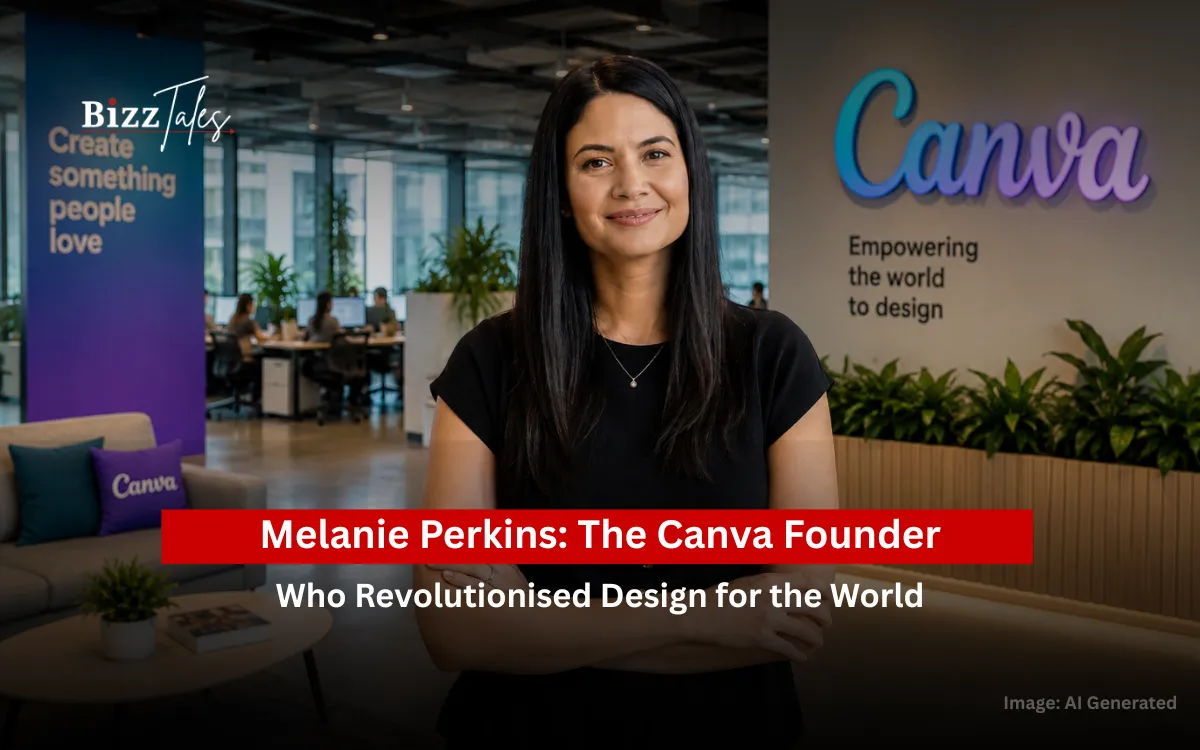
Few entrepreneurs have transformed an industry as dramatically as Melanie Perkins. In a world where graphic design was once considered a specialized skill requiring expensive software and extensive training, Perkins envisioned a future where anyone could create professional-quality designs with just a few clicks. That vision eventually became Canva, one of the world’s most successful technology companies and a platform used by millions of people across the globe.
Melanie Perkins’ journey is particularly inspiring because it challenges traditional startup narratives. She did not come from Silicon Valley, nor did she launch her company from a major technology hub. Instead, she built Canva from Australia, overcoming skepticism, investor rejections, and fierce competition along the way. Her story demonstrates that innovation can emerge from anywhere and that persistence often matters more than initial resources.
Today, Melanie Perkins is recognized as one of the world’s youngest self-made female billionaires. Her leadership has transformed Canva into a global powerhouse serving businesses, educators, students, content creators, and marketers. Beyond financial success, she has become a symbol of determination, creativity, and purpose-driven entrepreneurship.
Forbes Rankings and Net Worth
| Year | Forbes Ranking | Net Worth |
| 2026 | Among World’s Leading Female Billionaires | Approximately $7.6 Billion |
| 2025 | Among Australia’s Richest Entrepreneurs | Approximately $7.2 Billion |
| 2024 | Forbes Global Billionaire | Approximately $6.5 Billion |
The majority of Melanie Perkins’ wealth comes from her ownership stake in Canva, one of the most valuable privately held technology companies in the world.
Early Life and Education
Melanie Perkins was born in Perth, Western Australia, in 1987. Her upbringing played an important role in shaping her entrepreneurial mindset. Her mother worked as a teacher, while her father had an engineering background. Growing up in a household that valued education and hard work, she developed curiosity, independence, and a strong desire to solve problems.
Unlike many future technology founders, Perkins did not spend her childhood writing code or building software applications. Instead, she displayed entrepreneurial instincts through small business activities and creative projects. She enjoyed finding opportunities to earn money and was fascinated by the idea of creating something valuable for others.
During her school years, she excelled academically and demonstrated strong leadership qualities. Her interest in business became more apparent as she grew older. She eventually enrolled at the University of Western Australia, where she studied communications, psychology, and commerce.
While attending university, Perkins worked as a tutor teaching students how to use graphic design software. This experience proved to be life-changing. She noticed that many students struggled with traditional design programs because they were complicated, expensive, and time-consuming to learn.
The frustration she witnessed among her students planted the seed for what would eventually become Canva. She realized there was a massive opportunity to simplify the design process and make it accessible to everyone.
Believing strongly in her vision, Perkins eventually made the bold decision to leave university and focus entirely on entrepreneurship. It was a risky choice, but one that would ultimately change her life.
Career Journey
Melanie Perkins’ entrepreneurial journey began long before Canva became a household name. At just 19 years old, she co-founded Fusion Books with Cliff Obrecht, who would later become both her husband and business partner.
Fusion Books provided schools with an online platform that allowed students and educators to create yearbooks using simple drag-and-drop tools. At a time when yearbook creation was often complicated and expensive, the platform offered a more efficient solution.
The business gained traction quickly and expanded beyond Australia. Running Fusion Books taught Perkins valuable lessons about customer service, software development, product design, and business operations. Most importantly, it confirmed her belief that users preferred simple and intuitive digital tools.
Although Fusion Books was successful, Perkins had a much bigger idea. She imagined creating a platform that would allow anyone, regardless of technical expertise, to design presentations, posters, social media graphics, marketing materials, and other visual content.
The challenge was convincing investors that such a platform could succeed.
Over several years, Perkins pitched her vision repeatedly and encountered rejection after rejection. Many investors believed the graphic design market was already dominated by established software companies. Others doubted that a startup from Australia could compete on a global scale.
Despite facing more than one hundred investor rejections, she refused to give up.
Her persistence eventually paid off when she connected with experienced investors who recognized the potential of her idea. She also recruited Cameron Adams, a former Google designer, as a co-founder. Together, the team worked tirelessly to bring Canva to life.
In 2013, Canva officially launched.
The platform immediately attracted attention because it made design dramatically easier. Users could create professional-looking content without needing advanced design skills. This simple yet powerful concept resonated with individuals and organizations worldwide.
Over the following years, Canva experienced explosive growth. Millions of users joined the platform, and its reputation as a user-friendly design tool continued to strengthen.
Business Ventures
Canva remains Melanie Perkins’ most significant business venture and the primary source of her wealth. What started as a simple online design platform evolved into a comprehensive visual communication ecosystem.
The company’s mission is to empower the world to design. This mission guided every stage of its development. Instead of focusing solely on professional designers, Canva targeted a much broader audience, including students, teachers, entrepreneurs, marketers, nonprofits, and corporate teams.
One of the key factors behind Canva’s success was its freemium business model. Users could access many features at no cost while premium subscriptions provided additional tools and capabilities. This approach accelerated adoption and helped the platform achieve global reach.
As the company grew, Canva expanded beyond graphic design into presentations, video editing, whiteboards, team collaboration, website creation, and artificial intelligence-powered design tools.
Strategic acquisitions further strengthened Canva’s capabilities. The company integrated new technologies and talent to enhance user experiences and remain competitive in an evolving digital landscape.
Under Perkins’ leadership, Canva became one of the world’s most valuable private technology companies and one of Australia’s greatest startup success stories.
Success Story and Major Achievements
Melanie Perkins’ achievements extend far beyond building a successful business.
Her most notable accomplishment is creating Canva, a platform that transformed the way people communicate visually. By simplifying design, she removed barriers that previously prevented millions of individuals from expressing their ideas creatively.
Canva’s rapid growth established Perkins as one of the world’s most successful female entrepreneurs. Her rise challenged long-standing assumptions about who can build major technology companies and where those companies can originate.
Over the years, she has been recognized on numerous global rankings celebrating innovation, entrepreneurship, and leadership. Her influence continues to grow as Canva expands its presence in education, business, and creative industries.
Another significant achievement is the company’s culture. Perkins has emphasized collaboration, inclusivity, and purpose throughout Canva’s development. This commitment has helped attract talented employees and maintain a strong organizational identity.
Beyond business, her commitment to philanthropy has further enhanced her reputation as a leader focused on long-term impact rather than short-term financial gain.
Challenges, Failures, and Setbacks
Every entrepreneurial journey includes setbacks, and Melanie Perkin’s story is no exception.
The most well-known challenge she faced was repeated investor rejection. Many entrepreneurs would have abandoned their ideas after a handful of unsuccessful pitches. Perkins endured more than one hundred rejections before securing meaningful support.
Building a technology company outside traditional startup ecosystems presented additional difficulties. Recruiting talent, attracting investors, and gaining global visibility required significant effort.
As Canva grew, competition intensified. Established software giants and emerging startups all sought to capture portions of the design market. Maintaining growth while defending market share became an ongoing challenge.
Rapid expansion also introduced operational complexities. Scaling infrastructure, managing international teams, and maintaining company culture required careful leadership.
Economic uncertainty and changing technology trends created further obstacles. However, Perkins consistently demonstrated resilience and adaptability, allowing Canva to continue growing despite external pressures.
These challenges became valuable learning experiences that strengthened both the company and its leadership team.
Investments and Assets
Most of Melanie Perkin’s wealth is tied to her ownership stake in Canva. As the company’s valuation increased, so did her net worth.
Unlike many billionaires who diversify heavily into unrelated industries, Perkins has remained closely connected to the technology sector. Her primary focus continues to be expanding Canva and investing in innovation.
In addition to her business holdings, she has become increasingly involved in philanthropy. Together with her husband, Cliff Obrecht, she has pledged to dedicate the majority of their wealth to charitable causes and long-term social impact initiatives.
Their approach reflects a belief that business success should create positive change beyond financial returns.
Perkins also supports projects related to education, equality, and opportunity. These efforts align closely with Canva’s broader mission of empowering people around the world.
Leadership Style and Business Philosophy
Melanie Perkins is widely admired for her unique leadership style.
One of her defining characteristics is optimism. Even when faced with repeated rejection, she remained focused on her long-term vision. This ability to maintain confidence during difficult periods became a key factor in Canva’s success.
She believes that great businesses are built by solving meaningful problems. Rather than chasing trends, Perkins focuses on creating products that genuinely improve people’s lives.
Collaboration is another important aspect of her philosophy. She encourages teamwork, open communication, and shared ownership throughout the organization.
Perkins also emphasizes simplicity. Canva’s success stems largely from making complex tasks easier for users. This principle influences both product development and company operations.
Her leadership demonstrates that ambition and humility can coexist. While she pursues bold goals, she remains focused on serving customers and creating lasting value.
Personal Life
Melanie Perkins is married to Cliff Obrecht, her longtime business partner and fellow Canva co-founder. Their relationship is unique because it combines personal and professional collaboration.
Together, they built Fusion Books and later Canva, sharing both the challenges and rewards of entrepreneurship. Their partnership has become an important part of the company’s story.
Outside work, Perkins enjoys travel, adventure, and outdoor activities. She has spoken about how exploring different cultures broadened her perspective and influenced her thinking as an entrepreneur.
Despite becoming a billionaire, she maintains a relatively modest public image. Rather than focusing on luxury or celebrity status, she prefers discussing innovation, leadership, and social impact.
Her commitment to philanthropy reflects a broader belief that success should be used to improve the lives of others.
Social Media Accounts
Legacy and Future Outlook
Melanie Perkins has already established herself as one of the most influential entrepreneurs of her generation.
Her impact extends beyond Canva’s financial success. By democratizing design, she empowered millions of people to communicate ideas visually and creatively. This transformation has influenced education, marketing, business communication, and content creation worldwide.
The future looks promising for both Perkins and Canva. As visual communication becomes increasingly important in the digital economy, the company is well-positioned to expand its reach and capabilities.
Artificial intelligence, collaboration tools, and content creation technologies present new opportunities for growth. Under Perkins’ leadership, Canva is likely to continue evolving while remaining true to its mission of making design accessible to everyone.
Her commitment to philanthropy also suggests that her influence will extend beyond business into social and charitable initiatives.
Conclusion
Melanie Perkins’ story is one of vision, persistence, and extraordinary determination. From teaching graphic design software as a university student to leading one of the world’s most valuable technology companies, she has built a legacy that inspires entrepreneurs everywhere.
What makes her journey remarkable is not simply the wealth she created but the impact she made. Canva transformed an industry, empowered millions of users, and demonstrated that innovation can emerge from anywhere in the world.
For aspiring founders, her story offers an important lesson: rejection is not failure. Success often belongs to those who continue moving forward when others would quit.
Today, Melanie Perkins stands as one of the most successful female entrepreneurs in history, and her influence on technology, design, and business will continue for years to come.
FAQs
1. What is Melanie Perkins’ net worth in 2026?
Melanie Perkins’ estimated net worth in 2026 is approximately $7.6 billion.
2. How did Melanie Perkins become a billionaire?
She became a billionaire by co-founding Canva and growing it into one of the world’s most valuable technology companies.
3. What company does Melanie Perkins own?
Melanie Perkins is the co-founder and CEO of Canva, a global visual communication platform.
4. What is Melanie Perkins’ leadership style?
Her leadership style focuses on innovation, collaboration, long-term thinking, simplicity, and purpose-driven growth.
5. What is Melanie Perkins’ biggest business achievement?
Her biggest achievement is building Canva into a global platform that revolutionized design and visual communication for millions of users worldwide.