
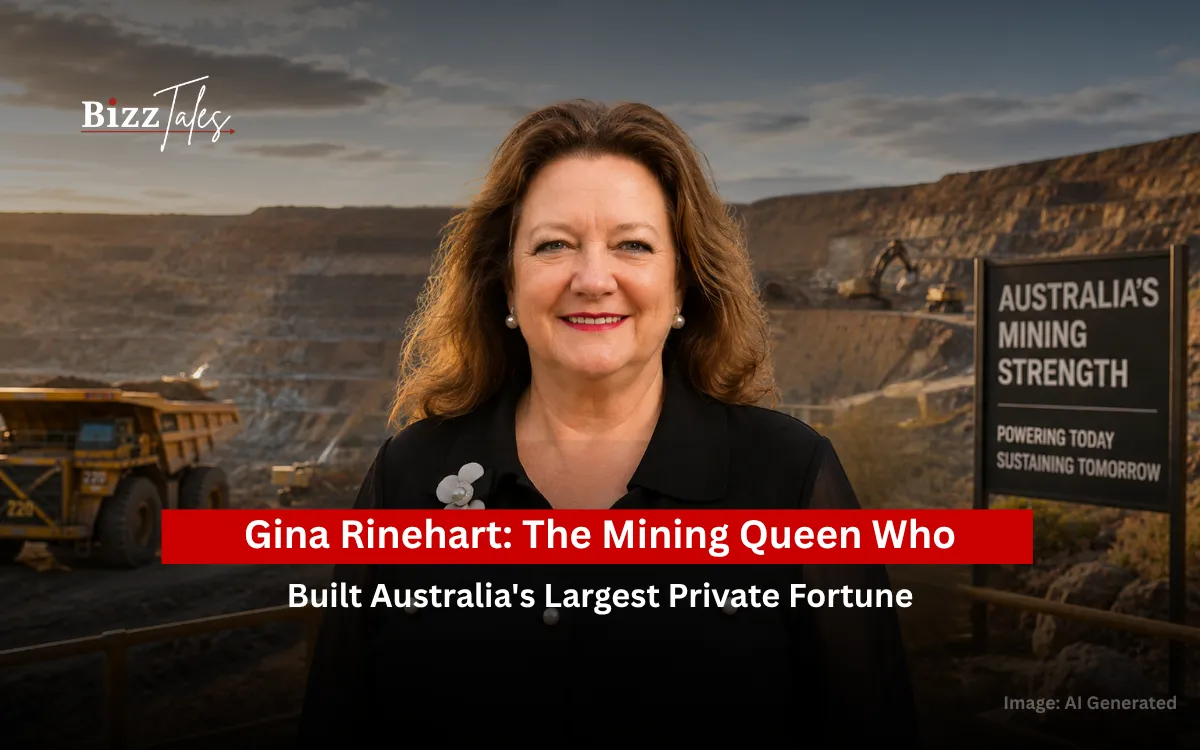
Gina Rinehart is one of the most influential businesswomen in the world and the wealthiest person in Australia. Often referred to as the “Mining Queen,” she transformed a struggling family business into a multibillion-dollar resources empire that spans mining, energy, agriculture, and investments. Through determination, strategic decision-making, and a deep understanding of the natural resources sector, Rinehart built a fortune that places her among the richest individuals on the planet.
Her story is particularly remarkable because she inherited a company facing significant financial difficulties rather than a thriving enterprise. Many observers initially doubted her ability to lead the business successfully. However, through persistence and bold leadership, she not only stabilized the company but expanded it into one of Australia’s most powerful privately owned organizations.
Today, Gina Rinehart is recognized as a dominant force in the global mining industry. Her influence extends beyond business into agriculture, media investments, philanthropy, and economic policy discussions. This article explores her net worth, early life, education, career journey, business ventures, achievements, challenges, investments, leadership philosophy, personal life, and lasting legacy.
FORBES RANKINGS AND NET WORTH
| Year | Forbes Ranking | Net Worth |
| 2026 | #48 | $27.5 Billion |
| 2025 | #52 | $25.8 Billion |
| 2024 | #61 | $23.6 Billion |
EARLY LIFE AND EDUCATION
Georgina Hope Rinehart was born on February 9, 1954, in Perth, Western Australia. She was the only child of Lang Hancock, a legendary prospector and mining entrepreneur who played a significant role in discovering major iron ore deposits in Australia’s Pilbara region.
Growing up in a family deeply connected to mining exposed Gina to the resources industry from an early age. Unlike many children raised in urban environments, she spent considerable time learning about exploration, mining operations, and business management. These experiences provided practical knowledge that would later become invaluable.
Rinehart attended St Hilda’s Anglican School for Girls in Perth before pursuing higher education. She studied economics at the University of Sydney, where she gained an understanding of finance, markets, and business principles. Although she did not complete a traditional corporate career path after university, the knowledge she acquired contributed to her business development.
Her father played a significant role in shaping her entrepreneurial mindset. Lang Hancock frequently discussed business opportunities, resource exploration, and economic issues, giving Gina early exposure to strategic thinking and investment principles.
The combination of practical industry experience, formal education, and family mentorship helped prepare her for the enormous responsibilities she would later assume within the family business.
CAREER JOURNEY
Gina Rinehart’s professional journey began within the family business, Hancock Prospecting. Founded by her father, the company held valuable mining interests but faced numerous financial and operational challenges.
The turning point in her career came after the death of Lang Hancock in 1992. At that time, Hancock Prospecting was burdened with debt and uncertainty. Many industry observers questioned whether Gina could successfully manage the company and preserve the family’s mining legacy.
Rather than being discouraged, she took control of the business and implemented a long-term strategy focused on maximizing the value of the company’s mining assets. Her leadership involved restructuring operations, strengthening financial management, and pursuing strategic partnerships.
One of her most significant achievements was securing agreements to develop major iron ore projects in the Pilbara region. These projects benefited enormously from rising global demand for iron ore, particularly from China. As commodity prices increased, Hancock Prospecting experienced substantial growth in revenue and profitability.
Over the following decades, Rinehart expanded the company into one of Australia’s most successful private enterprises. Her ability to capitalize on favorable market conditions while maintaining a disciplined business approach transformed her into Australia’s richest person.
Today, she is widely regarded as one of the most powerful figures in the global mining industry.
BUSINESS VENTURES
Hancock Prospecting remains the foundation of Gina Rinehart’s wealth. The company owns interests in some of Australia’s most productive mining operations, including major iron ore projects that generate substantial revenues.
One of the most important ventures associated with the company is the Roy Hill project. Located in Western Australia’s Pilbara region, Roy Hill became one of the largest mining developments in Australian history. The project’s success significantly increased Rinehart’s fortune and strengthened her position within the industry.
Beyond iron ore, Hancock Prospecting expanded into other resources, including coal, natural gas, and critical minerals. This diversification reduced dependence on a single commodity and enhanced long-term growth prospects.
Rinehart has also invested heavily in agriculture. Through large-scale acquisitions of cattle stations and agricultural businesses, she built one of Australia’s largest rural land portfolios. These investments reflect her belief in the long-term importance of food production and resource management.
The company also holds interests in energy projects and exploration ventures. These investments provide additional opportunities for growth and further diversify the business empire.
Through strategic expansion and disciplined investment, Rinehart transformed Hancock Prospecting into one of Australia’s most valuable private companies.
SUCCESS STORY AND MAJOR ACHIEVEMENTS
Gina Rinehart’s success story is one of resilience, vision, and extraordinary business execution. Taking control of a financially challenged company and transforming it into a multibillion-dollar empire ranks among the most impressive achievements in modern Australian business history.
One of her greatest accomplishments is the development of Roy Hill. The project required massive investment, complex logistics, and extensive infrastructure development. Its success established Rinehart as one of the leading figures in global mining.
She also became Australia’s richest person, a position she has held for much of the past decade. This achievement reflects not only favorable commodity markets but also effective management and strategic decision-making.
Rinehart’s influence extends beyond mining. Her investments in agriculture, energy, and other industries demonstrate an ability to identify opportunities across multiple sectors.
As one of the world’s most successful female entrepreneurs, she has become a symbol of leadership and determination. Her accomplishments continue to inspire business leaders and entrepreneurs around the globe.
CHALLENGES, FAILURES, AND SETBACKS
Despite her remarkable success, Gina Rinehart’s career has included significant challenges. The mining industry is highly cyclical, and commodity prices can fluctuate dramatically based on global economic conditions.
Managing large-scale resource projects often involves regulatory hurdles, environmental concerns, and infrastructure challenges. Projects such as Roy Hill required years of planning, negotiation, and execution before generating substantial returns.
Family disputes have also attracted public attention. Legal disagreements involving family trusts and inheritance matters created personal and professional challenges over the years.
Rinehart has occasionally faced criticism regarding business practices, political views, and industry policies. As one of Australia’s most prominent business figures, her actions and opinions frequently attract media scrutiny.
Economic downturns and commodity market declines also tested the resilience of her business empire. However, her focus on operational efficiency and long-term planning helped the company navigate periods of uncertainty.
Her ability to overcome these obstacles demonstrates the persistence and adaptability that have defined her leadership style.
INVESTMENTS AND ASSETS
The majority of Gina Rinehart’s wealth comes from her ownership of Hancock Prospecting and its mining assets. These holdings include substantial interests in iron ore projects that generate billions of dollars in revenue.
Roy Hill remains one of the most valuable components of her portfolio. The mine’s production capacity and long-term reserves make it a cornerstone asset within the company.
Agriculture represents another major area of investment. Rinehart owns extensive cattle stations and agricultural properties across Australia, making her one of the country’s largest landowners.
She has also invested in energy, exploration projects, and strategic business ventures. These investments provide diversification and additional opportunities for future growth.
Real estate holdings contribute to her overall asset base as well. Combined with her business interests, these assets create one of the largest private fortunes in the Southern Hemisphere.
Her investment strategy emphasizes long-term ownership, resource development, and sectors with strong demand fundamentals.
LEADERSHIP STYLE AND BUSINESS PHILOSOPHY
Gina Rinehart is known for a leadership style characterized by determination, strategic thinking, and strong operational focus. She believes that success comes from hard work, discipline, and a willingness to make difficult decisions.
One of her core principles is long-term value creation. Rather than focusing solely on short-term profits, she invests in projects capable of generating returns over decades.
Rinehart also emphasizes efficiency and productivity. In industries such as mining and agriculture, operational excellence plays a critical role in maintaining competitiveness and profitability.
Another defining aspect of her philosophy is resilience. Throughout her career, she faced skepticism, criticism, and market volatility. Her ability to remain focused on long-term objectives helped her overcome these challenges.
She advocates for entrepreneurship, resource development, and economic growth, believing that innovation and investment are essential drivers of prosperity.
PERSONAL LIFE
Despite her enormous wealth and public profile, Gina Rinehart maintains a relatively private personal life. Much of her public attention stems from business activities rather than celebrity status.
Family has played a significant role in her life, although family relationships have occasionally become subjects of public discussion due to legal disputes and inheritance matters.
Rinehart is involved in philanthropy and charitable initiatives. Over the years, she has supported educational institutions, medical research programs, community projects, and sporting organizations.
She is also known for supporting Australian athletes and sporting events. Her contributions have helped fund training programs and development opportunities for competitors across multiple disciplines.
Outside of business, she maintains interests in agriculture, economic policy, and national development issues. These interests often influence both her investments and public commentary.
Her reputation reflects a combination of entrepreneurial achievement, industry leadership, and commitment to long-term growth.
LEGACY AND FUTURE OUTLOOK
Gina Rinehart’s legacy is closely tied to the growth of Australia’s resources industry. Through Hancock Prospecting, she helped develop major mining projects that contribute significantly to the nation’s economy.
Her influence extends beyond mining. Investments in agriculture, energy, and other sectors demonstrate a commitment to building a diversified business empire capable of generating value for future generations.
As demand for resources continues to evolve, Rinehart’s companies are positioned to benefit from both traditional mining opportunities and emerging sectors such as critical minerals.
Future entrepreneurs will likely study her career as an example of how vision, resilience, and strategic execution can transform a struggling business into a global powerhouse.
Her philanthropic activities and support for education, healthcare, and sports further strengthen her long-term impact on Australian society.
The legacy she continues to build ensures that her influence will remain significant for decades to come.
CONCLUSION
Gina Rinehart’s journey from inheriting a financially challenged family company to becoming Australia’s richest person is one of the most extraordinary success stories in modern business history. Through strategic leadership, disciplined investment, and a deep understanding of the resources sector, she built a multibillion-dollar empire spanning mining, agriculture, and energy.
Her achievements extend far beyond personal wealth. The projects she developed have created jobs, contributed to economic growth, and strengthened Australia’s position in global resource markets.
Despite facing numerous challenges, including market volatility, regulatory hurdles, and public scrutiny, she consistently demonstrated resilience and determination. These qualities enabled her to overcome obstacles and achieve remarkable success.
Today, Gina Rinehart stands as one of the world’s most influential business leaders and a powerful example of entrepreneurial excellence. Her legacy continues to shape industries, communities, and future generations of entrepreneurs.
FAQS
1. What is Gina Rinehart’s net worth in 2026?
Gina Rinehart’s estimated net worth in 2026 is approximately $27.5 billion.
2. How did Gina Rinehart become a billionaire?
She became a billionaire by expanding Hancock Prospecting and developing major mining projects, particularly in iron ore production.
3. What companies does Gina Rinehart own?
She controls Hancock Prospecting, Roy Hill, and numerous investments across mining, agriculture, energy, and exploration sectors.
4. What is Gina Rinehart’s leadership style?
Her leadership style emphasizes long-term planning, operational efficiency, resilience, and strategic resource development.
5. What is Gina Rinehart’s biggest business achievement?
Her biggest achievement is transforming Hancock Prospecting into one of Australia’s most valuable private companies and developing the highly successful Roy Hill iron ore project.