AI has made an industry-altering impact on how businesses function, communicate, and strategize. Over the recent years, AI systems, such as chatbot and generative AI tools, became embedded in the very fabric of daily business operating processes: creating content, performing data analytics, enhancing customer experience and automating mundane procedures. Now, there is a new innovation that numerous industry experts consider potentially far more revolutionary than chatbot and generative AI technology. Enter the AI agent.
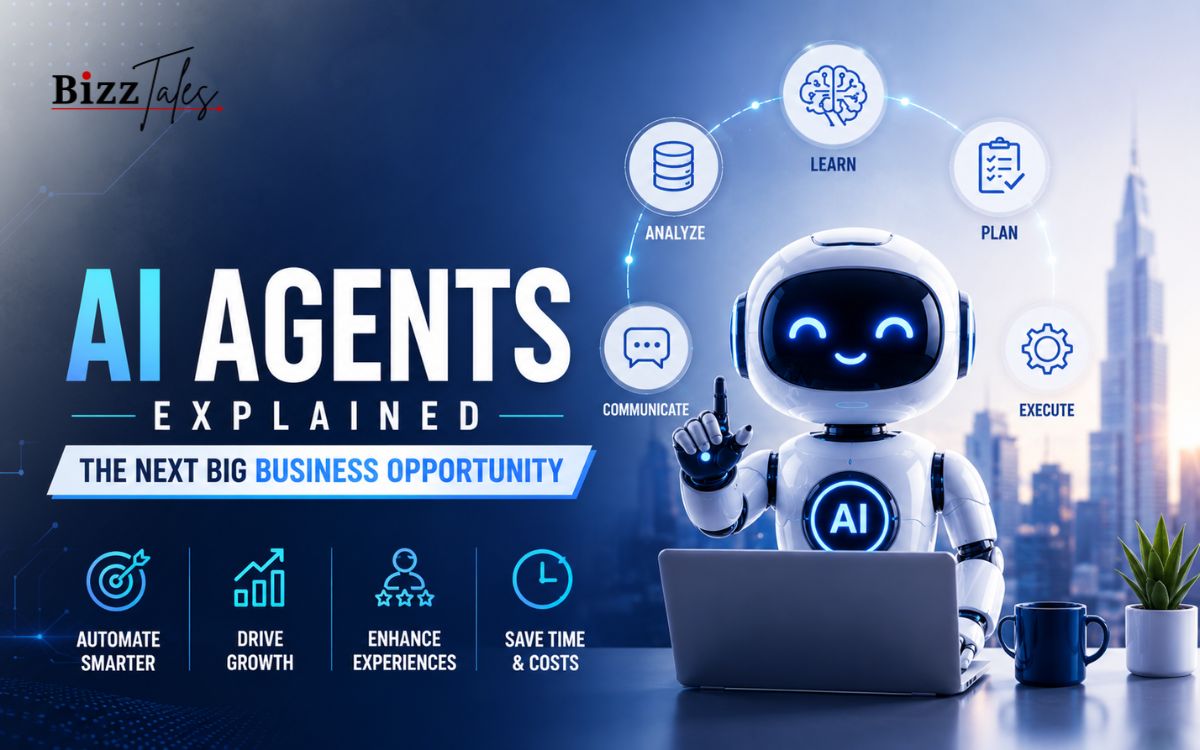
While normal AI system are only reactive, then they react on human inputs or answer questions if asked, AI agents are to do work on their own. They understand the goal, they can interact with software, make decisions, and act. They can work towards a goal without an constantly involved human behind it. Simply put an AI agent is more like a digital worker than a digital tool. They do one or more complete workflows every, rather than waits for a prompt every now-and-then:
The focus and excitement around AI agents isn’t just amongst ‘tech’ companies either. Investors, entrepreneurs, businesses and even governments are all keeping a close eye because of how agent-based AI can potentially transform industries. Leading ‘tech’ firms are pouring billions into agent based AI systems and new autonomous AI startups are seeing huge investment rounds. Many pundits see AI agents as possibly one of the largest business opportunities of the decade with the creation of new industries in the process.
The international AI market already has a value in excess of hundreds of billion dollars and in the next ten years it’s estimated to be worth trillions to the world economy. Among the wider AI ecosystem AI agents are one of the fastest growing groups of examples since they offer something businesses have always wanted: automation of complex work rather than just simple tasks.
What Are AI Agents and Why Are Businesses Paying Attention?
To get the reason behind the hype around AI agents, it’s critical to grasp the differences between AI and traditional software. Traditional software executes a rule set – it responds to interactions according to instructions put into them by programmers, and many AI-enabled tools also receive the lion’s share of their direction from humans. AI agents are built to operate largely independently of human direction – they understand goals, set plans, collect data, analyze it, update plans, and make decisions based on conditions.
Let say a business owner who is about to start a new marketing campaign. This would normally consist of product research, competitor research, content generation, ad setup, monitoring and optimization, all of which require human input. However, an AI agent may be capable of much of this workflow on his own. For example, an autonomous agent can do the competitor research, discover audiences trends, produce marketing content, lead advertising campaigns, analyze results, iterate and make adjustments based on data.
This ability signifies a significant change in the perspective of automation for companies. Earlier ages of automation dedicated itself to removing manual repetitive work. AI agents excess to automate decision-making and multi-step processes. For this reason many technology executives are confident that agents will become the core of future business processes.
The fast progress of large scale language models has pushed forward the progress of AI agent systems. Current AI agents can communicate in natural language, process complex reasoning, utilize external tools and interact with software applications. Combining these abilities by means of agent systems, the new “digital workers” can perform ever more complex tasks.
Organizations are taking notes because of the fact that human labor is still one of the largest costs of action for organizations. Organizations will always be looking to optimize their costs and maximize their efficiencies and productivity. AI agents can help allow organizations to do work that normally would have required heavy human capital resources to achieve. For small businesses and startups this could provide huge competitive advantage as AI could potentially provide the resources that are only scalable with huge budgets.
This increased attitude is also visible in the investment field. Venture capitalists invest more and more money in startups creating agent-powered AI platforms. Major tech companies are also creating agent features within their current solutions. Experts believe companies that apply agent-based AI solutions soon will establish an unmatchable advantage.
How AI Agents Are Creating New Business Opportunities
The truly fascinating thing about AI agents is not just what they can reduce costs but how they truly can revolutionize businesses. As has been the case with any revolutionary technology, they can lead to completely new business opportunities. AI agents seem set to make an impact in just this way.
Customer service There is arguably no better, more immediate example. Chatbots have traditionally been held up as a great way of reducing call cenrer queues. However, they have failed dismally because they are incapable of anything but rudimentary questions and answers. AI agents can be incredibly sophisticated. They could retrieve the relevant customer details, troubleshoot, take orders, book appointments, dole out advice etc.
The world of sales and marketing is undergoing profound change too. AI agents are able to undertake consumer research, spot a market opportunity, customize marketing communications and adapt marketing plans on the fly. But rather than replacing the salesperson they let marketing teams concentrate on strategy and creativity while expert automation takes care of execution and analysis.
Similarly, the software industry is being radically disrupted by AI agents. They can contribute to coding, testing, bug fixing and even managing a project. Currently a few startups are working on building agents that can produce simple programs with very limited input. As their capabilities grow, software creation could become faster, cheaper and more accessible to a larger group of entrepreneurs.
E-commerce businesses are finding innovative application areas for AI agents. They can track competitors, optimize prices, analyze customer returns, determine new product niches to address, and control inventory-and all with a few intelligent agents instead of dozens of employees.
Consulting, legal research, financial analysis and accounting are all starting to utilize agent based automation. When a significant amount of work requires knowledgeable human input, artificial intelligence can be used to handle the paperwork: gather data, write reports, do research, etc. Freeing humans up for the more high level strategic thought.
It may be true that the greatest opportunity is simply in entrepreneurship. ‘For most entrepreneurs up to now, founding a successful business has been a hassle of bringing together numerous poorly integrated teams, raising funding and establishing an operational foundation. AI agents might make these barriers colossal and personal. If today’s small teams with powerful AI were able to execute the work that has until now required dozens of workers…there might be a renaissance of lean, high lifetime value startups with tens of staffs.’
Challenges, Risks, and the Future of AI Agents
However, there are still challenges in use of AI agents even when their immense potential. There are also issues arise when organizations decide to use these systems as reliability, security, ethical and human resources changes. Although AI agents are getting better, but they definitely are not flawless. There is still chance of error, misinterpretation and erratic actions, especially at high degree of autonomy.
Security of data is another concern. Like any machine, AI agents need information and secure access to other vital machines or systems. Data or access to data should be guarded against abuse, infringement and misuse. As AI agents become more ingrained into the fabric of large business, security concerns will grow.
Another factor to consider is workforce disruption. Whenever new technologies automate activities that were once undertaken by people, fears of job losses inevitably follow. AI agents are bound to impact some types of work, for example mindless administrative tasks. Yet, more often than not, history has show that technological progress tends to generate as many opportunities as it liberates. It will be a matter of policies for businesses and governments alike to adapt the skills of the workforce accordingly.
Regulation: The future of AI agents will be affected by regulation. Countries will seek to regulate issues such as transparency, accountability, privacy and safety. Firms using agent based systems will need to adhere to new regulations while keeping public confidence.
As we look to the future, several authorities predict AI agents will take on a whole new level of sophistication over the next ten years. They are anticipated to work with other agents, run entire business cycles, and function open-endedly across many applications. Rather then focus on narrow task execution, agents could bring together intricate activities across several business functions-sales, marketing, finance, logistics and customer service.
The advent of AI agents might eventually be as pivotal as the arrival of internet or smartphones. As internet and smartphones revolutionized communication, trade and business strategies. AI agents can revolutionize the way we work and organize ourselves. First movers could potentially have a significant advantage over their competitors.
Conclusion
AI agents are evolving very quickly from being a cutting-edge research concept to being a business-ready technology that will have a concrete impact on how companies operate. AI agents have the ability to use their mind to plan, reason, and take actions, follow through tasks and requirements, and adapt when the needs change. They are very different from traditional software and even most AIs we know of today by their being autonomous digital workers working across the various functions of a business.
The business opportunities delivered by this technology are huge. Whether in customer service, marketing, software development or entrepreneurship, AI agents are unlocking new possibilities of efficiency, scalability and capability. All this while making companies more profitable and productive, lowering their costs and improving customer experiences and engaging business models.
Meanwhile, issues of security, regulation, the human workforce, and moral dilemmas remain conundrums. The firms that thrive in a world of AI agents will be those that can exploit the technology while also managing its side effects effectively. As advancement continues, AI agents will probably be a normal part of business around the globe.
Whether thought of as digital employees, smart helpers, or independent business systems, it is already clear that AI agents are not a fad or passing hype. They are poised to be one of the biggest new business opportunity of the modern economy, and their impact will surely become more pronounced in years to come.
FAQs
What actually is an AI agent?
An AI agent is an artificial intelligence that has the ability to identify its objectives, take decisions, perform actions and achieve its goals with relatively little human guidance.
What makes AIs or AI agents different from chatbots?
While chatbots tend to respond directly to questions from the user, AI agents can reason, use tools, and carry out multi-step plans on their own goal seeking.
In which sectors could AI agents operate?
The following domains, including but not limited to, are suitable for AI agents: customer support, marketing, software engineering, online shopping, financial market, medical, logistic as well as various professional services.
Would intelligent agents take the place of people?
The artificial Intelligence agents will be automating some processes and roles but they will be mainly creating new opportunities, in terms of productivity to allow workforce to focus on high value activities.
Intervenes of Investors in AI agent
Investors view AI agents as a disruptive innovation, with the opportunities to create new markets, grow business efficiency and yields enormous value in the next ten years.