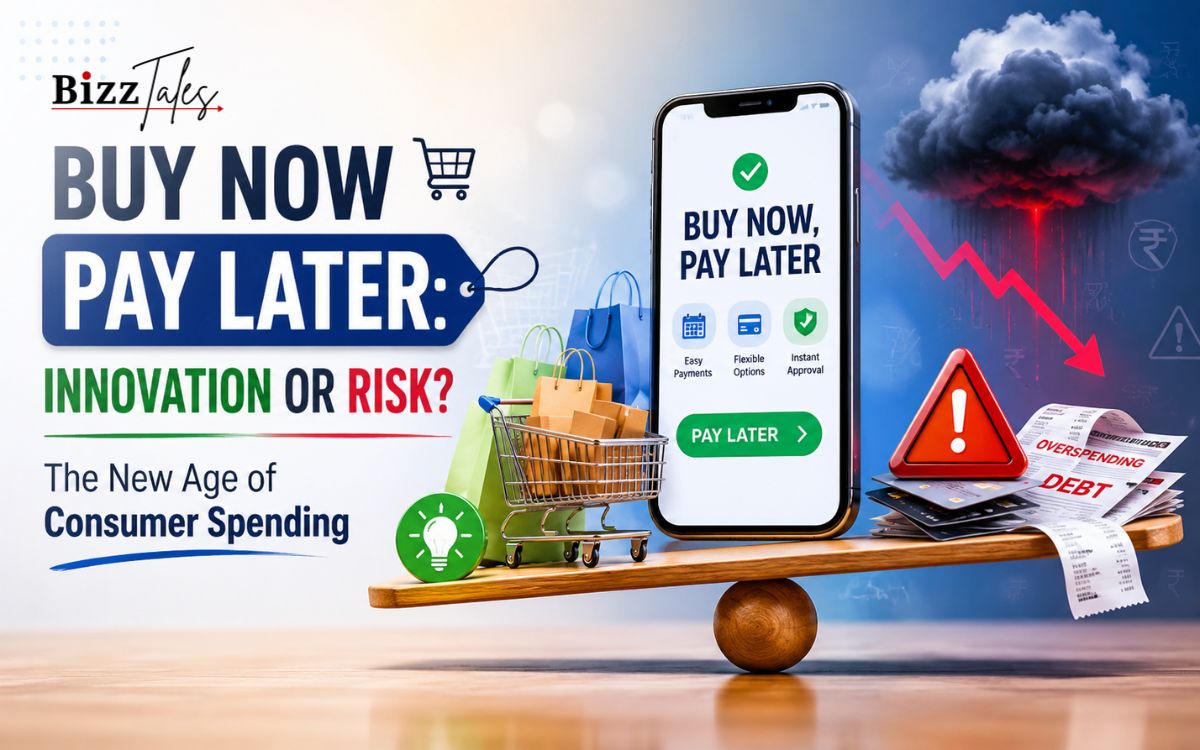
How consumers spend money has experienced one of the biggest shifts in the last ten years. Digital payments, mobile banking, e-commerce, fintech and many other developments have revolutionized the way consumers buy products and services. And there is one new payment model that has surged in popularity faster than just about any other concept in recent history: Buy Now Pay Later, or BNPL. Where once it was primarily a parking space for online transactions, it has now become a worldwide financial force that is redefining shopping, credit, and retail.
For example, whether buying a new mobile phone, booking a holiday, investing in a new kitchen or doing some clothing shopping, Buy Now Pay Later is benefitting consumers because it enables them to split their payments into smaller sections whilst still getting the associated product immediately. The advantages are clear and as opposed to settling the payment instantly, consumers are able to spread the cost over a period of weeks or months. BNPL is therefore undoubtedly one of the most successful areas of the fast expanding global Fintech sector.
However as the market grows, so does the argument. Proponents of BNPL argue that this innovative financial convenience offers consumers greater choice, along with providing businesses with an ability to increase sales. However, detractors warn that this will lead to greater costs for consumers, as it offers the temptation of unrestrained spend, increased debt loads and potentially serious financial difficulties through its inability to support a key consumer obligation. As millions of consumers in multiple countries adopt this model, this argument takes on new relevance.
The Rise of Buy Now Pay Later
The emergence of Buy Now Pay Later mirrors one of these shifts in consumer demand. Many members of the Gen Z and Millennials cohorts havegrown up with different perceptions towards credit products than their later predecessor. Witnessing the impacts of recessions, the rise in the cost of living and the debt accumulation, many turned to more straightforward payment schemes that detail in advance the duration and expense of repayment. BNPL firms identifiedthis trend and sought to compete with the ‘dinosaur’ credit card.
Most BNPL products offer the same, the only possible variation being if the customer intends to make the in-tran installment payments on time (and typically, if no interest will be paid). Unlike most other lending products, where disclosure can be rather complex of revolving debt protocols, in this product, the customer can step up for what appears to be a fairly attractive deal, and a large body of financial institution research supports this, in that younger consumers are far more likely to use installment-based finance over traditional credit option when shopping online.
This surge in e-commerce has also helped to drive BNPL adoption. Since retailers are always looking for methods to increase conversion rates and lower the shop cart abandon rate, I’m sure they are thankful that there are tools like BNPL to implement to solve these pain points. No matter how well a retailer persuades the customer to purchase an item, one of the biggest hurdles to completion is that the customer at checkout encounters the big sticker price. Customers will exit the point-of-sale in this situation, as they are less willing to drop $1,000 in a store. Instead, they are willing to part with $250 for each of four payments. That’s a very different psychological response, and one that most retailers clamor for.
Why Consumers Love BNPL
The growth in the industry is backed up by some impressive figures. Globally, BNPL transaction volumes have sky-rocketed over the last few years, with billions of dollars of transactions handled annually. Market forecasts suggest further growth as an increasing number of merchants approve installment payments and consumers grow used to these types of financing. Leading fintech companies have attracted billions of dollars of funding, while traditional incumbents have entered the sector to prevent their market share shrinking.
For businesses, the advantages go far beyond providing “another way to pay.” Research has demonstrated that consumers will spend more when BNPL options are on offer. The average order value for retailers using BNPL increases because customers may be more inclined to invest in high-end products knowing they can spread these costs over time. In highly competitive markets which require businesses to scrabble for every customer, the smallest improvement in conversion can significantly impact profitability.
Another incentive for merchants is BNPL’s customer acquisition function. A few providers have their own shopping websites and marketplaces that customers find products and brands on and are exposed to the business of partner merchants. It is still a competitive digital world out there and talking to more people is a big advantage.
Even the travel industry has adopted the model. Consumers can now pay for flights, holiday packages, hotel stays and experiences on a monthly basis. Healthcare providers, education and service businesses are also starting to implement BNPL. This shows that it is no longer confined to buying in shop. It is in the process of becoming an extensive financial ecosystem.
Why Businesses Are Embracing BNPL
However, despite the rapid expansion and the increased popularity of BNPL, criticism of the service continues to grow. Arguably, the biggest concern about BNPL is that it is facilitating impulsive spending. Consumers might find it easier to spend when payments are broken down into installments since BNPL will make the purchases seem more affordable. Instant approval and number of steps involved at the point of checkout may lower the barriers to borrowing money.
Financial advisors have also warned that consumers are not fully appreciating the compounding effect of multiple installment plans. Although just one BNPL instalment will only be a small amount, it also means juggling multiple plans across different providers and platforms makes it more difficult to manage and stay aware of your overall financial commitments. It always starts small, earning a bit of protection from multiple small monthly payments and then it snowballs until it becomes a serious problem.
Economic uncertainty adds another dimension to the problem. Price inflation, higher housing costs and inflated living costs impact household budgets across the globe. BNPL allow borrowers to make ends meet in the short term, but may also facilitate pre-spending of future earnings; once situation takes turn for worst, early debt redemption will be near impossible.
Alongside concerns about affordability, missed payments are also problematic. While there are many providers that sell the ability to make interest free transactions, consumer charges and fees may be levied in the event of missed payments. Occasionally missed payments damage credit records resulting in difficulties obtaining additional finance. As the market develops regulators are increasingly aware of these risks and stronger consumer safeguards are in the pipeline.
Innovation or Risk? The Reality Lies Between Both
The BNPL industry is under scrutiny by governments and financial authorities worldwide. Regulators in Europe, North America, Australia and Asia have asked questions about transparency, affordability assessments and lending criteria. A number of policy makers is in favour of innovation but want to provide consumers with the ability to make informed financial decisions when participating to installment payment facilities.
A few jurisdictions have implemented measures mandating providers to examine affordability, enhance certain disclosures and adhere to standards comparable to that of traditional creditors (Figure 7). Such initiatives reflect attempts to find an equilibrium between fostering financial innovation and safeguarding consumers. Leading players in the industry have been vocal in supporting “responsible” regulation as essential to the long-term viability and credibility of their activities.
The Hidden Risks Behind the Convenience
Competition in the sector has become fierce. Existing banks and payment companies as well as technology players are all now offering an installment service to compete within the BNPL space. The Big 3 payment platforms have embedded the installment option into their existing platforms, and incumbents providers have also issued direct-to-consumer offerings in order to maintain their customer’s loyalty.
Equally as important are the wider economic effects of the BNPL model. The concept is revolutionizing consumer Spending and borrowing behavior. For the longest time, credit cards have been the predominant way of providing short term consumer financing. Now, installment payments are emerging as a critical alternative. This is causing financial institutions to rethink their strategies and approach toward lending.
Technology is the backbone of delivering this change. Deep algorithms, machine learning and living data (https://www.ipsos.com/en-us/ monitoring-x) enable providers to undertake meta-batch risk in seconds. Many BNPL platforms are able to make approval decisions within seconds of a transaction being initiated, in effect, blindly approving transactions with a simple click of a button. Not only is this ultimately what a consumer wants, but in a digital world where every extra conversion journey attains a significant derating, it is what consumer brands demand.
The Future of Buy Now Pay Later
As for the future, the Buy Now Pay Later industry looks to have a bright and promising future but also a challenging one. Industry astrologists forecast more growth as digital business and online channels continue to thrive and people want more options and alternatives for their finances. New venues and opportunities are expected in and around the field of health system, education, education service, insurance and consultancy. Artificial Intelligence is believed to enhance credit scoring and prediction analytical power so that providers can charge the not-so-risk-y customers in the most correct and positive way.
Simultaneously, the most likely outcome is greater regulation. Countries understand both the need to put safeguards in place for consumers and the need to foster innovation. Institutions that put in place practices around transparency, responsible lending and educating customers are thus expected to be better positioned for the future than those that don’t.
Conclusion
The question, whether BNPL is an innovation or a risk, is often posed as if the two are mutually exclusive. However, these two aspects can coexist: BNPL is indeed a novel, innovative financial product that increases payment options, offers consumers more choices, and allows companies to make profit from previously unmet demand. However, it likewise entails unsolvable risks-mainly for consumers, who over-borrow or underestimate the costs incurred.
Finally, when all is said and done, BNPL is just a tool, and like any financial tool it will have its effects depending on its implementation. For the informed, it is a faithful snuggie, able to cater for sudden emergencies, investments of time and flexibility, assuming the customer is well acquainted with its repayment commitments and is a mindful user of their finances. For the careless seller or the inattentive consumer it can be a large contributor to the relief of all our stress points.
As digital finance develops, Buy Now Pay Later will continue to be a key element of worldwide discussions around the shape of future money, credit and consumer relationships. Ultimately, its pace of development and degree of adoption will be shaped by not just technological progress, but also by best practice seen by BNPL providers, regulations by governments and choices by consumers.
FAQs
What does Buy Now Pay Later BNPL mean?
Buy Now Pay Later is an alternative payment method that enables a customer to buy a product in advance and pay at later time was terms installments within fixed period.
Ever wondered as to why the popularity of BNPL has grown?
Hi, due to its simplicity, quick approval process, comprehesive and clear repayment schedule and flexible options, the BNPL is also believed to be very popular among modern customers, in particular young customers.
Is BNPL a superior financial option compared to a credit card?
It varies by case. BNPL may be suitable for fewer decisions in the near future that have more predictable repayments, credit cards often have rewards and wider acceptance and other protections.
Is it possible for BNPL to impact your credit rating?
In numerous countries, defaulting on BNPL may influence credit ratings, especially with more providers submitting payment behavior to credit reporting agencies.
What is the main danger of a concept like Buy Now Pay Later?
The first and biggest concern is excess pays. Most customers might be overwhelmed by huge total ever-growing pay for a large number of installment deals, which then may cause debts and difficult repayments.