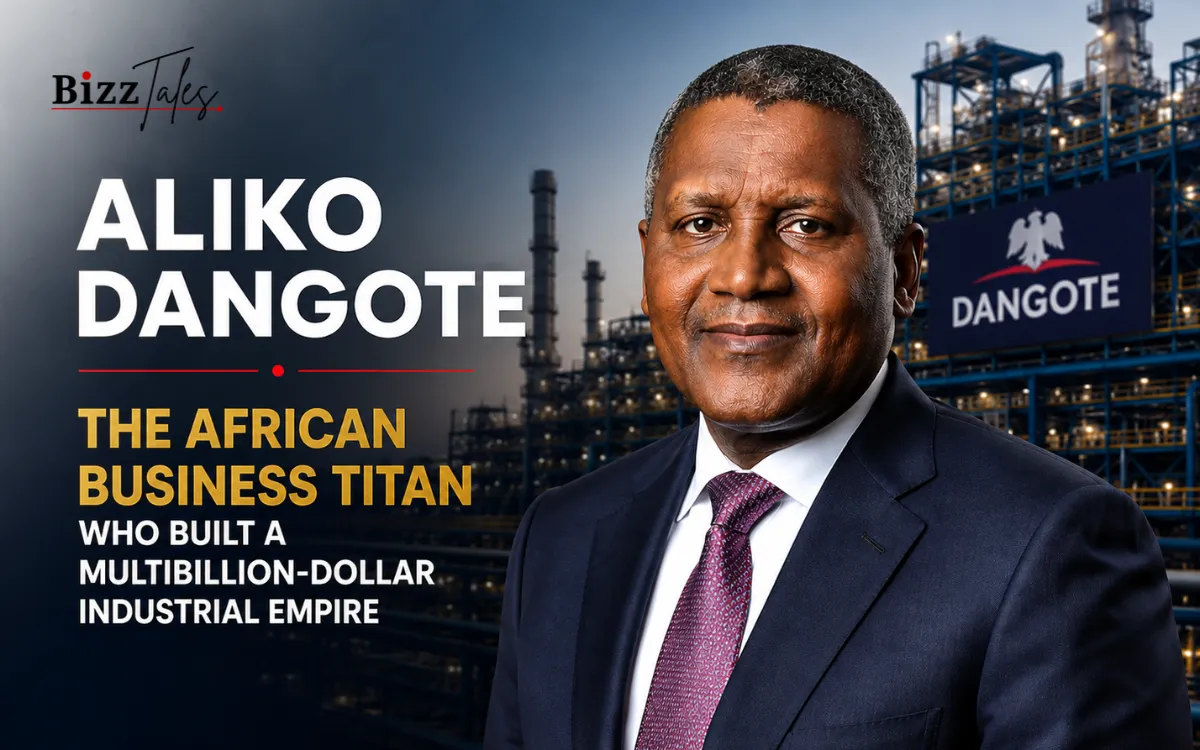
Few entrepreneurs have transformed an entire continent’s business landscape as dramatically as Aliko Dangote. Widely recognized as Africa’s richest man, Dangote built a business empire that spans cement, sugar, flour, fertilizers, oil refining, logistics, and manufacturing. His journey from a young commodity trader in Nigeria to one of the world’s wealthiest individuals is a remarkable example of vision, persistence, and long-term strategic thinking.
What makes Dangote’s story unique is his commitment to industrialization. Rather than relying solely on imports and trading, he invested heavily in manufacturing facilities capable of producing essential goods across Africa. This strategy not only generated enormous wealth but also contributed to economic development, job creation, and industrial growth throughout the continent.
Today, Aliko Dangote stands as one of the most influential business leaders in the world. His companies supply products to millions of people across Africa, and his ambitious investments continue to reshape industries ranging from construction to energy. This article explores his net worth, life journey, business empire, achievements, challenges, investments, leadership philosophy, and lasting legacy.
Forbes Rankings And Net Worth
| Year | Forbes Ranking | Net Worth |
| 2026 | #71 | $32.8 Billion |
| 2025 | #88 | $24.4 Billion |
| 2024 | Africa’s Richest Person | $13–14 Billion |
Net worth figures fluctuate based on market conditions, Dangote Cement performance, and the valuation of Dangote Refinery.
Early Life And Education
Aliko Mohammad Dangote was born on April 10, 1957, in Kano, Nigeria, into a wealthy trading family. His great-grandfather, Alhassan Dantata, was one of the richest businessmen in West Africa during his era. Growing up in a business-oriented environment exposed Dangote to commerce and entrepreneurship from a very young age.
Even as a child, Dangote displayed a strong interest in making money. He often purchased sweets and snacks in bulk and sold them to classmates for profit. These small ventures reflected an entrepreneurial mindset that would later define his career. His fascination with trade and business continued throughout his youth.
After completing his early education in Kano, he traveled to Egypt and studied Business Studies at Al-Azhar University. His academic background provided a foundation in commerce, management, and economics while broadening his understanding of international markets.
The combination of family influence, early business experiences, and formal education helped shape his entrepreneurial ambitions. These formative years laid the groundwork for what would eventually become Africa’s largest industrial conglomerate.
Career Journey
Aliko Dangote’s business career began in 1977 when he received financial support from his family to start a trading company. Using a loan reportedly provided by an uncle, he launched a small enterprise focused on importing and distributing commodities such as sugar, rice, cement, and other consumer goods.
The business grew rapidly due to his strong understanding of market demand and distribution networks. While many traders focused solely on buying and selling products, Dangote recognized the limitations of relying on imports. He believed that manufacturing products locally would create greater value and long-term sustainability.
During the 1990s, he began shifting from trading to industrial production. This transition represented a major turning point in his career. Rather than importing finished goods, he invested heavily in factories capable of producing cement, sugar, flour, and other essential products within Africa.
His expansion into cement proved particularly successful. Dangote Cement became the largest cement producer in Africa, operating plants across numerous countries. The company’s rapid growth dramatically increased his wealth and established him as Africa’s leading industrial entrepreneur.
Over time, Dangote expanded into fertilizers, petrochemicals, logistics, and energy. His willingness to undertake large-scale industrial projects transformed him from a trader into one of the world’s most influential business leaders.
Business Ventures
The Dangote Group serves as the foundation of Aliko Dangote’s fortune. The conglomerate operates across multiple industries and remains one of Africa’s largest privately owned business organizations.
Dangote Cement is arguably the most successful venture within the group. The company dominates cement production across Africa and supplies critical materials for infrastructure and construction projects. Its growth has played a major role in Dangote’s rise to billionaire status.
Dangote Sugar Refinery is another major contributor to the group’s success. By investing in large-scale refining operations, the company reduced dependence on imported sugar and strengthened local production capabilities.
The group also operates flour mills, salt production facilities, food processing businesses, and logistics companies. These ventures support a vertically integrated business model that enhances efficiency and profitability.
One of Dangote’s most ambitious projects is the Dangote Refinery near Lagos. The facility, which began operations in 2024, is among the largest oil refineries in the world and represents an investment of approximately $20 billion. The refinery aims to reduce Africa’s dependence on imported fuel and significantly improve regional energy security.
His growing interests in fertilizers, petrochemicals, ports, transportation, and energy infrastructure continue to expand the scope of his business empire.
Success Story And Major Achievements
Aliko Dangote’s success story is one of the greatest entrepreneurial achievements in African history. Starting with a small trading operation, he built a business empire worth tens of billions of dollars and became the richest person on the continent.
One of his most significant achievements is the creation of Dangote Cement. The company transformed the African cement industry and helped reduce reliance on imports while supporting infrastructure development across multiple countries.
The completion of the Dangote Refinery stands as another historic accomplishment. The project is expected to reshape energy markets in Africa and strengthen Nigeria’s position as an industrial powerhouse.
Dangote has also been recognized globally for his contributions to business and economic development. He has appeared on numerous lists of the world’s most influential and successful entrepreneurs.
Beyond financial success, his commitment to industrialization has had a profound impact on job creation, manufacturing capacity, and economic growth throughout Africa.
Challenges, Failures, And Setbacks
Despite his extraordinary success, Aliko Dangote has faced numerous challenges. Building large-scale manufacturing facilities in developing economies often involves infrastructure limitations, regulatory hurdles, and financing difficulties.
The Dangote Refinery project experienced significant delays, cost overruns, and operational challenges. Originally expected to begin production earlier, the project required years of additional development before becoming operational.
Commodity price fluctuations have also affected various parts of his business empire. Industries such as cement, energy, and manufacturing are heavily influenced by global economic conditions and input costs.
Dangote has occasionally faced criticism regarding market dominance and competition issues. As one of Africa’s largest industrialists, his businesses often attract regulatory attention and public scrutiny.
Currency volatility and economic instability in certain African markets have created additional challenges. Managing operations across multiple countries requires constant adaptation to changing economic conditions.
Despite these obstacles, Dangote consistently demonstrated resilience and maintained a long-term perspective, allowing him to overcome setbacks and continue expanding his empire.
Investments And Assets
The majority of Aliko Dangote’s wealth comes from his ownership stakes in Dangote Cement, Dangote Sugar, and other publicly traded companies within the Dangote Group.
The Dangote Refinery represents one of the most valuable assets in his portfolio. As production expands, the facility is expected to generate substantial revenues and further increase his fortune.
He also maintains investments in fertilizer production, petrochemicals, logistics infrastructure, transportation, and food manufacturing businesses. These diversified holdings reduce dependence on any single industry.
Real estate assets, industrial facilities, ports, warehouses, and transportation networks contribute additional value to his overall portfolio.
His investment strategy focuses on industries essential to economic development, including construction materials, energy, agriculture, and manufacturing. This approach has enabled him to build sustainable wealth while contributing to industrial growth across Africa.
Leadership Style And Business Philosophy
Aliko Dangote is known for a leadership style centered on ambition, discipline, and long-term vision. He believes successful entrepreneurs must identify opportunities where others see obstacles.
One of his core principles is local production. Rather than relying on imports, he advocates building manufacturing capacity within Africa. This philosophy has guided many of his largest investments and helped create competitive advantages.
Dangote also emphasizes scale. He frequently pursues projects large enough to transform entire industries rather than focusing on incremental growth. The refinery project exemplifies this mindset.
Another important aspect of his philosophy is reinvestment. Throughout his career, he consistently reinvested profits into expanding operations, increasing production capacity, and entering new industries.
His leadership demonstrates the value of patience, persistence, and strategic thinking when pursuing long-term business objectives.
Personal Life
Despite being one of the world’s wealthiest individuals, Aliko Dangote is often described as relatively modest in his lifestyle compared to many global billionaires. He generally focuses public attention on business development and economic growth rather than luxury or celebrity culture.
Family remains an important part of his life. He has children who are increasingly involved in aspects of the family business and wealth management structure.
Dangote is also one of Africa’s most prominent philanthropists. Through the Dangote Foundation, he supports initiatives related to education, healthcare, poverty reduction, disaster relief, and economic empowerment. The foundation has funded numerous projects across Nigeria and other African countries.
His public image combines entrepreneurial excellence with a commitment to improving living conditions and supporting economic development throughout Africa.
Social Media Presence
- X (Twitter)
Legacy And Future Outlook
Aliko Dangote’s legacy extends far beyond personal wealth. He has become a symbol of African entrepreneurship and industrialization. His businesses have helped demonstrate that large-scale manufacturing and infrastructure projects can succeed within Africa.
The continued expansion of the Dangote Refinery could significantly strengthen Africa’s energy independence and reshape regional fuel markets. Future plans involving petrochemicals, energy infrastructure, and industrial development suggest that his influence will continue growing.
His efforts to build local manufacturing capacity have inspired a new generation of entrepreneurs across the continent. Many view him as proof that African-owned businesses can compete successfully on a global scale.
As Africa’s economies continue expanding, Dangote’s companies are likely to remain central players in sectors such as construction, energy, agriculture, and manufacturing.
Conclusion
Aliko Dangote’s journey from a young commodity trader in Kano to Africa’s richest person is one of the most inspiring entrepreneurial stories of modern times. Through determination, strategic vision, and a commitment to industrialization, he built a multibillion-dollar empire that spans multiple industries and countries.
His success stems not only from identifying profitable opportunities but also from investing in businesses capable of transforming economies. From cement and sugar production to oil refining and energy infrastructure, his ventures have contributed significantly to Africa’s development.
Despite facing challenges, delays, and economic uncertainty, Dangote consistently demonstrated resilience and long-term thinking. Today, he stands as one of the world’s most influential business leaders and a powerful symbol of African enterprise.
FAQS
What is Aliko Dangote’s net worth in 2026?
Aliko Dangote’s estimated net worth in 2026 is approximately $32.8 billion, making him Africa’s richest person.
How did Aliko Dangote become a billionaire?
He became a billionaire by building the Dangote Group through investments in cement, sugar, flour, fertilizers, manufacturing, and energy infrastructure.
What companies does Aliko Dangote own?
He controls the Dangote Group, including Dangote Cement, Dangote Sugar, Dangote Fertilizer, Dangote Refinery, and several manufacturing and logistics businesses.
What is Aliko Dangote’s leadership style?
His leadership style emphasizes large-scale industrialization, long-term investment, disciplined execution, and local manufacturing.
What is Aliko Dangote’s biggest business achievement?
His biggest achievement is building the Dangote Group into Africa’s largest industrial conglomerate and developing the multibillion-dollar Dangote Refinery project.