
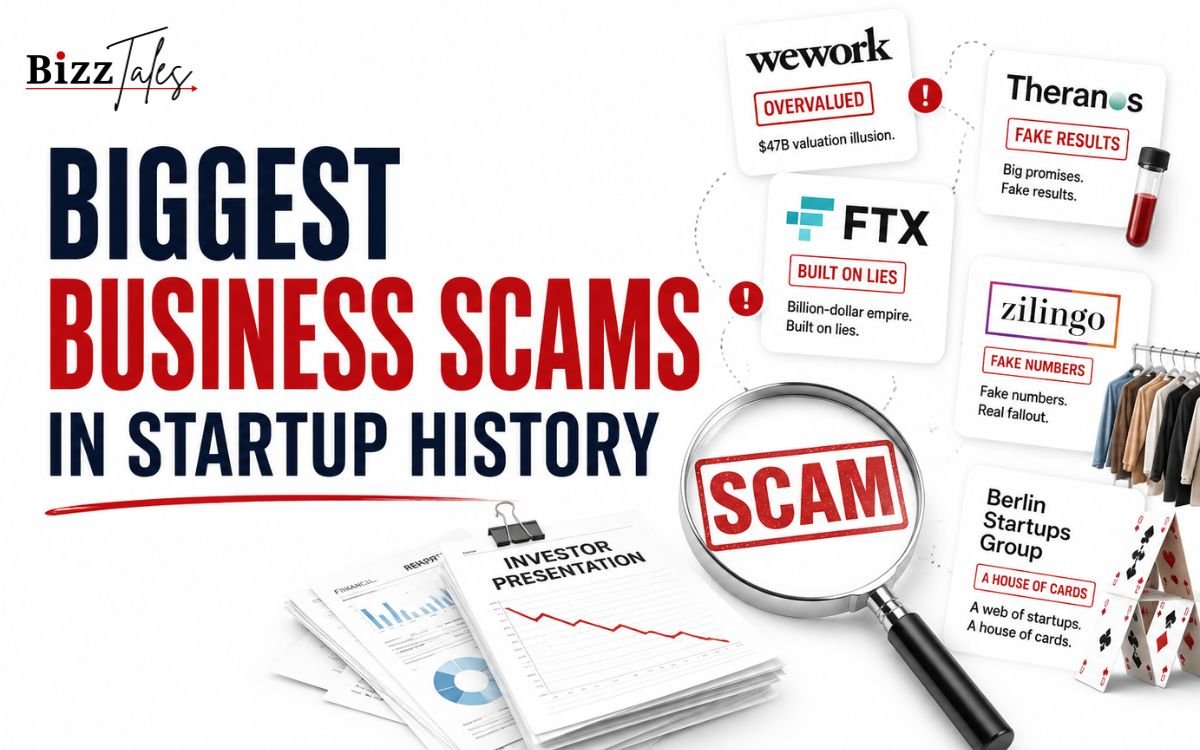
Since their emergence, startups have been seen as symbols of innovation, megabuck valuations and success stories. They have been behind the emergence of numerous ground-breaking companies and accumulation of unimaginable amount of wealth throughout the world.
However, not all startup success stories are authentic. In fact, there are some companies that gained popularity not due to innovation but rather due to fraud, scam, money juggling, and investors’ deception.
Throughout the history of the startup world, a few startups have generated enormous hype, brought in billions of dollars in capital, only to crash and burn after certain scandals came to light. Those scams have left investors, users, employees, and entire industries stunned.
Some of the biggest startup scams ever do provide some good lessons around greed, excessive ambition, bogus growth and the pitfalls of blind investor hype.
Why Startup Scams Happen
Usually startup ecosystems are showing us that huge growth and huge valuations are the only indicator of success.
Investors want the “next big company” and founders want to be seen as providing continuous winners.
In some situations this urge drives entrepreneurs to inflate figures, hide losses, falsify data, or make excessive commitments.
There is a clear link between the emphasis on image and valuation in companies and the increased occurrence of fraud.
The Theranos Scandal
Theranos and its founder Elizabeth Holmes were one of the most well-known scandals in the history of start-ups.
Theranos announced it had created a groundbreaking blood testing technology capable of running many medical tests on just a few drops of blood.
The concept gained huge popularity because it made health testing less expensive and more efficient.
Rise of Theranos
Elizabeth Holmes rose to become one of the most renowned entrepreneurs of our time.
She was likened to Steve Jobs because of her persona and large vision.
Key investors and business people backed the company and Theranos was valued in the billions.
The Truth Behind Theranos
Subsequently, it was found that the company’s technology was not performing as claimed.
Many of the tests were not accurate, and the business was using standard testing practices behind the scenes.
In addition, this revelation shocked the business and healthcare industries.
Finally, the company went bankrupt and so legal proceedings.
Lessons from Theranos
This was a stunning reminder of the perils of heeding the hype and the branding without validation.
It also uncovered the value of transparency in healthcare and tech companies.
The Rise and Fall of WeWork
An additional well-know startup failure is WeWork.
WeWork was initially a coworking space provider that was renting office spaces for startups and businesses.
The company quickly expanded and received massive funding because investors thought that it would change office culture forever.
The Problem with WeWork
But despite successful branding and expansion the company faced huge financial troubles.
It also invested heavily into a period of rapid growth and hundreds of millions of dollars was lost.
Questions also emerged concerning corporate governance and leadership decisions made by founder Adam Neumann.
WeWork’s Collapse
Once the financial information was revealed prior to its first public offering, investor confidence plummeted.
The valuation of the company tumbled, and WeWork became the biggest startup failure in contemporary business history.
FTX Cryptocurrency Collapse
FTX’s failure sent shockwaves through the financial and crypto sectors worldwide.
FTX was founded and became one of the world’s largest crypto exchanges, attracting billions in investments.
Sam Bankman-Fried, the founder, was viewed as a future star in financial genius.
What Went Wrong with FTX
Subsequently reports came out indicating a major problem with finances and how the customers’ money was being used.
Just two months after its launch, the company went bankrupt, leading to enormous losses to investors and users all over the globe.
Startup Hype and Investor Pressure
Overhype is also one of the most common reasons of startup scandals.
Investors may be more concerned with potential than actual business performance.
This creates scenarios where it is too tempting for founders to be pushed to achieve fictitious growth.
Fake Valuations and Unrealistic Growth
A couple of startups have become extremely valuable before turning a profit.
When they cannot grow anymore or they run into money problems, firms tend to conceal rather than resolve problems.
Why Investors Miss Warning Signs
Many investors overlook early indicators because they’re afraid to miss out on the next billion-dollar startup.
Entrepreneurial celebrities, media spotlight and powerful brand associations can foster unthinking confidence.
Impact on Employees and Customers
It’s not just investors that are targeted by startup scams.
Employers face layoffs, customers’ confidence is eroded and the whole industry suffers from tarnished image.
And sometimes, even regular people can lose life savings to these scams.
Lessons for Entrepreneurs
The largest startup scams also hold lessons for entrepreneurs.
The most important lesson is that only honest, transparent and value creating companies can be sustainable.
Another lesson learned is that fast growth can be hazardous without robust systems.
Importance of Corporate Governance
Good governance and accountability are very critical for start-up.
Inevitably, businesses that are not financially disciplined and transparent, accrue enormous long-term risk.
The Role of Media and Public Image
Some startup founders became stars before they had sustainable businesses.
Media hype at times may have led to false expectations and a diversion of focus from financial performance.
Ethical Business Practices Matter
Trust is essential to long-term business viability.
Companie that change figures and mislead customers may be successful for a short period, but their success is inevitably short lived when the real image is revealed.
Impact on Startup Ecosystem
For large startup scandals, it provides a fear to investors and influences confidence to the overall startup scene.
Investors tend to be cautious when financing new ventures after substantial failures.
Can Startup Failures Be Avoided?
Not every startup failure is a scam. In fact, the majority of honest startups fail because of competition, market forces, and other external factors.
But scams inherently require:
- Deception; 2. Concealed data; 3. Financial motivation.
No significant adverse effects can be reduced by having strict regulations, transparency and integrity in leadership.
Conclusion
Biggest business scams in startup history, with hype and valuation alone does not make successful businesses.
It is all about trust, transparency, building sustainable growth and embracing authentic innovation.
From Theranos and WeWork to FTX, these scandals served as cautionary tales for entrepreneurs, investors, and consumers around the globe.
Remind the business world that branding alone with celebrity founders are no substitute for business fundamentals.
The biggest lesson for entrepreneurs is – Credibility, honesty and creating value for customer is a key to long-term success rather than fake promises and ghost growth.
FAQs
What is a startup scam?
A startup scam involves misleading investors, customers, or employees through false claims, fake financial data, or fraudulent business practices.
Why did Theranos fail?
Theranos failed because its blood-testing technology did not work as claimed, leading to investigations and legal action.
What happened to WeWork?
WeWork faced financial collapse after concerns about losses, overvaluation, and leadership decisions became public.
Why is FTX considered a major business scandal?
FTX collapsed because of alleged misuse of customer funds and poor financial management.
What lesson can entrepreneurs learn from startup scams?
Entrepreneurs should focus on transparency, ethical leadership, and sustainable business growth instead of fake hype.