
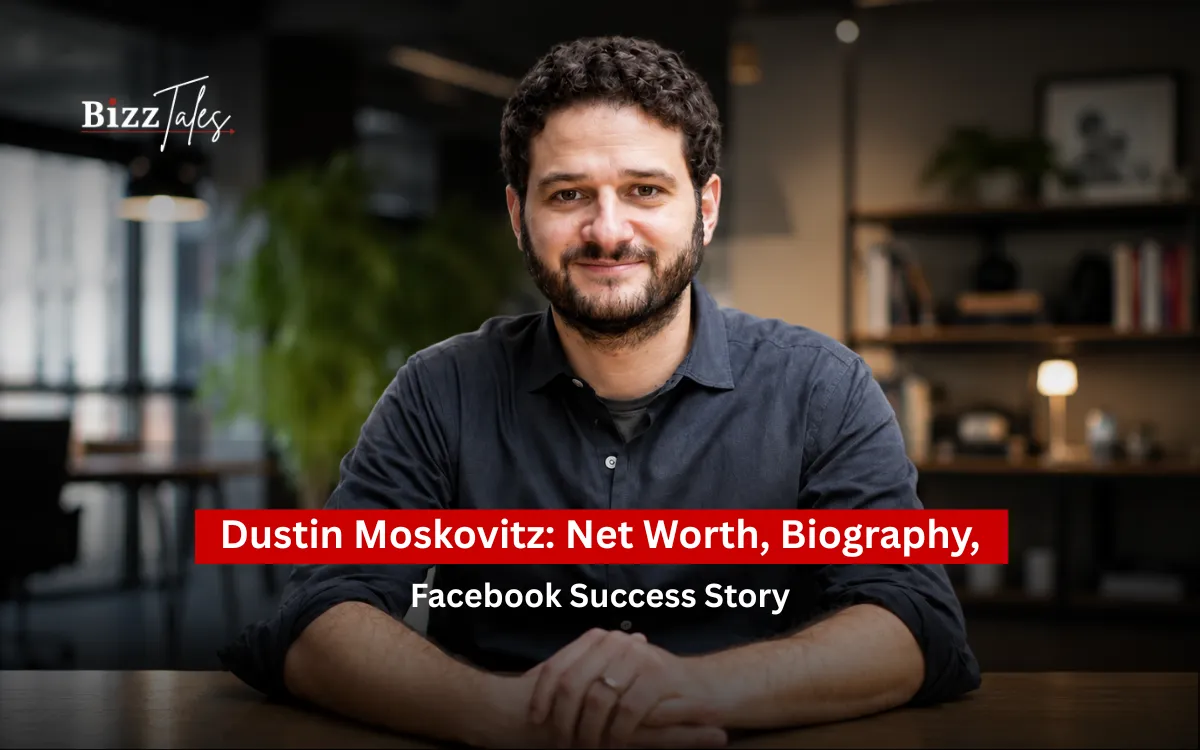
Dustin Moskovitz is one of the most successful yet least publicized technology billionaires in the world. Best known as a co-founder of Facebook and later the co-founder of Asana, Moskovitz played a crucial role in shaping the modern social media and workplace productivity industries. While many entrepreneurs seek the spotlight, he has consistently maintained a relatively private profile despite building a fortune worth billions of dollars and helping create companies that have transformed how people communicate and work.
His story is remarkable not only because of his financial success but also because of his influence on some of the most important technology businesses of the 21st century. As one of Facebook’s earliest architects, Moskovitz helped turn a college networking project into a global platform connecting billions of people. Later, through Asana, he focused on solving a different challenge: improving workplace collaboration and productivity for organizations around the world.
Unlike many billionaires whose careers revolve around acquisitions or financial engineering, Moskovitz built his reputation through product development, operational leadership, and long-term strategic thinking. His journey demonstrates how technical expertise, disciplined execution, and a focus on solving meaningful problems can create extraordinary success.
Beyond business, he is also widely recognized for his philanthropic efforts. Through large-scale charitable initiatives and a commitment to effective giving, Moskovitz has become one of the most influential voices in modern philanthropy. His willingness to dedicate substantial resources to addressing global challenges has added another dimension to his legacy.
Today, Dustin Moskovitz stands as one of the most respected figures in technology, entrepreneurship, and philanthropy, with a career that continues influencing both business and society.
FORBES RANKINGS AND NET WORTH
| Year | Forbes Ranking | Net Worth |
| 2026 | Forbes Global Billionaire | Approximately $19.5 Billion |
| 2025 | Forbes Global Billionaire | Approximately $17.8 Billion |
| 2024 | Forbes Technology Billionaire | Approximately $16.2 Billion |
EARLY LIFE AND EDUCATION
Dustin Aaron Moskovitz was born on May 22, 1984, in Gainesville, Florida, United States. Raised in a supportive family environment, he displayed an early interest in computers, technology, and problem-solving. Unlike many future entrepreneurs who dreamed of building companies from a young age, Moskovitz initially focused on academics and developing technical skills.
During his childhood, computers became an increasingly important part of daily life, and Moskovitz quickly developed a fascination with software and digital systems. He enjoyed learning how technology worked and was naturally drawn toward analytical thinking. These interests laid the foundation for what would eventually become a remarkable career in the technology industry.
After completing high school, he enrolled at Harvard University, one of the world’s most prestigious academic institutions. At Harvard, he studied economics while living in the same environment that would soon produce one of the most transformative companies in modern history.
A significant turning point came when he met fellow student Mark Zuckerberg. The two shared interests in technology, entrepreneurship, and the possibilities created by the internet. Their friendship eventually evolved into a business partnership that would change both of their lives.
While still a student, Moskovitz became involved in the development of a social networking platform originally designed for Harvard students. What began as a campus project would soon grow into Facebook, a company that transformed global communication and social interaction.
His educational journey was ultimately interrupted by entrepreneurship. As Facebook’s growth accelerated, Moskovitz left Harvard to focus full-time on building the company, a decision that would prove life-changing.
CAREER JOURNEY
Dustin Moskovitz’s professional journey is closely linked to the rise of Facebook. In 2004, while attending Harvard University, he joined Mark Zuckerberg, Chris Hughes, Eduardo Saverin, and Andrew McCollum in developing the social networking platform that would eventually become Facebook.
As one of the earliest members of the founding team, Moskovitz played a critical role in building and scaling the company’s infrastructure. During Facebook’s formative years, resources were limited, competition was intense, and the future remained uncertain. However, the founders shared a belief that online social networking could fundamentally change how people connect and communicate.
When Facebook relocated to Silicon Valley, Moskovitz followed the company and became deeply involved in its operational growth. He held multiple leadership roles and contributed to engineering, product development, and business operations.
As Facebook expanded beyond college campuses and attracted millions of users, Moskovitz helped solve the complex technical challenges associated with rapid growth. The company’s success required continuous innovation, infrastructure expansion, and operational excellence.
After several years at Facebook, Moskovitz decided to pursue a new entrepreneurial challenge. In 2008, he left the company and co-founded Asana alongside Justin Rosenstein.
The move surprised many observers because Facebook was experiencing extraordinary growth and offered enormous financial opportunities. However, Moskovitz believed he could create a meaningful impact by solving workplace productivity problems.
This decision marked the beginning of the second major chapter of his career.
BUSINESS VENTURES
Facebook remains one of Dustin Moskovitz’s most important business achievements. As one of the company’s earliest leaders, he helped build the infrastructure and operational systems that supported its explosive growth.
The company eventually became one of the most valuable businesses in the world, fundamentally changing social networking, digital advertising, and online communication. Moskovitz’s ownership stake in Facebook became a major source of his wealth and established him among the world’s youngest self-made billionaires.
However, his entrepreneurial ambitions did not end there.
In 2008, Moskovitz co-founded Asana, a software company focused on workplace productivity and project management. The idea emerged from challenges he observed while managing teams at Facebook. As organizations grew larger and more complex, coordinating projects and communication became increasingly difficult.
Asana was designed to help teams organize tasks, manage workflows, and collaborate more effectively. The platform quickly gained popularity among startups, technology companies, enterprises, and nonprofit organizations.
Under Moskovitz’s leadership, Asana evolved into one of the most respected productivity software companies in the world. The company eventually went public and expanded its customer base across numerous industries.
Beyond Facebook and Asana, Moskovitz has participated in various investment activities and technology initiatives. His business ventures consistently reflect a focus on efficiency, collaboration, and long-term value creation.
SUCCESS STORY AND MAJOR ACHIEVEMENTS
Dustin Moskovitz’s success story is extraordinary because it includes major contributions to two highly successful technology companies.
His first major achievement was helping build Facebook from a college startup into a global technology giant. The platform’s impact on communication, social networking, and digital media is difficult to overstate. As one of the company’s earliest leaders, Moskovitz played a significant role in creating systems capable of supporting billions of users.
Another major accomplishment was the creation of Asana. Unlike many entrepreneurs who struggle to replicate early success, Moskovitz successfully built a second company that achieved significant scale and public market recognition.
He is also recognized for his contributions to organizational productivity. Through Asana, he helped millions of professionals improve collaboration, project management, and workplace efficiency.
Beyond business, Moskovitz achieved prominence through philanthropy. Together with his wife, he committed substantial portions of his wealth to charitable causes focused on improving global well-being.
His ability to succeed across entrepreneurship, technology leadership, and philanthropy distinguishes him from many of his peers.
CHALLENGES, FAILURES, AND SETBACKS
Despite his success, Dustin Moskovitz faced numerous challenges throughout his career.
Facebook’s early years involved intense competition, technical difficulties, and uncertainty regarding the future of social networking. Building a rapidly growing platform required solving complex engineering problems while responding to changing user expectations.
Managing growth also presented organizational challenges. As Facebook expanded, leadership teams had to develop new processes, hire talent, and maintain company culture under significant pressure.
The decision to leave Facebook represented another major risk. Walking away from one of the fastest-growing companies in history required confidence and a willingness to pursue a new vision.
Asana also faced challenges. The productivity software market is highly competitive, with numerous established players competing for customers. Building a differentiated product required continuous innovation and substantial investment.
Like all entrepreneurs, Moskovitz experienced product setbacks, strategic challenges, and periods of uncertainty. However, his disciplined approach to problem-solving helped him navigate these obstacles successfully.
His career demonstrates that even the most successful entrepreneurs must overcome significant challenges to achieve long-term success.
INVESTMENTS AND ASSETS
A substantial portion of Dustin Moskovitz’s wealth comes from his ownership stake in Facebook, now known as Meta Platforms. The company’s extraordinary growth transformed him into one of the wealthiest technology entrepreneurs in the world.
His holdings in Asana represent another significant component of his financial portfolio. As founder and major shareholder, he benefited from the company’s growth and public market success.
Beyond these core assets, Moskovitz maintains investments in technology startups, venture opportunities, private companies, and diversified financial assets.
However, one of the most distinctive aspects of his financial strategy is philanthropy. Through organizations dedicated to effective giving, he has committed billions of dollars toward addressing global challenges.
His approach to wealth emphasizes long-term impact rather than personal consumption, making him one of the most prominent advocates of strategic philanthropy.
LEADERSHIP STYLE AND BUSINESS PHILOSOPHY
Dustin Moskovitz is known for a leadership style focused on clarity, efficiency, collaboration, and evidence-based decision-making. Rather than relying on charisma or public attention, he emphasizes strong systems, thoughtful planning, and disciplined execution.
One of his core beliefs is that organizations perform best when employees have clear visibility into goals, responsibilities, and progress. This philosophy directly influenced the development of Asana’s products.
He also values transparency and open communication. Throughout his career, he has emphasized the importance of sharing information and empowering teams to make informed decisions.
Another defining characteristic is long-term thinking. Rather than focusing exclusively on short-term financial results, Moskovitz prioritizes sustainable growth and lasting impact.
His leadership philosophy combines analytical rigor with a genuine desire to improve how people work and collaborate.
PERSONAL LIFE
Despite his immense wealth, Dustin Moskovitz maintains a relatively private and low-profile lifestyle. He is married to Cari Tuna, a journalist and philanthropist who shares his commitment to charitable giving and social impact.
Together, they have become leading advocates of effective altruism, a philosophy focused on using resources strategically to maximize positive impact. Their philanthropic initiatives support causes related to global health, poverty reduction, scientific research, and long-term human welfare.
Outside business and philanthropy, Moskovitz is known for his intellectual curiosity and interest in technology, economics, organizational behavior, and public policy.
Friends and colleagues often describe him as thoughtful, analytical, and deeply committed to solving meaningful problems.
His personal values emphasize responsibility, learning, and creating lasting benefits for society.
SOCIAL MEDIA PRESENCE
Dustin Moskovitz’s LinkedIn account
LEGACY AND FUTURE OUTLOOK
Dustin Moskovitz’s legacy extends far beyond financial success. Through Facebook, he helped transform global communication and social networking. Through Asana, he improved workplace collaboration and productivity for organizations around the world.
His contributions to technology have influenced billions of people and countless businesses. At the same time, his commitment to philanthropy demonstrates how entrepreneurial success can be used to address broader societal challenges.
Looking ahead, Asana continues expanding its influence within the productivity software market, while Moskovitz remains active in philanthropy and technology-related initiatives.
His support for effective altruism, scientific research, and global development suggests that his impact may ultimately extend well beyond the business world.
Future generations of entrepreneurs are likely to study his career as an example of how technical expertise, disciplined execution, and social responsibility can coexist within a successful business leader.
CONCLUSION
Dustin Moskovitz’s journey from Harvard student to billionaire entrepreneur is one of the most remarkable success stories in modern technology. As a co-founder of Facebook, he helped create one of the most influential platforms in history. As the founder of Asana, he built a second successful company focused on improving workplace productivity.
His achievements demonstrate the power of innovation, perseverance, and long-term thinking. Beyond business, his commitment to philanthropy and effective giving has positioned him as a leader not only in technology but also in social impact.
For entrepreneurs, investors, and technology enthusiasts, Moskovitz’s story offers valuable lessons about leadership, collaboration, and creating lasting value. His influence on both technology and philanthropy will continue shaping the future for years to come.
FAQS
1. What is Dustin Moskovitz’s net worth in 2026?
Dustin Moskovitz’s estimated net worth in 2026 is approximately $19.5 billion.
2. How did Dustin Moskovitz become a billionaire?
He became a billionaire through Facebook, Asana, technology investments, and long-term equity ownership.
3. What companies did Dustin Moskovitz found?
Dustin Moskovitz co-founded Facebook and later founded Asana.
4. What is Dustin Moskovitz’s leadership style?
His leadership style emphasizes transparency, efficiency, collaboration, evidence-based decisions, and long-term thinking.
5. What is Dustin Moskovitz’s biggest business achievement?
His biggest achievement is co-founding Facebook and later building Asana into one of the world’s leading workplace productivity platforms.