
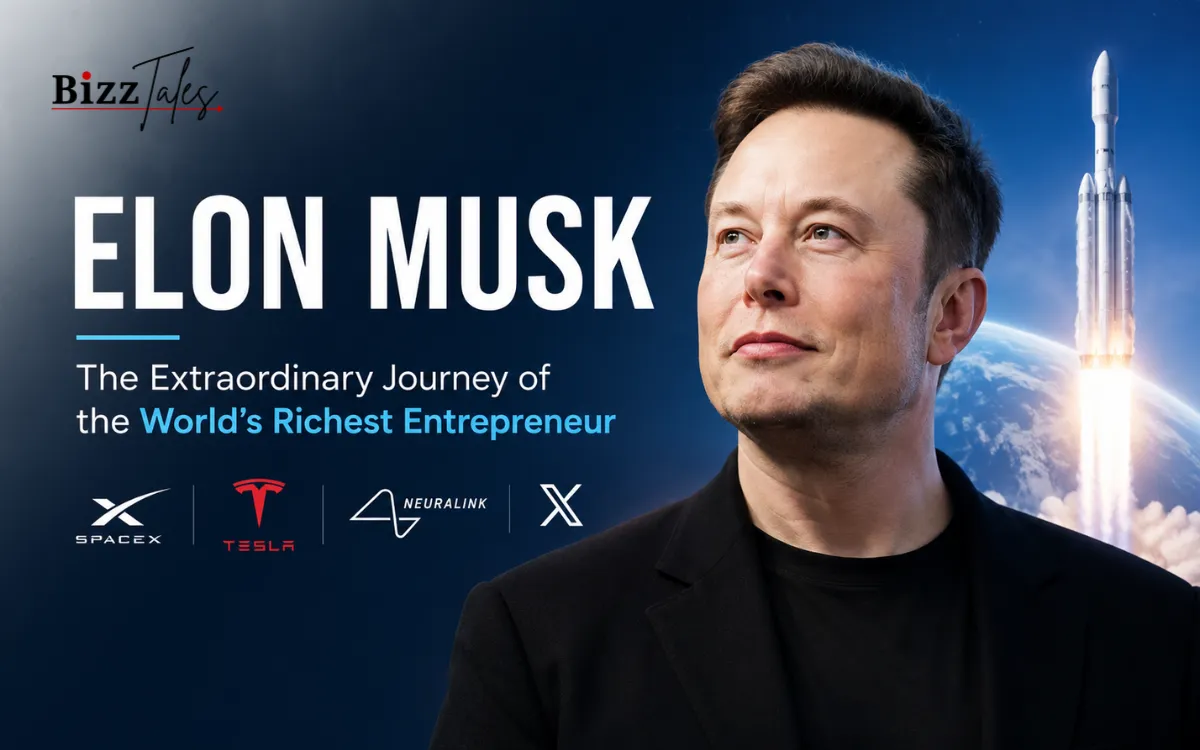
There are very few entrepreneurs in modern history who have attracted worldwide attention as much as Elon Musk. At the forefront of challenging businesses such as Tesla, SpaceX, xAI, Neuralink, and The Boring Company, Musk has established himself as one of the business icons of the 21st century. But moving beyond establishing successful enterprises, he has broader and more ambitious goals.
There is no overnight success story in Elon Musks life. Beneath the headlines and billion dollar wealth is a story of faults, failures and financial difficulties, criticism and perseverance. The story of how he went from being a curious child in South Africa to the richest man in the world can serve as inspiration to entrepreneurs everywhere.
Forbes Net Worth History
| Year | Estimated Net Worth |
| 2026 | $839 Billion |
| 2025 | $339 Billion |
| 2024 | $195 Billion |
The remarkable growth in Musk’s wealth has been driven by the rising valuations of Tesla, SpaceX, and artificial intelligence ventures, making him the richest individual ever recorded by Forbes.
Early Life and Education
Elon Reeve Musk was born on June 28, 1971, in Pretoria, South Africa. From a young age, he displayed an extraordinary interest in technology, science, and engineering. Unlike many children his age, Musk spent countless hours reading books and teaching himself computer programming.
At just 12 years old, he developed and sold a video game called Blastar, earning his first entrepreneurial income. This early success gave him confidence in his technical abilities and planted the seeds for his future ventures.
Despite his intelligence, Musk faced significant challenges during childhood. He was often bullied at school and described himself as introverted and deeply focused on learning. These difficult experiences helped shape his resilience and determination later in life.
Seeking greater opportunities, Musk moved to Canada at age 17 before eventually transferring to the University of Pennsylvania in the United States. There, he earned degrees in Physics and Economics, combining scientific understanding with business knowledge.
The Beginning of His Entrepreneurial Journey
After graduation, Musk briefly enrolled in a PhD program at Stanford University. However, he left after just two days because he believed the internet boom offered greater opportunities than academia.
In 1995, he co-founded Zip2 with his brother Kimbal Musk. The company provided online business directories and mapping services for newspapers, a concept that was ahead of its time.
The early days were extremely challenging. Musk often slept in the office and showered at public facilities to save money. Despite these hardships, Zip2 eventually gained traction and was acquired by Compaq for approximately $307 million.
The sale marked Musk’s first major financial success and provided capital for future ventures.
The PayPal Breakthrough
After selling Zip2, Musk founded X.com, an online financial services company. At the time, digital payments were still in their infancy, and many people doubted that banking could move online.
X.com later merged with a company called Confinity, which developed PayPal. Internal disagreements eventually led to Musk being replaced as CEO. However, he retained a significant ownership stake.
When eBay acquired PayPal in 2002 for $1.5 billion, Musk earned approximately $180 million from the deal. Instead of retiring comfortably, he chose to invest nearly all of his fortune into ambitious new ventures.
This decision would become one of the boldest moves in entrepreneurial history.
Building SpaceX
Many people considered Musk’s next goal impossible. He wanted to reduce the cost of space travel and eventually colonize Mars.
In 2002, he founded SpaceX. The company faced enormous technical and financial challenges during its early years. Several rocket launches failed, costing millions of dollars and pushing the company toward bankruptcy.
By 2008, SpaceX was on the verge of collapse. Musk later revealed that he had enough money left for either SpaceX or Tesla but not both.
Fortunately, the company’s fourth rocket launch succeeded. Shortly afterward, NASA awarded SpaceX a major contract, saving the company from financial disaster.
Today, SpaceX is one of the most valuable private companies in the world. Its reusable rocket technology has transformed the aerospace industry and dramatically reduced launch costs.
Tesla and the Electric Vehicle Revolution
Despite not having any direct connection to Tesla once he arrived there, Musk has invested heavily in the company and is now its chief executive officer. At the time he entered the world of electric vehicles, they were taken for being cumbersome and unattractive.
There was enormous skepticism about Tesla both from the public and from experts in the traditional automotive space. The large established automakers did not believe electric vehicles could rival the traditional gasoline-powered cars.
Production was delayed and the company lost money and attracted severe criticism. The analysts repeatedly predicted Tesla would go bankrupt.
Musk did not give up; he used his own funds, put in long time, and moved the company through several crises.
Tesla’s introduction of the Model S, Model 3, Model X and Model Y changed public opinion of electric cars. Tesla ultimately became one of the most valuable car companies of all time.
By this success,Tesla played a part to push forward the whole world toward sustainable energy and EV operation.
Other Businesses and Ventures
Elon Musk’s entrepreneurial projects don’t stop with just Tesla and SpaceX.
He established Neuralink with the goal of creating brain-computer interfaces that could aid those suffering from neurological conditions and maybe, someday, improve human intellect.
The Boring Company was established as a response to urban traffic congestion by introducing underground transportation tunnels.
Furthermore, Musk also established xAI, an artificial intelligence company that aims to compete in the booming industry.
He also bought Twitter and changed its name to X, with plans to make it a multi-purpose digital super-app in the form of providing messaging, payments, and a whole other of services.
All these endeavors demonstrate Musk’s courage to face tough global issues.
Major Challenges and Failures
Despite his extraordinary success, Musk’s career has been filled with setbacks.
SpaceX suffered multiple failed rocket launches before achieving success.
Tesla repeatedly faced manufacturing difficulties, supply chain problems, and financial pressures.
His acquisition of Twitter generated controversy and criticism from advertisers, users, and media organizations.
Musk has also faced lawsuits, regulatory investigations, and public scrutiny throughout his career.
Many of his ambitious predictions have been delayed or criticized. Yet his ability to persist through adversity remains one of his defining characteristics.
These failures often receive less attention than his successes, but they played a crucial role in shaping his leadership style and business philosophy.
Leadership Style
Elon Musk is known for his intense work ethic and demanding leadership approach.
Employees frequently describe him as highly driven, detail-oriented, and deeply involved in technical decision-making.
Musk often sets aggressive deadlines and encourages teams to challenge conventional thinking. While this approach has produced remarkable innovation, it has also attracted criticism regarding workplace pressure and expectations.
His leadership philosophy centers around solving difficult problems, moving quickly, and continuously improving products and processes.
Philanthropy and Personal Life
Although Musk is primarily known for his business achievements, he has also contributed to philanthropic causes through the Musk Foundation.
His charitable efforts focus on renewable energy, science education, medical research, and disaster relief.
Musk’s personal life often attracts media attention due to his relationships, family, and public statements. Despite constant scrutiny, he continues to maintain a highly visible public presence.
Official Social Media Accounts
Musk remains one of the most followed individuals on social media and frequently uses X to communicate directly with the public.
Lessons Entrepreneurs Can Learn from Elon Musk
One of the biggest lessons from Musk’s journey is the importance of thinking beyond conventional limitations. While many entrepreneurs focus on improving existing products, Musk often seeks to reinvent entire industries.
His story also demonstrates the value of persistence. Several of his companies came dangerously close to failure, yet he continued pushing forward despite overwhelming challenges.
Another key lesson is the importance of taking calculated risks. Musk repeatedly invested his own fortune into ventures that many considered impossible.
Finally, his success highlights the power of combining technical expertise with long-term vision.
Conclusion
Elon Musk’s journey from a young programmer in South Africa to the world’s richest entrepreneur is one of the most remarkable business stories ever told. Through companies such as Tesla, SpaceX, xAI, Neuralink, and X, he has transformed multiple industries and influenced the future of technology on a global scale.
While his career has included failures, criticism, and controversy, his determination to solve ambitious problems continues to set him apart from other business leaders. Whether through electric vehicles, artificial intelligence, or space exploration, Musk remains one of the most influential entrepreneurs of our time.
His story serves as a powerful reminder that extraordinary achievements often require extraordinary persistence.
FAQs
1. Who is Elon Musk?
Elon Musk is an entrepreneur and business leader known for Tesla, SpaceX, xAI, Neuralink, The Boring Company, and X.
2. What is Elon Musk’s net worth in 2026?
His estimated net worth is approximately $839 billion.
3. Where was Elon Musk born?
He was born in Pretoria, South Africa.
4. What was Elon Musk’s first company?
His first major company was Zip2.
5. How did Elon Musk make his fortune?
He built wealth through PayPal, Tesla, SpaceX, and other technology ventures.
6. Does Elon Musk own Tesla?
He is Tesla’s largest shareholder and CEO.
7. What is SpaceX?
SpaceX is a private aerospace company founded by Elon Musk in 2002.
8. What is xAI?
xAI is Musk’s artificial intelligence company focused on developing advanced AI systems.
9. What challenges did Elon Musk face?
He faced failed rocket launches, financial struggles, lawsuits, criticism, and business setbacks.
10. Why is Elon Musk considered influential?
His companies have transformed transportation, energy, artificial intelligence, communication, and space exploration.