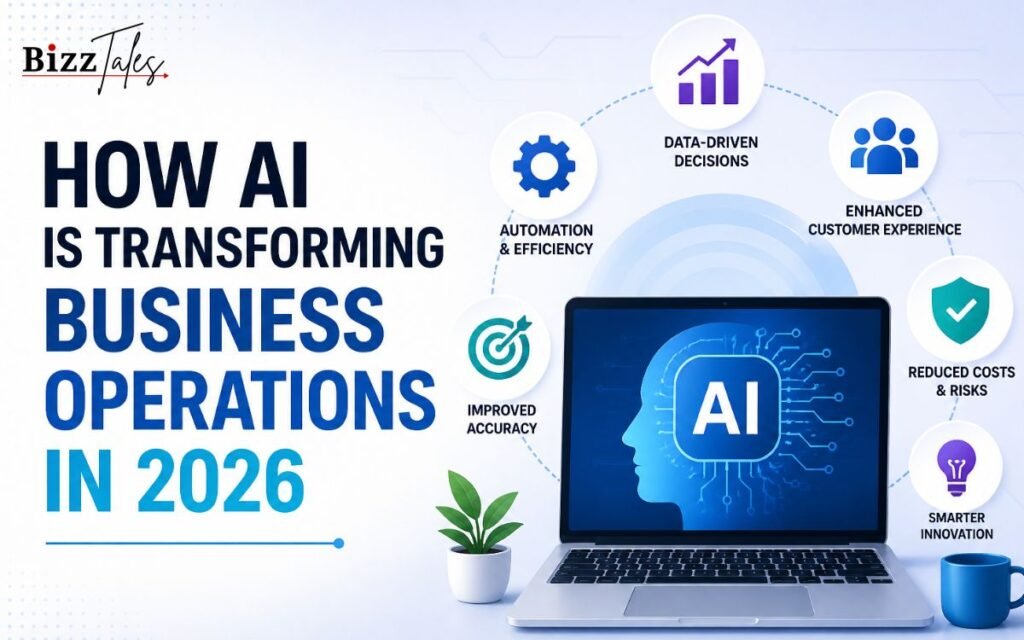
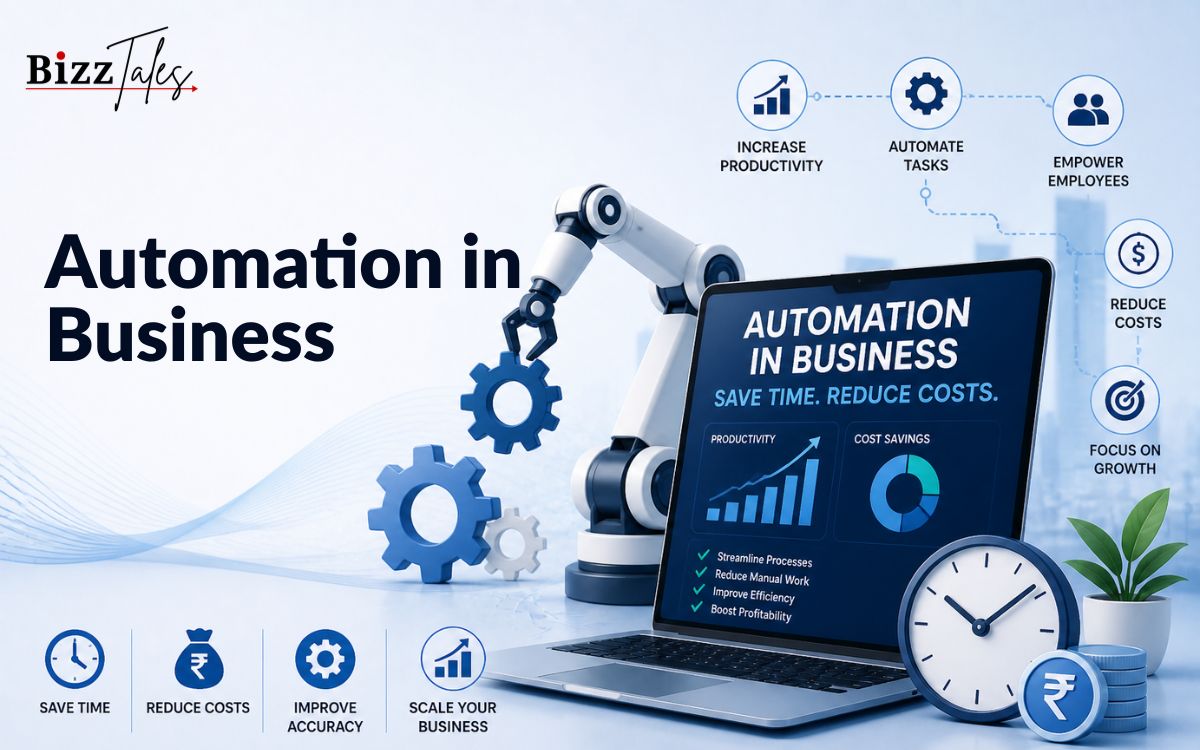
Today, organizations are being asked to do more than ever before. With increased competition, escalating operating costs, and more demanding consumers, companies must turn to automation to meet these challenges.
Business automation Business automation happens when a business employs technology to automatically do repetitive tasks that might otherwise require a high level of human input.
Businesses of all sizes – from startups to major corporations are embracing automation to save time and money, and to grow faster. More than a luxury, automation is essential to stay alive in a digital-first economy.
What is Business Automation?
Business automation is comprised of, software, tools and systems that automate standard processes like data entry, communication, inventory management, marketing activities and more.
Businesses can choose to automate these processes, rather than perform these manually, ensuring increased efficiency and accuracy. Processes can be automated within several departments such as sales, marketing, finance and customer support.
What do we want? A reduction in human intervention in tasks which don’t benefit from it so that employees have more time to do more worthwhile things.
Why Automation is Important for Businesses
Automation is not simply about making life easier-it directly affects profits and business growth.
Manual procedures are slow, not reliable and costly. These issues become more pronounced as the business expands. Automation is solution to this problem: it creates a standard process with greater consistency.
Companies that cannot or do not automate will inefficient, more expensive and slower growing than their automating peers.
Key Benefits of Automation in Business
Saves Time
Automation greatly decreases the time needed for repetitive jobs. What used to take hours can now be completed in minutes.
For intance, automated email systems can deliver millioms of messages in seconds whereas individual hand-written is far too slow it would have taken “7.192 days to hand write 1451 emails”.
Reduces Operational Costs
Cost reduction is one of the major benefits of automation. Organizations reduce dependence on people for monotonous activities thus reducing the expense involved in employment of people.
Furthermore, automation also helps to prevent human errors, making corrections and rework less costly.
Improves Accuracy
Humans make mistakes, and a manual task that is repetitive can lead to an error. Automated systems will have been designed to follow rules correctly, so there is much less chance of error.
Especially in fields like accounting, data entry and maintenance, stock.
Enhances Productivity
Allows employees to do work that is more strategic and creative. This makes them more productive and allows businesses to do more with less.
Enables Scalability
Automation allows a business to scale up operations without incurring costs that grow in direct proportion.
For example, an automated system can cope with additional customers contacts or transactions.2
Common Areas Where Automation is Used
Marketing Automation
Automation companies provide solutions for email marketing campaigns, social media management, and lead generation.
Customer Support
Many automated response systems and electronic barbets are utilized by organizations for addressing customer concerns. These systems give immediate replies and can reduce the burden on support groups.
Sales and CRM
CRM systems automate your Leads tracking, follow up and sales process. This allows customers to manage their communication for them.
Accounting and Finance
Using automation also makes accounting, reports, and expense management easier. This reduces bureaucracy and saves time for finance team.
Inventory and Operations
Using automation businesses can over see inventory levels, manage supply chains and ensure their operations are being optimized. This also allows control and prevents wastage.
Real-World Examples of Automation
E-commerce firms automate order processing, stock shipment tracking and customer communication. This helps them to handle large numbers of transactions more efficiently.
Service-based companies often automate appointment setting, billing, and client communication.
Small businesses are also starting to embrace automation tools.
Challenges of Business Automation
As with anything, automation has two sides and there are some issues that need to be solved.
Initial Setup Cost
Automation solutions; “automating any repetitive task has a finite implementation cost (hardware, and time to train workers). This cost was once recovered, however, through efficiency benefits.”.
Learning Curve
There may be a time lag before one is able to adjust to the new tools and systems. Training might be required to enable the implementation to proceed smoothly.
Over-Reliance on Technology
Over-reliance on automation can be problematic if things go wrong with the systems. Companies need to have processes backup plan to deal with such scenarios.
How to Implement Automation in Your Business
To be successful with automation, though, you need a plan.
The first step is to identify the repetitive tasks that take up most of the time/effort. Those are the ones to automate.
The second step is selecting the right tool for your business needs-check that the tools ‘fit’ your budget and business needs. Don’t try to do everything by committing to a bunch of tools at once.
This is one of the most popular tools available for supervision of the business. Train your staff to use the automation systems. It should be done cautiously while implementing the system.
Finally, always review and enhance automated tasks for better efficiency.
Future of Automation in Business
Automation is growing at a fast pace as we see advancements in artificial intelligence and machine learning. In the future we will see automation not just doing a task but also where automation will decide.
They will become more adaptive, intelligent and able to provide automation at scale leading to increased efficiencies, improved customer experience and business growth.
Early adopters of automation will be more competitive than those who are slower.
Conclusion
Automation is changing the way a business runs leading to cost savings, efficiencies, reduction in errors, and taking time away from mundane tasks. It helps businesses grow by allowing for growth, accuracy and increasing efficiency to be achieved.
In a competitive economy, automation is a must. The essential element for the consistent long-term success of your business operation is/are/is-
The businesses that adopt automation now will have a greater advantage to prepared to the challenges and opportunities that lie ahead.