Over the last ten years, streaming services have revolutionized how we consume entertainment. While they were once used as an accessible replacement for cable TV, they have now grown into a multi-billion dollar digital playground. Today, consumers are given the power of thousands of movies, TV series, podcasts, sports events, documentaries, music libraries and more at the simple press of a button on a smartphone, tablet, smart tv or laptop.
Streamin is arguably the most successful business model of the digital age thanks to its convenience. Today, there are numerous streaming services worldwide, most of which have multiple platforms and are experienced as a more affordable substitute for the traditional TV subscription package by consumers. They compete intensively for customers by providing large investments of exclusive content, innovative recommendation algorithms, international reach;
Nevertheless, behind the alluring allure of unlimited entertainment is a underlying reality that consumers are increasingly discovering. Streaming itself may be relatively cheap on a per service basis but the cumulative cost it is high in terms of finance, technology and behavior. The growing cost of subscription prices in contrast to the seemingly more and more saturation in streaming might be out weighing the affordability and convenience of streaming.
Knowing the real costs of streaming services helps you control cost of entertainment, analyze your watching patterns, and adjust your subscription choices accordingly in today’s digital age.
The Rise of the Streaming Economy
The streaming revolution was initially about solving a number of frustrations that people feel with traditional TV and media in general.
Consumers desired increased flexibility, less advertising, on-demand streaming, and convenient access to content whenever and wherever they wanted. Streaming managed to provide all of that at a lower cost compared to the traditional cable packages.
With the increasing bandwidth and mass adoption of smart devices, streaming had tremendous growth. Media providers understood that subscription business models can lead to recurring revenue streams backed with strong user data.
As a result, many media brands, sports body, tech companies, and content creators have entered the market with their own streaming products. In the present age streaming content is available across a range of categories such as entertainment, music, live sports, education, gaming subscriptions, and even specialized niche services.
While this proliferation has certainly brought about more choicesto the consumer, it has also raised a number of issues, which are frequently ignored in the rush to compare the economics of streaming.
Subscription Costs Add Up Quickly
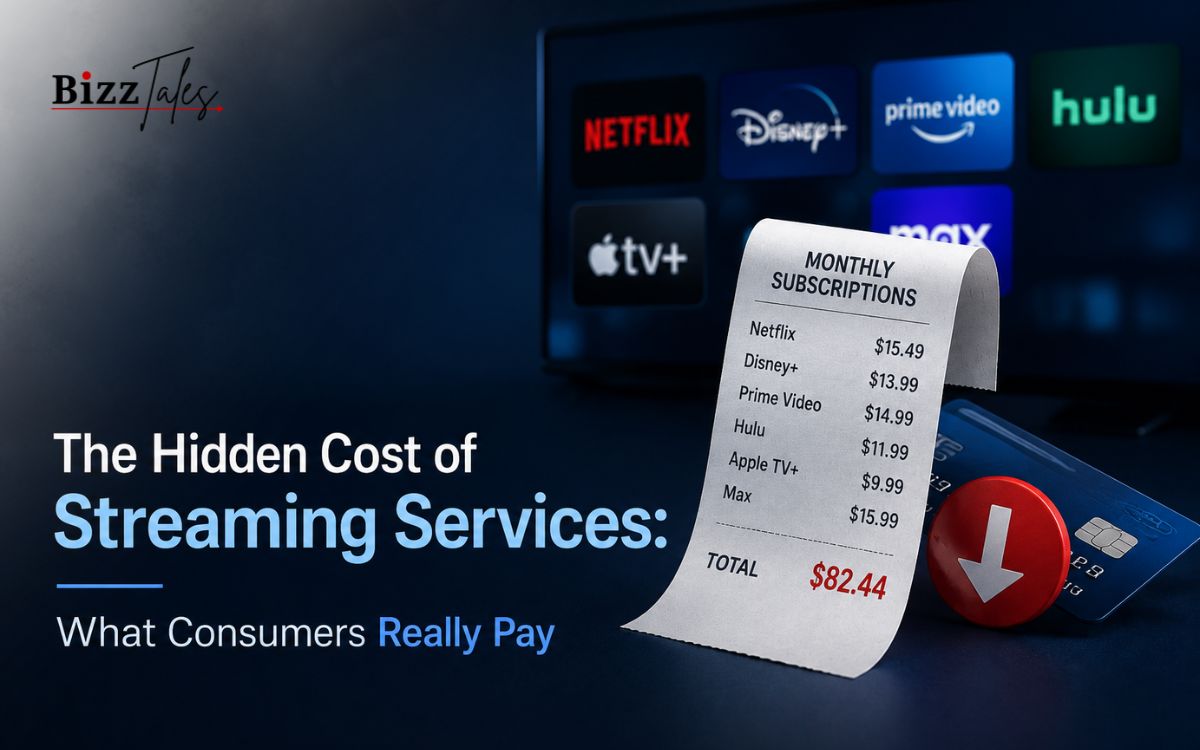
Firstly, the most apparent hidden expense regarding the use of streaming services is the cost of multiple subscriptions.
Just a single service might seem like a cheap option at first glance. The reality is that only a rare modern viewer has only one subscription. Competition between services, and the desire to have the rights to all the best films and sporting events has led to the breaking up of an entertainment monopoly.
The family could be paying for a movie channel, TV show channels, professional sports channels, a music channel, a documentary channel, an anime channel and a kid’s channel. Although these would seem manageable on their own by combining them collectively they could easily be as much as traditional cable TV.
Consumers often have no idea how much they’re actually spending on entertainment because the charges are paid automatically and are even billed in different cycles. Those minor, repetitive charges are easy to forget, for a year when it’s time to budget, there’s a hefty entertainment tab.
With subscription prices getting higher, this is going to be an even bigger burden.
The Return of Content Fragmentation
One of the initial benefits of streaming was the consolidation of content. Consumers had a virtually unlimited library available to them through one medium without having to buy individual DVDs or subscribing to additional cable channels.
Today the opposite trend is happening.
Media companies are making their most valuable movie content available only on their own streaming sites. Major studio movies, TV properties, sports rights and the most exclusive originals can now be found on many different services.
Consequently, subscribers frequently end up with several subscriptions at once rather than base their viewing around a sole provider. This desire to have always-on or broken-out content can be both expensive and impractical.
They may take a long time to find the time and station/content availability, keep track of subscriptions and decide whether or not other programs are worth their money. This fragmentation lead to a diminishing level of convenience.
In many respects the modern streaming environment is more similar to the cable systems consumers wanted to avoid than it is to the traditional broadcast system.
Rising Subscription Prices
Initially streaming services lured the consumer with attractive price points to push subscribers early and quickly.
However, as the subscriber numbers grew, a large number of networks and mediums started to price up in order to fund content creation, technology purchase and shareholder demands.
Content production has grown to be one of the costliest aspects in the streaming domain. Platforms are investing billions of dollars per year in exclusive programming including series, movies, documentaries and live events-seeking to outpace the competition.
Industry-wide price hikes. Streaming was once heralded as an inexpensive form of entertainment, but now the consumer is seeing year over year subscription price changes that will be adding to household expenses.
With fierce competition and ever-rising content budgets, it is likely that future price hikes will maintain their position as a continuing theme.
Internet Costs and Infrastructure Expenses
Perhaps most significantly, much of the discussion relating to streaming neglects to acknowledge is that streaming is entirely dependent on an internet connection.
Broadband networks for HD and UHD content need to be both fast and reliable, since content can be huge. Consumers are also increasingly demanding that their internet plans are more suitable to be share between many screens at once:
Hence the cost of streaming is not only about the subscription fee. Consumers might receive a higher broadband bill, and buy more sophisticated networking hardware or even upgrade their hardware in order to stream nicely.
In low bandwidth areas or areas with costly internet services, the infrastructure costs may significantly drive up the actual cost of the streaming entertainment.
If the video quality continues to improve and 8K streaming, those demands in terms of bandwidth (and cost) could be even higher.
The Hidden Cost of Advertisements
Streaming services has become a new way for many consumers to escape commercials often found on traditional television.
Nevertheless, the streaming sector is, more and more, moving toward advertising-financed models.
Many services have begun to create cheaper subscription levels with advertising. During times when consumers hope to circumvent the interruptions, a new generation of less expensive subscriptions return them.
For the businesses, the presence of advertising opens up extra revenue streams. While for the consumers, there is a hidden compromise between the price and the quality of watching through the ads.
As streaming businesses look for new revenue streams, advertising is likely to become an even more significant aspect of platform economics.
The Time Cost of Endless Content
There are other hidden costs that are not financial in any way but cost the user money regardless.
This glut of available content is what psychologists call “decision fatigue” and the time consumers now spend scanning libraries, comparing titles, reading reviews and choosing what to watch seems to be continuing unabated.
Among the complainant’s observations about the various services is that they “sometimes just spend… Alot of entertainment time just looking up stuff and not watching it.”.
Recommender systems seek to address this challenge by providing tailored content suggestions. Yet, they can also exploit our desire to stay engaged for extended periods and scroll endlessly, wasting precious hours.
In an age where attention is becoming ever more precious, the opportunity cost of over indulging should not be dismissed.
Time that could be used for other activities such as studies, self improvement, socialization, exercise, boredom relief, crafts activities.
Data Collection and Privacy Concerns
Streaming services values their user data.
All activity-whether you are selecting something, searching, skipping, rewinding, viewing to the end, or clicking on something-provides data that services are able to analyze and utilize. Recommendations, investments, and ads are all informed by this comprehensive insight.
While personalisation is convenient, it can also be put to use by others without your knowledge.
Most people provide more the most comprehensive user behavioral data without understanding how, when and where it is collected, processed, stored, and used. In addition to being hard to value, data privacy is one of the less visible costs of streaming,
As data-centric business models evolve to new levels of sophistication, transparency and consumer consciousness will become even more critical.
The Impact on Content Quality
The competition among streamers have created an unparalleled production volume.
Yes. But this has also increased competition in terms of quality and sustainability.
The incentive to produce new content is so strong that it demands enormous output. Sometimes the short-term payoff is valued at the expense of the long-term return or cultural significance.
In the end, consumers may who pay for this shift as they become the consumers of ever more ephemeral content in far-flung fragmented libraries.
The Environmental Cost of Streaming
Not many consumers give any thought to how online entertainments effects the environment.
Streaming requires a large infrastructures such as data centers, content delivery networks, servers, network equipment or cloud computing. All these hardware and software infrastructure need a lot of power and must be maintained.
As the worldwide demand for streaming increases, so does the energy required for the digital entertainment.
Numerous technology firms are also making investments in green energy and sustainable infrastructure to minimize their impact on the environment. Streaming itself, though, involves significant demands on computing resources.
The sustainability of large scale streaming ecosystems in the long term will become a more and more interesting/important topic as global environmental concerns keep gaining momentum.
The Business Perspective on Streaming Economics
From a business perspective no other conception of a recurring revenue model than streaming services was ever more impacting.
Subscription revenue offers consistent cash flows, crucial customer understanding, and the chance to expand businesses across the globe. Firms have a unique position to develop offerings and services directly to customers.
But profitability continues to be a challenge for many of them.
Content production costs, licensing agreements, infrastructure investments and customer acquisition costs are ever increasing. Therefore, firms need to find a balance between growth and sustainability.
These would ultimately lead to an increase in subscription fee, more promotion efforts and tightening of the account-sharing policy to consumers.
These business factors will go a long way to understanding much of the changes happening within the streaming business today.
The Future of Streaming Services
The streaming market is entering a more mature phase, where consolidation, competition, and changing business models are taking place.
Looking ahead, consumer trends are likely to evolve toward bundle subscriptions, recommendation engines with the aid of AI, interactive contents, personalized viewing experience with multiple options, more layers to advertising, and an increased focus on revenue.
Further, consumers may ultimately witness the advent of aggregation platform that have the capability to easily manage all their subscriptions in one place and help find content from multiple platforms
AI could also enhance content recommendations by diminishing search friction and choice overload.
Initially, escalating competition will continue spurring platforms to come up with innovative ideas, which will have to match both the price levels and maintain profit margins.
The success of streaming in the future will hinge on how well companies meet the rising issues of cost, convenience, privacy and quality of content.
Conclusion
Streaming services changed entertainment with their ease of access, unparalleled flexibility and access to digital entertainment but then the actual invoice for it goes far further than just a monthly billing.
Consumers are battling increased prices, multiple sources of content, broadband infrastructure costs, privacy issues, advertising, environmental effects, and opportunity costs of consuming too much content. Streaming is not only a great and valuable technology but every-one ought to be aware of costs that consumers arguably do not realize or consider.
With the industry in a state of constant transformation, consumers and companies need to understand that streaming is not now just a cheaper option to traditional media. It has and will continue to develop into a multi-layered environment, with financial, technical, social and behavioral elements that will determine how entertainment develops in the years ahead.
FAQs
But why do the prices of streaming services continue to rise?
The cost of content production, licensing, technology, and operation keeps growing for streaming companies (and most other content providers). Companies tend to increase subscription prices to offset these costs.
What does content fragmentation of streams stand for?
Content fragmentation happens when all the rights for movies, shows and sports are held by several channels so that consumers have to pay multiple subscriptions.
Are streaming services less expensive than cable television?
Individually lower costs, but multiple subscriptions may reach or even surpass the cable cost.
How do streaming platforms utilize customer data?
Streaming services gather information about user behavior and engagement to enhance recommendations.
What are the setting impacts of streaming?
Streaming depends on energy-consuming data centers, cloud, and network infrastructure-which together form digital energy consumption.
What’s next for streaming providers?
Upcoming features like personalization with AI, packages/subscriptions, interactive content, more ad options, and increased emphasis on profit.